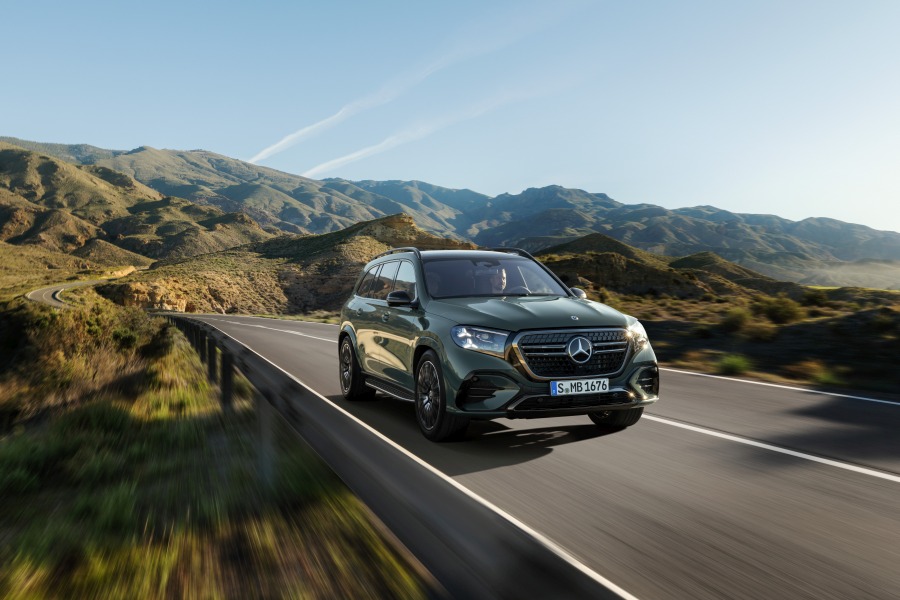
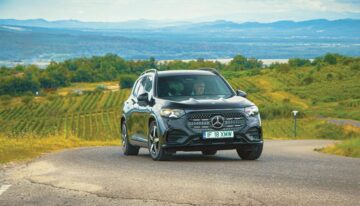
Alongside the Mercedes GLE/GLE Coupe, Mercedes has also substantially revised the Mercedes GLS, which the Stuttgart-based manufacturer proudly calls the S-Class of SUVs. As with the GLE, the front end has been updated, there are new engines, and a redesigned dashboard featuring a multimedia system with a new operating system.
Although they are theoretically two different ranges, it seems that Mercedes has treated them as a single lineup, since the extensive facelift applied to the GLE has also been carried over to the GLS.
The Mercedes GLS is slightly newer than the GLE, having been launched in 2006 (ML in 1997), and is only in its third generation (X167), which is also relatively recent, having debuted in April 2019 at the New York Auto Show, six months after the GLE.
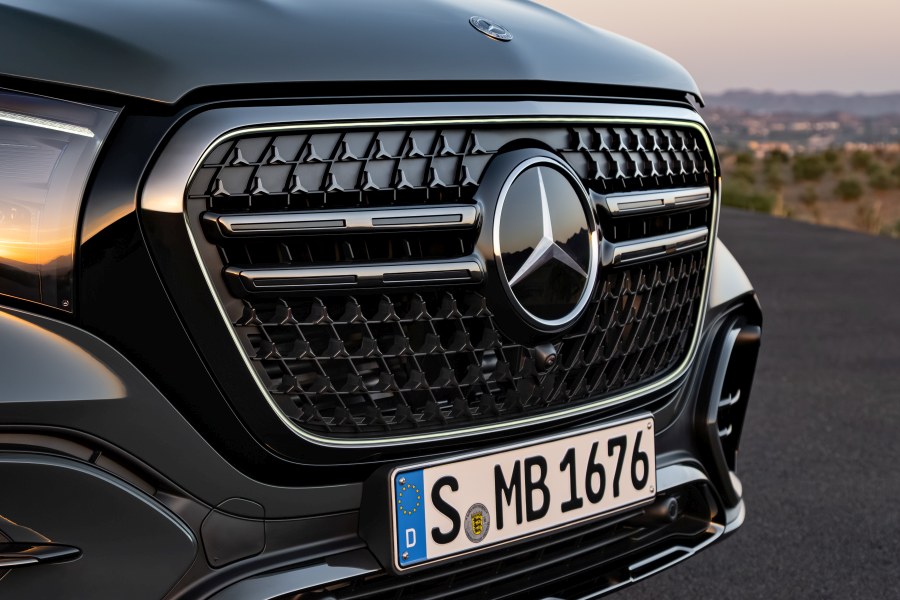
In terms of design changes, Mercedes wanted to differentiate the GLS from the GLE. Thus, the larger, optionally illuminated radiator grille on the GLS features two horizontal chrome bars supporting the Mercedes logo. Depending on the market, the logo is illuminated— in China it lights up when the vehicle is stationary, while in the U.S. it also shines while driving.
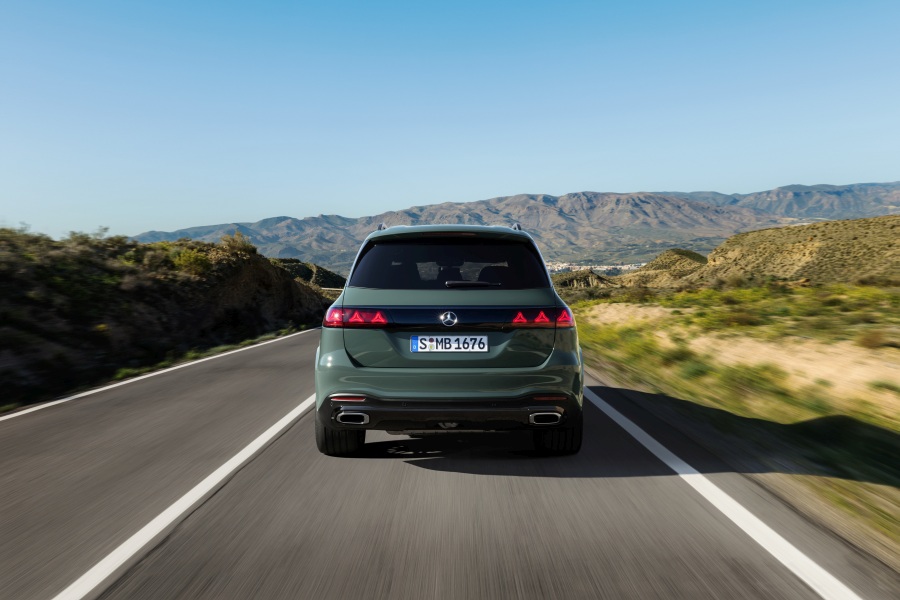
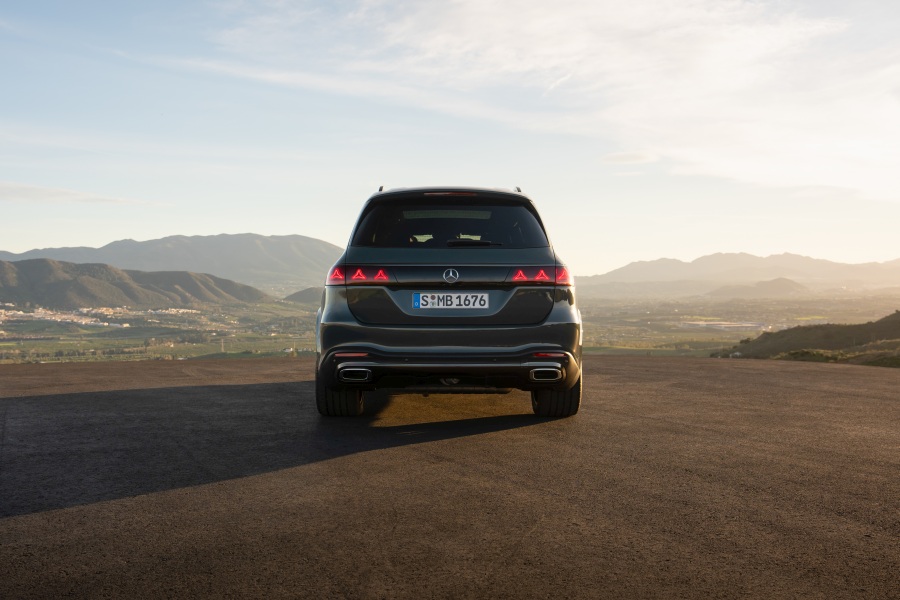
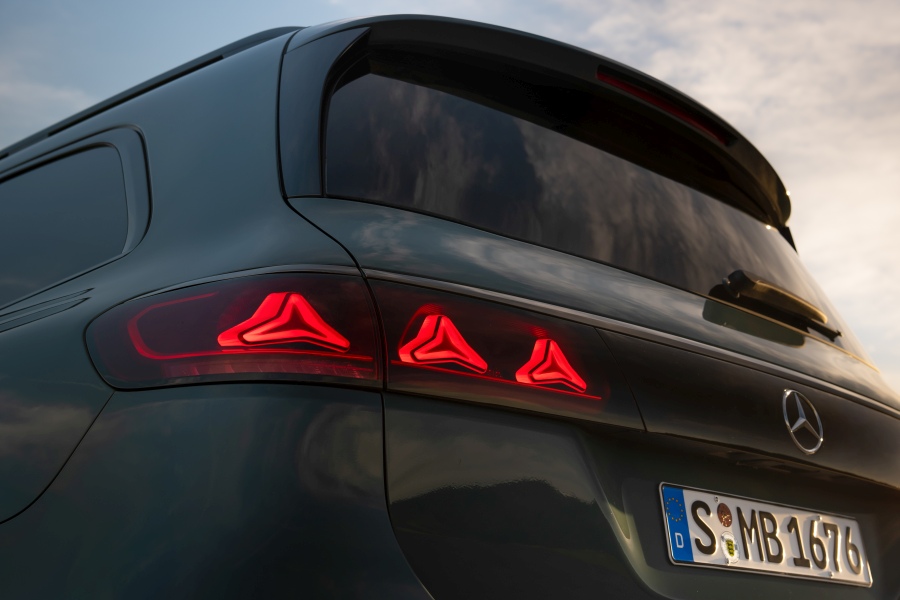
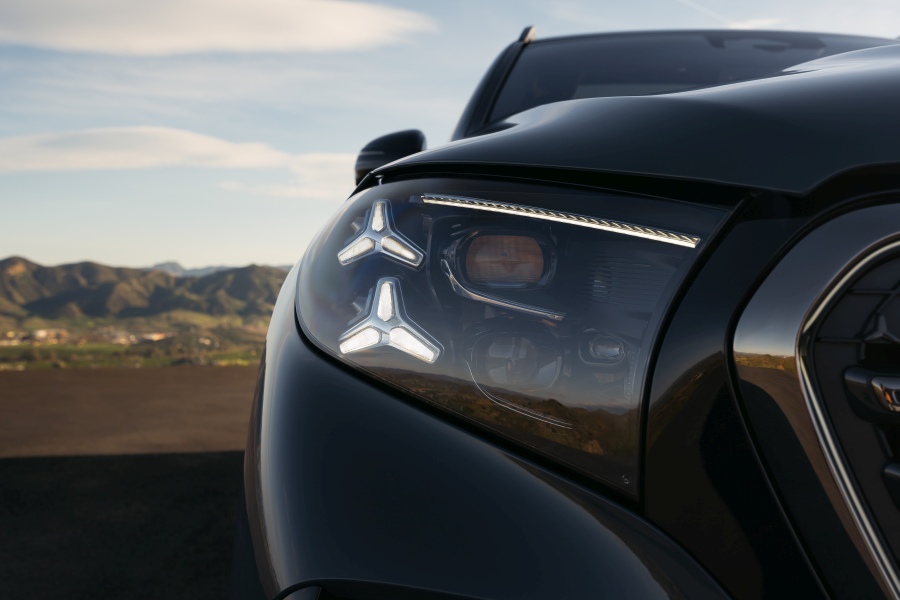
The bumper has been redesigned in the GLE style, and an elegant black panel connects the headlights and grille. The headlights and taillights also adopt a light signature inspired by the Mercedes logo, though their design differs. At the front, there are two stacked light signatures, while the GLE has two horizontal ones; at the rear, there are three light signatures instead of two as on the GLE.
Optionally, Digital Light headlights are available, which are 25% lighter, consume 50% less energy, and increase the high-resolution lighting field by about 40%. The Ultra Range high beam can illuminate up to 600 meters.
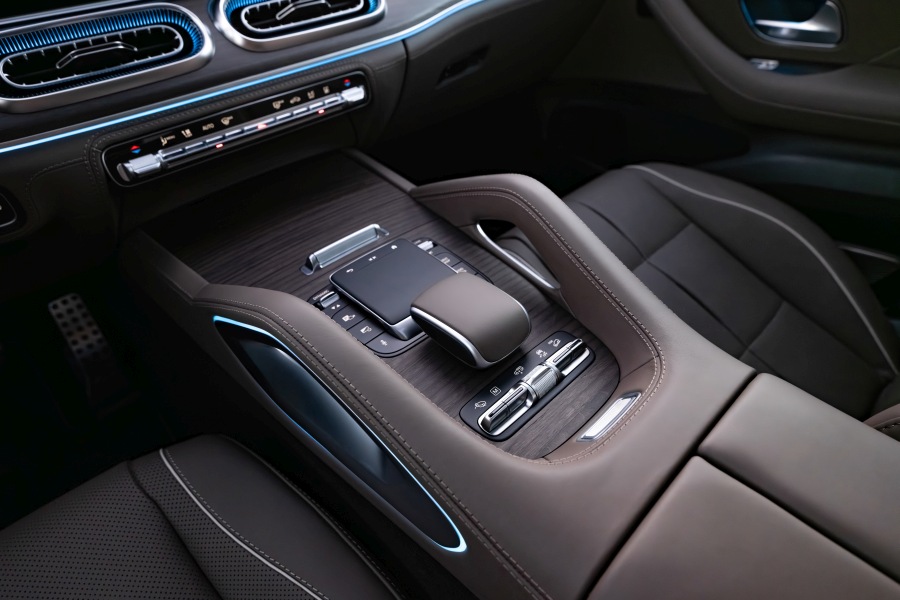
New interior color combinations are available, such as Beech Brown combined with black, offered with both Artico artificial leather and Lugano leather.
The steering wheel replaces the two small, hard-to-use touch surfaces with a switch on the left spoke and a rotary control on the right spoke, both made of galvanized metal.
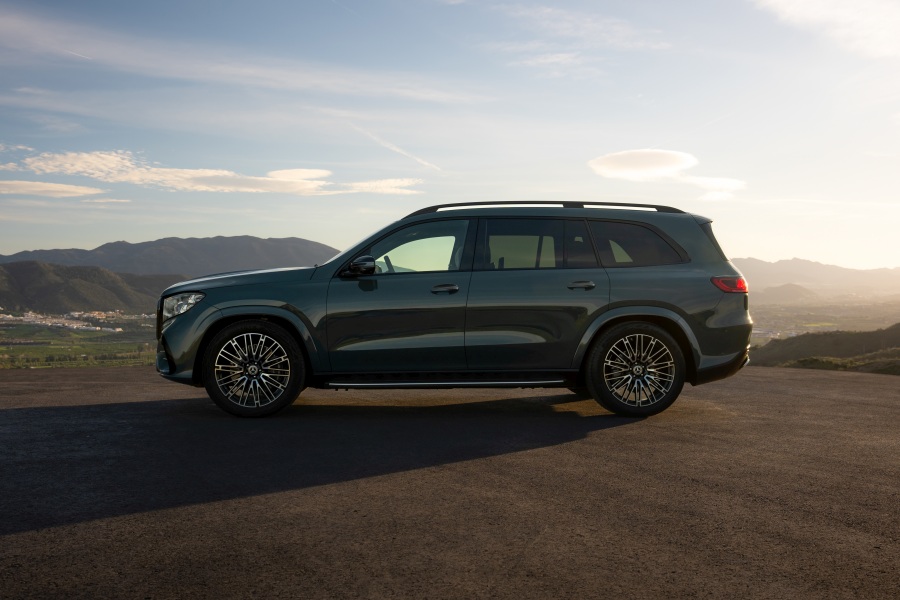
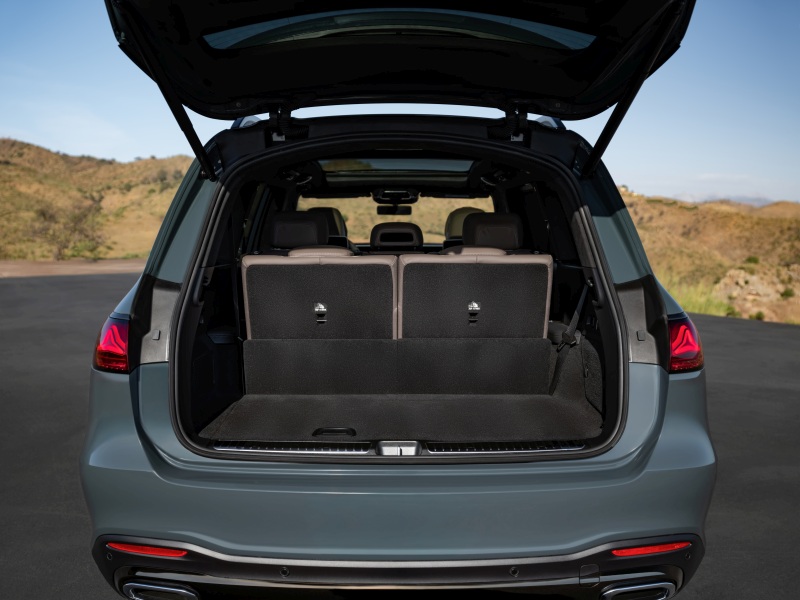
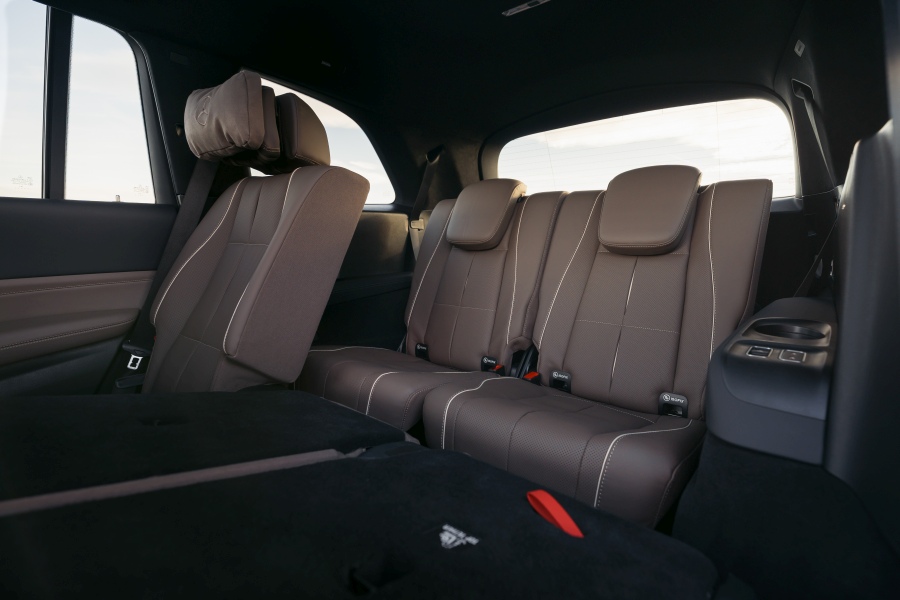
The Mercedes GLS comes standard with seven seats, and the space in the third row is just as generous as in the second row thanks to the vehicle’s imposing dimensions: 5,207 mm in length, 1,956 mm in width, and a wheelbase of 3,135 mm—60 mm longer than the GLE.
All seven seats are electrically adjustable, and Mercedes claims that people up to 1.94 m tall can sit in the third row. Since the body dimensions have not changed at all, we can confirm that there is room for two tall adults in the third row.
Access to the third row is easy thanks to the Easy-Entry system, and the third-row seats can fold flat into the floor, creating a flat loading surface. If the second-row seats are also folded, a massive cargo capacity of 2,400 liters is achieved.
With the Rear Comfort Plus package, the Mercedes GLS offers supreme luxury with multi-contour seats featuring Pro massage, removable MBUX remote controls, Thermotronic automatic climate control, electric sun blinds in both doors, heating for the third row, comfort head restraints, wireless charging for mobile devices, and adaptive lighting.
The Rear Comfort Plus package also includes additional luxury features such as leather grab handles, an extended comfort center armrest with an illuminated storage compartment, and a center console with two cupholders.
Additionally, similar to the Chauffeur package in the S-Class, the rear right passenger in the second row can electrically adjust the front passenger seat to create more legroom.
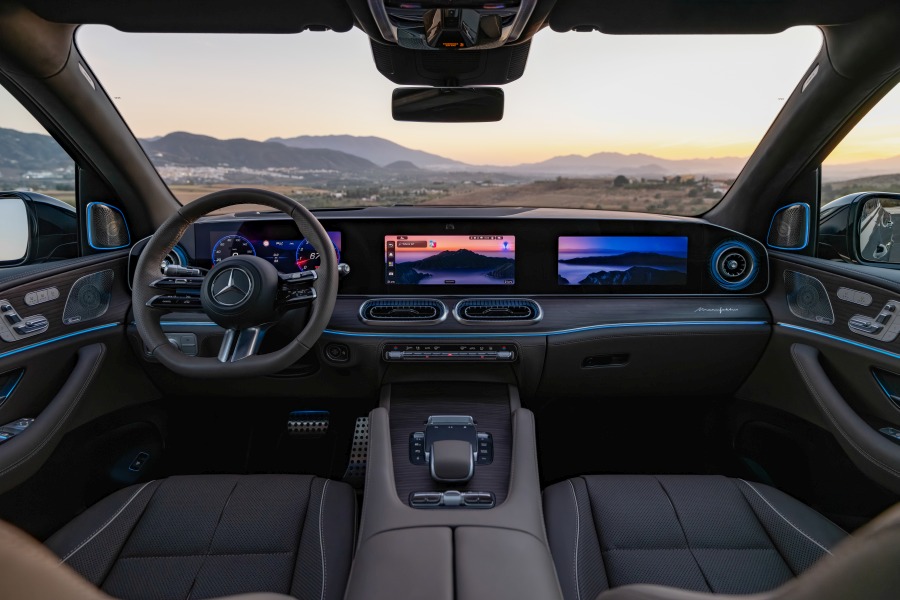
Multimedia system with new MB.OS operating system
The dashboard is completely redesigned, as the facelifted GLE adopts the solution from the CLA, with three 12.3-inch displays grouped under a single glass panel spanning the entire dashboard width. Unlike the CLA, all three displays are standard regardless of version. Optionally, a 3D instrument cluster and an augmented reality head-up display are available, projecting information onto the windshield on a virtual 45.7 cm (18-inch) screen.
The new MB.OS operating system includes Google Maps navigation services and artificial intelligence from Microsoft, Google, and ChatGPT. In Europe and other regions, the front passenger can also watch movies on their display via Disney+ or YouTube.
Optionally, the MBUX high-end rear entertainment system is available, featuring two 11.6-inch (29.5 cm) Full HD displays mounted on the backrests of the front seats.
As with the GLC, the optional MB.Drive Parking Assist 360 is available, combined with a “transparent hood” function that provides a virtual view beneath the front wheels, including their steering angle, using images from the 360° camera system.
Same engine lineup, but no PHEV
Since the Mercedes GLS comes standard with seven seats, there is no space for a 25 kWh battery under the trunk floor, which is why the GLS is not available as a plug-in hybrid. Otherwise, all the new engines from the GLE are available, all featuring 48V mild hybrid systems: the two diesels (GLE 350 d 4Matic and GLE 450 d 4Matic—with the smaller diesel producing 313 PS compared to 286 PS in the GLE), the gasoline GLE 450 4Matic with 381 PS, and the new V8 with a flat-plane crankshaft producing 537 PS.
The diesel engines in the GLS 350 d 4Matic and GLS 450 d 4Matic feature an electrically heated catalyst, allowing the exhaust system to reach optimal temperature more quickly and maintain it under all conditions.
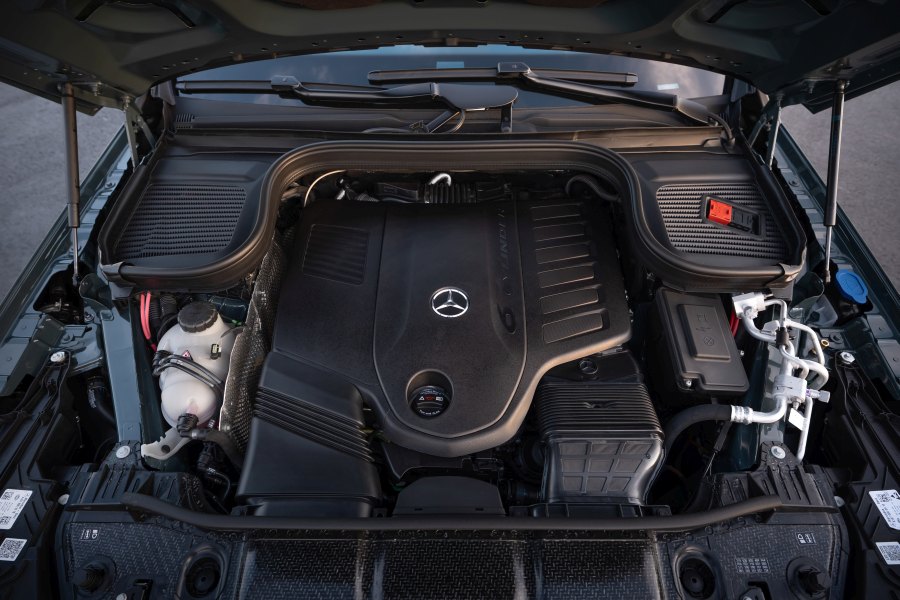
The engine block and cylinder head are now made of aluminum, reducing overall weight and front axle load. The cylinder surfaces are coated with Nanoslide (as in Formula 1), and the pistons, now made of steel instead of aluminum, use a “shaker cooling” technique.
The base gasoline version is the GLS 450 4Matic, powered by the new 3.0-liter inline-six M256 evo engine producing 381 PS and 560 Nm, 12% more than before. It is turbocharged and also features a more powerful electrically driven compressor that activates before the turbocharger spins up.
The top gasoline model is the GLE 580 4Matic, equipped with a new V8 featuring a flat-plane crankshaft, producing 537 PS (+20 PS) and 750 Nm (+20 Nm), plus an additional 23 PS and 205 Nm from the integrated starter-generator in the 9-speed automatic transmission.
For now, Mercedes has not announced a successor to the AMG GLS 63, but according to our information, the company is working on a top version with over 600 PS using the new 4.0-liter V8 with a flat-plane crankshaft. A Maybach GLS version equipped with the same new V8 will also follow.
Unlike the GLE, the Mercedes GLS comes standard with Airmatic air suspension, which uses data stored in the cloud to anticipate road irregularities and adjust accordingly. Optionally, the E-Active Body Control suspension is available. This system operates on a 48V network and uses five multi-core processors and over 20 sensors that analyze driving conditions 1,000 times per second. It can individually control spring and damping forces at each wheel, counteracting roll, pitch, and lift movements.
| Model | GLS 350 d 4Matic | GLS 450 d 4Matic | GLS 450 4Matic | GLS 580 4Matic |
|---|---|---|---|---|
| Engine/no. Of cylinders | L6 | L6 | L6 | V8 |
| Displacement | 2,989 | 2,989 | 2,999 | 3,982 |
| Max. Power/revs (PS/rpm) | 313/3,600-4,400 | 367/4,000 | 381/5,000-6,100 | 537/5,500-6,000 |
| Max. Torque/revs (Nm/rpm) | 650/1,200-3,200 | 750/1,350-2,800 | 560/2,000-4,500 | 750/2,500-4,500 |
| Electric motor | ||||
| Max. Power (PS) | 23 | 23 | 23 | 23 |
| Max. Torque (Nm) | 205 | 205 | 205 | 205 |
| Acceleration 0-100 kph (s) | 6.3 | 5.9 | 5.7 | 4.7 |
| Top speed (kph) | 238 | 250 | 250 | 250 |
| Fuel consumption (l/100 km | 7.8-8.5 | 7.8-8.5 | 9.9-11.9 | 13.1-13.7 |
| Energy consumption (kWh/100 km) | ||||
| CO2 emissions (g/km) | 205-223 | 205-223 | 225-248 | 297-310 |