
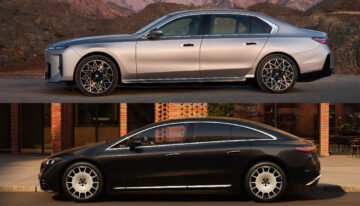
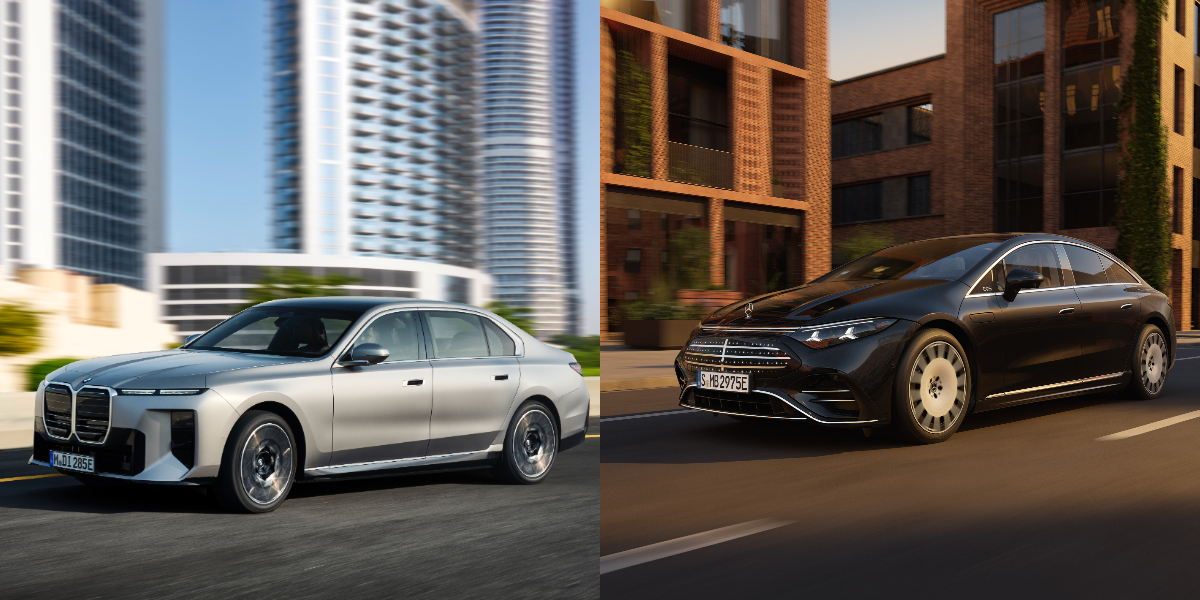
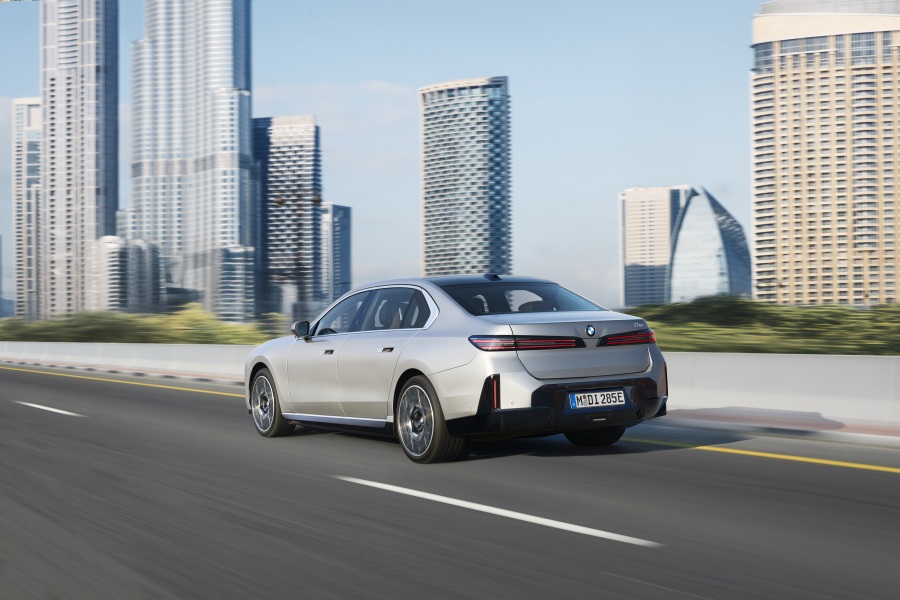
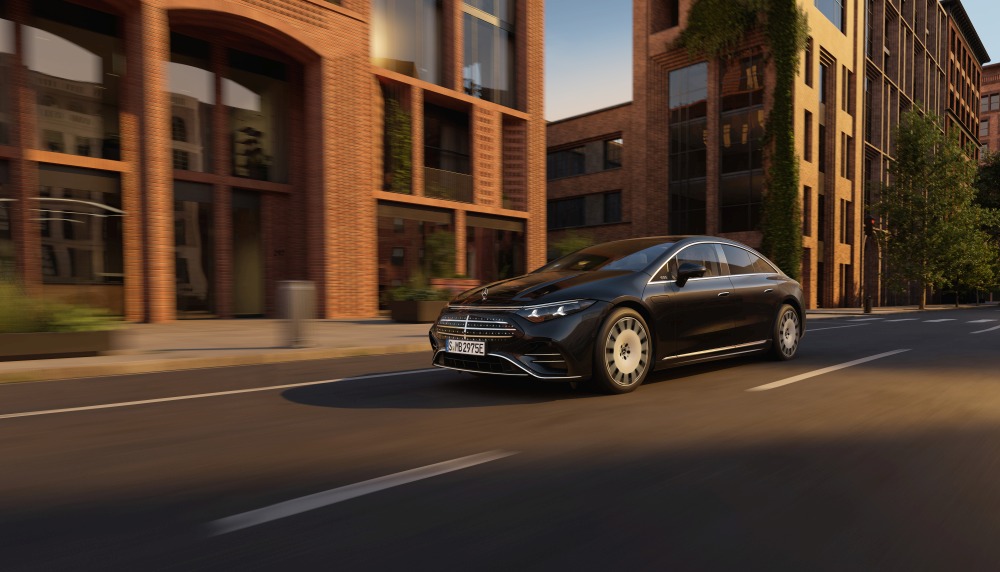
BMW has carried out a major facelift across the entire 7 Series range, including the electric versions built on the same conventional CLAR platform as the internal combustion and PHEV models. Meanwhile, Mercedes has also introduced a significant facelift for the Mercedes EQS. Does Mercedes still have any advantage given that it is built on a dedicated electric platform, EVA II? Here is our analysis.
Different architectures
The Mercedes EQS is built on the EVA II platform, and with the facelift Mercedes made a major change by switching to an 800V architecture instead of the previous 400V.
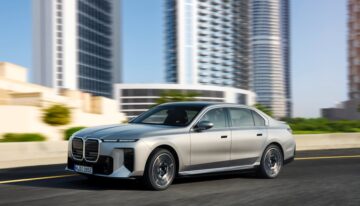
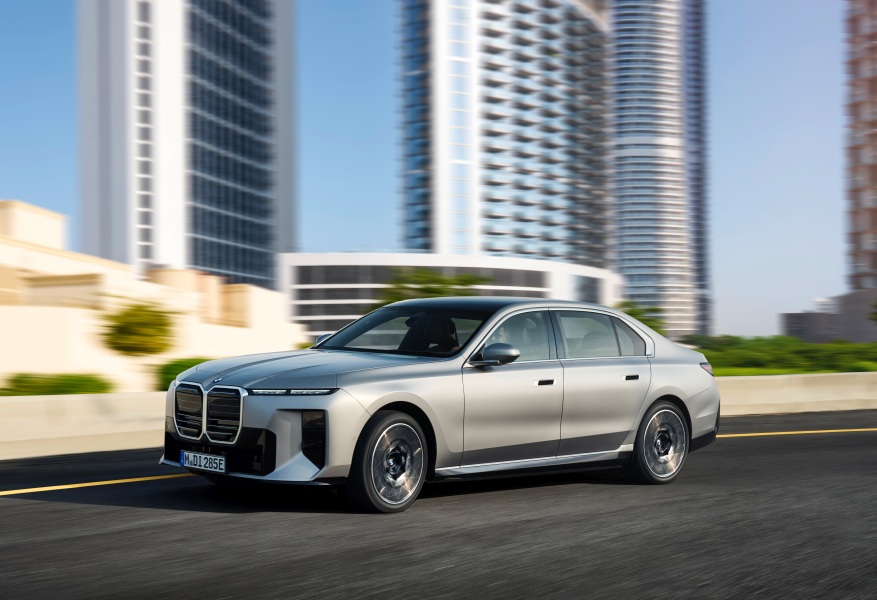
The BMW i7 continues to use the conventional CLAR architecture, also used for internal combustion and PHEV versions, but BMW has made important updates to the electric variants—while still retaining the 400V technology from before the facelift.
Motors, batteries, range, charging
BMW has replaced prismatic battery cells with cylindrical cells similar to those used in the Neue Klasse architecture. As a result, the BMW i7 now features new cylindrical cells with a diameter of 46 mm and a height of 95 mm, similar to those used in the i3 and iX3 (the 120 mm cylindrical cells are reserved for the iX5). However, it still does not adopt 800V technology like Mercedes.
Even so, despite keeping the 400V architecture, BMW has significantly increased charging power from 195 kW to 250 kW. The new 112.5 kWh battery can charge from 10% to 80% in 28 minutes.
Mercedes has also introduced new batteries: a 112 kWh net battery for the base EQS 400 version, while other versions receive a 122 kWh net battery. Thanks to the 800V technology, the Mercedes EQS offers clearly superior charging power compared to the BMW i7. The base EQS 400 can charge at up to 330 kW, while other versions reach up to 350 kW. Mercedes does not specify a 10–80% charging time but states that just 10 minutes of charging is enough for 320 km of range.
Unlike the GLC EQ and CLA EQ, the facelifted Mercedes EQS can also charge at 400V stations without needing an adapter. When charging at a 400V station, an intelligent control system virtually splits the battery into two parts, each charged at 400V and up to 175 kW. This system is similar to that used by the Audi Q6 e-tron and Porsche Macan.
Mercedes has redesigned its permanently excited synchronous motors, making them more compact and efficient. Borrowing from the GLC EQ and C-Class EQ, Mercedes also introduces a two-speed transmission for the rear motor.
In dual-motor versions, the front motor can be disengaged when extra power or traction is not needed, reducing consumption. Additionally, Mercedes has increased energy recuperation power, which now reaches up to 385 kW. The BMW i7 benefits from a new silicon carbide inverter and, like the iX3, now uses externally excited motors.
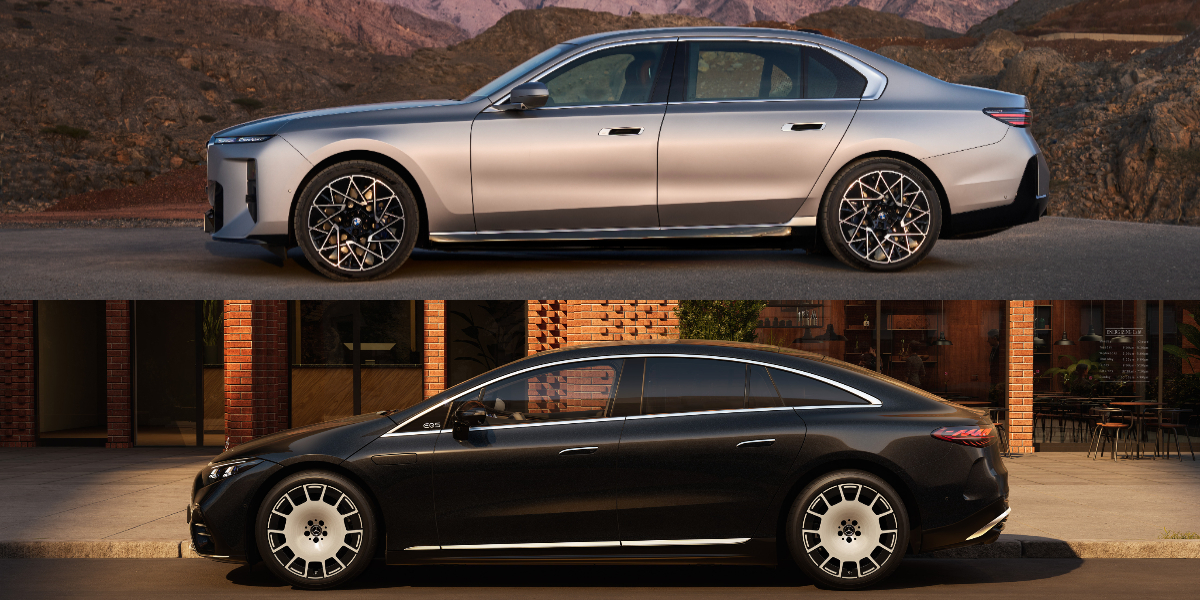
The BMW i7 is available in three electric versions, all with all-wheel drive, while Mercedes offers two rear-wheel-drive versions and two all-wheel-drive versions.
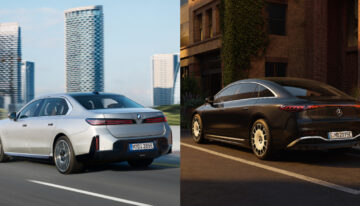
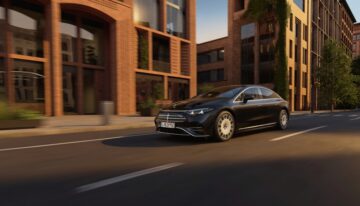
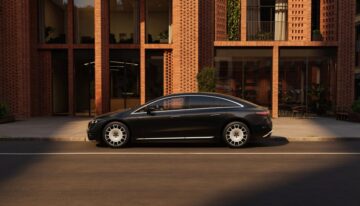
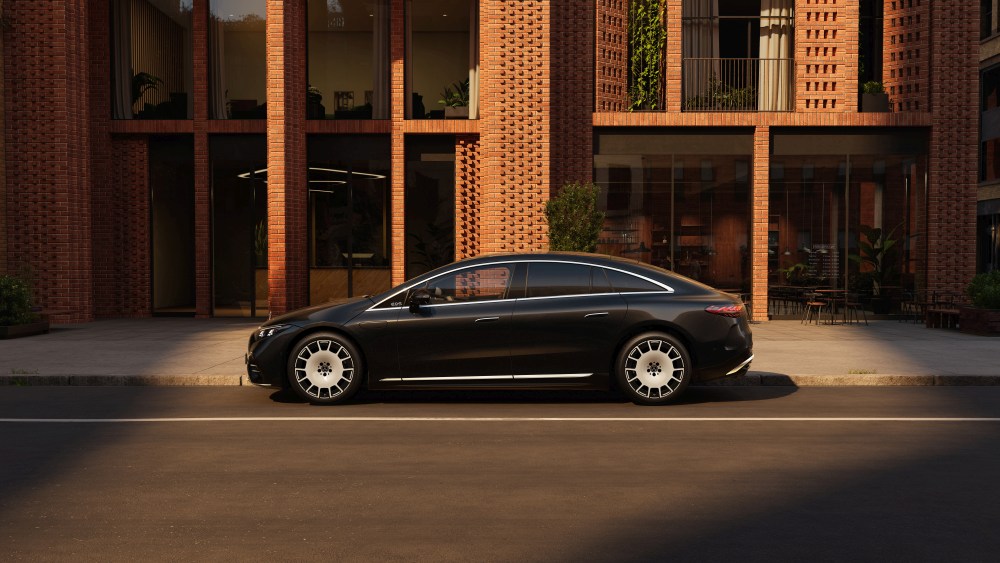
Thanks to its more aerodynamic shape (Mercedes has a Cx of 0.20 compared with 0.26 for BMW) which contribute to a much lower energy consumption, and, except for the base version, a battery that is 10 kWh larger (net), the Mercedes EQS has a greater range in all versions. The advantage in favor of Mercedes is impressive, at up to 200 km.
Here are the BMW i7 versions:
- BMW i7 50 xDrive: two motors, 455 HP / 660 Nm, 112.5 kWh net battery, WLTP 728 km, WLTP consumption 18.1–21.8 kWh/100 km
- BMW i7 60 xDrive: two motors, 544 HP / 745 Nm, 112.5 kWh net battery, WLTP 727 km, WLTP consumption 18.2–21.9 kWh/100 km
- BMW i7 M70 xDrive: two motors, 680 HP / 1,100 Nm, 112.5 kWh net battery, WLTP 686 km, WLTP consumption 19.7–22.9 kWh/100 km
The Mercedes EQS facelift is available as:
- Mercedes EQS 400: single motor, 367 HP / 505 Nm, 112 kWh net battery, WLTP range 817 km, WLTP consumption 15.7–19.3 kWh/100 km
- Mercedes EQS 450+: single motor, 408 HP / 505 Nm, 122 kWh net battery, WLTP range 926 km, WLTP consumption 15.4–19.3 kWh/100 km
- Mercedes EQS 500 4MATIC: two motors, 476 HP / 750 Nm, 122 kWh net battery, WLTP range 876 km, WLTP consumption 16.2–19.5 kWh/100 km
- Mercedes EQS 580 4MATIC: two motors, 585 HP / 800 Nm, 122 kWh net battery, WLTP range 876 km, WLTP consumption 16.2–19.5 kWh/100 km
Dimensions and space
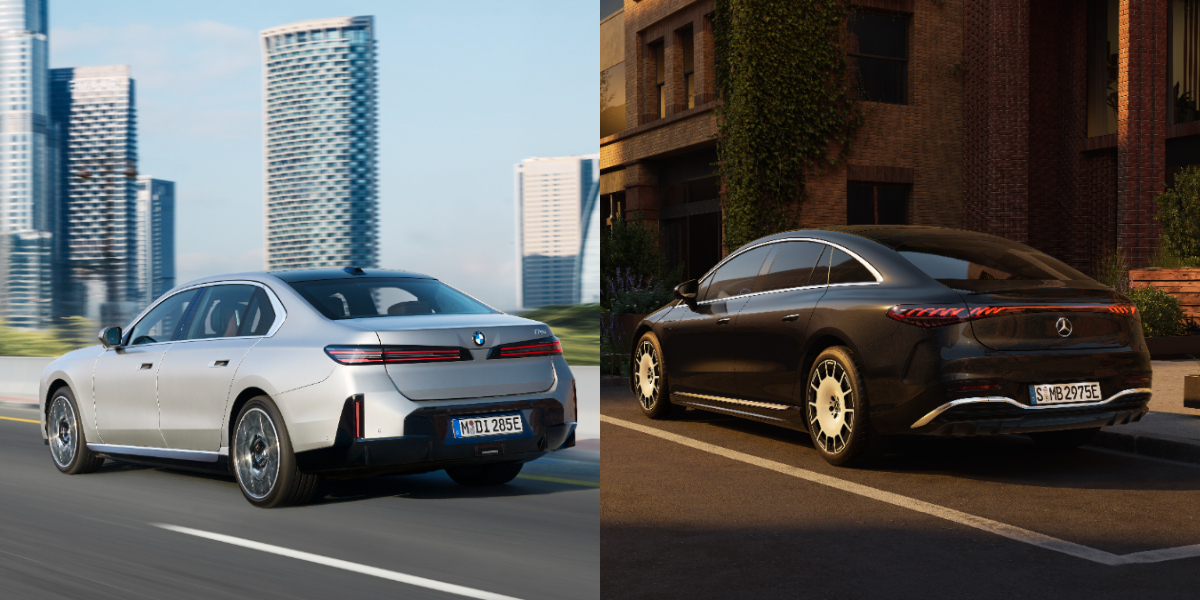
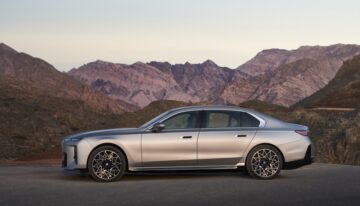
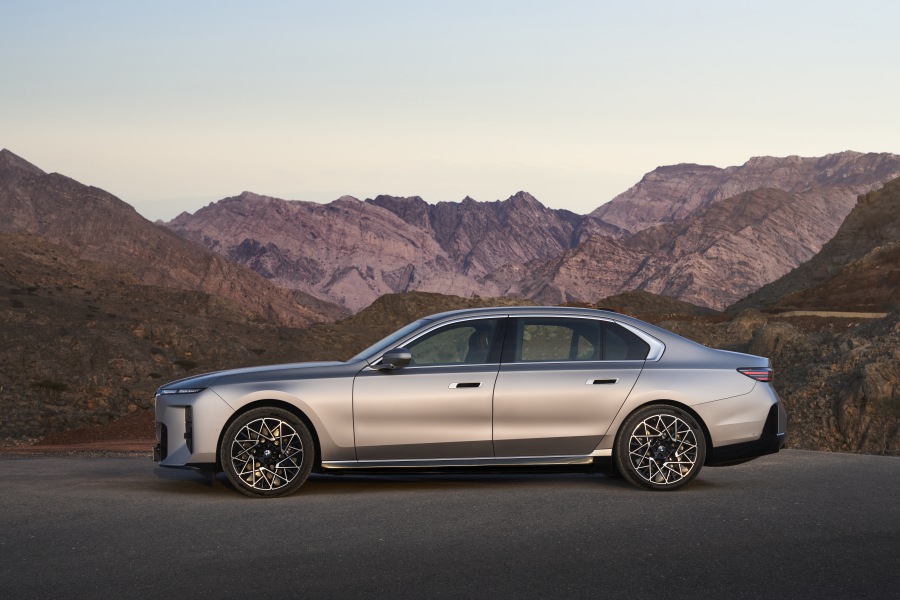
The BMW i7 is larger in every direction. With a length of 5,391 mm, a width of 1,950 mm, and a height of 1,544 mm, the BMW i7 is 166 mm longer, 24 mm wider, and 26 mm taller (Mercedes EQS l/w/h 5,225 / 1,926 / 1,518 mm), while its wheelbase of 3,215 mm is 5 mm longer.
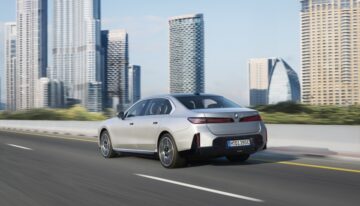
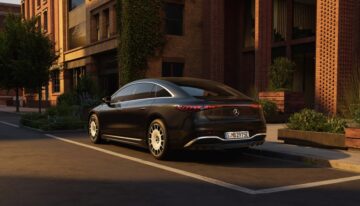
The BMW i7 has a three-box silhouette and a 500-liter trunk, while the Mercedes EQS has a hatchback and a larger 610-liter trunk. Neither model has a frunk, and in the Mercedes EQS the front hood can only be opened at a service center.
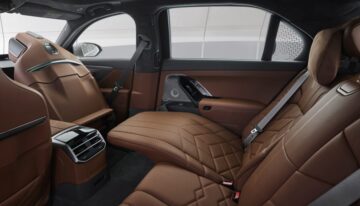
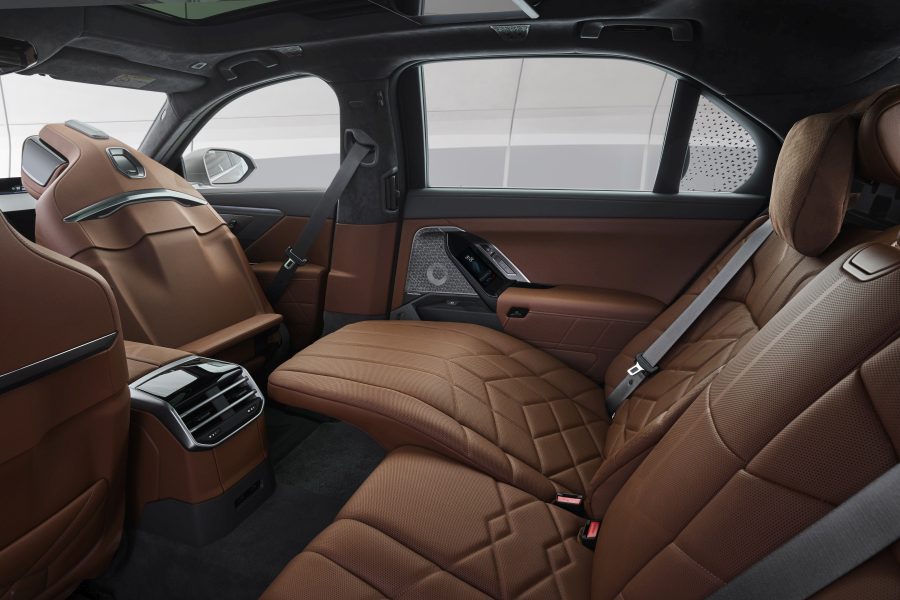
From previous experiences with the pre-facelift versions of the two models, access is easier in the BMW thanks to the wider rear door opening, and rear headroom is slightly better since the Mercedes roof slopes more sharply toward the back.
Interior and ergonomics
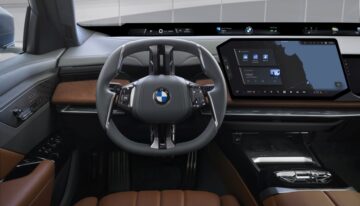
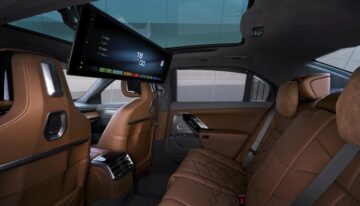
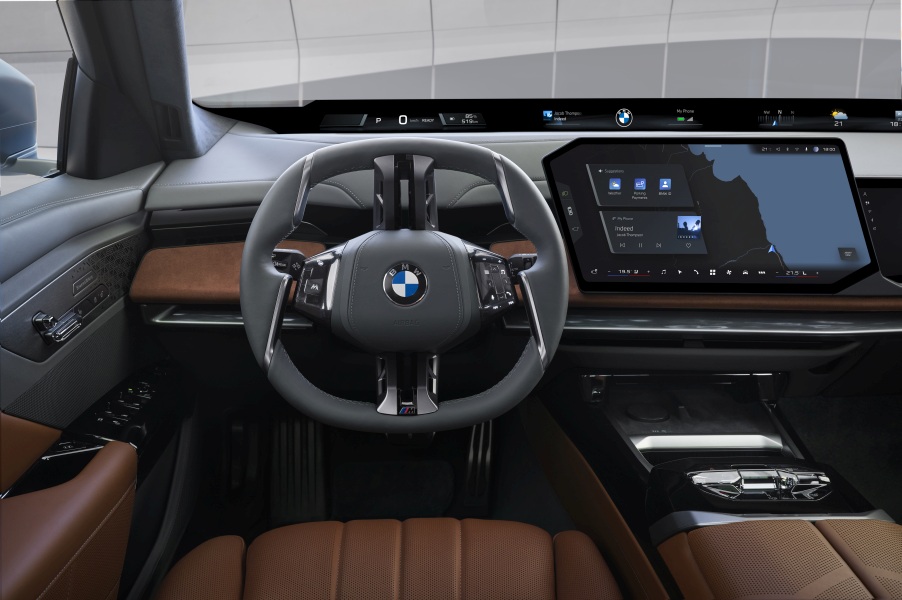
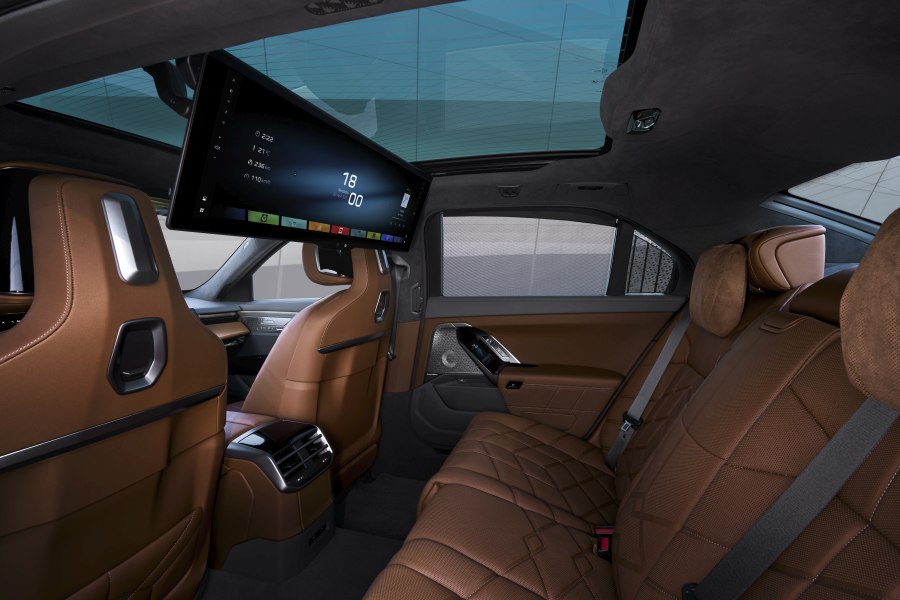
BMW has made a major change to the interior by adopting the new ergonomic concept from the iX3, known as Panoramic iDrive, featuring the Panoramic Vision display that stretches across the entire width of the dashboard at the base of the windshield, a new 17.9-inch central display positioned very close to the steering wheel, and—premiering for BMW—a 14.6-inch passenger display.
As in the iX3, the multimedia system uses the new BMW OS X operating system, but BMW still relies on Here maps rather than Google services. However, the BMW Intelligent Personal Assistant now includes Amazon’s Alexa artificial intelligence.
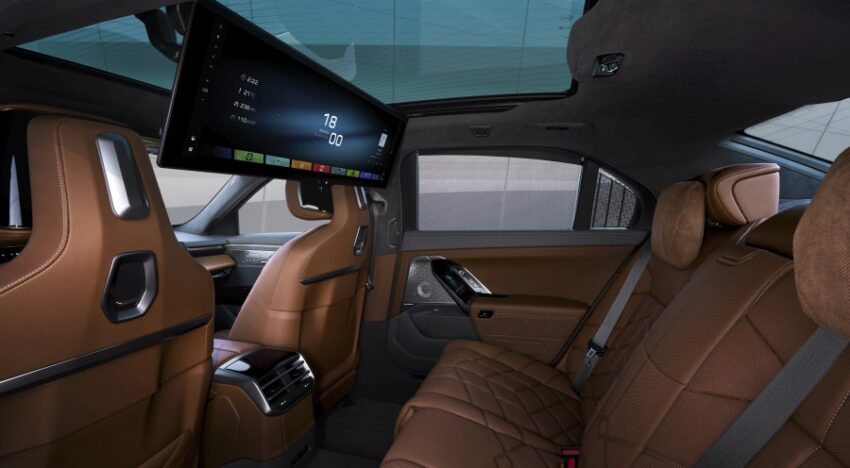
The famous 31.3-inch 8K TV screen that folds down from the roof is still offered as an option, now also featuring a video camera for online conferencing.
In terms of sound, the Bowers & Wilkins audio system with 18 speakers and 665 W is standard, while an optional new system offers 36 speakers, 1,965 W, and 4D sound.
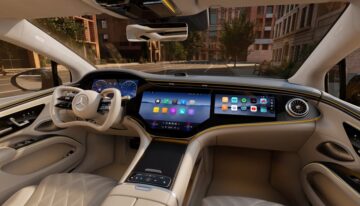
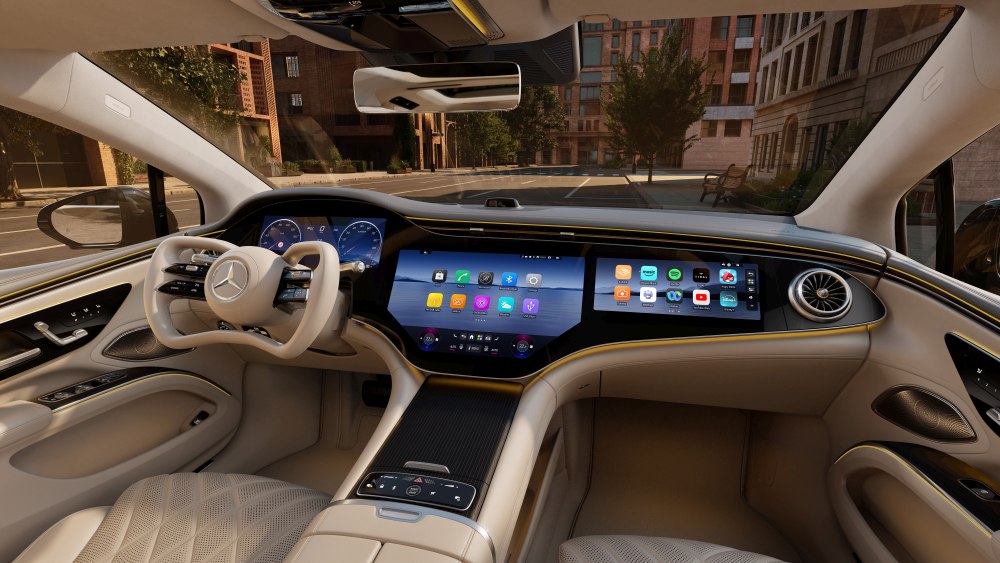
In the Mercedes EQS, the displays remain unchanged, consisting of three screens grouped under a single glass panel, but the software architecture is completely new. The new MB.OS operating system is based on Google services, including intelligent navigation with charging route planning, and uses artificial intelligence from Google and Microsoft.
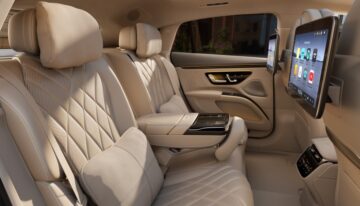
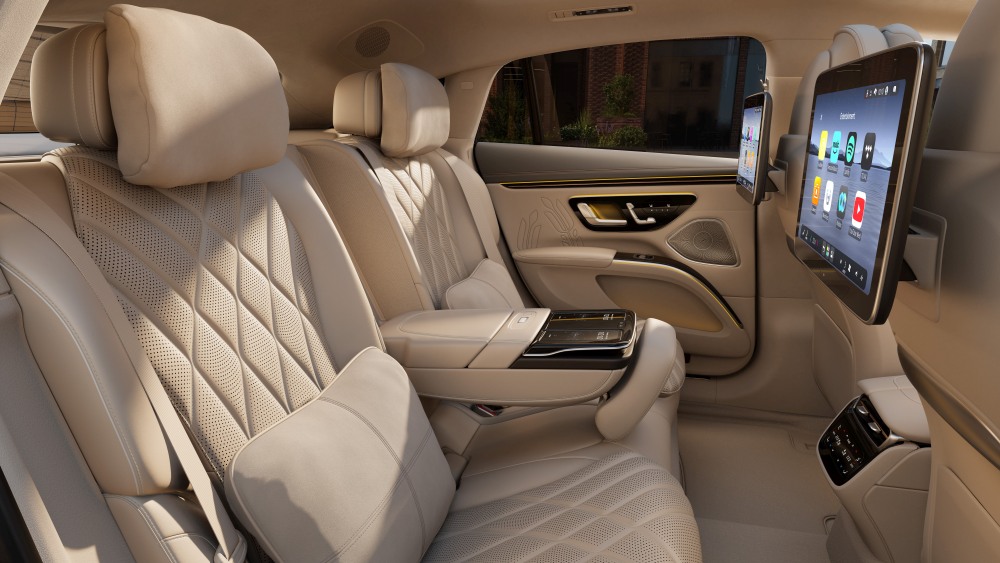
The Mercedes EQS also offers a rear entertainment system, though not as spectacular as BMW’s, with two 13.1-inch displays mounted on the back of the front seats (€4,510), enabling video streaming, radio, audio, web browsing, app downloads, and travel route information.
The Burmester 3D Surround audio system with 15 speakers and 710 W is available only as part of the expensive Advanced Plus package (€9,211).
The Mercedes EQS is available with new materials, including open-pore wood trim and expanded Nappa leather options. For the first time in a Mercedes, the EQS can be configured with a leather-free interior.
BMW continues to offer, in addition to leather upholstery, an optional cashmere upholstery, which is very elegant.
Drive train and Comfort
Both models feature adaptive air suspension and all-wheel steering. In the Mercedes, all-wheel steering with a steering angle of 4.5 degrees is standard, while the 10-degree steering angle version and the E-Active Body Control suspension are optional.
Mercedes also optionally offers an intelligent adaptive air suspension that reacts based on information stored in the cloud. Also, Mercedes will optionally be available with steer-by-wire steering, a first for Mercedes as well as for German brands.
Mercedes can be configured with wheels ranging from 19 to 22 inches, while the new BMW i7 comes with wheels from 20 to 22 inches.
Prices
Due to weak sales, Mercedes has introduced the new base version EQS 400 to offer a model below €100,000. The EQS 400 starts at €94,402. Meanwhile, the EQS 450+ is slightly more expensive than before the facelift, now costing €108,635 compared to €106,264 previously.
The two all-wheel-drive versions, EQS 500 4Matic and EQS 580 4Matic, are significantly more expensive, priced at €123,284 and €134,731 respectively.
Since it only comes in all-wheel-drive versions, the BMW i7 starts at higher prices. The BMW i7 xDrive50 with two motors, 455 hp and 660 Nm, starts at €121,400, although it is €2,000 cheaper than the EQS 500 4Matic with 449 hp and 700 Nm.
The most powerful i7, the i7 M70 xDrive—essentially an M Performance version with no direct Mercedes equivalent—starts at €182,400.
The Mercedes EQS facelift has been available to order since April 14, 2026, with production starting in April 2026 at the Sindelfingen plant and deliveries expected in autumn. Meanwhile, orders for the BMW i7 open on May 28, 2026, with deliveries beginning in July 2026. The i7 will continue to be produced alongside other versions at BMW’s Dingolfing plant.
Verdict
With its 800V platform, the Mercedes EQS has a significantly higher charging power—350 kW compared to 250 kW for the BMW i7 (which is the maximum possible with BMW’s 400V technology). It also offers a noticeably longer range thanks to its superior drag coefficient and larger battery. On the other hand, BMW provides higher interior quality and better rear-seat access. For equivalent power versions, the prices are similar.
Model Mercedes EQS 400 Mercedes EQS 450+ Mercedes EQS 500 4Matic Mercedes EQS 580 4Matic BMW i7 50 xDrive BMW i7 60 xDrive BMW i7 M70 xDrive Engine 1, electric 1, electric 2, electric 2, electric 2, electric 2, electric 2, electric Max. output HP(kW) 270 (367) 300 (408) 350 (476) 430 (585) 334 (455) 400 (544) 500 (680) Max. torque (Nm) 505 505 750 800 660 745 1,100 L x w x h (mm) 5,225 x 1,926 x 1,510 5,395 x 1,950 x 1,550 Wheelbase (mm) 3,210 3,215 Boot volume (l) 610 500 Kerbweight (kg) 2,550 2,550 2,660 2,660 2,770 2,770 2,845 Battery capacity net (kWh) 112 122 122 122 112.5 112.5 112.5 Charge power DC (kW) 330 350 350 350 250 250 250 Charge power AC (kW) 11/22 (option) 11/22 (option) 11/22 (option) 11/22 (option) 11/22 (option) 11/22 (option) 11/22 (option) Energy consumption (kWh/100 km) 15.7-19.3 15.4-19.3 16.2-19.5 16.2-19.5 18.1–21.8 18.2–21.9 19.7–22.9 WLTP range (km) 817 926 876 876 728 727 686 Acc 0-100 km/h (s) 6.2 5.9 4.5 4.1 5.5 4.8 3.8 Top speed (km/h) 210 210 210 210 210 240 250 price (euro with VAT) 94,403 108,635 123,284 134,732 121,400 na 182,400 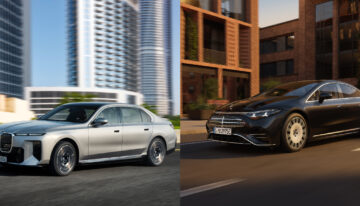


It’s interesting how much both models share in terms of platform; the software and range seem to be where the biggest differences lie.
in this case Mercedes has a clear advantage and proves that an electric dedicated platform is a better solution.The software is a big improvement for both but you are right, they are very different. Mercedes use Google services meanwhile BMW navigation is still based on here maps.