First Static Comparison: Mercedes GLE Facelift vs the New BMW X5 2027

,
1 0

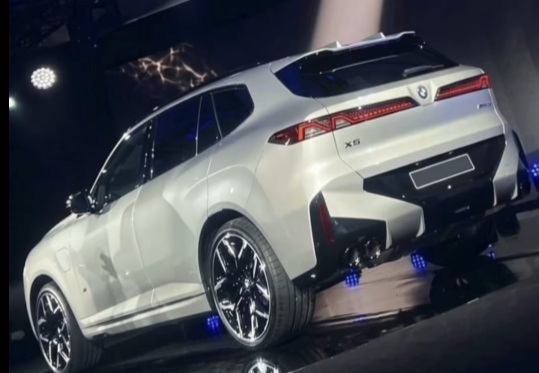
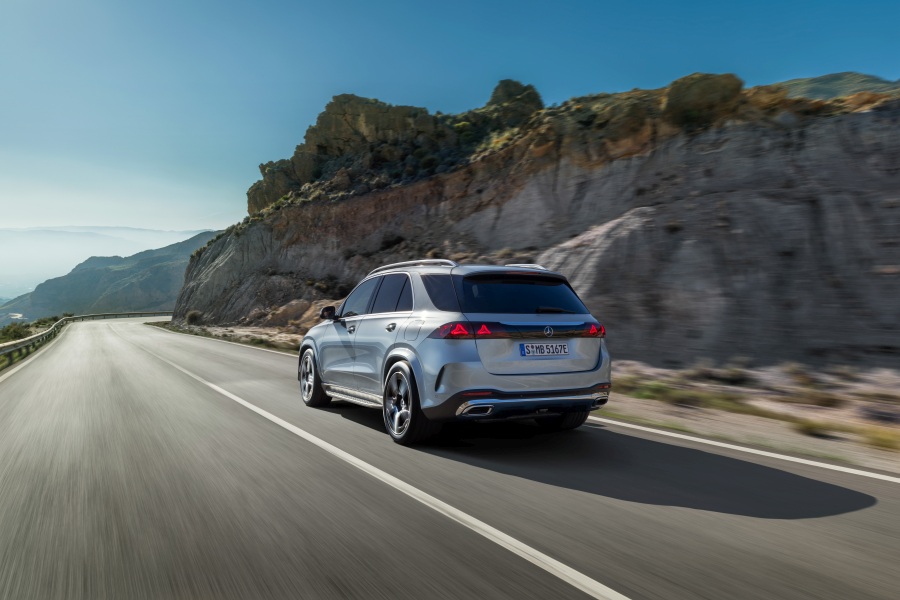
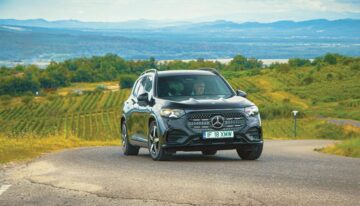
Although the official unveiling of the new-generation BMW X5 will only take place on June 30, 2026, the first official photos have already leaked online, along with official information from BMW’s U.S. website. This has allowed for an initial static comparison between the Mercedes GLE facelift and the new BMW X5, codenamed G65.

Photo: Mercedes-Benz, capture video tiktok tomadrives

First of all, the new BMW X5 will compete with both the Mercedes GLE facelift and the Mercedes EQE SUV, as it is the first car in the world to be offered with five types of powertrains on the same platform: mild-hybrid gasoline, mild-hybrid diesel, plug-in hybrid, fully electric, and hydrogen fuel cell.

The fifth-generation BMW X5 continues to be built on the CLAR platform, enhanced with Neue Klasse technologies such as the sixth-generation electric drivetrain featuring new electric motors and cylindrical battery cells, as well as the Panoramic iDrive dashboard with a display positioned at the base of the windshield, spanning the entire width of the dashboard.

By comparison, the Mercedes GLE facelift uses the updated MRA II platform, while the EQE SUV is based on the EVA II electric architecture, which Mercedes plans to phase out in the medium term.

Engines and versions

Mercedes has understood that in this segment customers do not want four-cylinder engines and has completely dropped them with the facelift. As a result, the Mercedes GLE range now consists only of six- and eight-cylinder versions.

Two diesel and two gasoline versions are available, all featuring a 48V mild-hybrid system with a 23 hp / 205 Nm electric motor integrated into the transmission:

  • GLE 350 d 4Matic: 3.0-liter inline-six turbodiesel, 286 hp / 650 Nm
  • GLE 450 d 4Matic: 3.0-liter inline-six turbodiesel, 367 hp / 750 Nm
  • GLE 450 4Matic: 3.0-liter inline-six gasoline engine with turbo and electric compressor, 381 hp / 560 Nm
  • GLE 580 4Matic: 4.0-liter V8 twin-turbo gasoline engine with flat-plane crankshaft, 537 hp / 750 Nm

There is also a plug-in hybrid version that combines a 3.0-liter inline-six turbo engine (326 hp / 540 Nm) with an electric motor (184 hp / 480 Nm), for a total output of 455 hp.

By comparison, the BMW X5 comes with one diesel, one gasoline engine, and two plug-in hybrid versions:
X5 40 xDrive: 3.0-liter turbo inline-six gasoline engine (revised B58 family), producing 394 hp and 540 Nm, plus a mild-hybrid system with a 17 hp / 200 Nm electric motor integrated into the transmission

  • X5 40d xDrive: 3.0-liter inline-six turbodiesel producing around 300 hp and 670 Nm, also with a 48V mild-hybrid system (17 hp / 200 Nm electric motor)

The two plug-in hybrid versions are:

  • X5 50e xDrive: 489 hp
  • X5 M60e xDrive: 612 hp

    According to unofficial sources, the BMW X5 will also have a V8 engine version in addition to the top M model. BMW has already announced that it will reintroduce the 4.4-liter twin-turbo V8 engine on the BMW 7 Series facelift in certain markets starting in 2027.

    The Mercedes EQE SUV in all its versions comes with a 96 kWh net battery in the EQE 500 4Matic, giving it a maximum range of up to 588 km.

    The new BMW iX5 is the first BMW model to feature the new cylindrical battery cells with a height of 120 mm, while the BMW 7 Series and BMW iX3 use cylindrical cells with a height of 95 mm (the cell diameter is the same in both cases, 46 mm). As a result, the new BMW iX5 will have a 140 kWh battery, providing a range of over 800 km.

    In addition, starting in 2028, the BMW X5 will also have a hydrogen fuel cell version with two motors and a range of 750 km. The BMW iX5 Hydrogen has hydrogen tanks placed in a casing where the battery is located in the electric model, a buffer battery in the trunk, and two electric motors. Thanks to the third-generation, more compact fuel cell, it was possible to install a second motor at the front. The hydrogen fuel cell version will offer a range of 750 km and will be lighter than the electric model.

    Dimensions and Size

    The new BMW X5 will be slightly larger than the current generation. Its length will increase by about 6 cm, height will decrease by 1.5 cm, while the width will remain unchanged at 2 meters. As a result, the new X5 will measure დაახლოებით 5 meters in length, 2 meters in width, and 1.75 meters in height.

    For comparison, the Mercedes GLE measures 4.92 m in length, 2.01 m in width, and 1.80 m in height—making it 8 cm shorter, 1 cm wider, and 5 cm taller.

    The wheelbase of the BMW X5 will increase by 60 mm to 3,035 mm, which is 40 mm longer than that of the Mercedes GLE facelift, which measures 2,995 mm.

    The X5’s trunk capacity will remain unchanged at 655 liters and can expand to 1,850 liters with the rear seats folded down. By comparison, the Mercedes GLE facelift offers a luggage capacity between 630 and 2,055 liters.

    The new BMW X5 will also have increased ground clearance of 226 mm, which is 12 mm more than before. Mercedes, however, does not specify the ground clearance for the GLE facelift.

    Multimedia Systems

    The BMW X5 will use the new ergonomic concept introduced on the iX3 and i3, called Panoramic Drive. This includes a display stretching across the full width of the dashboard at the base of the windshield, a 17.9-inch hexagonal display positioned close to the steering wheel, an optional head-up display, and a new steering wheel with two haptic surfaces that will also appear in future BMW models.

    Mercedes stays true to a wide digital panel across the dashboard, grouping three displays: a 10.3-inch instrument cluster, a 14-inch multimedia screen, and a 14-inch passenger display (available from the Advanced Plus trim level). Optionally, a continuous display spanning the entire dashboard with a diagonal of 99.1 cm is available.

    Mercedes has removed the two small touch surfaces on the steering wheel, replacing them with a switch and a rotary knob for easier operation.

    BMW’s infotainment system runs on the new BMW X operating system, using BMW Maps and offering access to external apps such as Spotify, Disney+, YouTube, Zoom for video conferencing, and Air Console games.

    Mercedes, meanwhile, uses its own MB.OS operating system but integrates Google Maps for navigation and AI support from Google, ChatGPT, and Microsoft. Like BMW, it also offers over 40 external apps, including Spotify and Disney.

    Production and Availability

    Production of the new BMW X5 (G65) will begin in August 2026 at the Spartanburg plant in the USA and, according to current plans, will continue until July 2035. Deliveries to customers are expected by the end of 2026 or early 2027 at the latest.

    Production of the Mercedes GLE facelift (V167) will start in June 2026 at the Mercedes plant in Tuscaloosa, Alabama, USA, with deliveries to customers beginning in autumn 2026.

    As for the Mercedes EQE SUV, some rumors suggest it may be discontinued at the end of 2026 without a direct successor.

Shoot A Reply

Your email address will not be published.