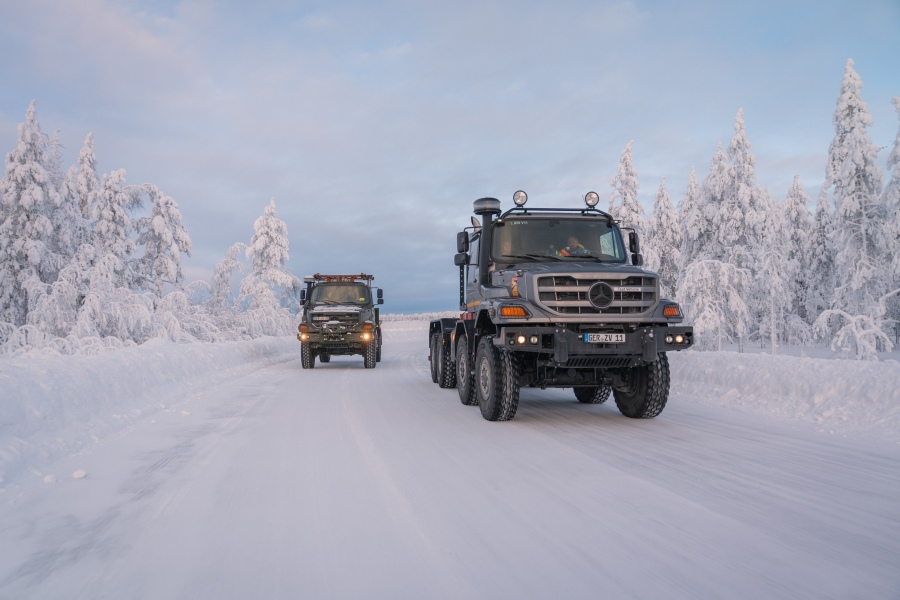
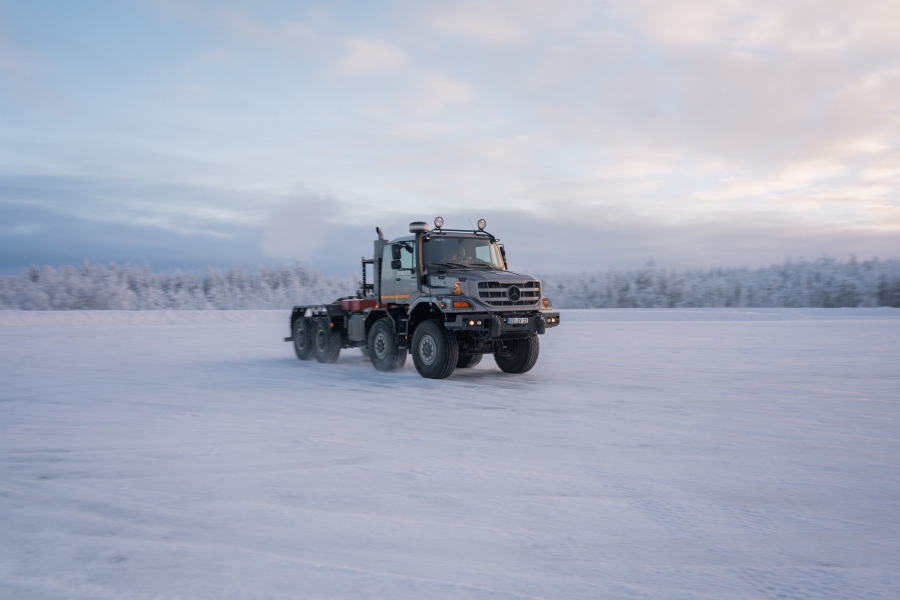
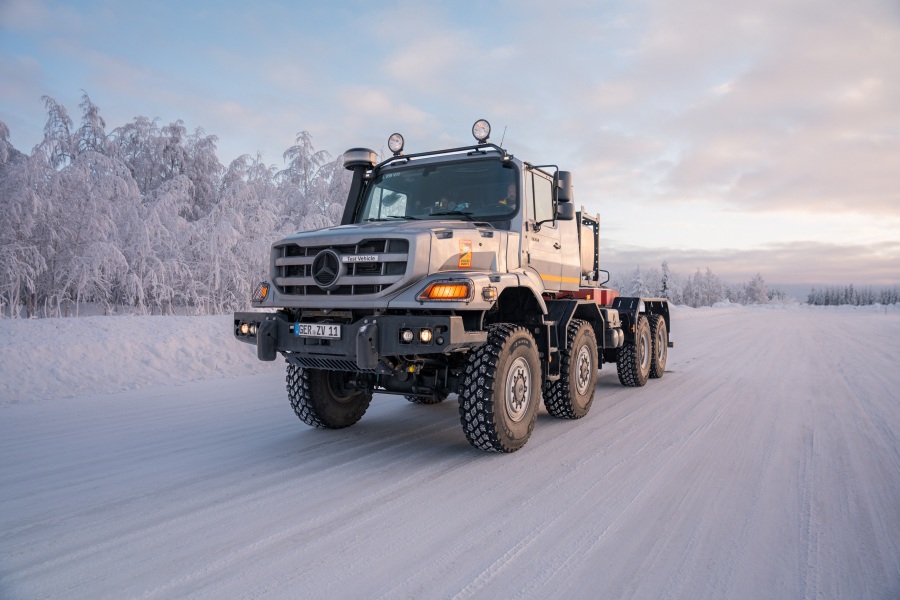
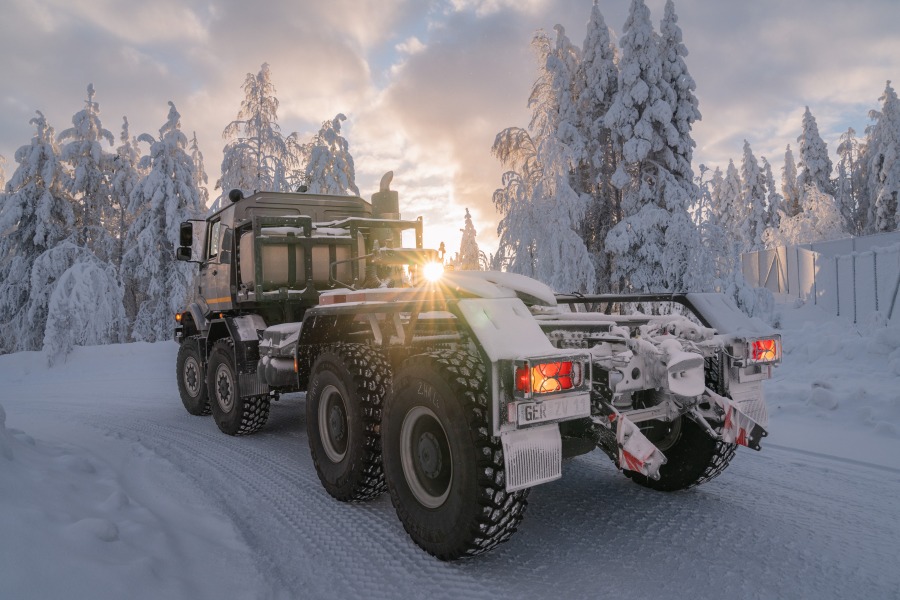
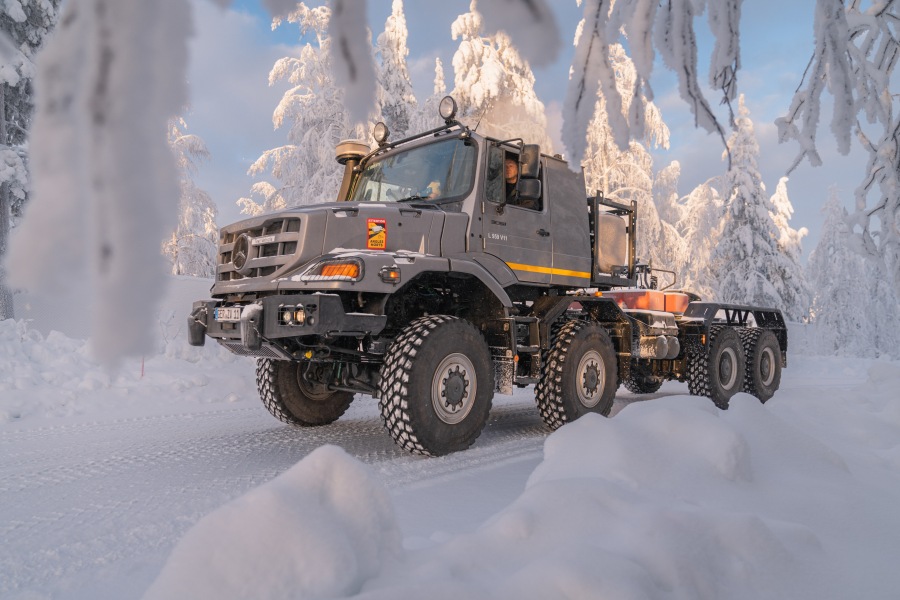
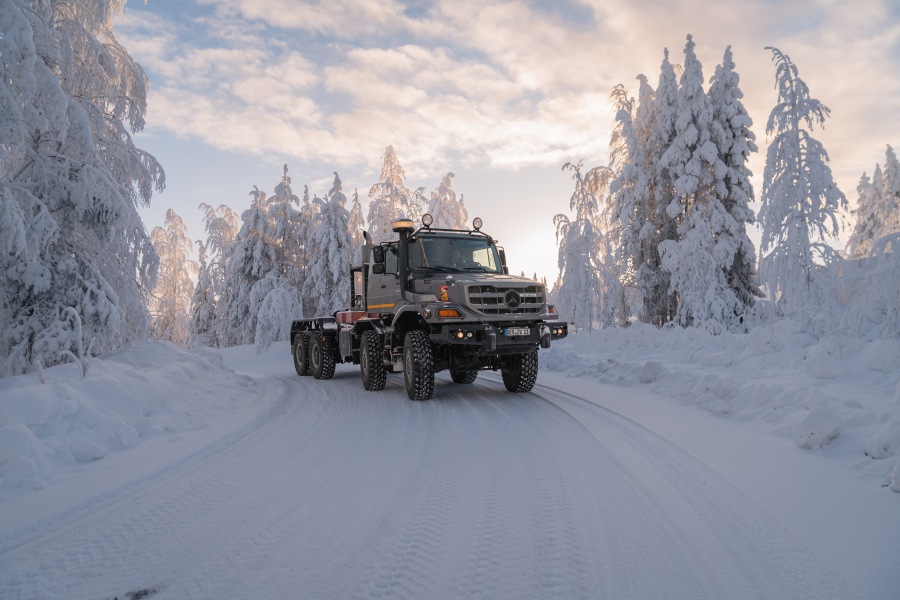
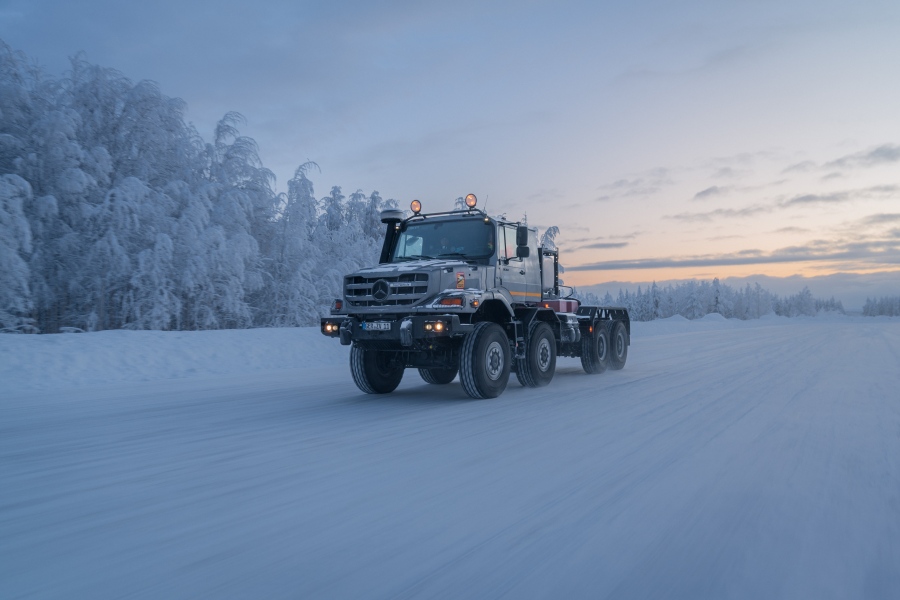
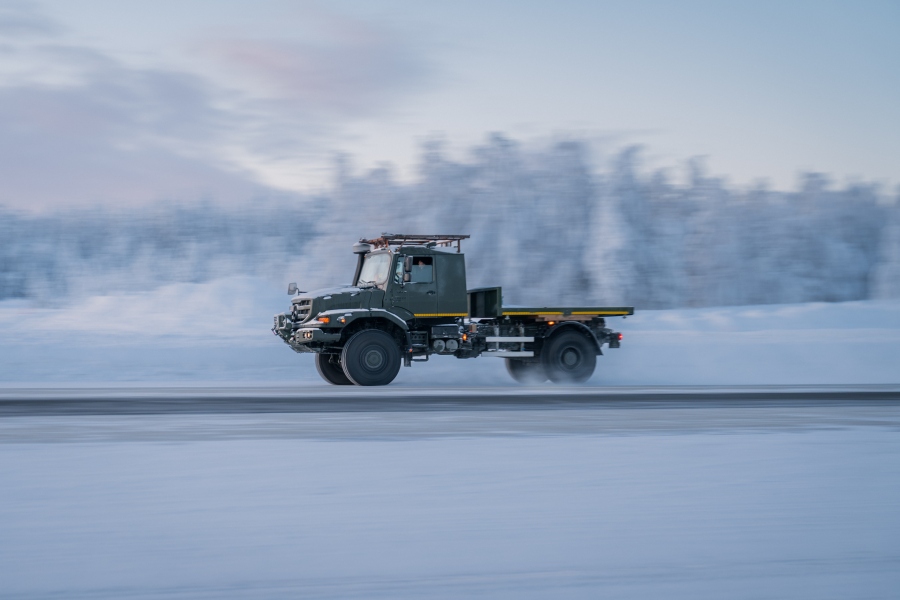
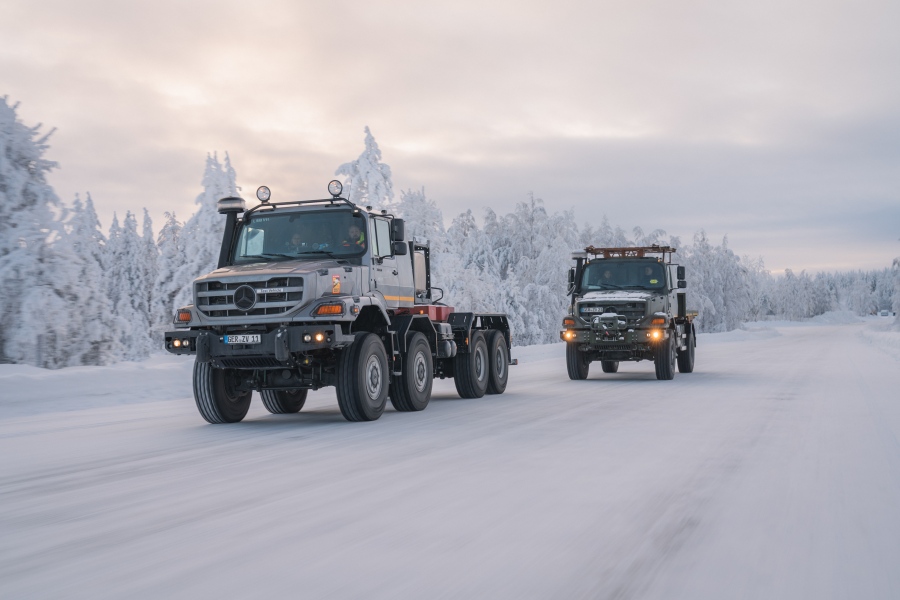
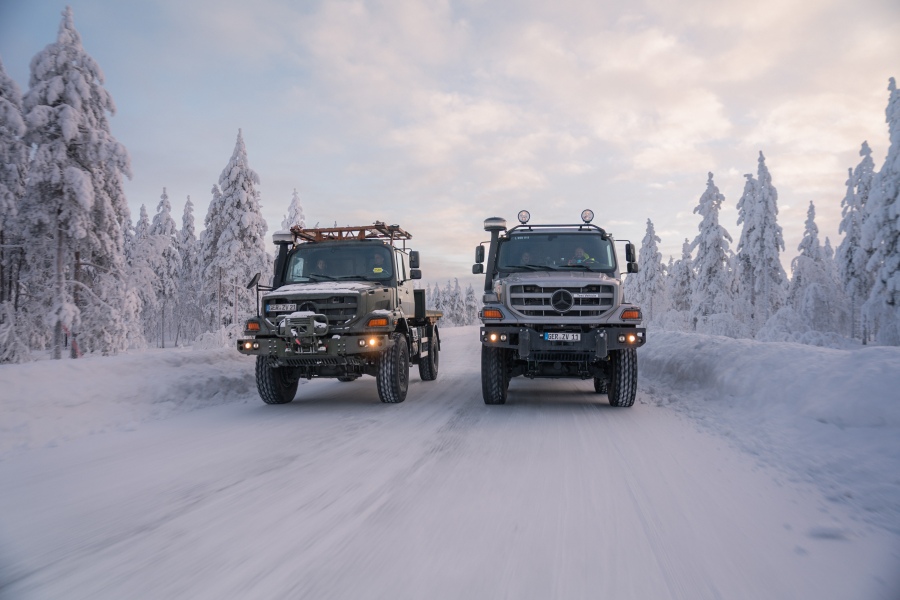
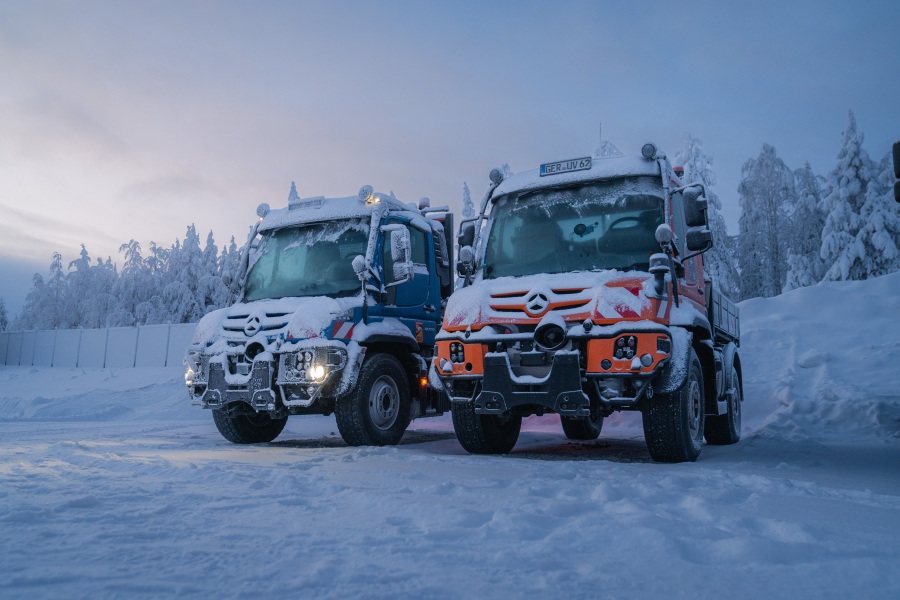
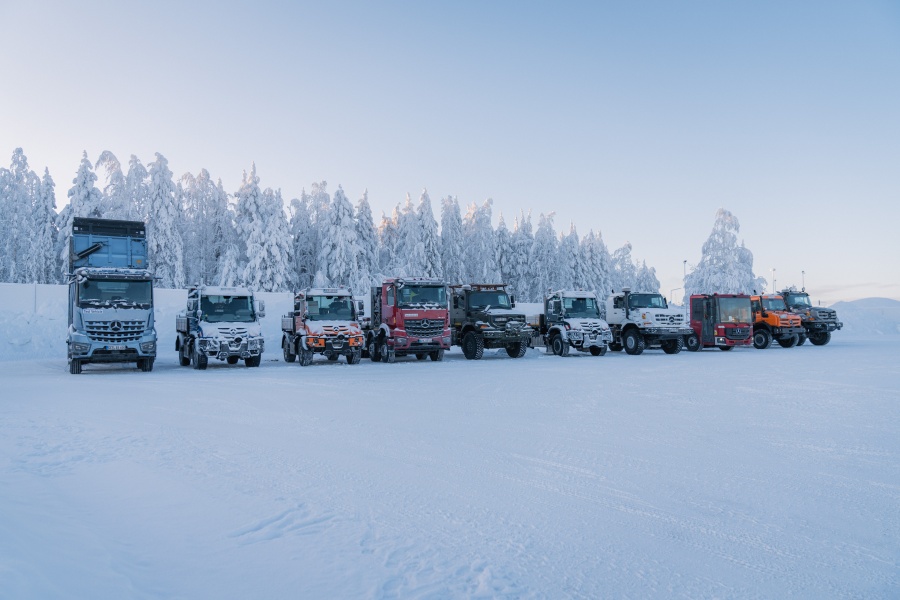
Mercedes has begun testing the Mercedes Zetros military vehicle at the Arctic Circle and is presenting spectacular images from winter tests conducted in Finland at temperatures of –40°C.
Daimler Truck tested the military versions of the Zetros series (4×4 and 8×8 versions) for several weeks near the Arctic Circle in Finland. During the winter tests at the beginning of the year, temperatures reached as low as –20°C, and the road sections were mostly frozen and covered with a thick layer of snow—ideal conditions for field testing.
The goal of the tests, carried out by the Mercedes-Benz Special Trucks expert team over several weeks, was to verify the vehicles’ capabilities and reliability in very harsh winter conditions.
The testing program included traction and stability tests on snow-covered roads, as well as evaluating the vehicle’s handling in extremely cold weather.
An extreme temperature simulation test was also conducted, with the vehicles placed in a cold chamber and started at –40°C to test the reliability of the engine, electrical system, and other components in extreme cold. This test was performed because Canada placed a major order for 1,500 Mercedes Zetros (100 units 4×4 and 500 units 8×8), which will become part of the Canadian Army. In winter, temperatures often drop very low, especially in the Far North. The Ukrainian army also purchased over 100 Mercedes Zetros vehicles in 2023.
And due to the international geopolitical context, more and more countries are strengthening their armies. Two months ago, France placed the largest order in the history of Daimler Trucks — for 7,000 Zetros trucks, which will be delivered over the next 10 years.
To give you an idea of what this order of 7,000 units from France means, Daimler Truck produced around 15,000 units Mercedes Zetros between 2008 and 2025, which is less than 1,000 per year. The order placed by France and Canada, as well as the interest from other countries, will force Daimler Truck to increase production at its two factories in Wörth am Rhein, Germany, and Molsheim, France.
Part of the tests involved fine-tuning the driver assistance systems and safety systems in Arctic conditions. The operation of the Electronic Stability Program (ESP), which is also available on heavy vehicles, was tested on ice and snow. Braking tests with both unloaded and fully loaded vehicles completed the testing program.
Like the Hummer H1, the Zetros has a tire pressure control system, which was tested in extreme cold conditions. Tire pressure can be increased or decreased from inside the cabin. For example, lowering the pressure increases the tire’s contact surface with the ground, improving traction on snow and loose surfaces.
The program also included tests of the driver cabin air conditioning system and the auxiliary heating system at very low temperatures, as well as checks of components considered sensitive to cold, such as the vehicle software. Tests were also conducted on exhaust emissions after-treatment, as well as engine and transmission optimization.
Another important test examined how the engine performs when running on kerosene instead of diesel fuel. In extremely cold conditions, diesel can form deposits that clog filters and pipes, while kerosene performs better at very low temperatures because it is easier to pump and ignite. For this reason, the military uses it for both aircraft and off-road vehicles. However, kerosene has poorer lubrication properties, so the engine must be designed from the start to operate on kerosene.
The Zetros is designed as an off-road truck with a front-mounted engine in a classic configuration. The cabin is positioned behind the front axle, allowing direct access to the engine through a forward-opening hood and enabling maintenance work without tilting the cab. The lower overall height facilitates rail or air transport and offers advantages in rough terrain.
Zetros is available in 4×4 and 6×6 versions, and starting in 2025, an 8×8 version with two or three driven axles is also available. The four-axle version can carry payloads of up to 25 tons. All driven axles feature locking differentials, and the high ground clearance allows it to tackle very rough terrain.
The Mercedes Zetros is available in three wheelbase versions and three weight classes. The off-road vehicle is equipped with a 6 inline 12.8-liter engine OM460 that produces 476 PS in the Euro III version and 510 PS in the Euro V version, with a maximum torque of 2,400 Nm, paired with a 16-speed manual transmission. An armored cabin is available as an option.
In addition to classic logistical tasks, the Zetros is used as a carrier vehicle for special equipment, a recovery and crane vehicle, or a tractor for heavy military systems. It is also used in extreme civilian applications, such as mining, pipeline construction, and expedition vehicles.