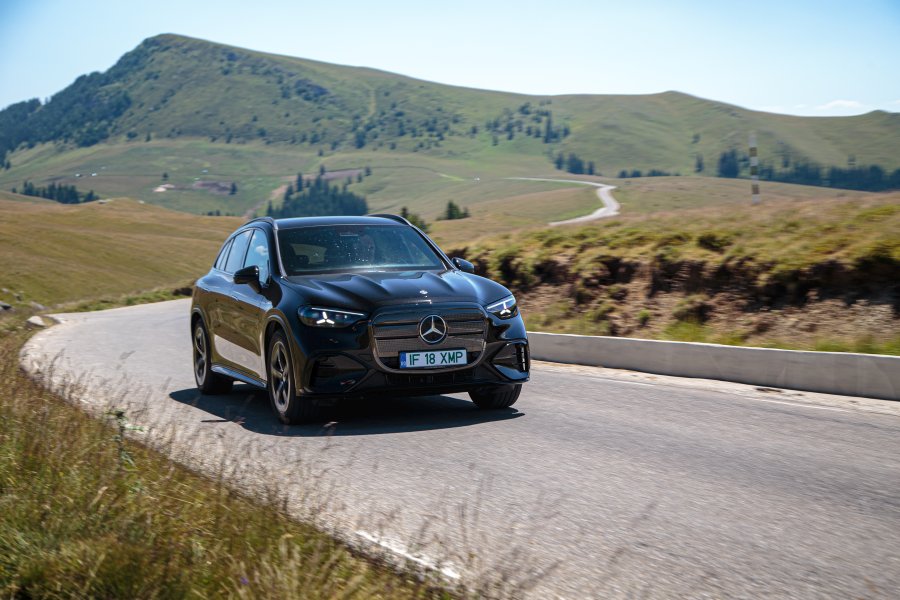
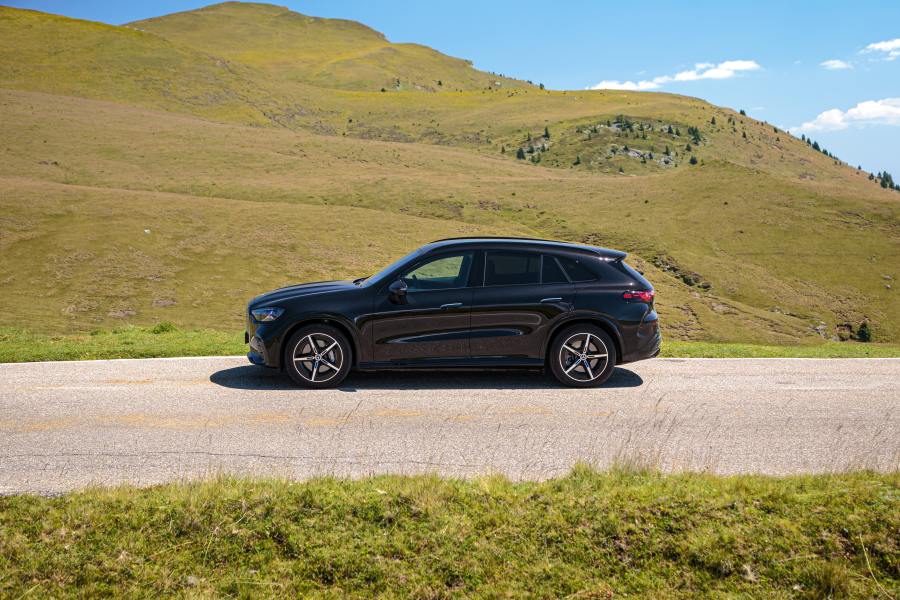
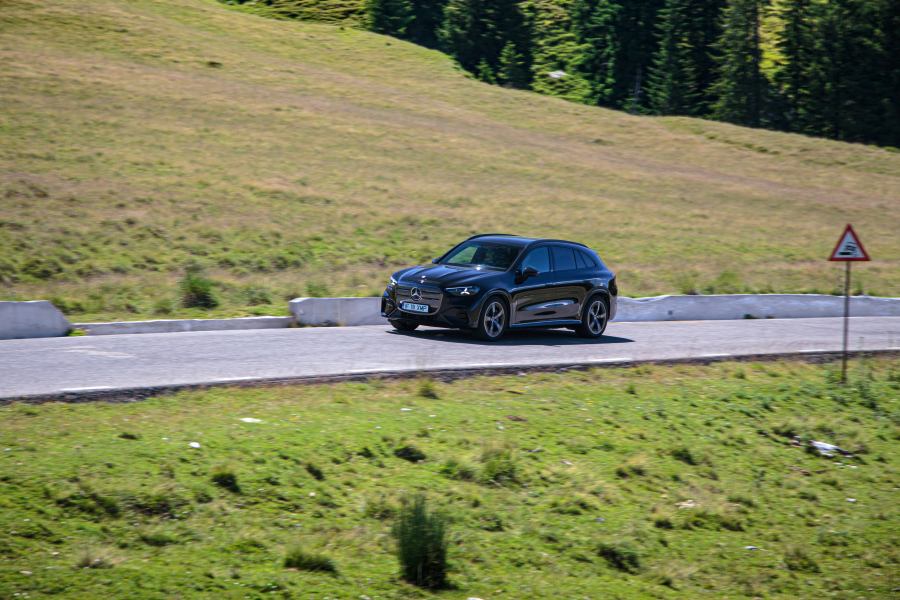
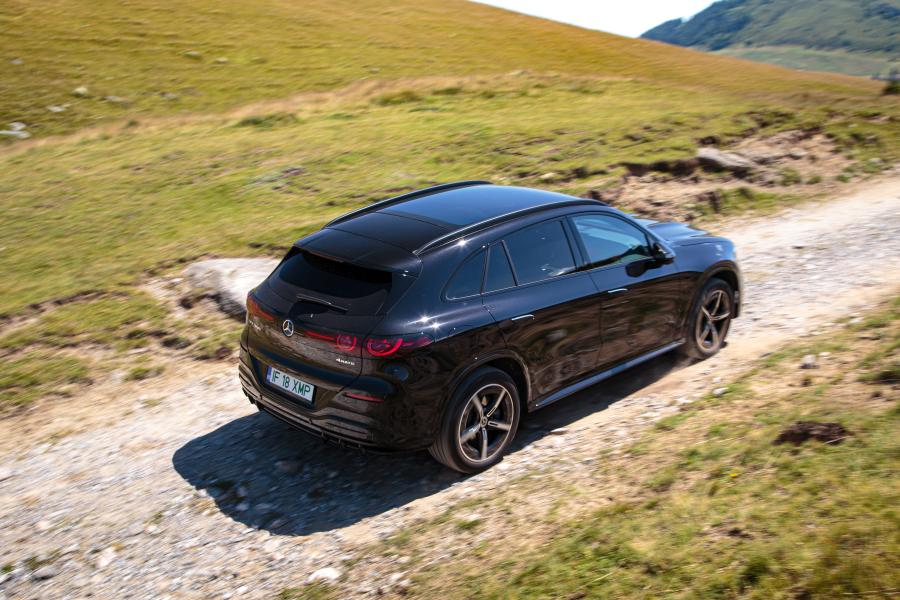
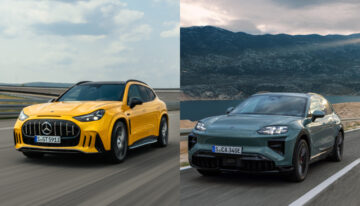
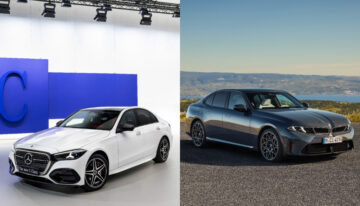
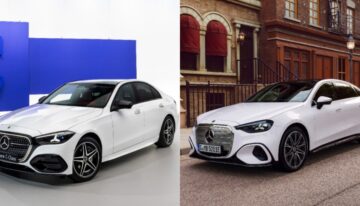
The GLC is Mercedes’ best-selling model, yet this was precisely the segment where the German manufacturer lacked a truly competitive electric vehicle. Now it finally has one, featuring an 800-volt architecture, immense power and torque delivered by two electric motors producing a combined 360 kW and 800 Nm, a large 94 kWh battery, and a new Google-based operating system. Is Mercedes GLC 400 4Matic the new star of the Mercedes lineup?
On September 4, 2019, six months after the debut of the Tesla Model Y, Mercedes unveiled the EQC, which was intended to be the electric equivalent of the GLC and a direct rival to the Model Y. However, its electric technology was far behind Tesla’s, whose Model Y still rides on the same platform today, while the EQC has been out of production for three years after becoming a major commercial failure.
That experience made Mercedes realize it could no longer compromise on electric technology. In today’s EV era, premium means ultra-fast charging and long driving range first—everything else comes afterward. This realization led to the creation of the dedicated MB.EA electric platform with an 800-volt architecture, which now underpins both the new electric GLC and the new electric C-Class.
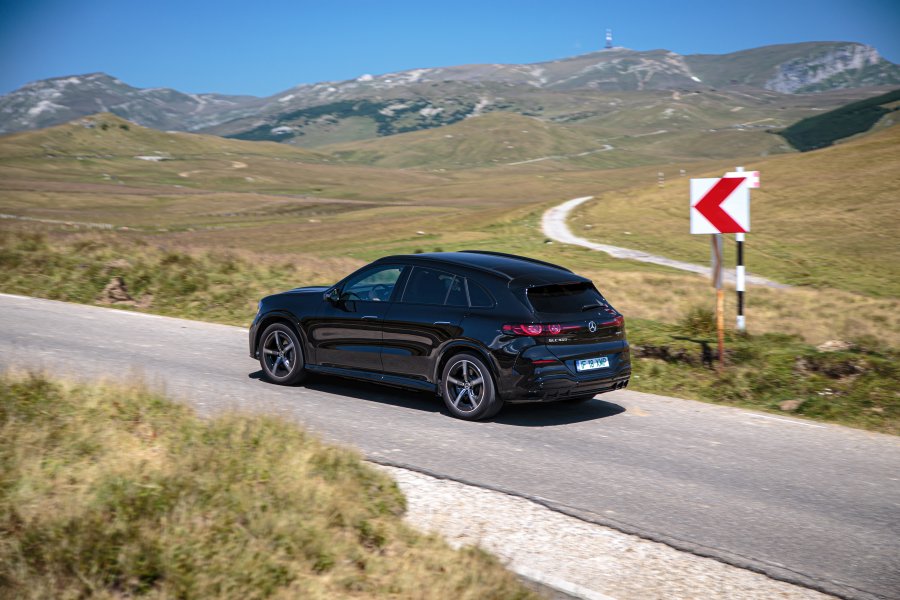
We first saw the new electric GLC at last autumn’s Munich Motor Show, and now we’ve had the opportunity to put the launch version—the GLC 400 4Matic—through an extensive test. It features two permanent-magnet synchronous motors delivering a combined 489 hp and 800 Nm, powered by a 94 kWh (net) NMC battery. (Since then, Mercedes has expanded the lineup with two additional versions: the dual-motor GLC 300 4Matic with 421 hp and the single-motor GLC 250 with 354 hp, both equipped with an 85 kWh net battery.)
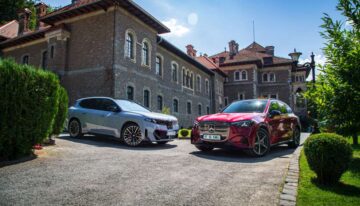
The new GLC arrived just a few months after the BMW iX3, which is also built on an all-new dedicated platform. It remains to be seen whether these two models can replicate the commercial success of their combustion-powered counterparts. But first, let’s take a closer look at the GLC 400 4Matic.
A Futuristic User Experience
The electric GLC has nothing in common with its combustion-engine sibling, unlike the old EQC. It is built on an entirely new platform with a new electronic architecture and Mercedes’ new MB.OS operating system based on Google services.
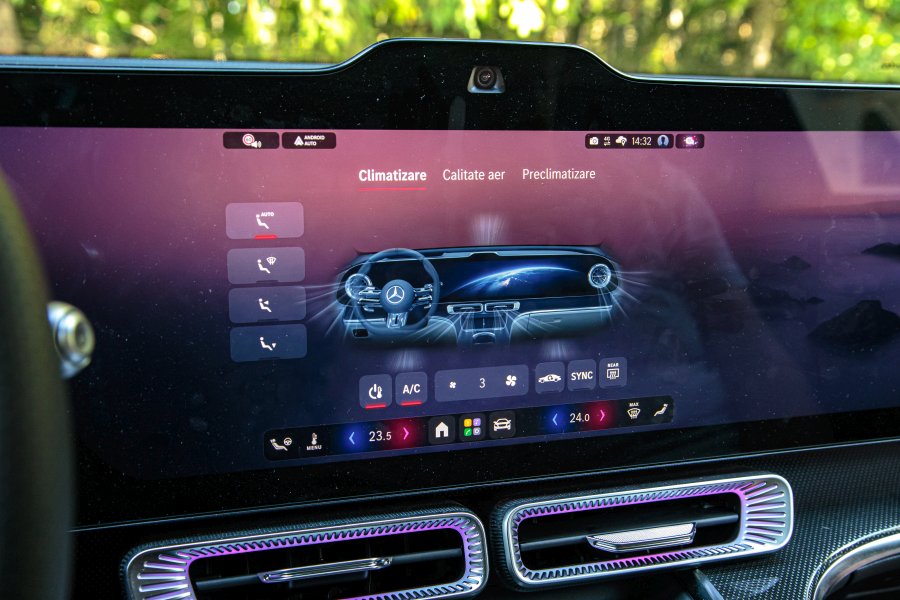
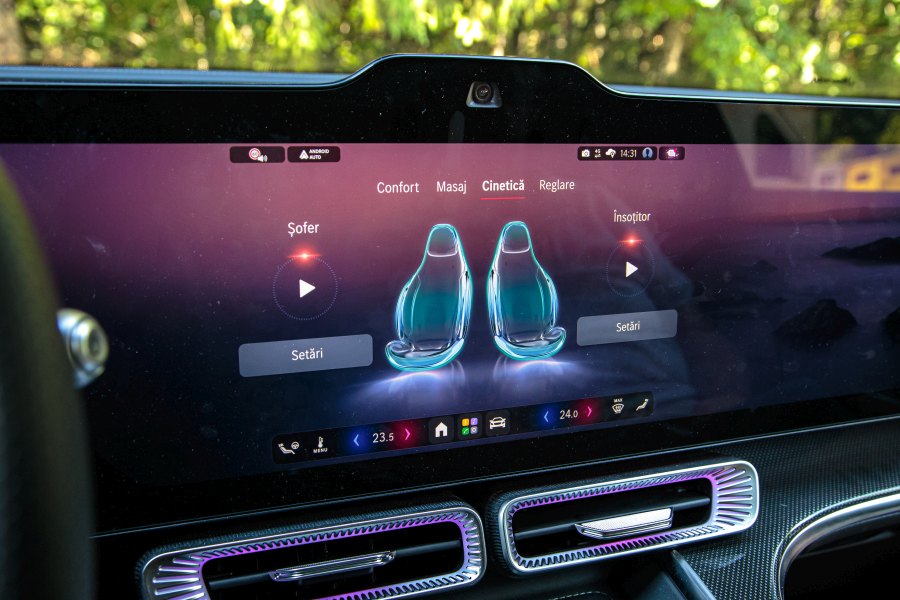
The electric GLC comes standard with the Superscreen, consisting of three 12.3-inch displays for the instrument cluster, infotainment system, and front passenger. Our test car, however, featured the revolutionary Hyperscreen (€1,487.50, mandatory in combination with the Advanced Plus package with Digital Extras costing €3,570). It is a seamless display stretching across the entire dashboard, measuring an impressive 39.1 inches (99.31 cm) diagonally according to Mercedes’ press kit, and almost 98 cm wide according to our own measurements—making it even wider than a typical 40-inch television.
The new display is spectacular, especially when selecting different visual themes from the infotainment menu. We were particularly impressed by the “Mystic Coast” and “Polar Night” display modes. Equally important is that the screen brightness can be reduced sufficiently to avoid becoming distracting at night. It cannot be completely switched off, but the “Off” function at least disables the backlighting of the passenger-side section and significantly dims the rest of the display.
The ambient lighting is equally impressive thanks to a new generation of LEDs that remain clearly visible even in daylight.
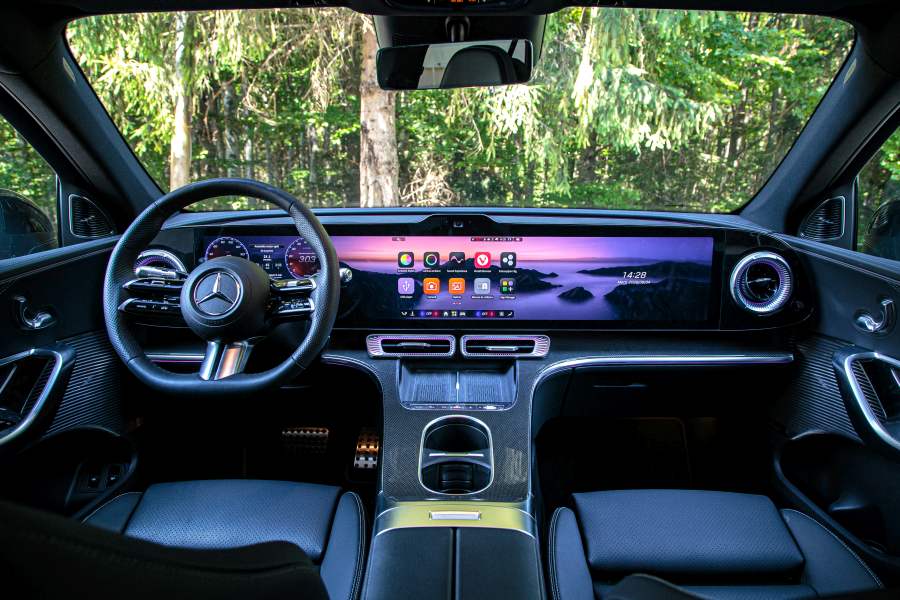
Ergonomics bring both improvements and drawbacks. Mercedes has reintroduced two physical controls on the steering wheel: a rotary knob on the right for audio volume (there is another one on the center console) and a switch on the left for adjusting the adaptive cruise control speed. However, the touch-sensitive pad on the right steering-wheel spoke remains. It allows switching between the different instrument cluster layouts—there are fewer than before, now limited to Classic, Navigation, and Assistance, the latter displaying nearby vehicles, pedestrians, and roadside obstacles in a Tesla-like fashion—and accessing the trip computer. Unfortunately, this touchpad is either overly sensitive or sometimes slow to respond.
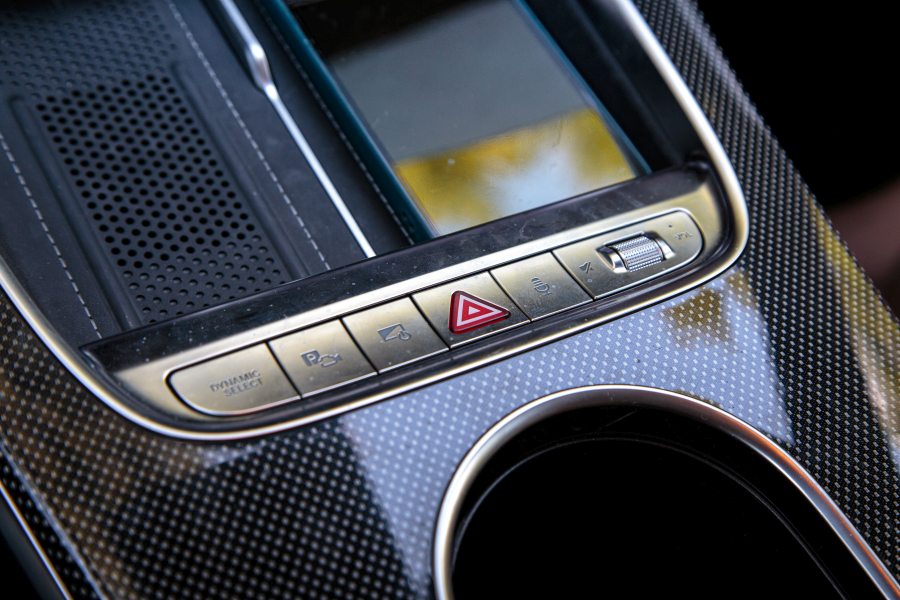
Another odd decision is relocating the voice-control button from the steering wheel to the center console. Even if you activate the system by saying “Hey Mercedes,” this button is still required to interrupt voice responses or activate the connected smartphone’s voice assistant.
The integration of ChatGPT and Gemini has not solved many usability issues either. Some commands, such as “Previous song,” are not recognized, while the alternative wording “Play the previous track” works correctly. Likewise, the system does not understand commands like “Turn off the screen” or more complex navigation requests. Even stranger, asking it to “Increase screen brightness” turns on the driver’s reading light instead. Standard voice commands work well, but for now, artificial intelligence mainly serves as an information provider rather than improving everyday usability.
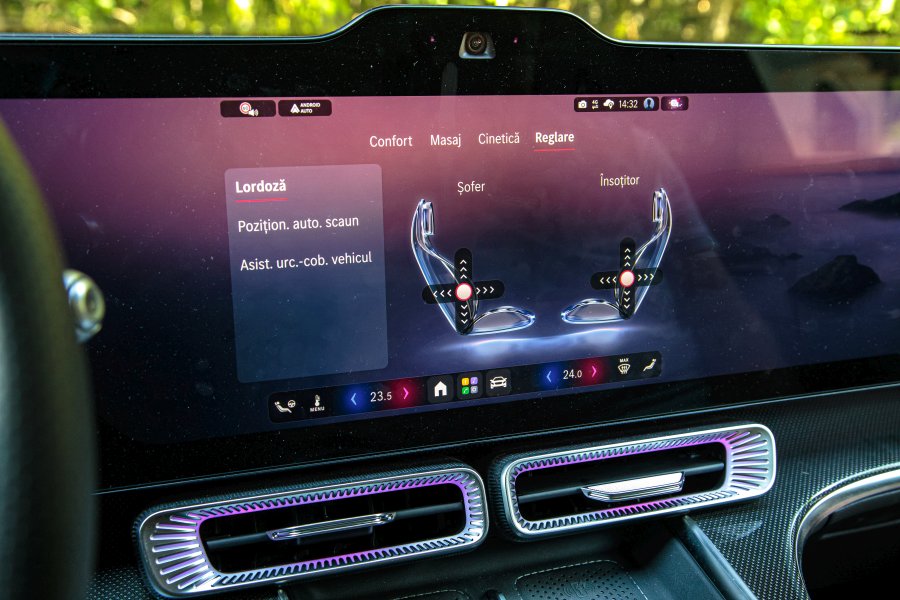
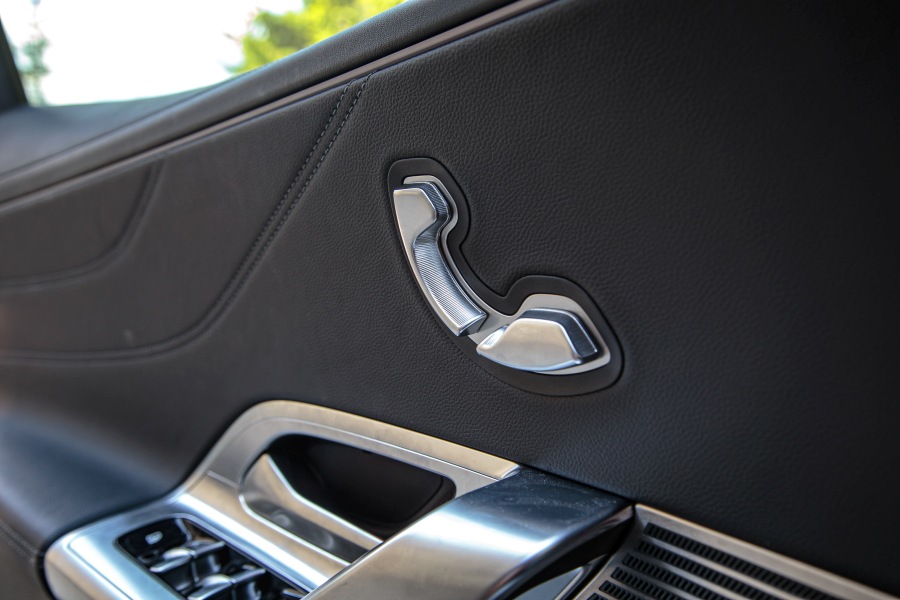
Mercedes has also eliminated the electrically adjustable seat cushion extension, replacing it with a manual adjustment. Many seat functions have also migrated into the infotainment system, meaning that heating, ventilation, massage, lumbar support adjustment, and memory functions can only be accessed via the touchscreen.
Even the multimedia system no longer features a dedicated physical home button, only a small icon at the bottom of the display that serves as the gateway to most menus.
On the other hand, adopting Google services is a major step forward. Android Auto and Apple CarPlay are still available, but you can also use the built-in Google Maps navigation directly. Mercedes has customized it to display charging stations, their charging power, and real-time availability—a genuinely useful feature.

Climate controls are also touchscreen-only but remain easy to access, with dedicated temperature icons permanently displayed.
There is, however, one concern. Cars equipped with the Keyless-Go package feature flush automatic door handles without a conventional key cylinder. If the 12-volt battery were ever to fail, there would be no obvious way to enter the vehicle. Mercedes insists this cannot happen because the 800-volt battery continuously supports the 12-volt system. Still, it’s wise never to say never.
More space then in ICE GLC, less quality in detail
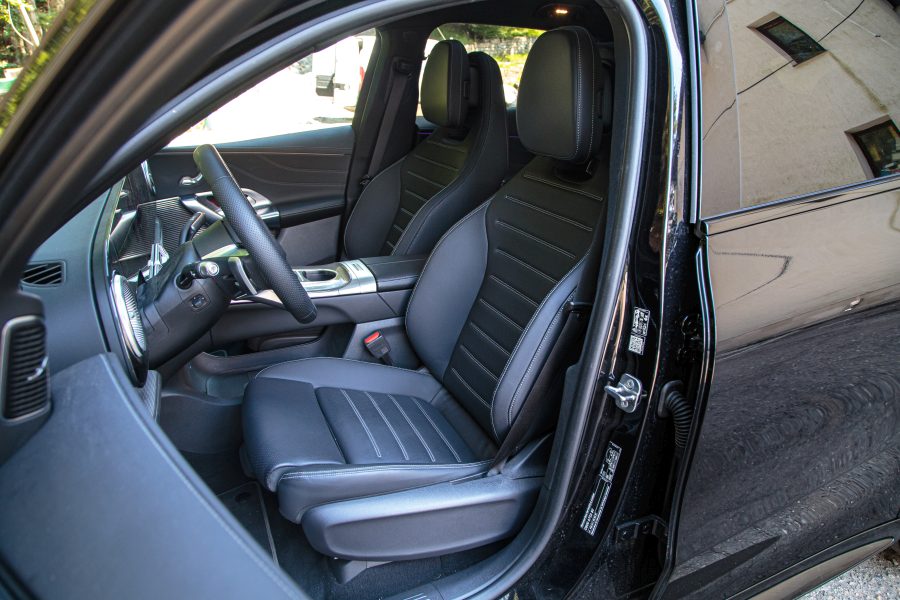
Our test vehicle also featured the AMG Package (€3,451), including sports seats. They do not provide particularly aggressive lateral support but prove exceptionally comfortable on long journeys. The seating position is low, giving the driver an excellent sense of integration with the vehicle.
With a wheelbase 84 mm longer than the combustion-engine GLC, the electric version clearly offers more rear knee room. The absence of a transmission tunnel also makes life much easier for the middle rear passenger. The rear backrest remains well contoured, although, like in the combustion GLC, the seat cushion is relatively short.
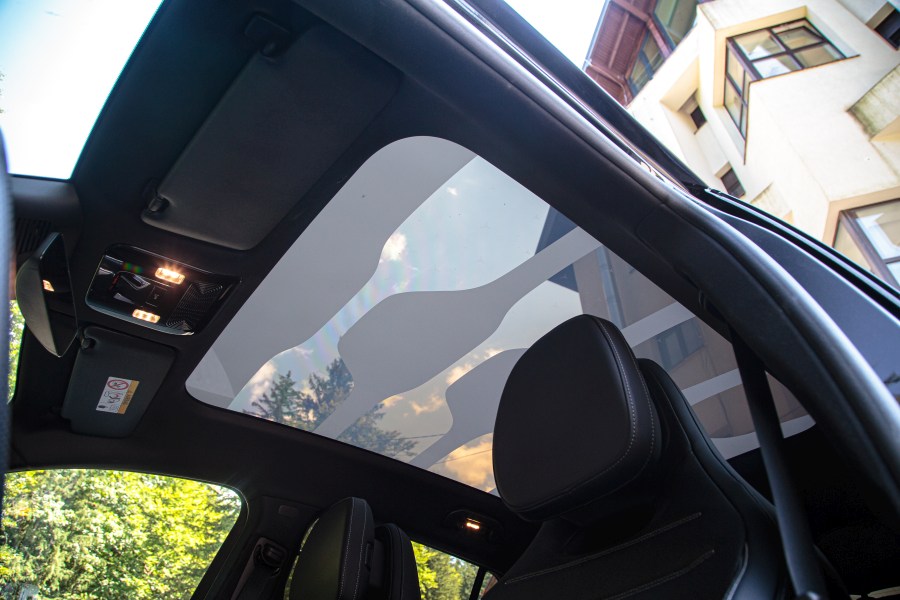
The panoramic Sky Control roof further enhances the airy feeling inside. Its transparency can be adjusted via the infotainment system. Divided into nine sections, it can be fully transparent, fully opaque, or split between transparent and opaque. The 174 illuminated stars embedded in the roof change color to match the ambient lighting, which also features dynamic functions coordinated with the driver-assistance systems.
Since we’re talking about lighting, we must also praise the outstanding Digital Light headlights with the new Ultra Range high-beam function. The beam actively follows corners, making winding roads appear almost as brightly lit as during daylight. Likewise, the illuminated grille—with lighting around its perimeter and within the distinctive polycarbonate star pattern—is simply spectacular at night.

The cabin is undeniably high-tech, but compared with the combustion-powered GLC, Mercedes has made several quality compromises.
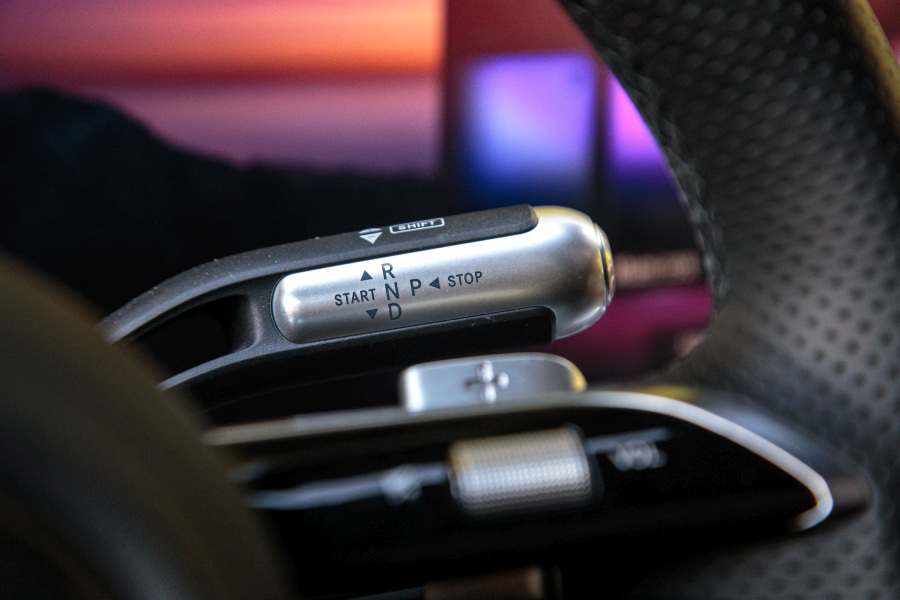
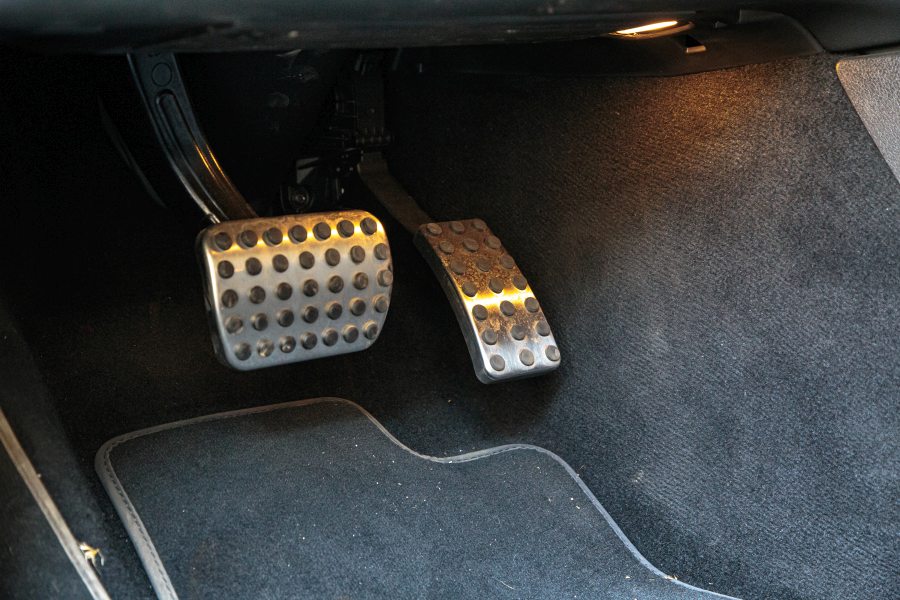
Even with the leather package—which covers parts of the dashboard and door panels in Artico synthetic leather with beautiful red stitching (included in the expensive Premium Plus package with Digital Extras costing €11,305)—the upper dashboard is covered only in soft-touch plastic, admittedly of very high quality. The new sun visors feel rather inexpensive, the lower dashboard plastics are less premium than before, the steering-wheel paddles are now plastic, and the accelerator pedal is suspended rather than floor-hinged.
Otherwise, the electric GLC delivers a thoroughly premium atmosphere, with generous leather trim, elegant black-and-silver textile inserts (€405), and a beautifully crafted Nappa leather multifunction steering wheel.
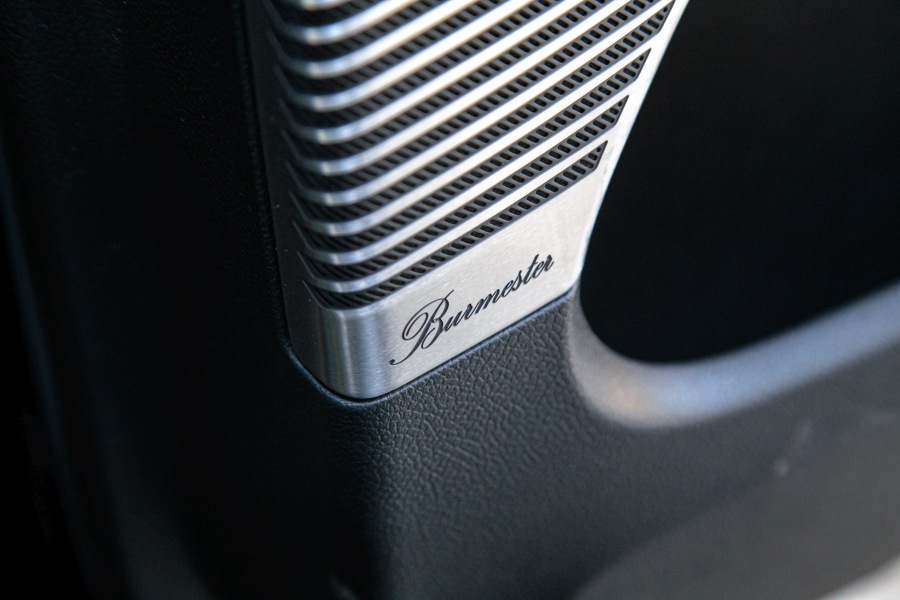
We also have to take our hat off to the Burmester 4D Surround sound system—also included in the Premium Plus package with Digital Extras—which delivers powerful bass and astonishingly deep, rich sound quality.
The luggage compartment is almost as spacious as in the combustion GLC, offering 570 liters compared with 600 liters. Folding the rear seats—optionally electrically operated from the cargo area—creates a completely flat loading floor thanks to the adjustable cargo floor, increasing capacity to 1,740 liters, compared with 1,640 liters in the combustion model.
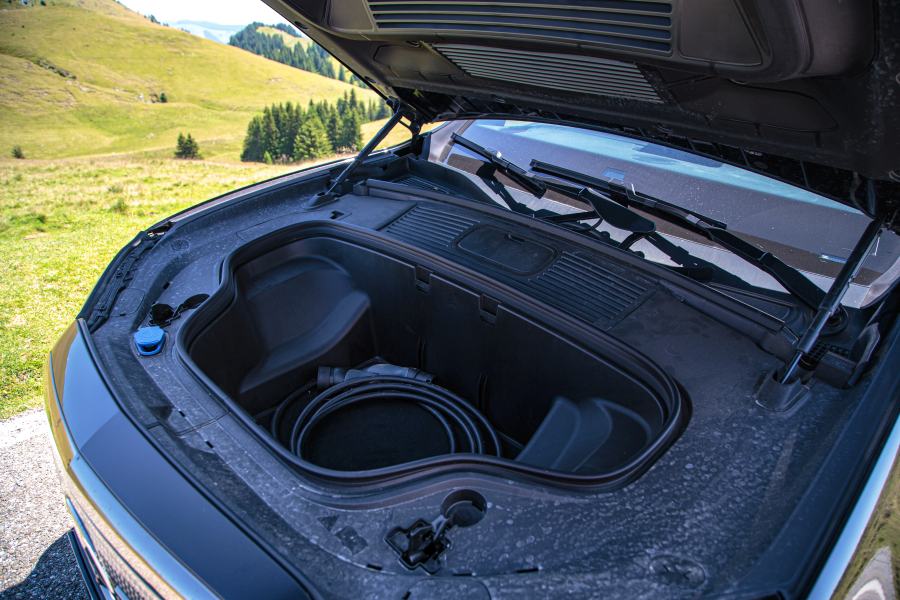
In addition, the electric GLC features a huge 100-liter front trunk (frunk), which can be opened either via a button on the driver’s door panel or through the infotainment system.
And now, it’s time to hit the road.
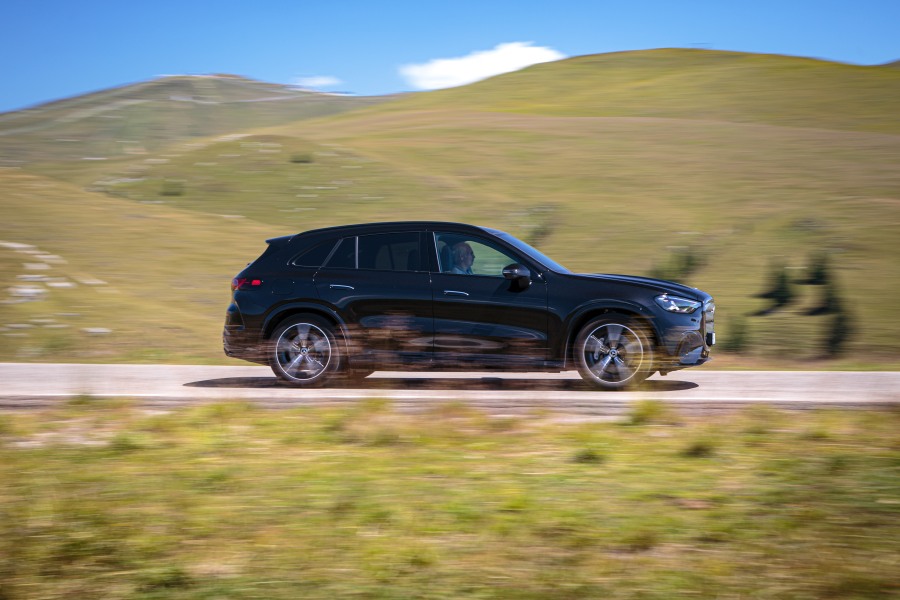
- Good driving range
- Decent energy consumption
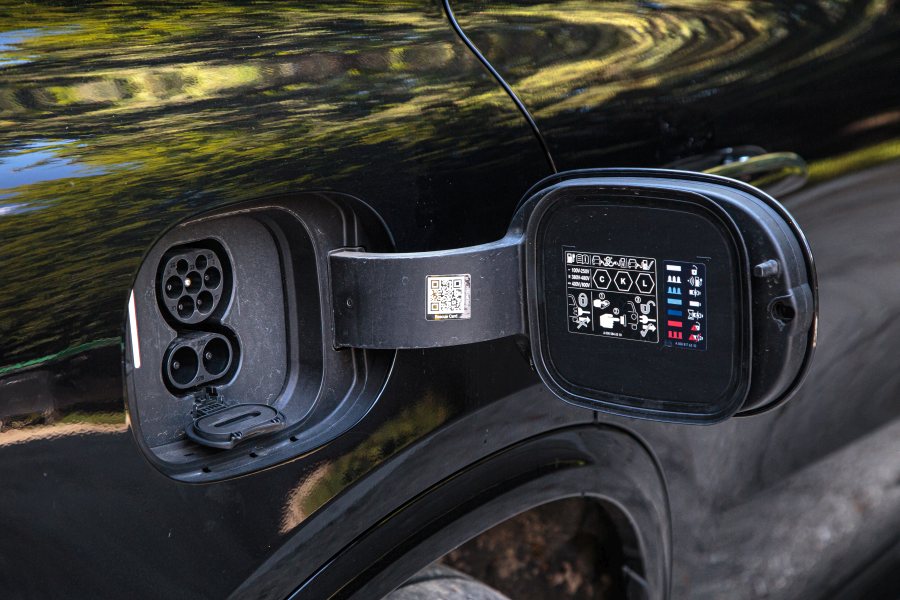
- Very fast charging
- Outstanding ride comfort
- Powerful electric drivetrain
- Exceptional brakes
- Very secure and stable handling
- More spacious interior than the ICE-powered GLC

MAX vs MIN
- Complicated ergonomics in some details
- Some quality-related details could be improved
- Very expensive optional equipment