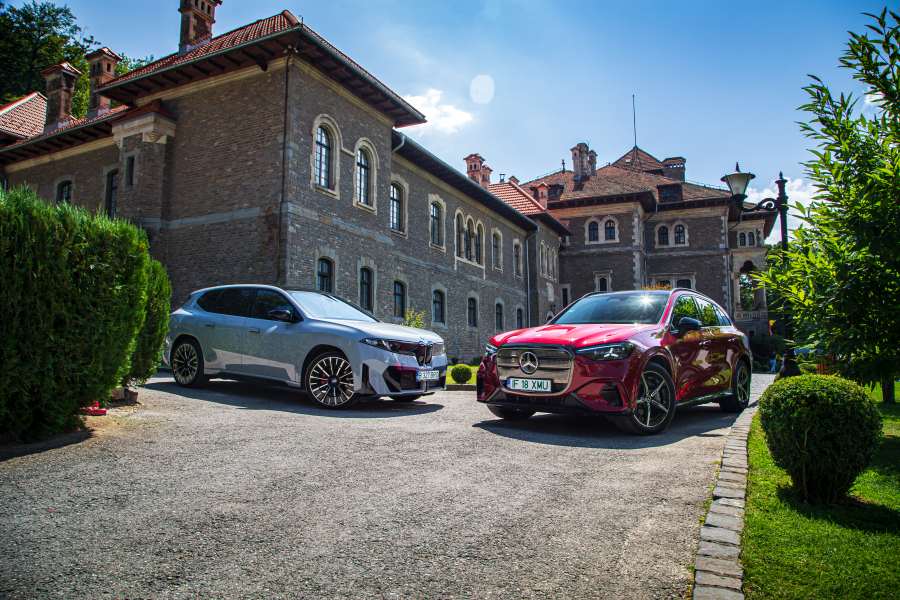
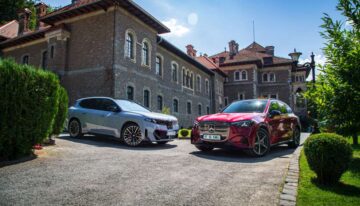
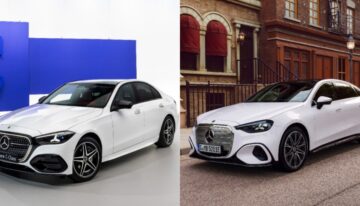
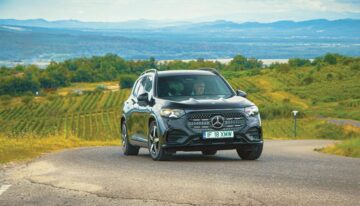
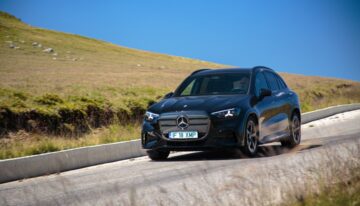
The BMW–Mercedes rivalry is moving into the electric era as both manufacturers have invested heavily in electric mobility and developed two dedicated electric platforms: Neue Klasse for the BMW iX3 and MB.EA for the Mercedes GLC. In our test, we compare the top versions, the BMW iX3 50 xDrive and Mercedes GLC 400 4Matic.
Photo: Christian Bart
BMW and Mercedes have understood that, in the tough new electric era and in the face of the wave of Chinese competition, they have only one option: to develop dedicated electric platforms with 800-volt technology capable of delivering long ranges and high charging power. And that is exactly what they have done.
The models in our test, the BMW iX3 50 xDrive and Mercedes GLC 400 4Matic, promise ranges of 805 and 666 km respectively, along with maximum charging powers of 400 and 330 kW. How realistic are these figures? That is exactly what we wanted to find out in our test – and much more.
For the time being, our head-to-head comparison involves the top versions: the BMW iX3 50 xDrive with two motors, 469 PS/645 Nm and a 108.7 kWh net battery, and the Mercedes GLC 400 4Matic with two motors, 489 PS/800 Nm and a 94 kWh net battery.
We say “for the time being” because sportier versions from the M and AMG divisions will follow: the iX3 M60 xDrive and AMG GLC 53 4Matic, both with more than 600 PS.
If the prices of €72,471 for the Mercedes GLC 400 4Matic and €74,700 for the BMW iX3 50 xDrive seem high to you, the ranges have recently been expanded at the lower end as well. The BMW iX3 40 comes with a single rear-mounted motor, 320 PS and an 82.6 kWh net battery, starting at €67,200. Mercedes offers the GLC 250 with a single rear-mounted motor, 354 PS and an 85 kWh net battery, from €64,736, as well as the GLC 300 4Matic with two motors, 421 PS and an 85 kWh net battery, from €68,306.
But let’s get back to the models in our test.
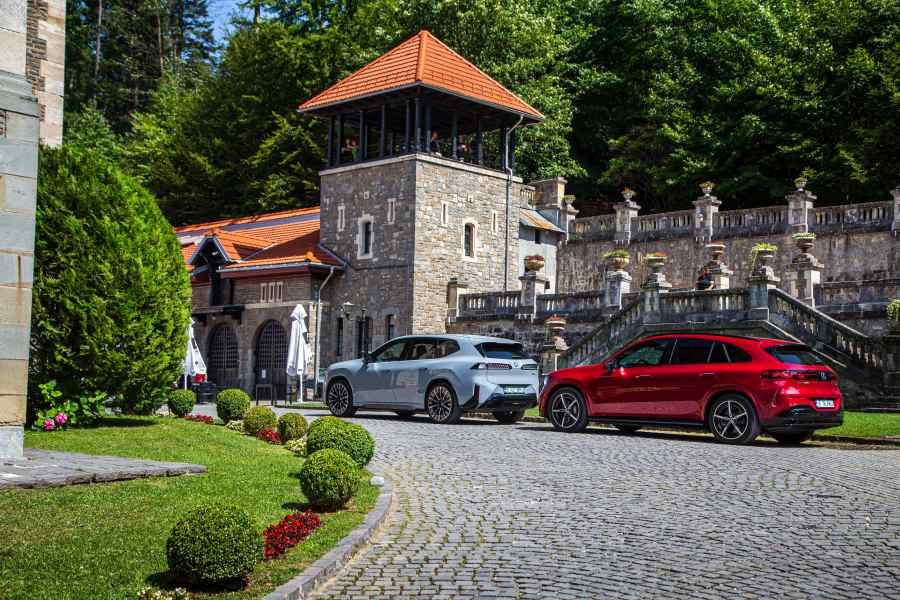
Similar Interior Space
The Mercedes is 6 cm longer, 2 cm wider and 1 cm taller. Although the differences are small, interior width is 3 cm greater at the front and 5 cm greater at the rear in the Mercedes, while interior height is 4.5 cm and 4 cm greater at the front and rear respectively.
On the other hand, the Mercedes has a wheelbase that is 7.5 cm longer, but this does not translate into more rear-seat space: the BMW actually offers 1 cm more knee room in the back.
Being 6 cm longer, the Mercedes also has a larger standard luggage compartment, with 570 litres compared with 520 litres in the BMW.
However, with the 40/20/40 split-folding rear seats folded down in both models – the BMW’s backrests can be adjusted to different angles, while the Mercedes offers optional electric folding of the individual sections – the BMW provides a maximum luggage capacity of 1,750 litres, 10 litres more than the Mercedes.
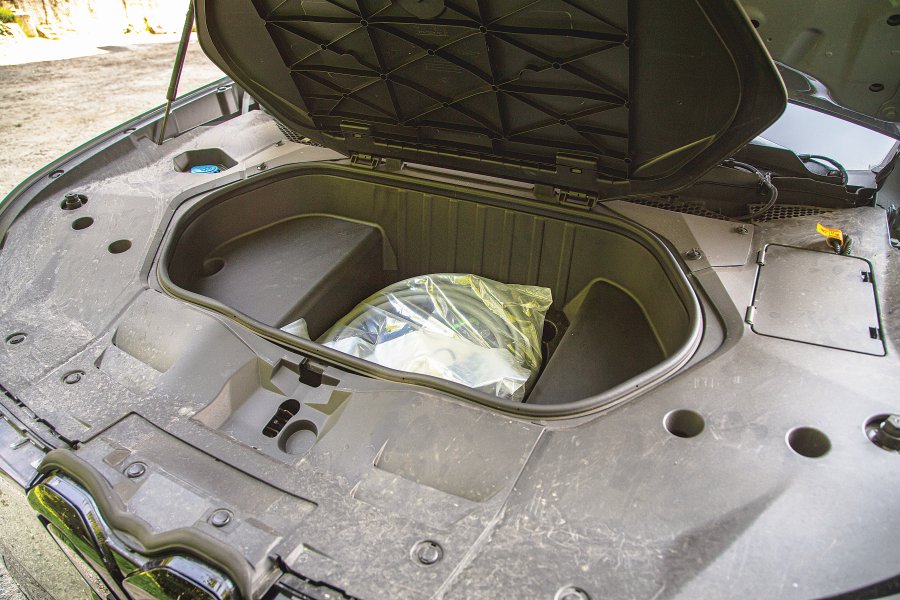
The Mercedes, on the other hand, has a more spacious frunk, with 100 litres compared with 58 litres in the BMW. The Mercedes frunk can be opened via the multimedia system, using a button on the lower section of the tailgate, or from outside when the car is unlocked. However, it does not have a cover, which is available only on the BMW.
Rear-seat comfort is better in the BMW, which has a longer and better-contoured seat cushion, while the Mercedes seat cushion is too short.
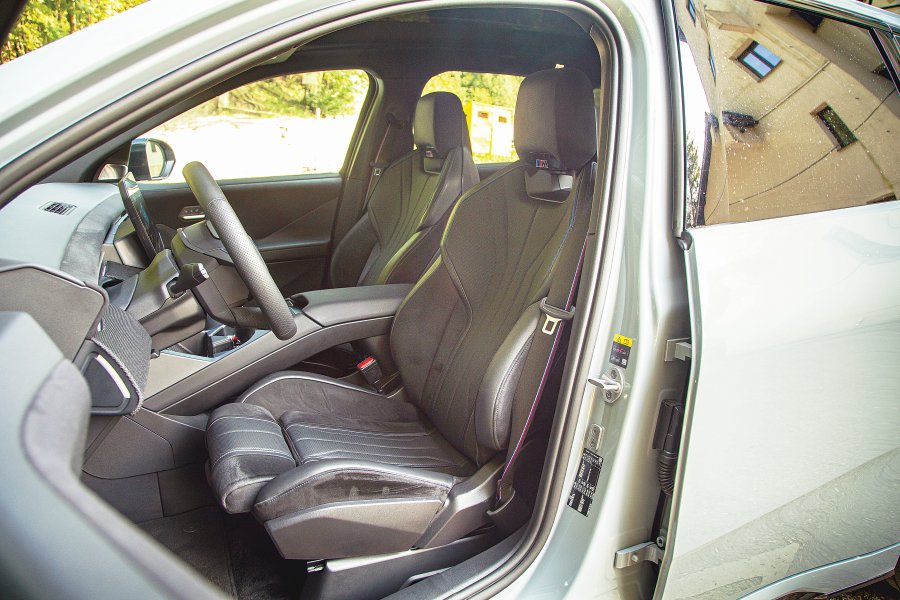
Up front, both cars had sport seats because they were equipped with the optional AMG Line package in the Mercedes and M Sport Pro in the BMW. Both feature more pronounced side bolsters, with the BMW offering better support at the seat cushion. However, in both models, the seat cushion can no longer be adjusted electrically for length; this adjustment is manual only.
Mercedes: Spectacle; BMW: Functionality
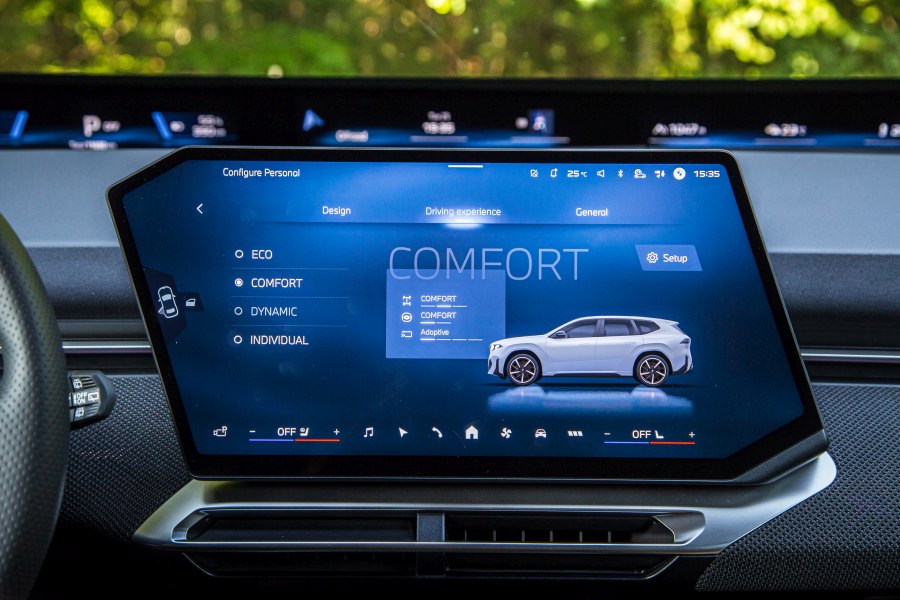
After revolutionising cockpit ergonomics with iDrive in 2001, BMW is once again reinventing the concept with the new Panoramic Drive. It consists of a slim panoramic display positioned at the base of the windscreen and extending across the entire width of the dashboard, incorporating simplified digital instrument cluster, a hexagonal multimedia display positioned very close to the steering wheel, and an optional head-up display.
In front of the driver, the instrument section provides only the essentials – speed, remaining range and battery percentage. Menus from the multimedia system can be transferred to the central and passenger-side sections of the Panoramic Vision display.
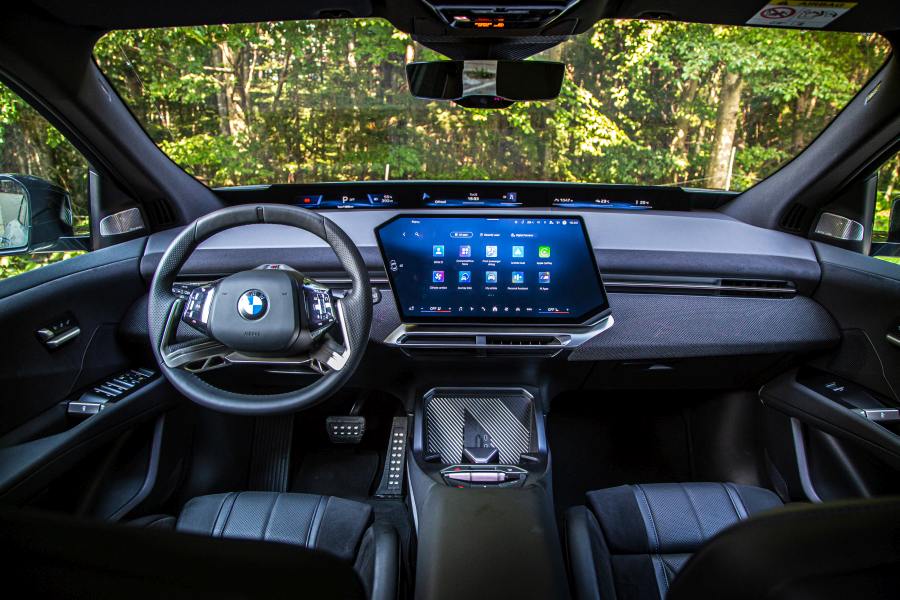
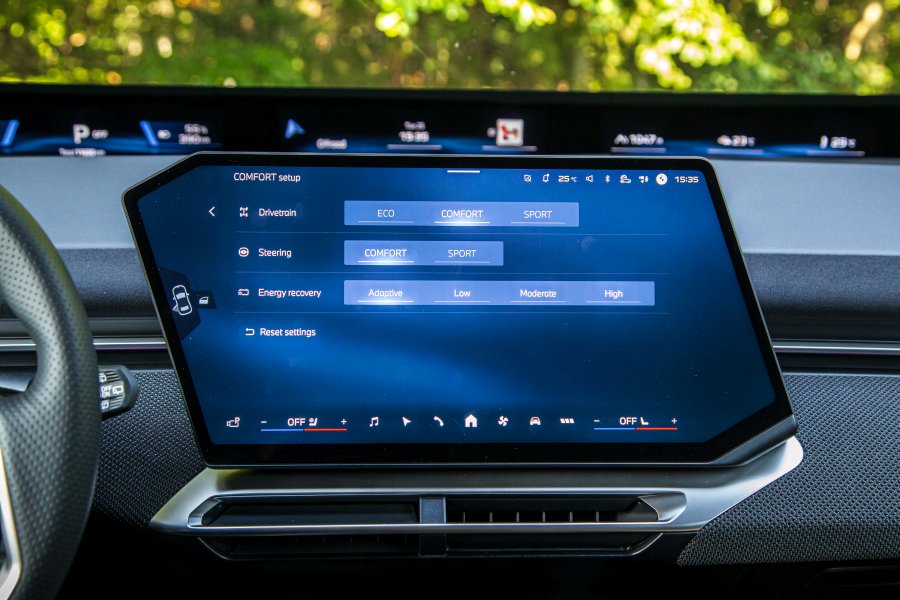
The unconventional-shaped display is easy to operate thanks to its proximity to the steering wheel. On the left side are icons for quickly deactivating the assistance systems and accessing the trip computer menu, while the bottom of the screen contains icons for the main menus: navigation, audio, climate, vehicle and driving modes.
However, BMW has also gone too far with touch controls because the climate-control functions can only be accessed via the display. This is annoying, but even more annoying is the fact that the levels of energy recuperation can also only be adjusted through the touchscreen.
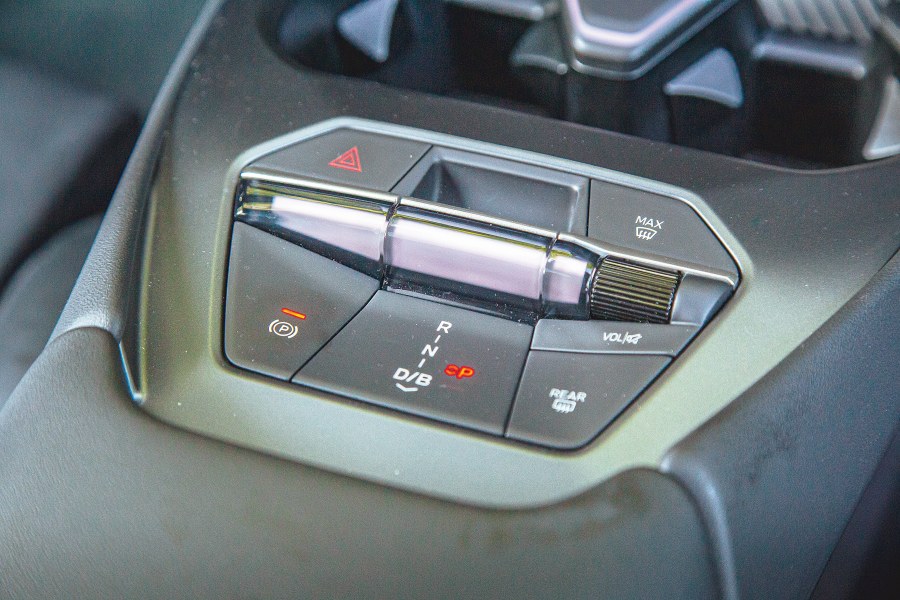
There are virtually no physical buttons apart from those on the centre tunnel. Next to the gear selector is a rotary audio-volume controller, along with the hazard-warning-light button and the front and rear window defroster controls.
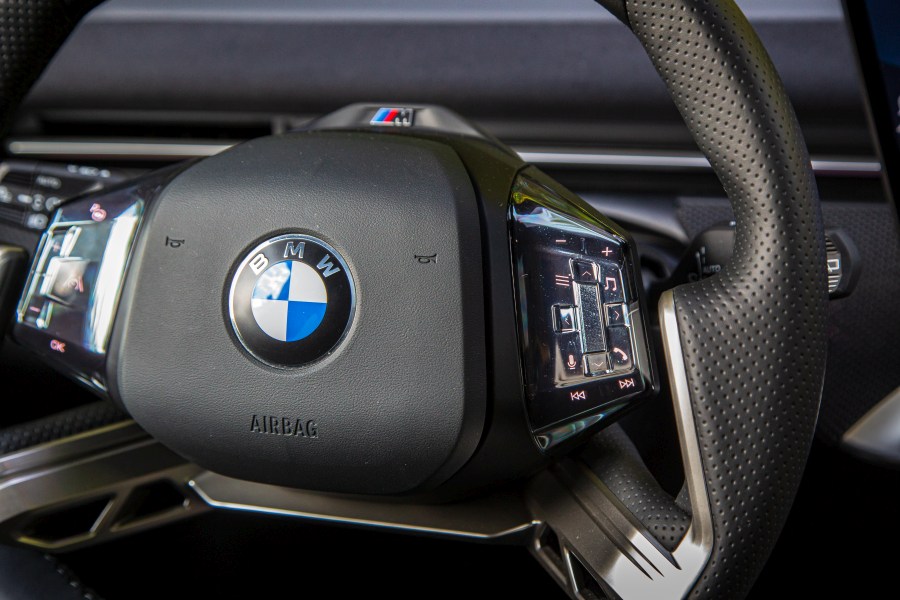
And there is something else that can be irritating in the BMW: the small touch-sensitive surfaces on the steering wheel – on the left for the adaptive cruise control and on the right for the telephone, audio system and voice control.
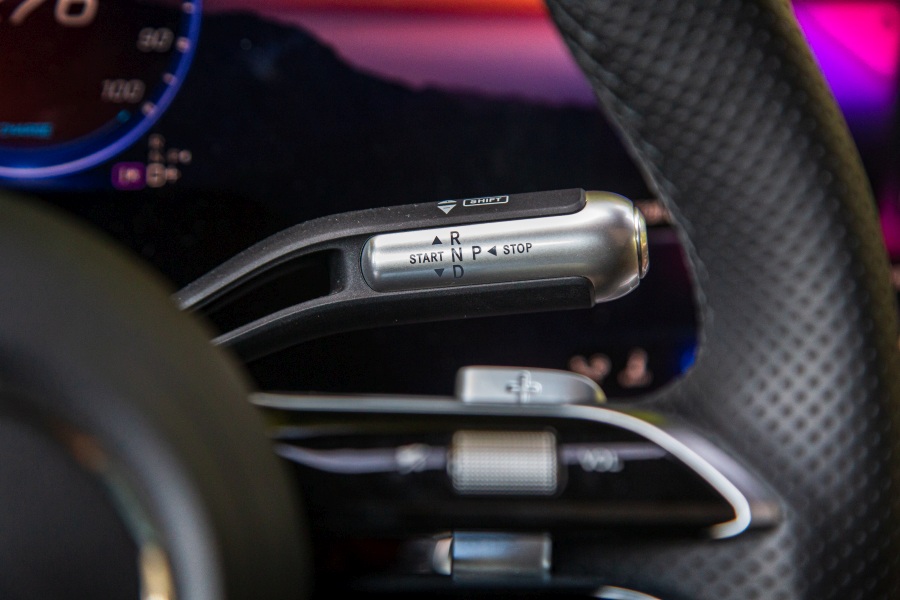
We also encountered some strange solutions in the Mercedes, such as moving the voice-control button from the steering wheel to the centre tunnel, into a row of buttons that also includes the driving modes, parking assistant and rotary audio-volume controller.
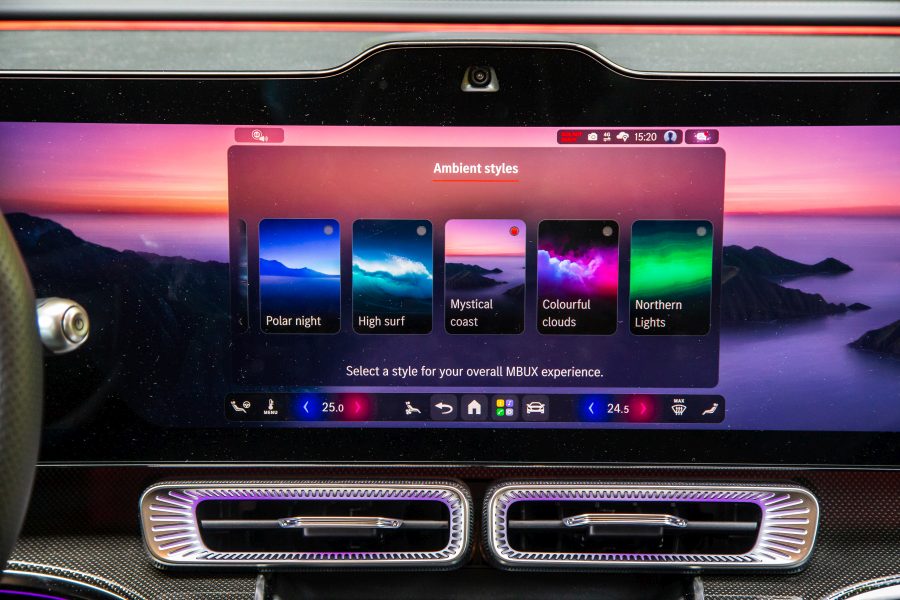
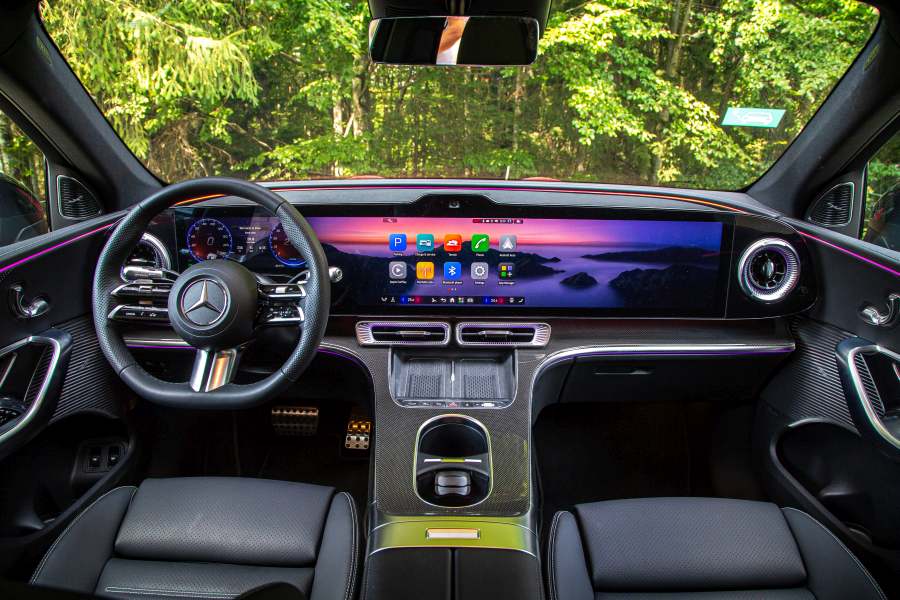
However, you quickly forget these minor ergonomic inconveniences when you switch on the spectacular Hyperscreen display.
While BMW’s Panoramic Drive concept is standard, Mercedes charges an extra €1,487.50 for the Hyperscreen display, which comes as part of the expensive Advanced Plus with Digital Extras package (€3,570).
The new display is particularly spectacular when you select the various display themes from the multimedia menu. Among those that impressed us were “Mystic Coast” and “Polar Night”.
Importantly, the display brightness can be reduced sufficiently so that it does not become distracting at night. It cannot be switched off completely, but the function called “Off” at least disables the backlighting of the passenger-side third of the screen and significantly reduces the brightness of the rest of the display.
Mercedes has responded to criticism by introducing two physical buttons on the steering wheel for audio volume and adaptive cruise-control speed adjustment. However, it has retained the touch-sensitive surface on the right-hand steering-wheel spoke for changing the instrument-cluster layout, which remains too sensitive or does not always respond immediately.
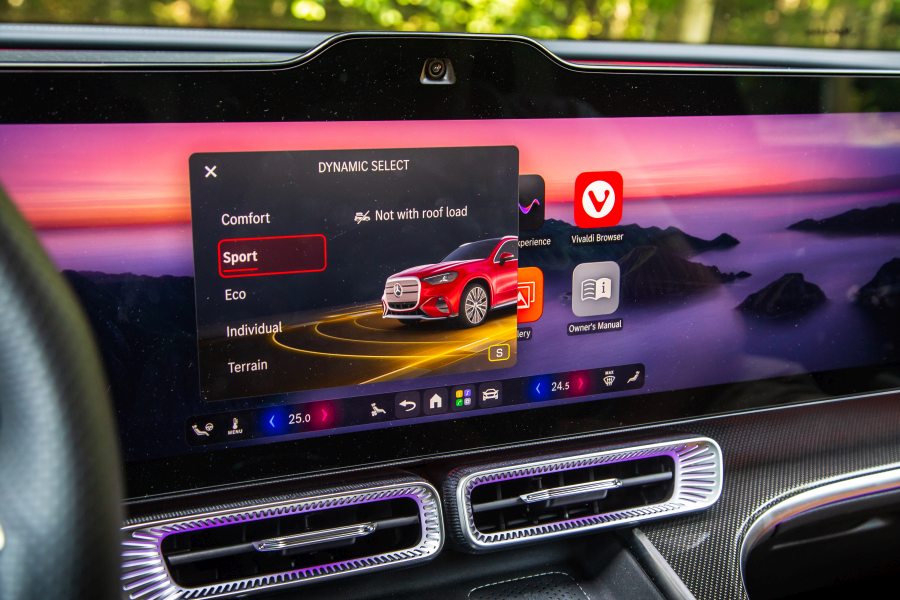
There is no Home button for the multimedia system, only a small icon that provides access to all menus, while many of the seat-adjustment functions have been moved to the multimedia display.
On the other hand, the recuperation levels can be adjusted more practically than in the BMW using the paddles behind the steering wheel. The highest setting, Strong recuperation, is similar to one-pedal driving and is more intensive than in the BMW.
BMW has remained faithful to its own HERE maps, which are continuously updated and are just as detailed as Google Maps. Mercedes has made a radical change and has turned to Google’s services – Google Maps, Google Assistant and Google’s artificial intelligence. Both systems allow you to plan charging stops along a route and precondition the battery either manually or automatically.
Mercedes plays the comfort card
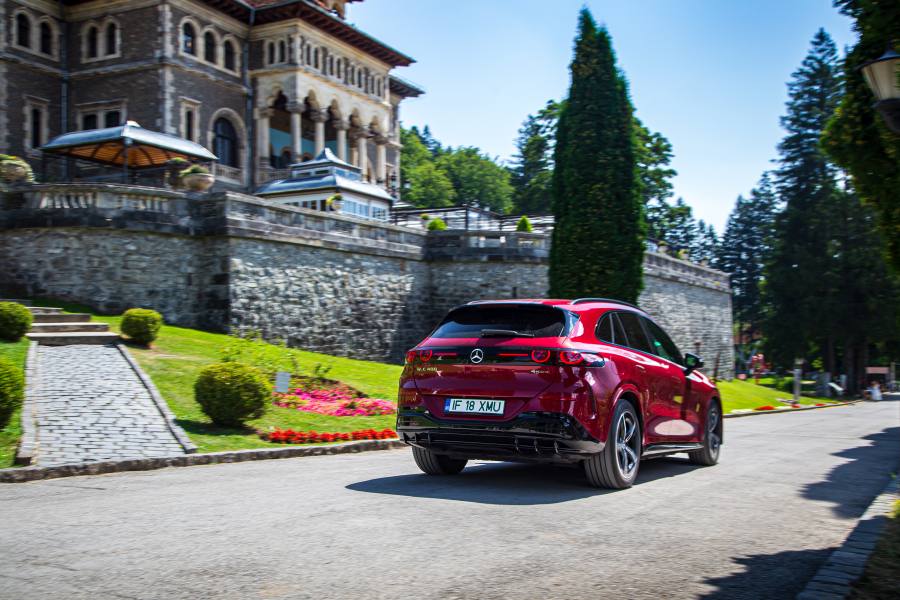
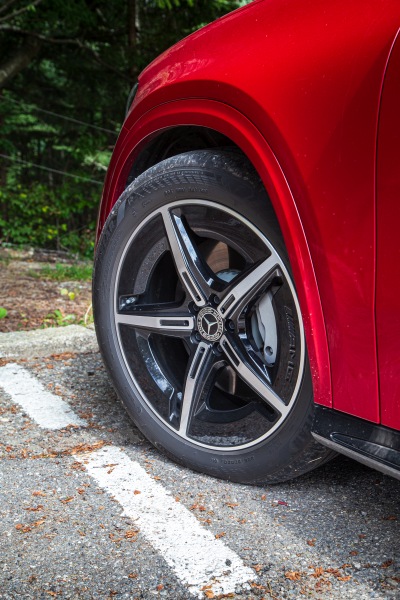
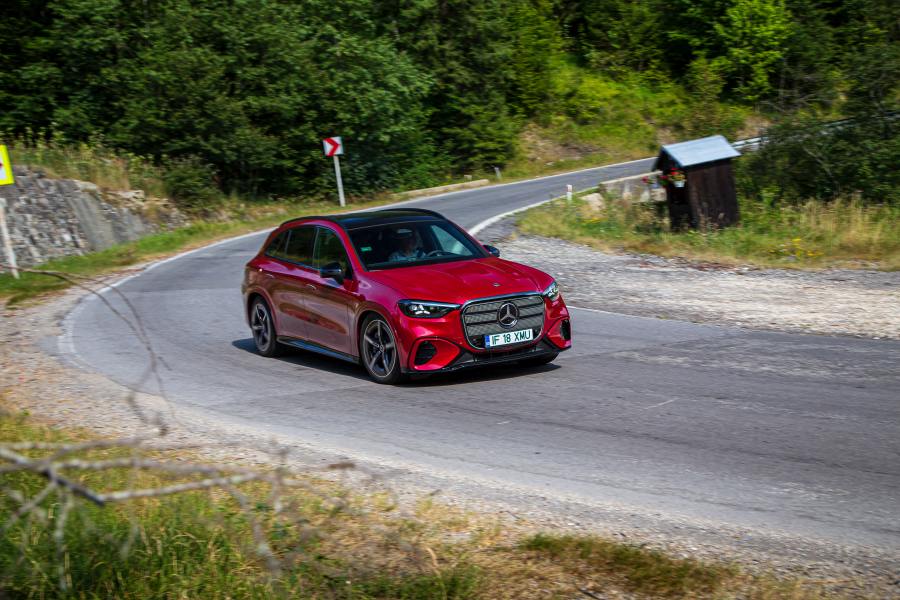
Even in its electric version, the Mercedes GLC plays the comfort card, a traditional Mercedes strength. The Mercedes can be optionally equipped with air suspension, which comes together with rear-axle steering offering a steering angle of up to 4.5 degrees (€2,844.10). These are combined in the AMG Line package with 20-inch wheels fitted with 265/45 R20 tires at the rear and 235/50 R20 at the front.
We do not know how comfortable the Mercedes is with the standard steel-spring suspension because both test cars we drove were equipped with the air suspension and rear-axle steering. With these features on board, however, the Mercedes rides more smoothly and comfortably than the BMW.
With Airmatic suspension, manhole covers, tram tracks and cobblestones are absorbed effectively, and Mercedes also offers a unique feature. The suspension has an intelligent function connected to Mercedes’ cloud-based navigation system. It can adapt to potholes or major bumps that have already been recorded in the cloud by other Mercedes models equipped with this technology and which have previously driven over those locations.
The steering provides very good feedback, clearly informing the driver when the limit of grip is approaching, and is very linear. The motors, mounted on aluminum subframes at the front and rear, eliminate any vibrations, making the Mercedes GLC an extremely pleasant companion on long motorway journeys.
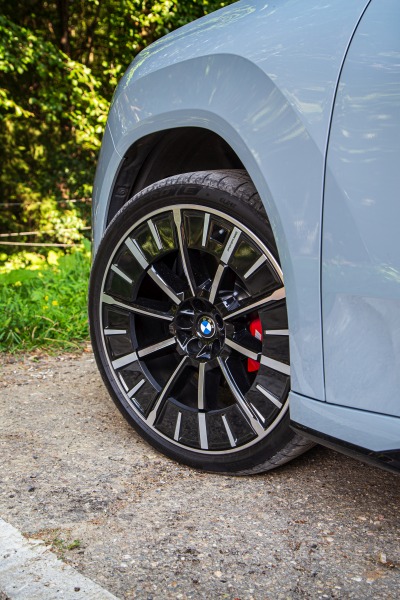
The BMW iX3 does not offer air suspension as an option, nor does it even offer adaptive suspension. The M Sport or M Sport Pro packages are essentially cosmetic, apart from the sport seats. As a result, the conventional suspension, combined with the largest available 22-inch wheels fitted to our test car (275/35 R22 tires at the rear and 255/35 R22 at the front), has a significant impact on comfort on poor roads because the suspension is tuned quite firmly, almost like a sports suspension.
It seems BMW decided against fitting air suspension because it wanted to keep weight as low as possible. And it succeeded. Despite having a much larger battery, at 108.7 kWh net, the BMW iX3 weighs only 2,360 kg, making it 180 kg lighter than the Mercedes, which has a much smaller 94 kWh net battery.
The Mercedes’ greater weight also affects its cornering behavior, where the BMW demonstrates its superiority. The Mercedes is not less agile because of its steering or suspension, which keeps body roll well under control. The problem is the greater inertia, with the Mercedes’ chassis reaching the limit of grip sooner than the BMW’s.
The BMW feels firmer and more incisive to drive, even though the electric version no longer offers the spectacular rear-axle reactions found in models with combustion engines. The iX3 feels more agile and more connected to the driver, and behind its wheel you do not feel the inertia as much as in the Mercedes when taking fast corners.
On a straight line, the Mercedes is slightly faster, benefiting from an extra 20 PS, but especially from 155 Nm more torque. The GLC 400 4Matic accelerates from 0 to 100 kph in 4.2 seconds, compared with 4.9 seconds for the BMW, while 0–200 kph takes 15.3 seconds for the Mercedes versus 16.1 seconds for the BMW. At 210 kph, everything comes to an end because both models are electronically limited to this speed.
Under hard acceleration, the BMW is more linear because the Mercedes experiences a brief reduction in traction at around 120 km/h, due to the two-speed transmission connected to the rear motor.
Mercedes has, however, substantially improved brake-pedal feel compared with the EQE/EQS, thanks to the new ZF-supplied one-box braking system, which provides a perfectly linear brake-pedal response without the hesitation between regenerative and mechanical braking. BMW, which did not have as significant a refinement issue with the braking system on the previous iX3, has also implemented a Continental-supplied one-box braking system.
Mercedes loses the battle when it comes to the operation of the driver-assistance systems. BMW’s new Symbiotic Drive concept is clearly superior. For the lane-departure warning system, a monitoring camera checks whether the driver is paying attention to the road. If the driver is looking ahead, the system does not intervene in the steering, or intervenes later if the car is about to cross the lane markings.
It is an excellent system that prevents unnecessary and sometimes annoying interventions such as those encountered in the Mercedes and other brands. The active lane-keeping assistance is even more impressive. No other automated steering system guides the car so smoothly and confidently on expressways and motorways. It is also remarkable how naturally you can take control from the system or override it through steering-wheel movements.

BMW offers higher charging power — and greater real-world range
The official figures are also confirmed at the charging station. In our charging test at a 400 kW station, the BMW reached a peak charging power of 373 kW and averaged 229 kW from 15 to 80% in just 20 minutes and 32 seconds.
Despite having a battery that is 14.7 kWh smaller in net capacity, the Mercedes also needed 20 minutes to charge from 17 to 80%, but its peak charging power was 354 kW, while the average was only 197 kW.
In practice, charging times are comparable, but the BMW adds more energy than the Mercedes over the same period. And because the two models recorded identical test consumption figures of 21.3 kWh/100 km, the BMW achieved a longer range of 510 km, compared with just 441 km for the Mercedes. However, 441 km is still a very good result.
Both models can charge at AC stations at 11 kW, or optionally at 22 kW. However, the Mercedes has a problem with older DC charging stations using 400V technology, and you need to purchase an adapter costing €654.50 to charge at these stations.
Prices
At €74,700, the BMW iX3 50 xDrive is almost €2,500 more expensive than the Mercedes GLC 400 4Matic, which costs €72,471.
However, BMW’s Panoramic Drive is standard, while there is no option for air suspension. If you tick the box for the Hyperscreen at Mercedes, which comes as part of an expensive package, and add air suspension with rear-axle steering, the price quickly climbs to €80,000. The test car, with the AMG Line package, Digital Light headlights and other options, reaches €96,000.
The BMW is somewhat cheaper in our test configuration, reaching €88,000. Both prices are high despite the very comprehensive equipment levels.
Verdict
Mercedes GLC offers a high level of comfort and a spectacular interior. Its two motors deliver top-level performance, reasonable energy consumption, and decent range. On the other hand, the BMW iX3 is more agile, charges at a higher power, and offers a longer range. In terms of base price, the Mercedes is slightly cheaper, but once options are added, it becomes more expensive than the BMW with equivalent equipment.
| Model | BMW iX3 50 xDrive | Mercedes GLC 400 4Matic |
|---|---|---|
| Motors | 2, electric | 2, electric |
| Max. output (CP) | 469 | 489 |
| Max. torque (Nm) | 645 | 800 |
| Traction | awd | awd |
| Transmission | 1 gear, front and rear | 2 gears rear, 1 gear front |
| DIMENSIONS and WEIGHT | ||
| L x l x h (mm) | 4.782 x 1.895 x 1.635 | 4.845 x 1.913 x 1.644 |
| Wheelbase (mm) | 2.897 | 2.972 |
| Boot volume front/rear (l) | 58/520-1.750 | 100/570-1.740 |
| Curbweight (kg) | 2.360 | 2.540 |
| Battery capacity net(kWh) | 108,7 | 94 |
| Charging AC/DC (kW) | 22/400 | 330 |
| PERFORMANCES | ||
| Acceleration 0-100 km/h (s) | 4,9 | 4,3 |
| Top speed (kph) | 210 | 210 |
| WLTP consumption (kWh/100 km) | 15,1 | 16 |
| WLTP range (km) | 805 | 666 |
| MEASUREMENTS | ||
| Interior width front/rear (cm) | 148/143 | 151/148 |
| Interior height front/rear (cm) | 102/96 | 107/100 |
| Kneeroom rear (cm) | 76 | 75 |
| Energy consumption (kWh/100 km) | 21,3 | 21,3 |
| Real range (km) | 510 | 441 |
| Price, euro with VAT | 72,471 | 74,700 |