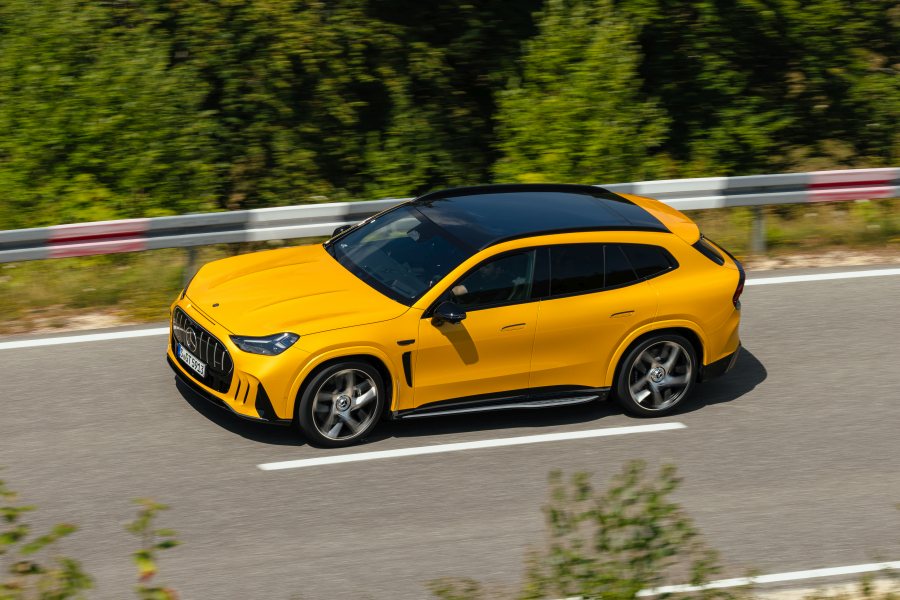
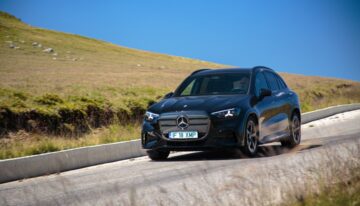
The new Mercedes-AMG GT SUV made a spectacular debut with a drift demonstration in front of the Mercedes-Benz Museum in Stuttgart, illuminated in red. Unlike the AMG GT 4-Door Coupé, it is also available with a larger 128 kWh battery and a higher charging power of up to 710 kW.
The first all-electric AMG SUV made its debut at a lavish presentation in front of the Mercedes-Benz Museum in Stuttgart. Built on the AMG.EA architecture also used by the AMG GT 4-Door Coupé, the Mercedes-AMG GT SUV features 800V technology, YASA axial-flux motors and cylindrical battery cells. It delivered two surprises: alongside the version with a 106 kWh battery, which can charge at up to 600 kW, there is also a larger 128 kWh battery that supports a record charging power of up to 710 kW for a production car.
The 106 kWh battery consists of 18 modules, while the 128 kWh version has 22 modules. Both use cylindrical cells measuring 26 mm in diameter and 105 mm in height, which are easier to cool than prismatic cells grouped into modules.
The AMG GT SUV is available in three versions from launch:
– AMG GT 63: Three axial-flux motors develop a peak output of up to 1,169 PS, with a continuous output of 721 PS, and maximum torque of 2,000 Nm. Acceleration from 0–100/0–200 kph takes 2.7/7.2 seconds, respectively, while top speed is electronically limited to 270 kph with the Driver Package, battery 106/128 kWh, charging power up to 600/710 kW
– AMG GT 55: Three axial-flux motors develop a peak output of up to 816 PS, with a continuous output of 721 PS, and maximum torque of 1,860 Nm. Acceleration from 0–100/0–200 kph takes 3.1/9.9 seconds, respectively, while top speed is electronically limited to 270 kph with the Driver Package, battery 106/128 kWh, charging power up to 600/710 kW
– AMG GT 53: Two conventional permanent-magnet synchronous motors develop a peak output of up to 544 PS, with a continuous output of 367 PS, and maximum torque of 800 Nm. Acceleration from 0–100/0–200 kph takes 4.2/14.6 seconds, respectively, while top speed is electronically limited to 250 kph with the Driver Package, battery 106 kWh, charging power up to 600 kW
Compared with the coupé, the AMG GT 63 SUV is 125 kg heavier, weighing 2,585 kg, while the version with the 128 kWh battery tips the scales at 2,695 kg. Surprisingly, the AMG GT 55 SUV is even heavier, at 2,605 kg, making it 145 kg heavier than the coupé with the same battery. The version with the 128 kWh battery weighs 2,715 kg.
The AMG GT 53 SUV is also 150 kg heavier than the four-door coupé, with the AMG GT 53 coupé weighing 2,375 kg.
Measuring 5,084 mm in length, 2,001 mm in width and 1,656 mm in height, the AMG GT SUV is 10 mm shorter, 42 mm wider and 245 mm taller than the four-door coupé, while its 3,040 mm wheelbase is identical. Its taller body results in a drag coefficient of 0.27, compared with 0.22 for the coupé. However, a Cd value of 0.27 is exceptional for an SUV.
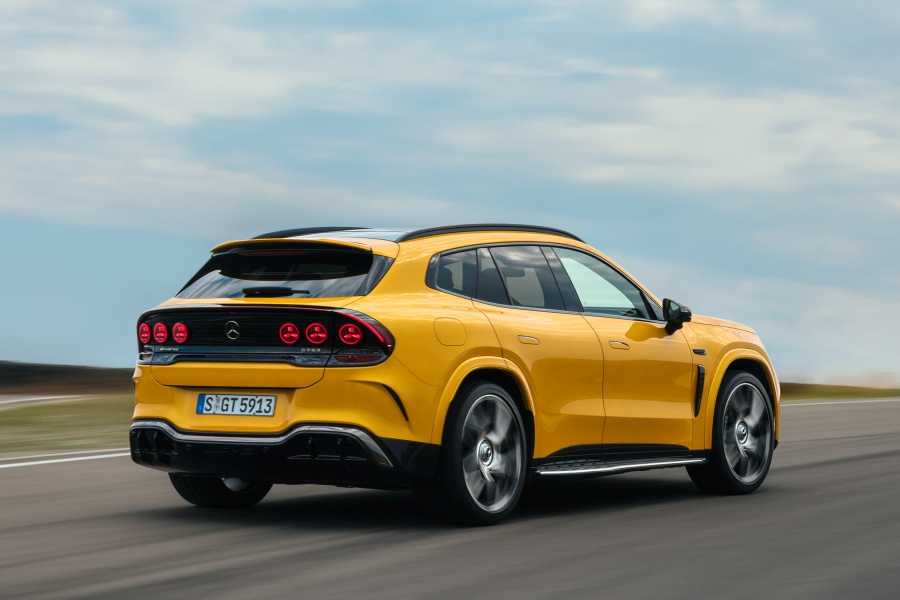
Design
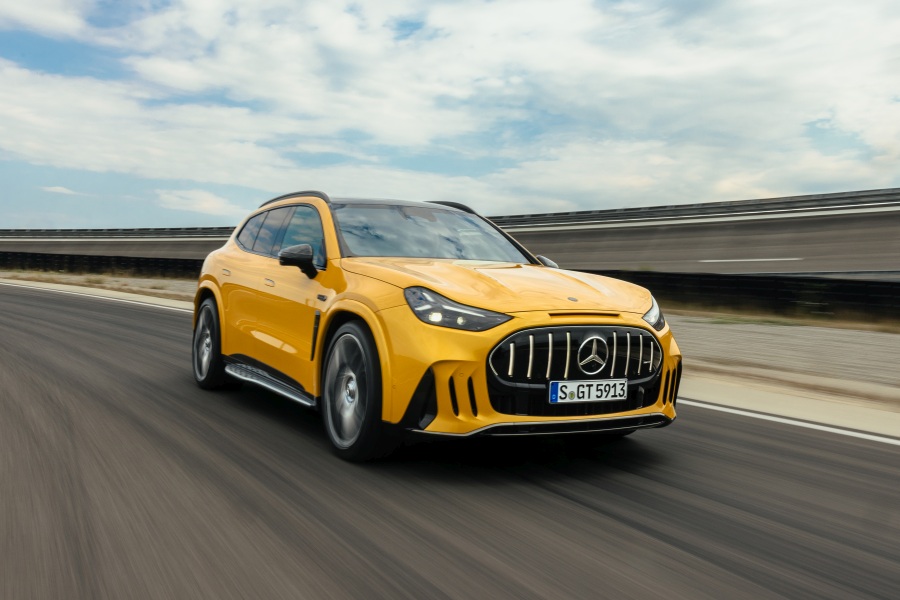
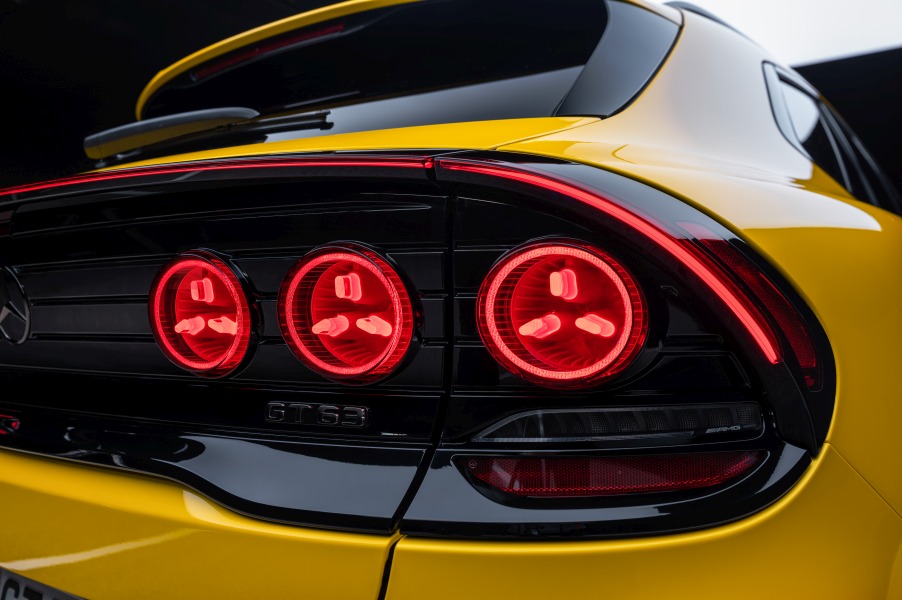
The design differs slightly from that of the four-door coupé on which the SUV is based. The headlights are more elongated, as is one of the three elements in the lighting signature that echoes the Mercedes-Benz logo.
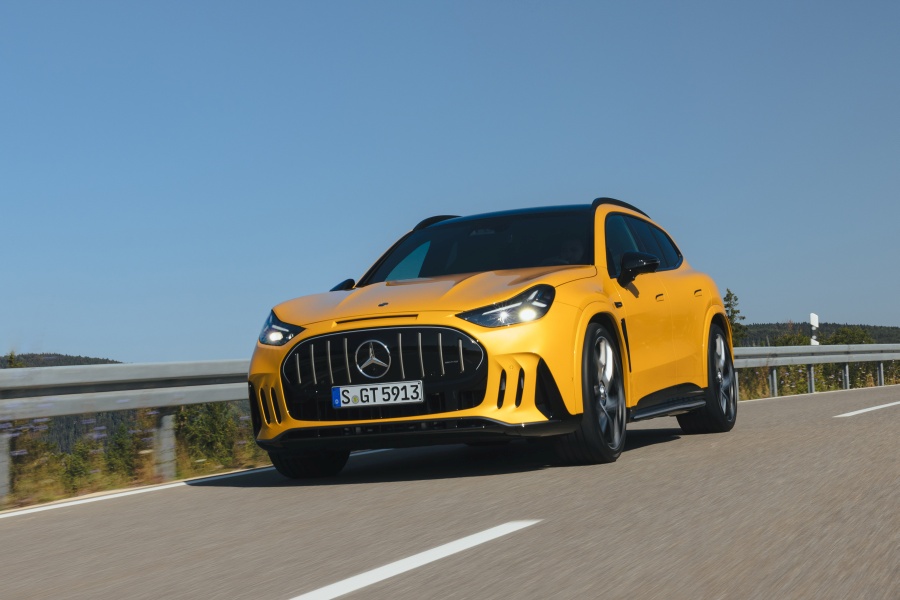
Thanks to the longer headlights and two additional cooling openings in the front bumper, the radiator grille is somewhat narrower and taller. Another noticeable feature is the air intake above the grille, similar to the one on the AMG GT 53 4-Door Coupé, but absent from the range-topping three-motor AMG GT 55 and AMG GT 63 4-Door Coupé models.
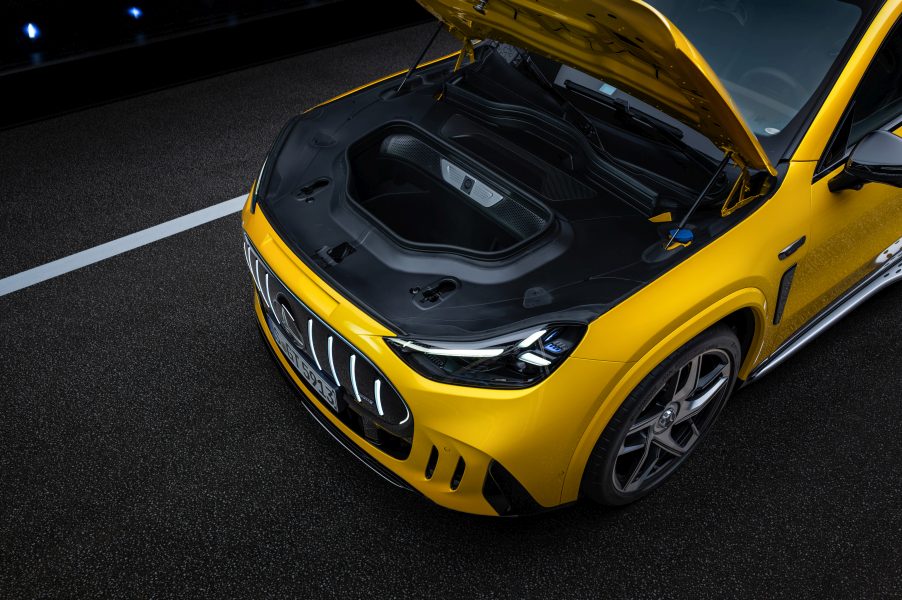
Because it is narrower than the coupé’s grille, the SUV’s front grille has only four vertical slats on either side of the central emblem, compared with five on the coupé. These slats are illuminated, as is the logo.
Interior
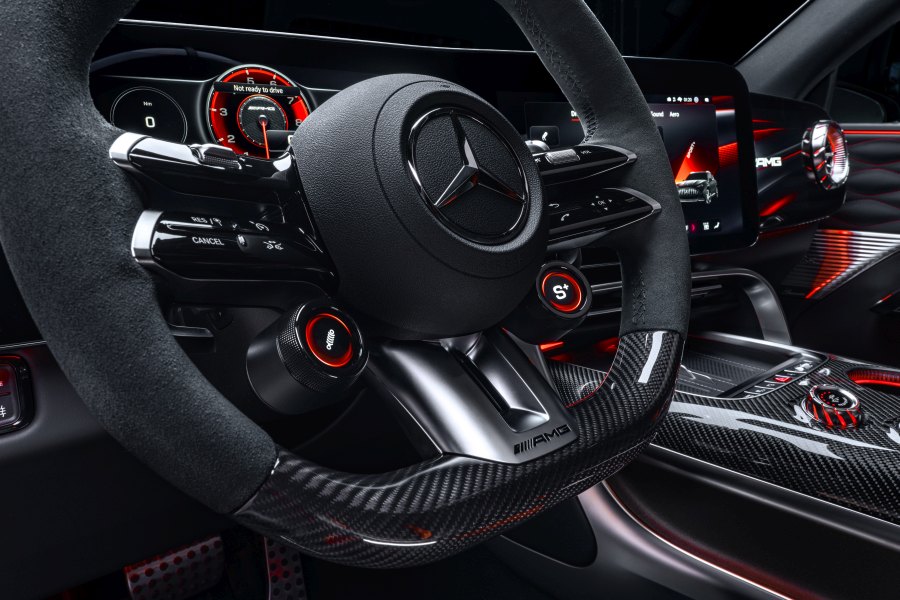
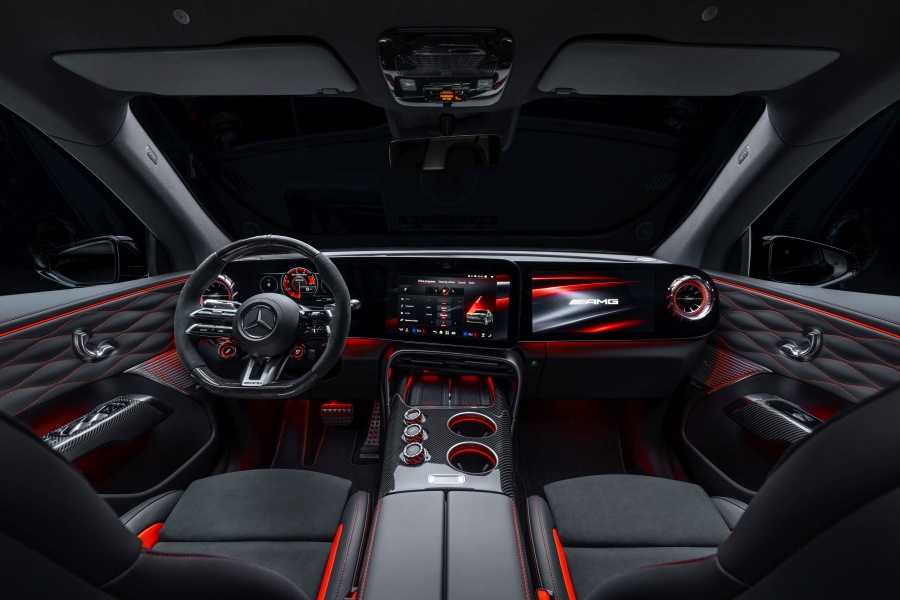
The interior is carried over entirely from the 4-door coupé, featuring a 10.2-inch digital instrument display and a 14-inch central infotainment screen angled towards the driver, alongside a 14-inch display for the front passenger. The AMG Performance steering wheel incorporates rotary controls for selecting the driving modes.
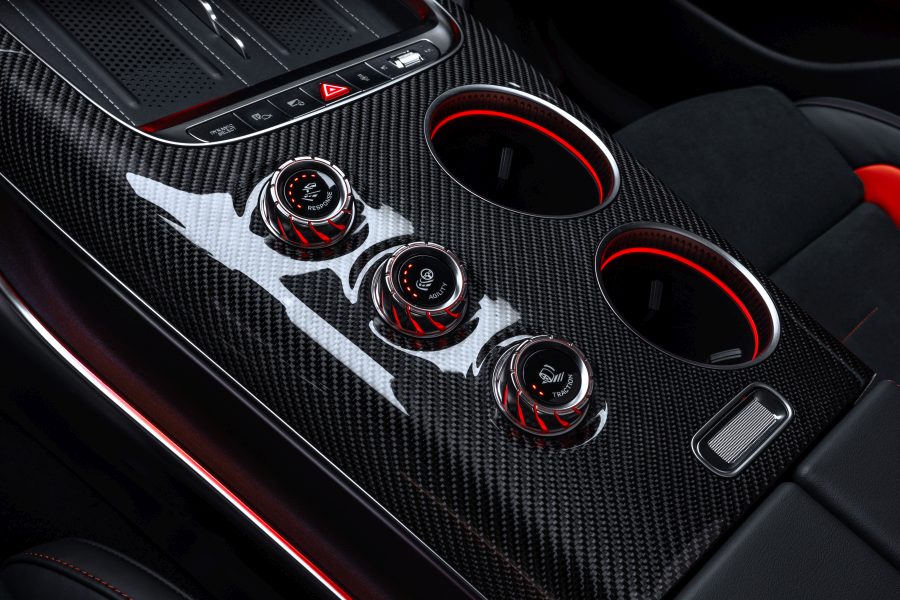
As in the AMG GT 4-door Coupé, the centre console houses three rotary controls for individually adjusting the car’s response, cornering and slip behaviour.
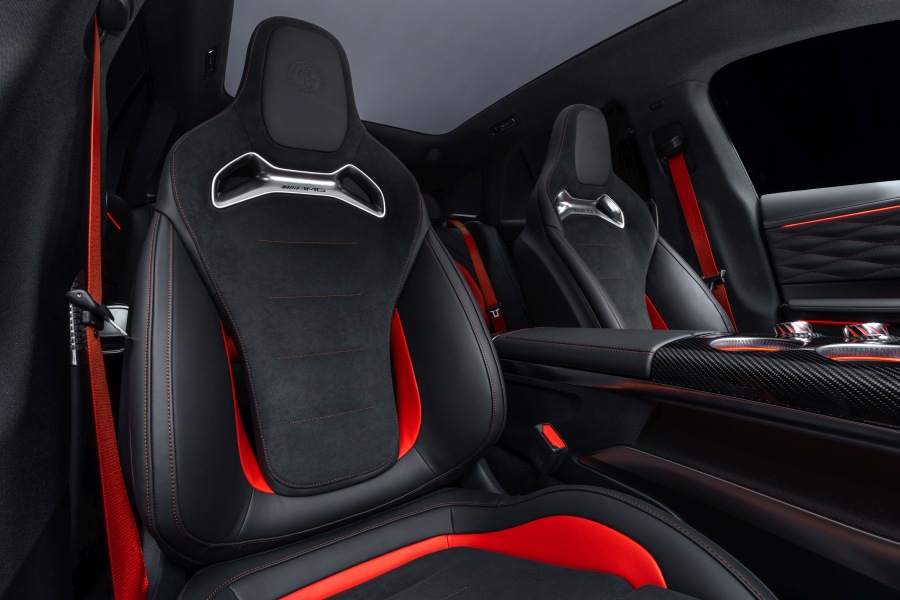
Despite its high price, the AMG Performance seats with integrated headrests are available only as an option, as is the Burmester 4D sound system.
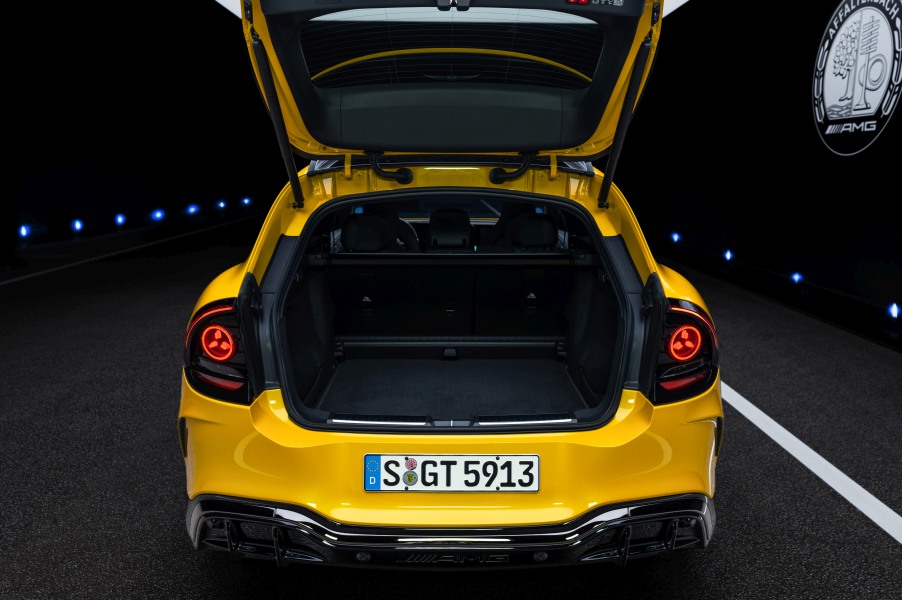
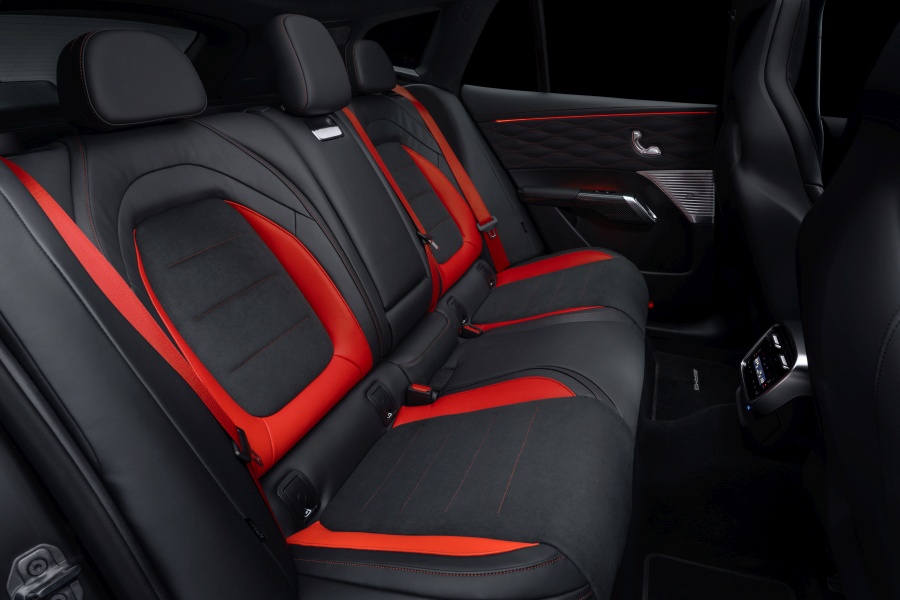
At the rear, a three-seat bench is standard. The split-folding rear seatbacks can be folded down, while the headrests are electrically retractable. The Sky Control panoramic roof features a shading system and can be switched between transparent and opaque.
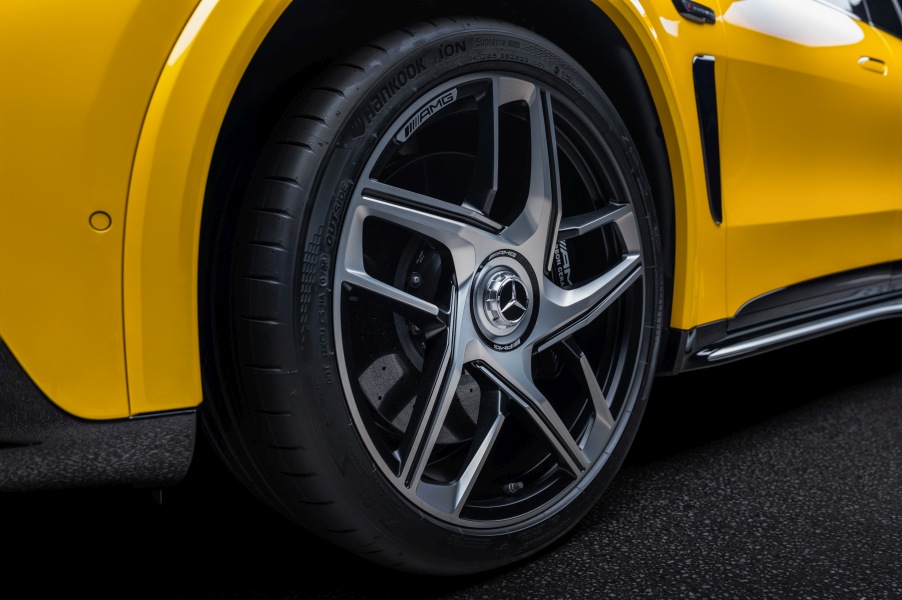
A choice of 60 Manufaktur exterior paint colours is available, while AMG forged wheels can be ordered with coloured accents. Seat belts are also available in Fjord Blue, Green Hell and Orange Flame.
Chassis
The Mercedes-AMG GT SUV features a sophisticated three-stage adjustable AMG Active Ride Control+ air suspension system. It is standard on the AMG GT 63 SUV and optional on the AMG GT 55 SUV. Conventional anti-roll bars have been replaced by active hydraulic elements that control both body roll and pitch. As a result, the nose no longer rises sharply under hard acceleration or dips under heavy braking.
The suspension is combined with rear-axle steering. At speeds of up to 80 kph, the rear wheels turn by up to 6 degrees in the opposite direction to the front wheels. Above 80 kph, they turn in the same direction as the front wheels, by up to 1 degree.
The AMG GT 63 SUV comes with ceramic brake discs as standard, while the AMG GT 55 SUV is equipped with steel discs.
The driver can choose from seven driving modes: Eco, Comfort, Sport, AMG Force Sport+, Race, Slippery and Individual. In Race mode, additional functions are available, including Drift Mode, Drag Race, Track Race and Launch Control.
A boost function is available in Comfort, Sport and AMG Force Sport+ modes by pulling both steering-wheel paddles simultaneously.
In AMG Force Sport+ mode, the system reproduces the sound of an AMG V8 engine in the AMG GT 63 and AMG GT 55 SUVs, and that of an AMG inline-six engine in the AMG GT 53 SUV. The driving programmes also simulate gear changes similar to those of the AMG Speedshift nine-speed transmission.
Active aerodynamics
The roof spoiler on the AMG GT 55 and AMG GT 63 automatically adjusts its position at speeds above 150 kph, depending on the selected driving programme.
The AEROKINETICS Airpanel active airflow control system regulates cooling airflow through vertical slats in the front bumper. When additional cooling is not required, the slats remain closed, reducing aerodynamic drag. They open only when more cooling air is needed.
| Model | Mercedes-AMG GT 53 SUV | Mercedes-AMG GT 55 SUV | Mercedes-AMG GT 63 SUV |
|---|---|---|---|
| Engine | 2, electric | 3, electric | 3, electric |
| Max. output PS(kW) | 400 (544) | 600 (816) | 860 (1,169) |
| Continuous power PS (kW) | 270 (367) | 530 (721) | 530 (721) |
| Max. torque (Nm) | 800 | 1,860 | 2,000 |
| L x w x h (mm) | 5,084 x 2,001 x 1,656 | 5,084 x 2,001 x 1,656 | 5,084 x 2,001 x 1,656 |
| Wheelbase (mm) | 3,040 | 3,040 | 3,040 |
| Kerbweight (kg) | 2,525 | 2,605/2,715 | 2,585/2,695 |
| Boot volume front/rear (l) | 78/607-1,740 | 78/607-1,740 | 78/607-1,740 |
| Battery capacity net (kWh) | 106 | 106/128 | 106/128 |
| Charge power DC (kW) | 600 | 600/710 | 600/710 |
| DC Charging time 10-80% (min) | 11 | 11/12 | 11/12 |
| Charge power AC (kW) | 11 | 11 | 11 |
| Energy consumption (kWh/100 km) | 18.8 | 20.9/21.2 | 20.9/21.2 |
| WLTP range (km) | 668 | 585/700 | 585/700 |
| Acc 0-100/0-200 kphh (s) | 4.2/14.6 | 3.1/9.9 | 2.7/7.2 |
| Top speed (km/h) | 250 | 270 | 270 |