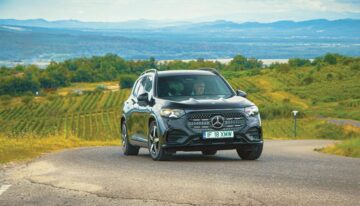
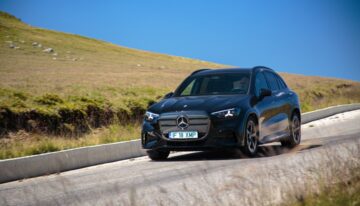
Mercedes has begun testing the seventh-generation Mercedes E-Class, which will debut in 2027 on the MB.EA platform and will replace the EQE.
The seventh-generation E-Class, which will be offered with electric propulsion, will not replace the sixth-generation E-Class but will coexist with it. The current E-Class generation with combustion and PHEV engines will undergo a comprehensive facelift in 2027, adopting the design of the new electric-motor seventh generation that will launch at the same time.
The combustion-engine and PHEV model will continue to be offered in sedan and estate versions, while the electric model will only be available as a sedan.
Thus, the seventh-generation Mercedes E-Class—and the first with electric propulsion—will replace the Mercedes EQE, which will have a rather short career of only five years. Launched in 2022, the Mercedes EQE has not been a success, with customers criticizing its material quality and lack of practicality compared to its combustion-powered sibling.
Mercedes has repeatedly stated that it will phase out the EQ naming from its models and that electric models will have a design similar to combustion ones, even though the platforms will be completely different.
Internal Mercedes documents quoted de british car magazine Autocar specify that the design will follow the traditional three-box silhouette of the E-Class and that the electric E-Class will have “a very status-oriented wheelbase offering maximum space and comfort.”
While the combustion and PHEV E-Class will continue using the conventional MRA II platform, the electric Mercedes E-Class will be based on the MB.EA platform from the new GLC EQ, which will also underpin the new electric C-Class in 2026.
Thus, we expect versions with a single motor and rear-wheel drive, or two motors and all-wheel drive, adaptive air suspension, rear-wheel steering, and 800V technology.
Additionally, the motors and 94 kWh battery—offering up to 713 km of range in the GLC EQ—will be carried over from the GLC EQ. The 800V architecture will enable charging power of up to 350 kW.
The design of the electric Mercedes E-Class will adopt the new grille introduced on the GLC EQ and further developed on the Mercedes Vision Iconic concept.
The MB.EA platform provides ideal conditions for achieving a generous wheelbase that ensures a spacious interior. The current combustion-powered Mercedes E-Class generation has a wheelbase of 2.96 meters and a length of 4.95 meters, while the Mercedes EQE—despite having the same length—has a 3.12-meter wheelbase, 16 cm longer.
With a three-box body, it will be difficult for the future electric Mercedes E-Class to achieve a drag coefficient close to that of the EQE, which holds a record value of 0.22. But the new MB.EA platform features highly efficient motors, a silicon carbide inverter, and improved battery thermal management—offsetting the slight increase in drag.
Given its sedan silhouette, we expect the future electric E-Class to offer a slightly higher range than the 713 km of the new GLC EQ SUV.