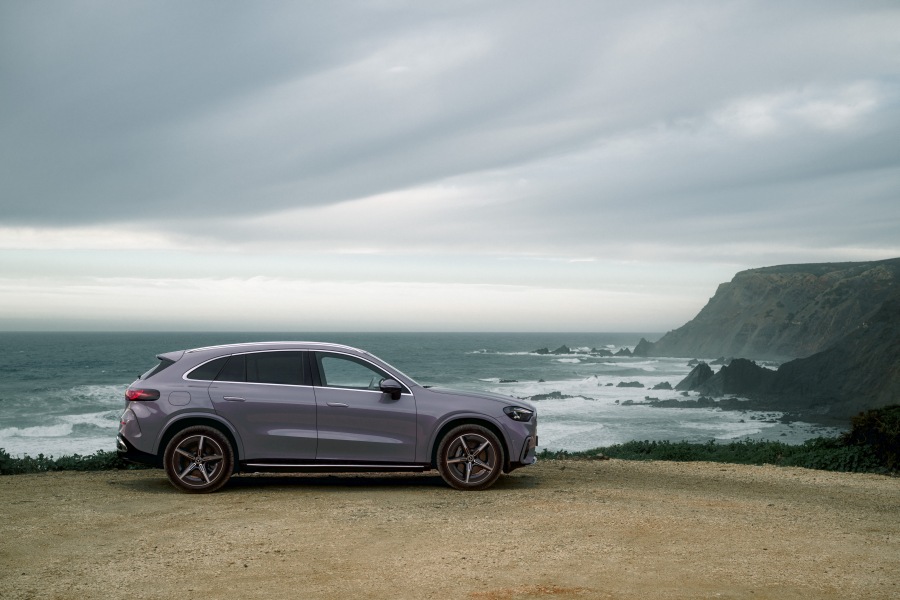
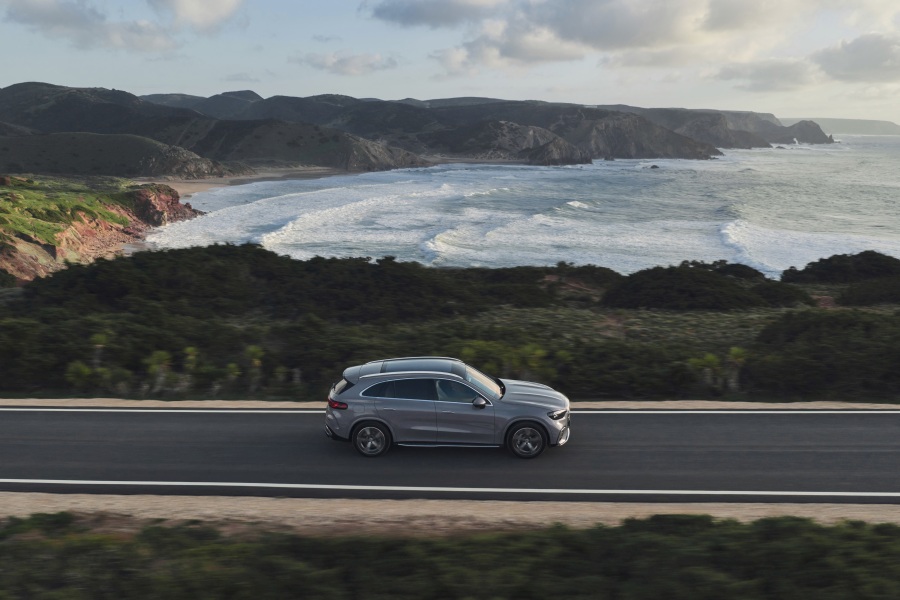
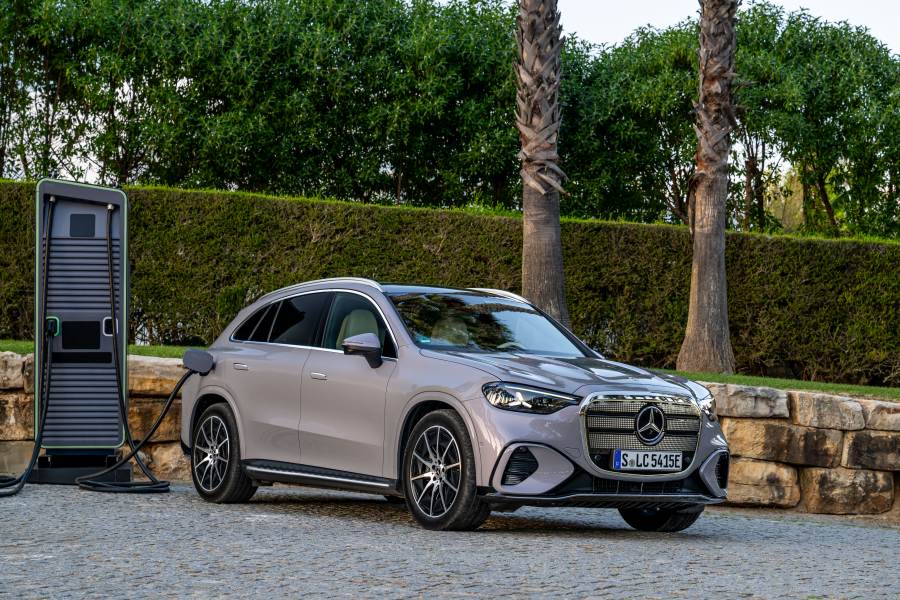
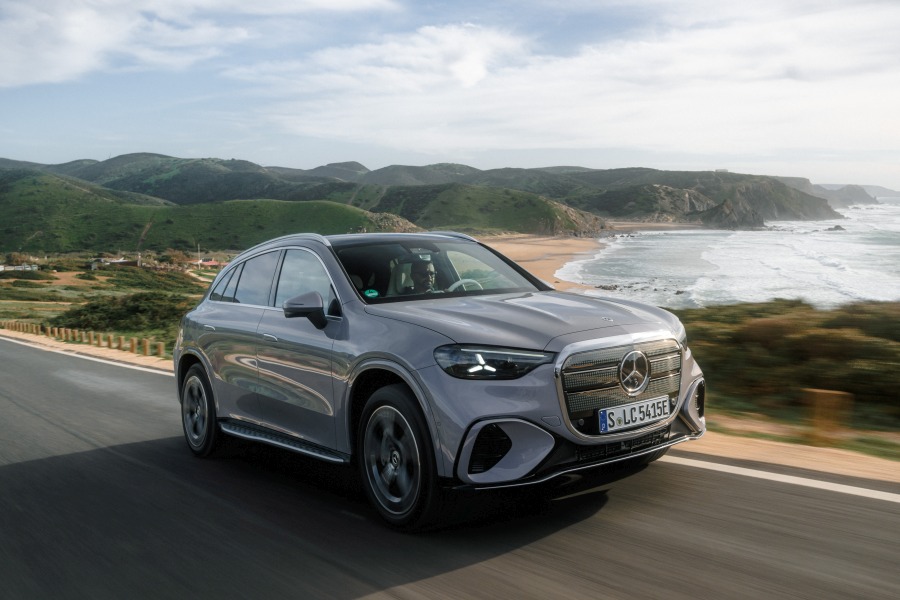
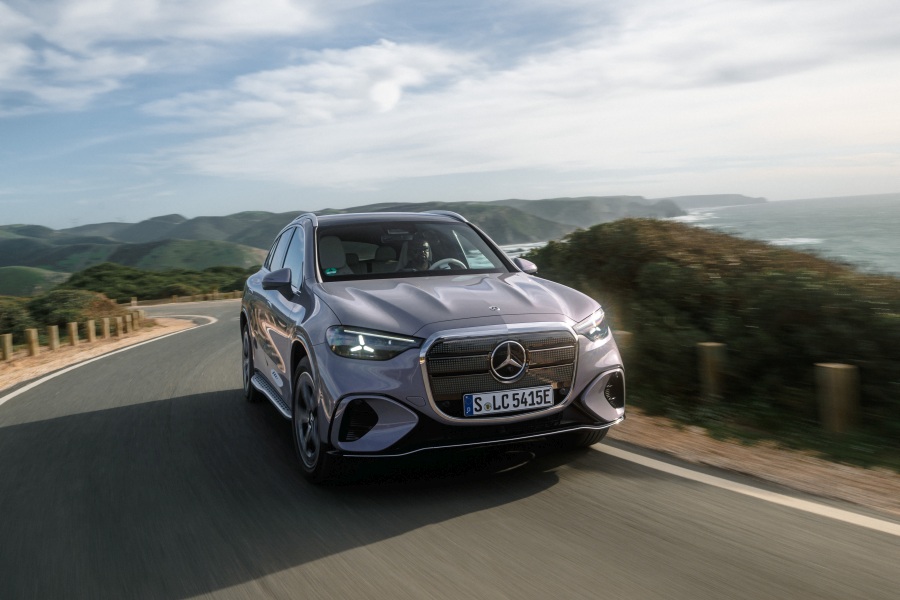
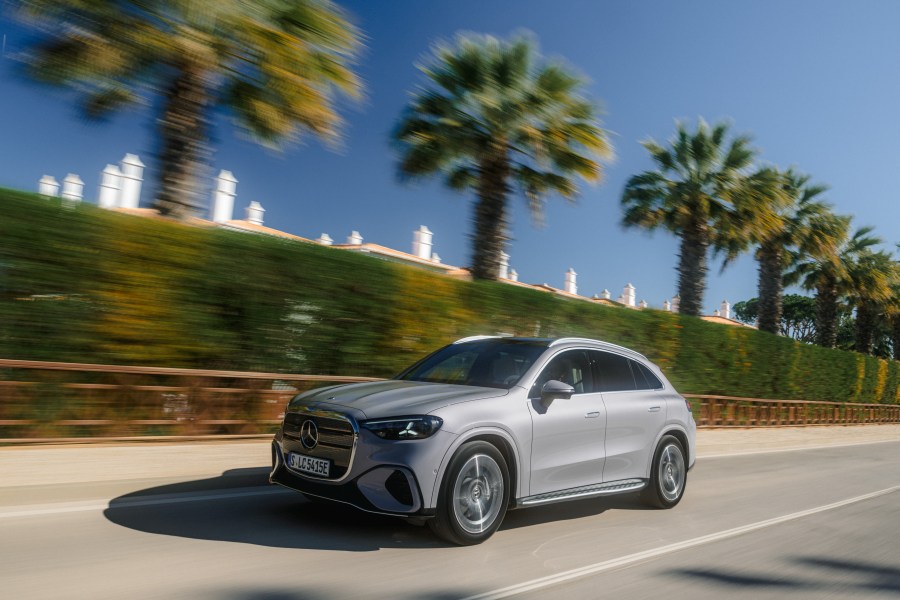
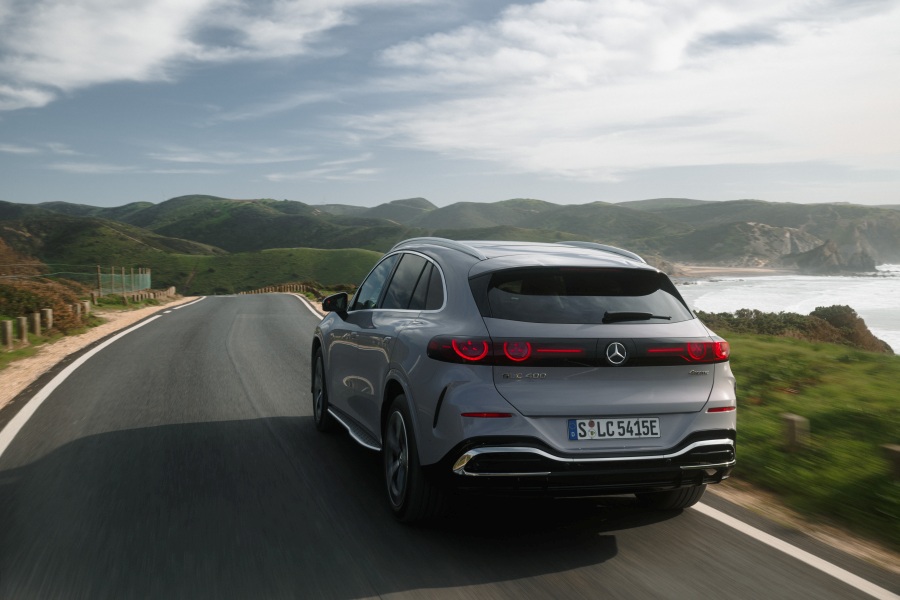
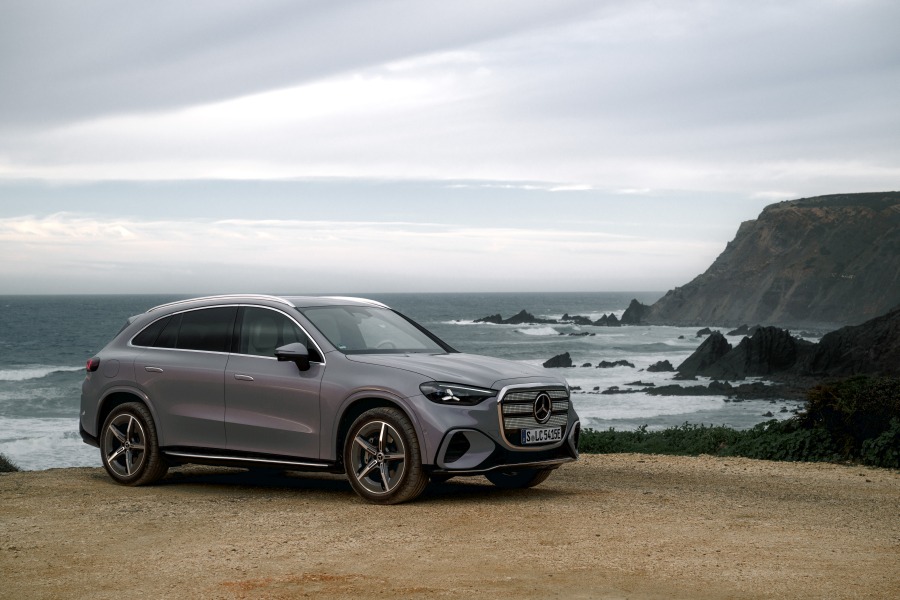
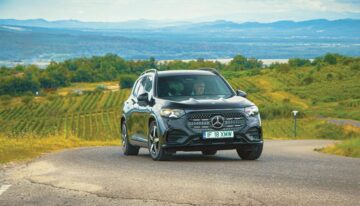
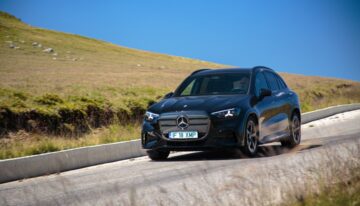
How does the first Mercedes model from the new electric era drive? Impressions of the new Mercedes GLC 400 4Matic EQ on the Portuguese coast in Algarve.
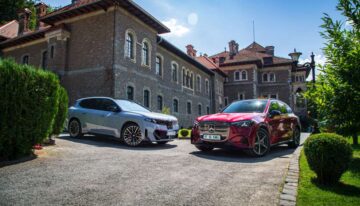
Like its rival, the BMW iX3, the new Mercedes GLC EQ has nothing in common with the combustion-engine GLC model. Instead, it is built on a completely new electric platform that promises major improvements in charging power, range, and usability compared to Mercedes’ first generation of electric models and its successor, the EQC 400.
Thus, the Mercedes GLC 400 4Matic EQ uses the dedicated MB.EA electric platform, which will also underpin the future electric C-Class, while BMW uses a flexible architecture grouped under the name “Neue Klasse” for the iX3 and the new i3.
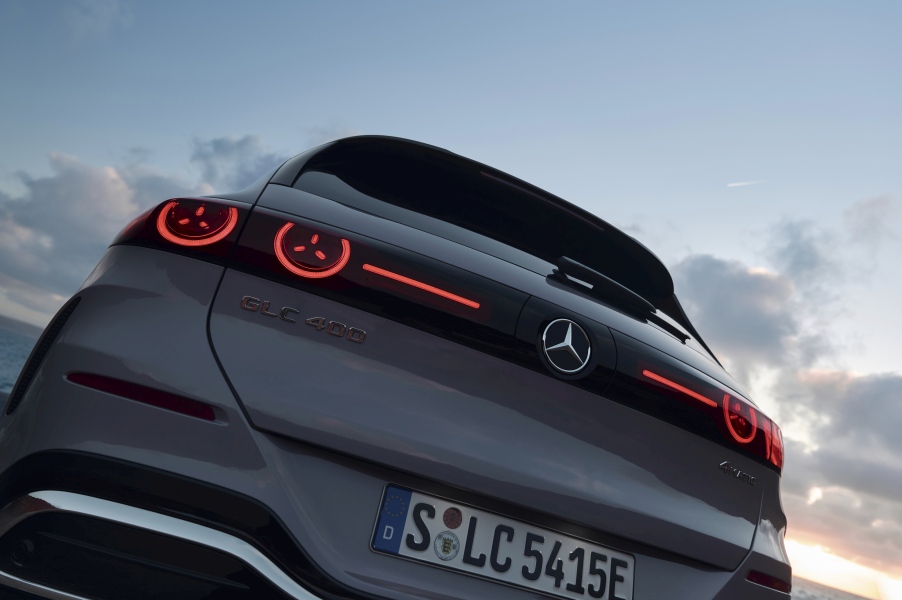
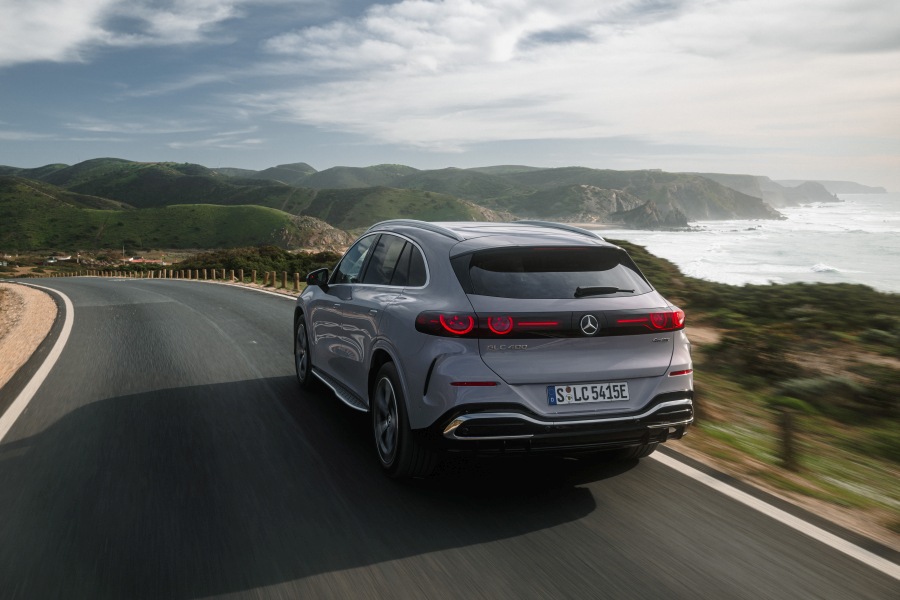
Although the Mercedes GLC EQ is entirely new, you can see Stuttgart’s strategy to visually link combustion and electric models. The electric version closely resembles the combustion GLC that has been in production for several years—except for the new grille, which debuts on the GLC EQ and will appear on many future Mercedes models.
The Mercedes GLC EQ has so far been launched in the GLC 400 4Matic version with two permanently excited synchronous motors producing 489 hp and 800 Nm. The front motor engages only when extra power or traction is needed. A base version with a single motor and top AMG versions are also planned.
All versions feature 800V technology and ultra-fast DC charging up to 330 kW. AC charging is available at 11 kW or optionally (for €654) at 22 kW. For charging at older 400V stations, an additional €654 adapter is required.
The Mercedes GLC 400 4Matic starts at €71,281, placing it close to the BMW iX3 (recently increased to €70,900), cheaper than the similarly powerful Audi Q6 e-tron (€74,700 for 428 hp), and much cheaper than the Porsche Macan 4 (€84,600 for 408 hp).
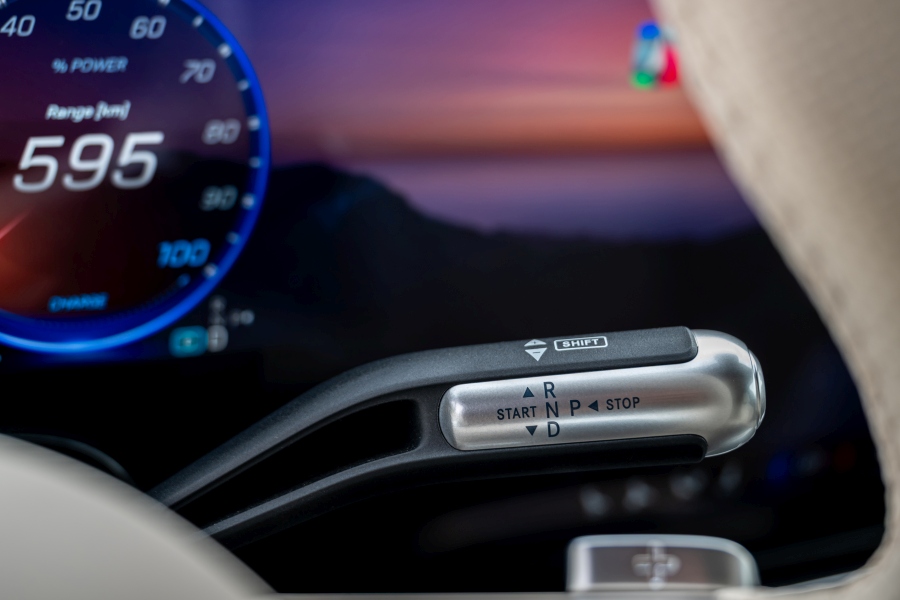
Mercedes claims a WLTP range of 673 km, lower than the BMW iX3’s 805 km, which also has a significantly larger battery.
Very spacious and elegant interior
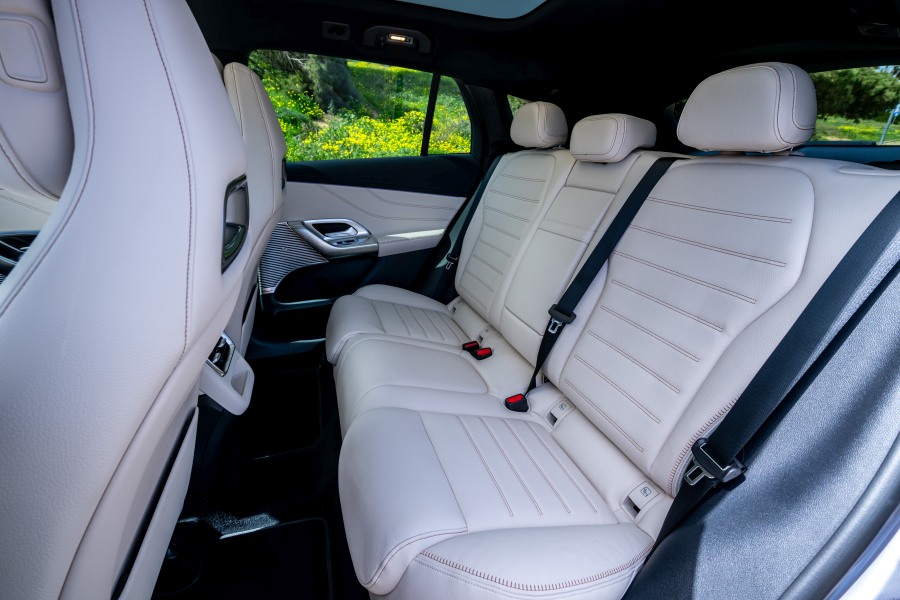
Although, aside from the grille, the GLC EQ doesn’t differ much from the combustion GLC, it is a significantly larger car—100 mm longer, with a wheelbase extended by 84 mm, offering more rear legroom. Headroom is also improved, and although the trunk (520 liters) is slightly smaller than the combustion GLC (620 liters) or the GLC PHEV (470 liters), there is an additional 128-liter front trunk (frunk).
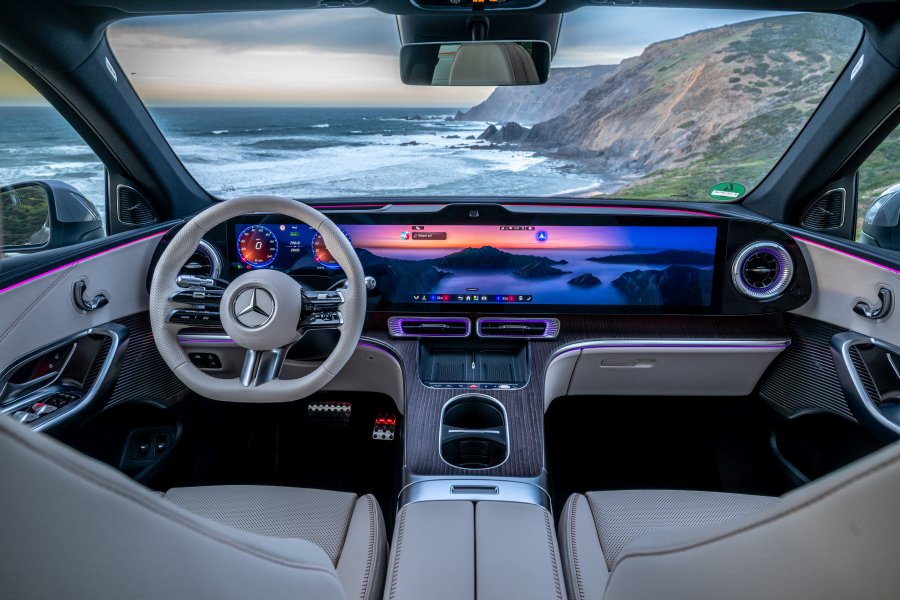
The interior impresses with material quality. The seats are luxurious and well-configured, and it’s worth noting that Mercedes replaced the small touch-sensitive controls on the steering wheel with a classic stalk on the left and a rotary control on the right, both offering satisfying tactile feedback.
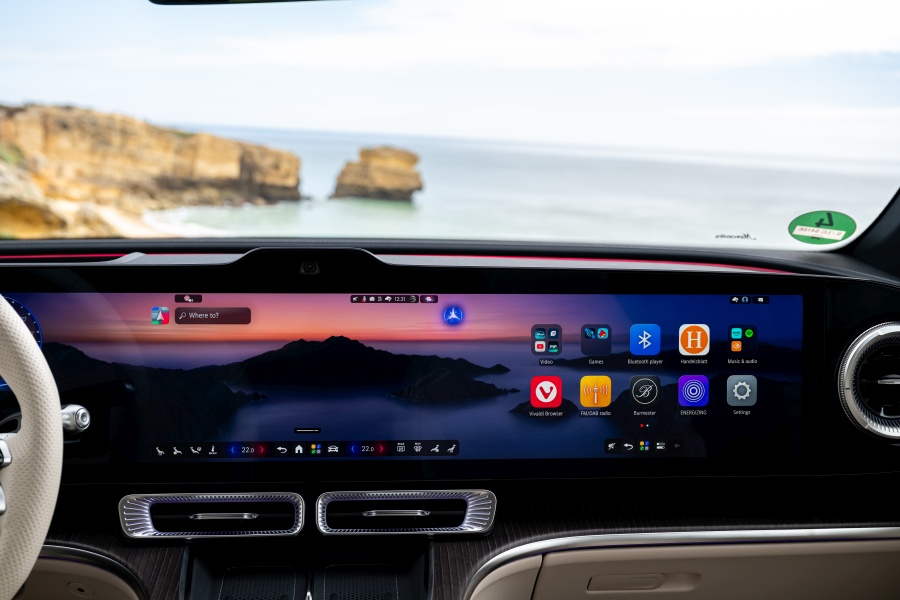
The tested top version featured an optional massive single-piece display spanning the entire dashboard. At first glance, it looks impressive, but when turned off, fingerprints are very visible. Moreover, it can only be ordered with the expensive “Advanced Plus with Digital Extras” package, meaning that beyond the €1,487.50 display, you must also pay €3,570 for the package.
The base version, with only two displays (instrument cluster and multimedia), looks less appealing, as the passenger side only gets a digital photo frame. A proper passenger display is only available with the same costly package.
On the other hand, the multimedia system with the new MB.OS operating system features a supercomputer capable of 254 trillion operations per second. It runs incredibly fast, includes AI from Google and Microsoft, and offers apps like Disney+, games, and Microsoft Teams for in-car conferencing, complete with a built-in webcam and screen-sharing capability.
As with other Mercedes models, the augmented reality head-up display (€1,249) is worth it, projecting navigation directions onto the windshield using intuitive virtual arrows. Driver assistance systems can also be easily deactivated individually.
Extremely comfortable and quiet, moderate agility
Available at launch only in the 489 hp version, the GLC 400 4Matic is extremely fast—perhaps too fast for many users. It accelerates smoothly, and you don’t feel when the rear motor’s 2-speed gearbox shifts, as it doesn’t operate at a fixed speed but adapts to multiple factors. Thanks to this gearbox, strong power is always available, even at high speeds.
There is also a Sport mode, where the car responds very quickly, though not as aggressively as the BMW iX3, because Mercedes uses permanent magnet synchronous motors instead of BMW’s externally excited motors.
In Comfort mode, it drives smoothly and calmly, delivering power linearly. The single-motor version will likely behave similarly, as only the rear motor is used during relaxed driving. It remains to be seen how much cheaper it will be, though it should offer longer range and potentially more driving enjoyment due to rear-wheel drive.
Our impressions are based on a test car equipped with the optional Agility & Comfort package (€2,844), which includes rear-axle steering (4.5-degree angle) and air suspension. This makes comparisons with the BMW iX3 somewhat uneven, as the BMW currently uses conventional steel-spring suspension.
Even though tested on different roads, it’s clear that the GLC handles successive bumps better and offers superior comfort on rough roads. It is more relaxed and better suited for long highway journeys.
Mercedes also impresses with overall comfort, especially low interior noise at highway speeds, thanks to both motors being mounted on elastically isolated subframes.
At the same time, the GLC EQ remains reasonably agile for a car weighing 2,535 kg—175 kg more than the BMW—even though it has a smaller battery. This higher weight may also affect energy consumption.
Consumption is hard to compare due to different test conditions. BMW reports 14.9–17.9 kWh/100 km, while Mercedes claims 14.9–18.9 kWh/100 km. However, the Mercedes’ battery is 14 kWh smaller, resulting in about a 100 km range disadvantage.
Verdict
Verdict
As expected, the Mercedes GLC 400 4Matic sets new standards for refinement and comfort. It is extremely fast and features a high-quality interior. At first glance, the price seems reasonable for this power class, but once you add important options for drivetrain and multimedia, it becomes as expensive as a Porsche Macan. Its agility does not match the BMW iX3, and its range is also lower.