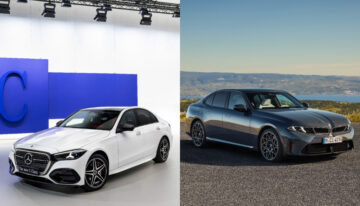
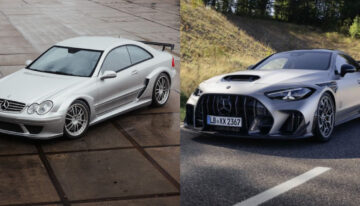
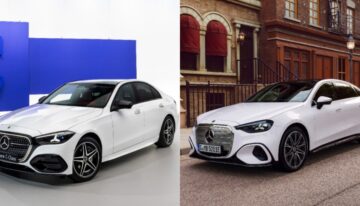
A shocking report announces that Mercedes is in talks with BMW to receive BMW engines, and at a later stage, the two manufacturers may develop joint production facilities for combustion engines.
The rumor is not new, since almost 9 months ago Ola Källenius, Mercedes’ CEO, initiated the idea of a potential collaboration with BMW regarding combustion engines. A final decision is expected within the next two months, according to the German magazine Manager Magazin.
If the Boards of Directors of both companies approve, BMW could begin delivering engines to Mercedes starting in 2027. Later, the Bavarians could also supply complete powertrains—engines and transmissions—to the Stuttgart-based manufacturer.
From a technical standpoint, it seems there is no obstacle, since the technical development heads of the two companies—Markus Schäfer from Mercedes and Joachim Post from BMW—concluded that transplanting BMW engines into Mercedes models could be done with minimal modifications.
What about Geely
After ending its cooperation with Renault on four-cylinder diesel and gasoline engines for the compact class, Mercedes signed a contract with Geely to jointly develop a new generation of four-cylinder engines. These are designed in Germany and produced in China at a new plant built by Geely—one of the largest engine factories in the world. The new Geely-Mercedes engines have already debuted in the new Mercedes CLA.
However, using these engines, which will also be shared with Volvo in higher-class Mercedes models such as the C-Class, GLC, and E-Class, is problematic both in terms of brand image—since they are produced in China—and because of new tariff policies. Engines manufactured in China are expensive to import into the U.S.
And this is where BMW comes in. The Bavarians are in no rush to abandon the combustion engine and have huge production capacity in Steyr, Austria. Since Mercedes recently decided to extend the lifecycle of its combustion-powered models, it needs modern engines, including for PHEV versions.
Possible joint production
After an initial phase in which BMW acts only as supplier, the two carmakers could begin producing engines jointly in the U.S. to avoid customs tariffs. At some point, they might even establish a joint venture for the production of engines and transmissions.
What will customers say?
For BMW, this is both a major image boost and a financial win. The fact that their rivals at Mercedes would use BMW engines is proof of the quality of these powertrains. For BMW, supplying engines to Mercedes is also a very profitable business case. It remains to be seen whether customers will hesitate to buy a Mercedes model powered by a BMW engine.
As for transmissions, except for the compact class, BMW relies on 8-speed automatic gearboxes from ZF, while Mercedes uses its own in-house 9-speed automatics. Will Mercedes give up its own transmission on some models in favor of one from BMW? That would mean reducing production of Mercedes’ own automatic gearboxes, which could impact profitability.