While auto insurers in California are increasingly deploying artificial intelligence to accelerate claims, the reality of this “operational shift” is more fragmented than it first appears. According to a new report, while between 58% and 82% of insurance carriers now use AI tools, the technology is often restricted to small-scale or routine tasks rather than full-scale claim management. Despite the industry’s excitement, only 12% of insurers describe their AI capabilities as “fully mature,” and just 7% have achieved scalable success.
These AI-driven systems often produce immediate digital payouts that can fail to account for the full spectrum of damages. For luxury car owners, this can lead to substantial losses stemming from undervalued premium repair costs and overlooked long-term medical needs. The core issue is that while AI can process data quickly, it often lacks the nuanced judgment required for complex claims involving sophisticated engineering and delayed-onset physical injuries.
The Rise of AI in Automotive Claims Processing
Insurers like Travelers are increasingly adopting AI assistants to handle initial claim calls and damage assessments, framing the technology as a way to streamline operations and resolve claims faster. The company’s AI Claim Assistant now fields initial auto damage claim calls, using advanced language recognition to guide customers through the process.
While the goal is greater efficiency, reports show that widespread, mature AI implementation remains fragmented, with only 12% of carriers having fully developed AI capabilities. The technology primarily serves to speed up the initial phases of a claim, but not necessarily to improve the accuracy of the final settlement, especially for non-standard vehicles and injuries.
AI models analyze accident reports, vehicle photos, and historical claim data to generate damage estimates and settlement figures within hours or even minutes of a crash being reported. This automated process, however, is trained on vast datasets of common vehicles and repairs. It often lacks the specific, granular information needed to properly assess damage to a premium automobile or to anticipate the full medical journey of an accident victim.
The Financial Risks for Mercedes-Benz Owners
The speed of an AI-generated offer directly correlates with its primary risk: incompleteness. For owners of a Mercedes-Benz, the gap between an algorithm’s initial assessment and the true cost of recovery can be significant, spanning both vehicle and personal damages.
Undervaluing Premium Repair and Diminished Value
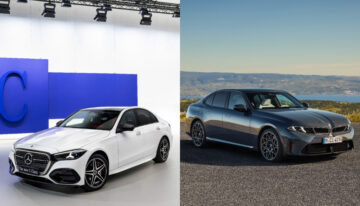
Repairing a Mercedes-Benz requires specialized expertise, Original Equipment Manufacturer (OEM) parts, and precise calibration for advanced systems like DISTRONIC adaptive cruise control or the MBUX infotainment interface. An AI model trained on data from mass-market vehicles is unlikely to accurately price these premium components and the higher labor rates associated with certified technicians.
For example, repairing a flagship model like the S-Class requires a level of diagnostic and technical skill that generic algorithms cannot factor into a quick estimate. Furthermore, these systems frequently ignore “diminished value”—the permanent loss in a luxury vehicle’s resale value after an accident, even with perfect repairs, which can represent thousands of dollars.
Overlooking Delayed-Onset and Soft Tissue Injuries
Injuries like whiplash, back strain, or micro-tears in ligaments may not present symptoms for days or even weeks after a collision. Personal injury lawyers warn that AI-generated offers, issued almost immediately, cannot account for future medical needs such as physical therapy, diagnostic imaging, or chronic pain management. These delayed injuries can be significant. To understand the potential long-term costs that an algorithm might miss, it is critical to consult a comprehensive guide on the average soft tissue injury settlement. These types of claims can range from $15,000 to over $50,000 depending on severity—a figure far beyond what an instant digital payout would typically offer.
The Pressure of an Instant Payout
The strategy behind an immediate settlement offer is psychological. Insurers understand that a fast digital payment can be tempting to a vehicle owner facing the stress and disruption of an accident. This approach pressures individuals to accept an offer before the full extent of vehicle damage or personal injury is known. In doing so, this tactic effectively transfers the risk of future, undiscovered costs from the insurance carrier directly to the victim, who may be left paying out-of-pocket for subsequent repairs or medical care.
How to Protect Your Claim in the Age of AI
While artificial intelligence is now an integral part of the claims process, vehicle owners retain the right to a fair and complete settlement. The key is to proceed with diligence and refuse to be rushed by an automated system designed for speed over accuracy. Your response to an initial offer sets the tone for the entire claim.
Steps to Take Before Accepting Any Settlement Offer
- Decline an Immediate Offer: Politely refuse any instant settlement offered via an app or phone call. State clearly that you need time to have your vehicle and any potential injuries fully and professionally assessed.
- Obtain a Certified Mechanical Evaluation: Take your Mercedes-Benz to an authorized dealership or a certified collision center that specializes in the brand. An expert human appraisal is necessary to document the full cost of OEM parts, specialized labor, and sensor recalibration.
- Seek a Thorough Medical Examination: Even if you feel fine, see a doctor immediately after the accident. Explain the nature of the collision and request a full evaluation to document your physical condition. This creates a medical baseline that is critical for any future injury claims.
- Document Everything: Maintain a detailed file containing the certified repair estimate, all medical records, diagnostic reports, and a log of any related expenses or lost work time. This evidence is your primary tool in negotiations.
- Submit a Comprehensive Counter-Demand: Once you have a complete and documented picture of your damages, submit your evidence-backed costs to the insurer. This figure will serve as a counter to the initial, and almost certainly lower, AI-generated offer.
| Claim Component | Typical AI-Generated Offer | Comprehensive Human Evaluation |
|---|---|---|
| Immediate Vehicle Repair | Based on generic parts/labor data | Based on certified, OEM part costs |
| Diminished Value | Often excluded ($0) | Calculated based on vehicle’s pre-accident value |
| Future Medical Costs | Excluded; based on immediate status | Includes projected costs for therapy/treatment |
| Lost Wages | Usually excluded | Calculated based on documented time off work |
| Pain and Suffering | Excluded or minimal flat rate | Negotiated based on injury severity and impact |
Navigating the New Landscape of Auto Insurance
The integration of artificial intelligence into the auto claims process is an irreversible trend driven by the pursuit of operational efficiency. For owners of sophisticated vehicles like a Mercedes-Benz, this new reality demands heightened vigilance. Automated systems are primarily tools for corporate cost-containment, not for comprehensive and fair damage assessment that accounts for the unique value of a luxury automobile.
Ultimately, protecting the value of your investment and your well-being after a collision rests on one timeless principle: never settle a claim until the full scope of damages is known and documented. By insisting on thorough, human-led evaluations of both your vehicle and your health, you can effectively counter the inherent shortfalls of an algorithm and secure the fair compensation you are owed under your policy.