Features Worth Prioritizing
Video quality: Higher resolution, HDR, and low-light performance matter more than raw megapixels — they’re what make plates and signs readable later.
Parking mode: Impact detection, motion detection, and buffered pre-recording catch the hit-and-run or parking-lot scratch you’d otherwise never solve.
Storage and power draw: Multi-channel systems use more storage and draw more power during parking mode — plan capacity and wiring accordingly.
Mounting and cable routing: This is what separates a factory-look install from one that looks bolted on. Routing cable behind trim is worth the extra ten minutes.
Photo: Depositphotos
FAQ
Is a front-only dash cam enough for daily driving?
For most commuters, yes — simple, discreet, and it captures the majority of real-world incidents.
Does a Sprinter or Vito used for work need multi-channel coverage?
Usually. Commercial use benefits from broader coverage for liability protection and driver accountability.
Will a dash cam affect my interior’s factory look?
Not if it’s installed carefully. Compact cameras with hidden wiring can sit almost invisibly near the rearview mirror.
The Bottom Line
The right dash cam setup isn’t determined by the specific badge on the trunk, but by how the vehicle is driven—whether it functions as a daily commuter, a family transport, or a high-traffic taxi and rideshare vehicle. Matching the camera configuration to your actual driving habits unlocks concrete, high-value protection across four key areas:
Indisputable Collision Documentation: Reconstructs the precise timeline before and after an impact, providing objective evidence to establish fault, eliminate out-of-pocket deductibles, and accelerate insurance claim payouts.
Livelihood & Income Defense for Taxi Drivers: Interior cabin footage with synchronized audio protects commercial and rideshare operators against false misconduct allegations, fraudulent harassment claims, and fare evasion—preventing immediate platform suspensions and safeguarding daily earnings.
Asset & Luxury Interior Protection: Captures hit-and-run incidents in parking lots and documents passenger-inflicted cabin damage, securing third-party compensation to cover expensive bodywork repairs or leather upholstery detailing without sacrificing resale value.
De-escalation & Around-the-Clock Security: Visible lenses and infrared night vision act as a psychological deterrent against disruptive passenger behavior before conflicts escalate, while continuous parking modes keep the vehicle monitored when left unattended.
Ultimately, a well-matched dash cam converts your Mercedes into a fully documented, low-risk environment—delivering real-world financial security and daily peace of mind tailored precisely to how you use your car.
- Parking mode. Trucks sit in lots and driveways for long stretches. A camera that keeps watching while parked is what catches a hit-and-run or tailgate break-in.
- Storage and durability. Commercial use rack ups footage fast, so plan for a high-capacity card and hardware that handles both July heat and January cold.
A Setup Worth Considering: Vantrue’s Multi-Channel Lineup
Among brands building specifically for this use case, Vantrue has a lineup that scales with how serious the coverage needs to be:
- A 3-channel system (e.g., Nexus 4 S): Serves as a solid baseline because it simultaneously monitors front traffic, interior cabin, and rear tailgating in a single system. It guarantees that whether you get rear-ended at a stoplight, face a false front-collision claim, or deal with a passenger dispute, all three primary risk zones are covered without buying separate devices.
- 4K resolution upgrades with Sony 2nd Gen sensors (e.g., Nexus 4 Pro S): Worth the extra investment for high-mileage drivers because higher pixel density reads fine details when standard HD blurs out. It captures readable license plates on fast-moving highway traffic during high-speed merges, legible state tags during pitch-black night hit-and-runs, and clear road hazard details in heavy rain—crucial evidence needed when an at-fault driver flees the scene.
- A 4-channel setup (e.g., Nexus 5 S): Covers front, rear, and side-cabin angles to completely eliminate remaining blind spots. This is essential for commercial fleets, taxis, and long-distance haulers needing to document side-swipe collisions, T-bone impacts at intersections, and side-window passenger interactions.
What Are the Benefits of a Dash Cam for Trucks?
In an industry where heavy rigs are routinely blamed for accidents, the outcome of an insurance claim hinges entirely on whether you have objective video proof or are left trapped in a verbal dispute.
- Without a Dash Cam (The “He Said, She Said” Trap):
○ Assumed Liability & Fraud Target: Police and adjusters often assume the larger vehicle was tailgating or failing to yield. This makes commercial truckers prime targets for staged brake-check scams and predatory lawsuits aiming for high-value liability payouts.
○ Livelihood & Fleet Disruption: Claims drag on for months, driving up commercial insurance premiums, risking contract losses, and placing damaging points on your Commercial Driver’s License (CDL) or fleet safety score.
- With a Dash Cam (Instant Exoneration):
○ Exoneration from False Liability Claims: Video footage provides definitive proof when smaller passenger cars aggressively cut into your stopping distance, brake-check your rig, or make illegal lane changes, instantly clearing you of fault.
○ CDL & Safety Score Protection: Prevents unjust traffic citations and damaging points on your Commercial Driver’s License (CDL) or fleet safety rating (FMCSA/CVOR), preserving your ability to work and keep contracts.
○ Faster Claim Settlements & Fraud Defense: Accelerates insurance payouts from months to days while shutting down staged-accident scams and personal injury lawsuits aimed at commercial liability policies.
○ Elimination of Critical Blind Spots: Multi-camera systems (covering front, rear, and side angles) give visibility into massive truck blind spots, helping document side-swipe collisions, T-bone impacts, and parking lot hit-and-runs.
○ Cargo & Vehicle Security: External and interior-facing lenses monitor cargo loads, fuel tanks, and cabin areas against theft, vandalism, or unauthorized access during mandatory rest breaks or overnight stops.
Bottom Line
As commercial vehicle safety rules tighten across Canada and parts of the U.S., a dash cam is shifting from optional accessory to near-standard equipment for anyone driving for work. For personal trucks, it’s still a low-cost way to protect yourself against a dispute that would otherwise come down to your word against someone else’s.
FAQ
What’s the best dash cam setup for a pickup truck?
A multi-channel system (front, rear, and optional bed/cabin) is the optimal setup for a pickup truck because standard front-only cameras miss high-risk zones unique to large, open-bed vehicles. Dual- and multi-channel systems hold up better and deliver superior value. A secondary lens mounted inside the rear cabin or externally on the bed monitors open-bed tools, valuable gear, and trailer hitches, providing objective proof of cargo theft, tampering, or loose-load damage that a front camera cannot see.
Besides,purpose-built commercial multi-channel hardware uses extreme heat-tolerant supercapacitors (instead of swelling lithium batteries) and IP67/IP69K-rated waterproof rear lenses. This prevents unit failure under direct windshield sun soak, heavy bed dust, mud, or harsh off-road vibrations.
If you want true round-the-clock protection—especially when parked overnight in unfamiliar hotel lots—a high-caliber setup requires a few non-negotiable accessories. A reliable setup for 24/7 surveillance needs:
Hardwire Kit with Voltage Protection: Plugs into the fuse box (or OBD-II port) to supply constant power during parking mode, automatically shutting off if the car battery drops below a set voltage threshold.
High-Endurance MicroSD Card: Standard SD cards fail quickly under relentless rewriting; you need a high-endurance (V30/U3 rated) card designed specifically for continuous loop cycles.
G-Sensor & Motion Detection: Triggers parking mode recording only when movement or an impact is detected, saving power and storage space.
CPL Filter (Circular Polarizer): Snaps over the lens to slice through windshield reflection and dashboard glare, ensuring clear license plate captures in direct sunlight.
Finally, I format the SD card right from the camera menu to clear out old files and give the loop recording system a clean slate.
While I’m Actually Driving
Once the ignition turns on, the camera powers up automatically—and from that point on, I forget it exists and focus entirely on driving.
When an incident occurs, you don’t need to panic about pressing buttons. The dash cam handles the entire timeline quietly in the background:
- Before: Continuous buffering captures the vital 10 to 15 seconds before a collision, proving who actually had the right of way, signaled correctly, or blew through a red light.
- During: The internal G-sensor senses the sudden g-force of an impact and instantly locks the active clip into a write-protected emergency folder, ensuring loop recording cannot overwrite it.
- After: It keeps recording the aftermath—documenting trailing vehicles, the other driver’s reaction, or the plate number of a fleeing hit-and-run driver.
Retrieving the footage takes seconds. Just like in my rental car incident, there’s no need to dig out the SD card. I simply open the Vantrue App, download the protected video file straight to my phone, and submit it to the insurance portal .
Beyond the peace of mind during emergencies, there’s a fantastic secondary bonus: capturing breathtaking golden-hour sunsets, scenic mountain passes, and bizarre roadside events are all logged automatically. Long after the trip ends, those ambient clips turn into a preserved vault of travel memories you would have otherwise missed
What I Do When I Stop For The Night
This is the habit that has saved me more times than I care to admit: I never skip enabling parking mode, especially when leaving the car overnight at a dimly lit motel or an unfamiliar highway rest stop.
On a road trip through the Midwest, I parked a hire car in a hotel lot overnight and walked out the next morning to a fresh, ugly scrape along the front bumper—with no note on the windshield and no witnesses in sight. In the past, that would have meant an expensive hit to my security deposit. But because I had parking mode powered continuously through a hardwire kit, the camera had been silently guarding the vehicle all night.
This protection works seamlessly through Vantrue’s integrated motion and impact detection technology. Even when the engine is completely switched off, the dash cam remains vigilant in a low-power standby state. If your car is sitting anywhere unfamiliar, turning on parking mode every single night isn’t just an extra setting—it is your best defense against waking up to a costly surprise.
The Habit I Only Picked Up After A Bad Trip
On one past trip, someone scraped my car in a parking lot, but I didn’t even notice the damage until two days later while loading luggage. By then, it was far too late to check footage, review timestamps, or file a timely claim. That missed window was a hard lesson: recorded footage doesn’t help if you don’t realize an incident occurred until days after the fact.
To fix that blind spot, I added the Vantrue LTE module to my setup. Powered by a cellular connection, the LTE box
Best Dash Cam for Your Mercedes: A Buying Guide for Every Model in the Lineup
Quick answer: Most Mercedes owners do best with a front-and-rear dash cam that has a discreet, low-profile mount and reliable parking mode. Daily-driven compacts (A-Class, CLA) only need a small front-facing camera; family SUVs (GLC, GLE, GLS) benefit from adding a cabin lens; S-Class owners should prioritize the cleanest possible install; and Sprinter or Vito vehicles used commercially get the most value from a 3- or 4-channel system covering the road, cabin/cargo area, and rear.
Choosing the right dash cam for a Mercedes isn’t about grabbing the model with the longest spec sheet — it’s about matching the camera to the car you drive and how you use it. A C-Class commuter, a GLE family hauler, an S-Class owner, and a Sprinter fleet operator all have different needs. This distinction is especially vital for taxi and rideshare drivers. In Europe, Mercedes-Benz is the undisputed backbone of the taxi industry; for these drivers, the car isn’t just transport—it’s a high-traffic professional environment where protection must extend inside the cabin just as much as outside the front bumper.
Why More Mercedes Drivers Are Adding a Dash Cam
Road safety has been trending in the right direction. Per the International Transport Forum’s Road Safety Annual Report 2025, U.S. road deaths fell from 40,901 in 2023 to 39,345 in 2024 — a 3.8% decrease, with preliminary 2025 data showing further improvement. A dash cam isn’t the reason for that trend, but it’s one practical piece of a safety-minded routine: it documents crashes, clarifies fault, catches hit-and-runs, and gives owners something concrete to hand an insurer after an incident.
What Are the Benefits of Cabin Cameras for Mercedes Taxi Drivers?
Interior-facing cabin cameras turn a Mercedes taxi from a high-risk commercial environment into a fully documented, protected workplace, safeguarding both the driver’s revenue and the car’s premium interior.
- Shielding Against False Accusations: Rider complaints regarding sexual harassment, verbal abuse, or reckless driving can cause immediate account deactivation or license suspension. Cabin video with synchronized audio provides irrefutable evidence to exonerate drivers during platform or municipal investigations.
- De-escalating Conflicts & Deterring Misconduct: Visible camera lenses—especially those equipped with Infrared (IR) LEDs—exert an immediate psychological effect. Intoxicated or aggressive passengers are far less likely to instigate verbal insults, physical threats, or property damage when aware they are being recorded.
- Fast-Tracking Fare Dispute Resolutions: Disagreements over drop-off points, meter pricing, or non-payment (fare evasion) are resolved quickly when backed by timestamped interior footage, saving hours spent on police reports or formal arbitrations.
- Recovering Premium Interior Cleaning & Repair Costs: Re-upholstering or professionally detailing a damaged Mercedes interior (such as MB-Tex or Nappa leather seating) is costly. Clear footage of passenger-inflicted damage—such as vomit, tears, or vandalism—is essential to secure fast cleaning fees and insurance payouts.
- Ensuring Night-Shift Safety with Infrared Coverage: Because most high-risk passenger interactions happen after dark, interior lenses featuring IR lights illuminate the cabin in pitch darkness without disturbing the driver’s view, capturing clear footage of all passenger rows.
Matching a Dash Cam to Your Model
A-Class, CLA, and compacts. Cabin space is tight, so a small, single front camera fits best without cluttering a minimal dashboard.
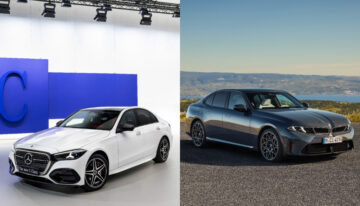
C-Class and E-Class. As daily commuters and highway cruisers, a front-and-rear setup is the sweet spot. While a dash cam cannot physically prevent a collision, it authentically captures the critical moments before and after a rear-end hit or parking-lot incident—providing clear evidence to protect your vehicle asset and streamline insurance claims without a complicated installation.
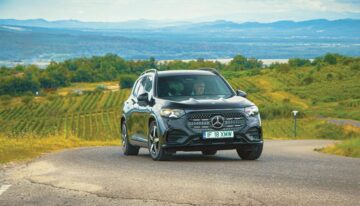
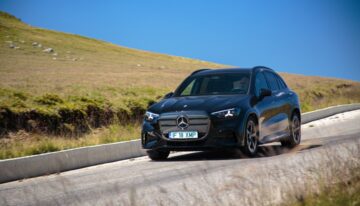
GLC, GLE, and GLS SUVs. Families often benefit from adding a cabin-facing lens on top of front-and-rear coverage, especially with kids or pets riding regularly.
S-Class and flagship models. Owners here prioritize a factory-finish interior, so look for the most discreet mounting hardware and wiring tucked along the headliner rather than across the windshield.
G-Class and rugged use. Off-road driving calls for hardware that handles vibration, dust, and temperature swings, plus a wide-angle lens.
Sprinter, Vito, and commercial vehicles. This is where a 3- or 4-channel system earns its keep — covering the road, cargo/cabin area, and rear to document loading disputes, driver behavior, and collisions.
EQ electric models. These already carry more onboard connectivity, so a camera with reliable Wi-Fi or app-based review pairs naturally with how owners already use the car.