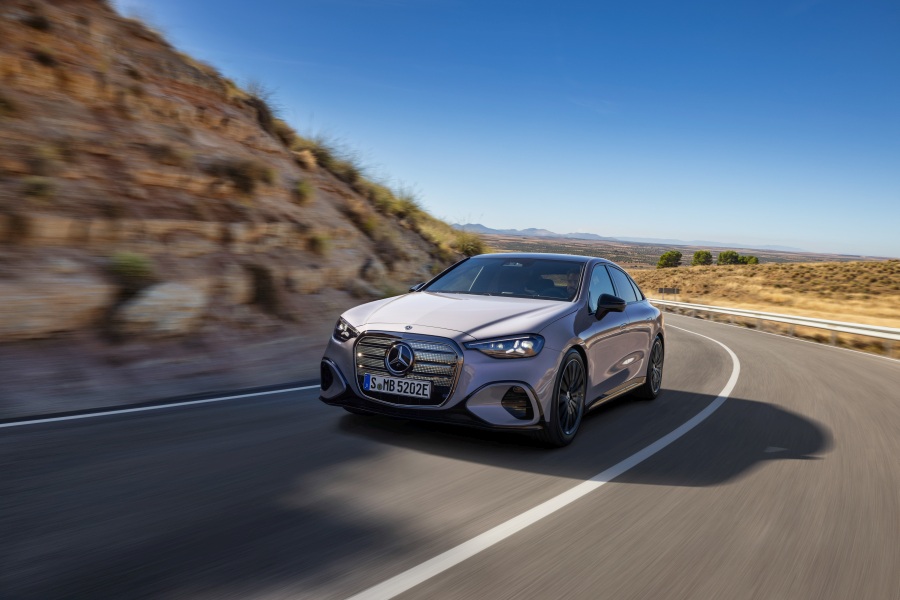
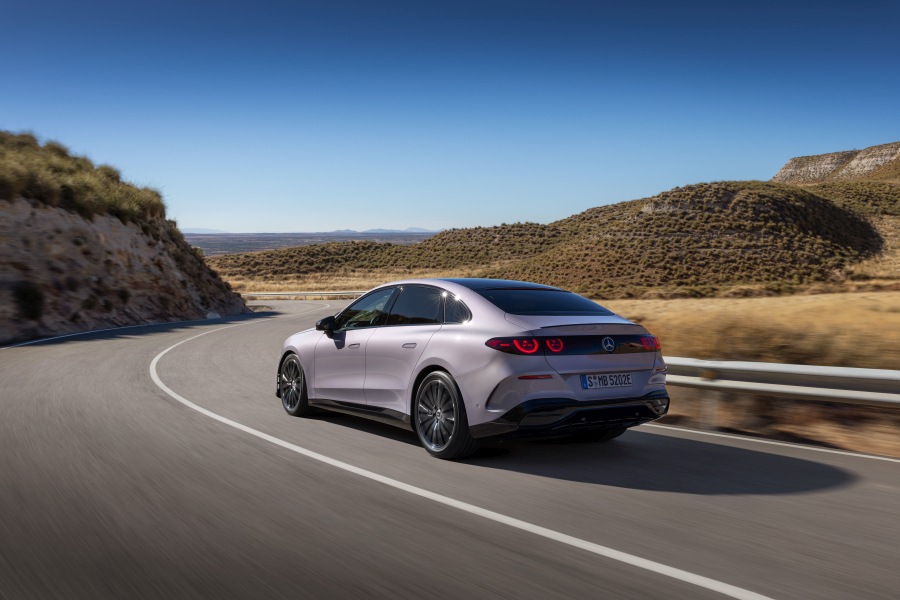
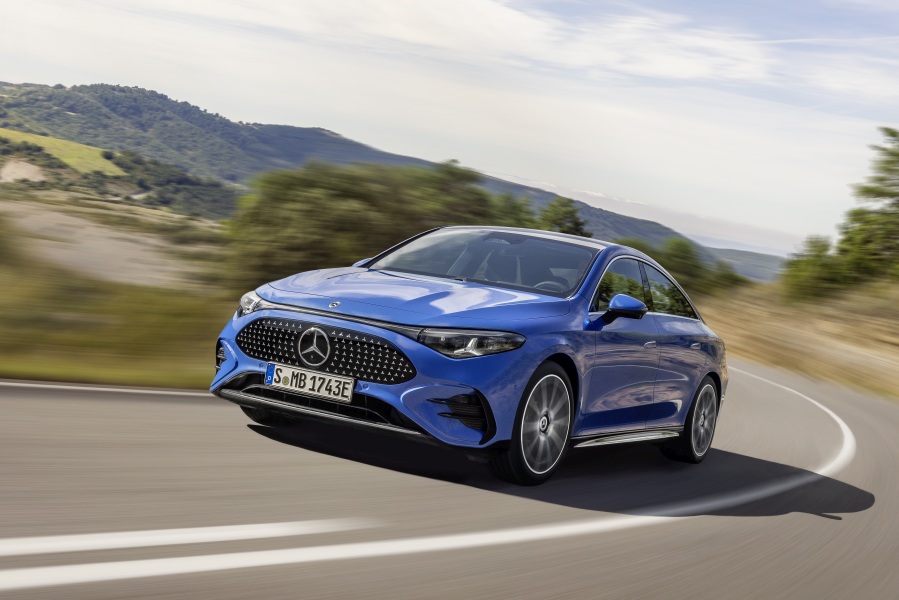
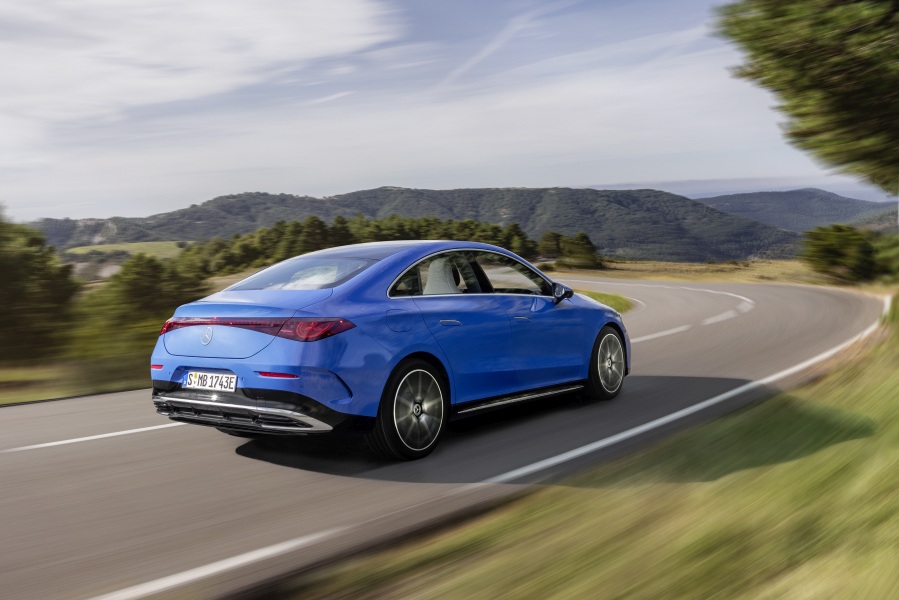
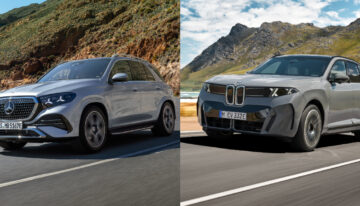
Only a 6,000 Euro Difference Between the Mercedes C-Class EQ and CLA EQ: Is the Smaller Model Worth Buying?

,
4 0

Mercedes has not yet announced the prices for the Mercedes C-Class EQ, but considering the €5,000 difference between the C-Class and GLC with combustion engines, we expect it to cost about €5,000 less than the GLC 400 4Matic, which is priced at €71,281. So roughly €66,000. Meanwhile, the Mercedes CLA 350 4Matic EQ costs €60,285. Is it worth buying the smaller CLA model for a difference of under €6,000?

Different architectures

There are major differences between the two models. The Mercedes CLA is built on the MMA multi-powertrain platform designed as “electric first,” but not “electric only,” while the Mercedes C-Class is based on the dedicated electric MB.EA platform.

Although CLA versions with combustion engines have front-wheel drive, the electric CLA EQ has rear-wheel drive or all-wheel drive in versions with two electric motors.

The C-Class EQ also comes with rear-wheel drive or all-wheel drive (in dual-motor versions), similar to the Mercedes GLC with combustion engines, which still uses the MRA II architecture.

Although the MMA platform makes certain compromises in terms of space, it uses 800V technology, just like the dedicated MB.EA electric platform.

Dimensions and space

With a length of 4,883 mm, width of 1,892 mm, and height of 1,503 mm, the C-Class EQ is 160 mm longer, 37 mm wider, and 35 mm taller, while its generous wheelbase of 2,962 mm is 172 mm longer.

This highlights the compromise made by the MMA platform in the CLA, as the C-Class EQ uses interior space more efficiently. Its wheelbase is 172 mm longer, even though the overall length is only 160 mm greater.

However, even though the CLA has a wheelbase of 2,790 mm, rear knee room is only average and headroom is tight. This was observed in our tests of both the CLA 200 mild hybrid and the CLA 250+ electric. Both versions share the same length and width, with the electric version being 18 mm taller due to the battery placement in the floor.

We have not yet tested the C-Class EQ, but the combustion-engine C-Class (with a 2,865 mm wheelbase, compared to 2,790 mm for the CLA and 2,962 mm for the C-Class EQ) already offers more rear knee room than the CLA. Rear passengers also benefit from more headroom, as the roofline does not slope as sharply as in the CLA.

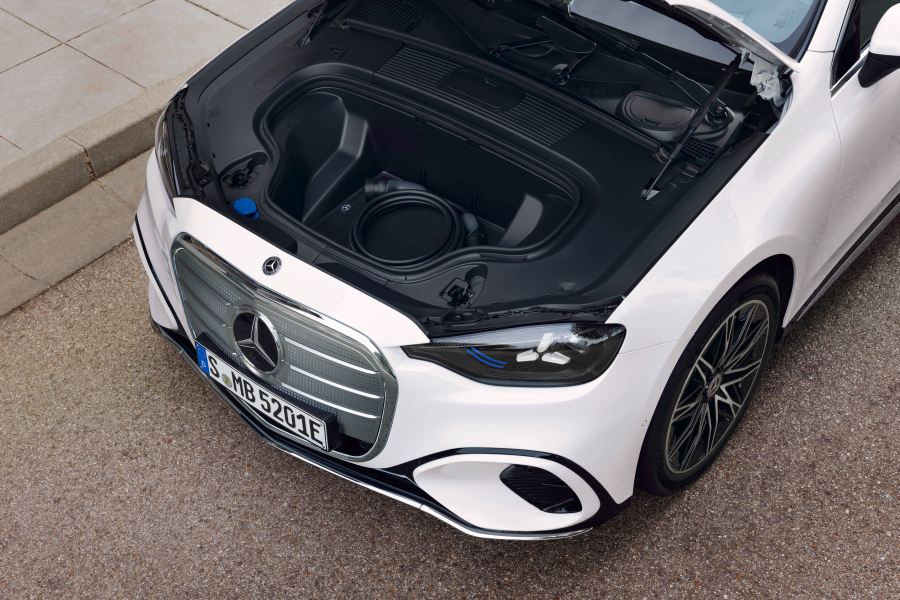
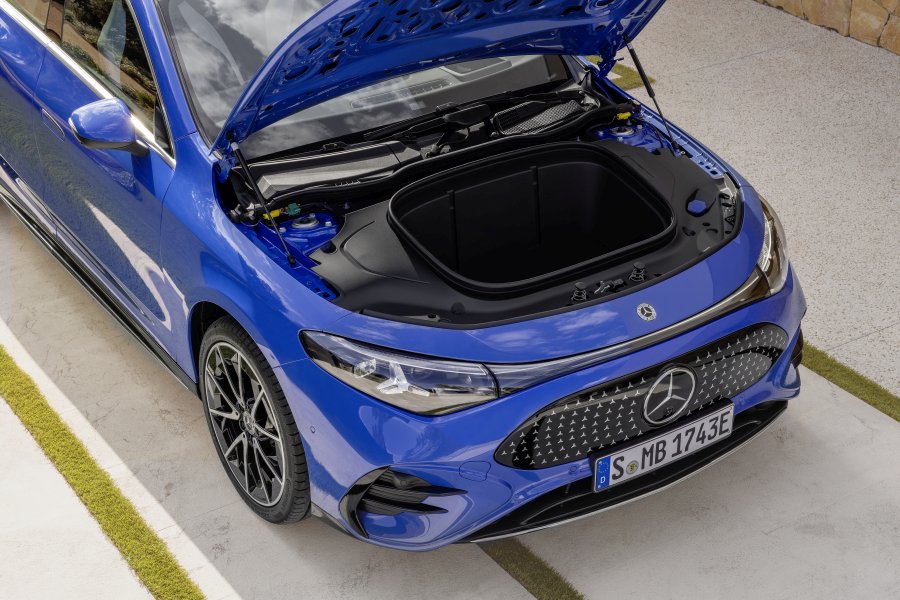
In terms of cargo capacity, the C-Class EQ is clearly superior, offering 470 liters compared to 405 liters in the CLA. However, both models benefit from a spacious front trunk (frunk) of 101 liters.
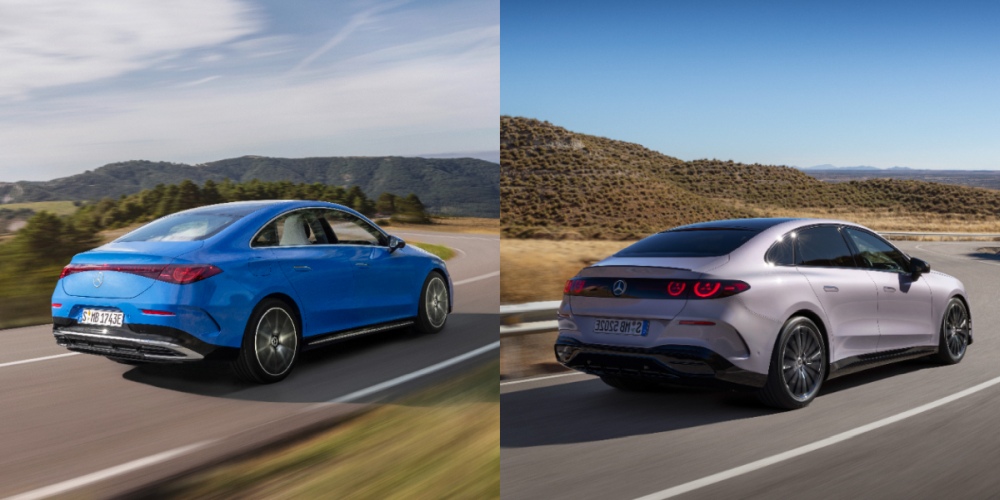
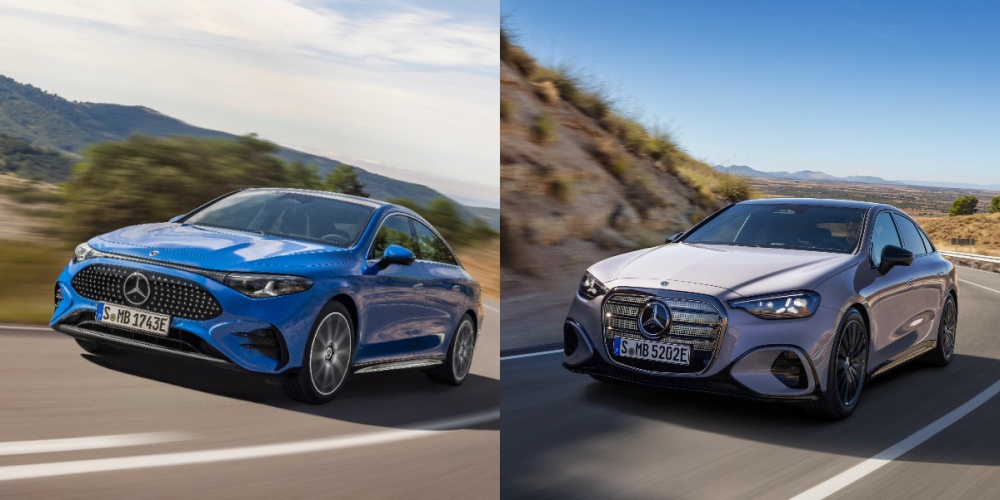
Mercedes C-Class EQ vs Mercedes CLA EQ

Interior and Ergonomics

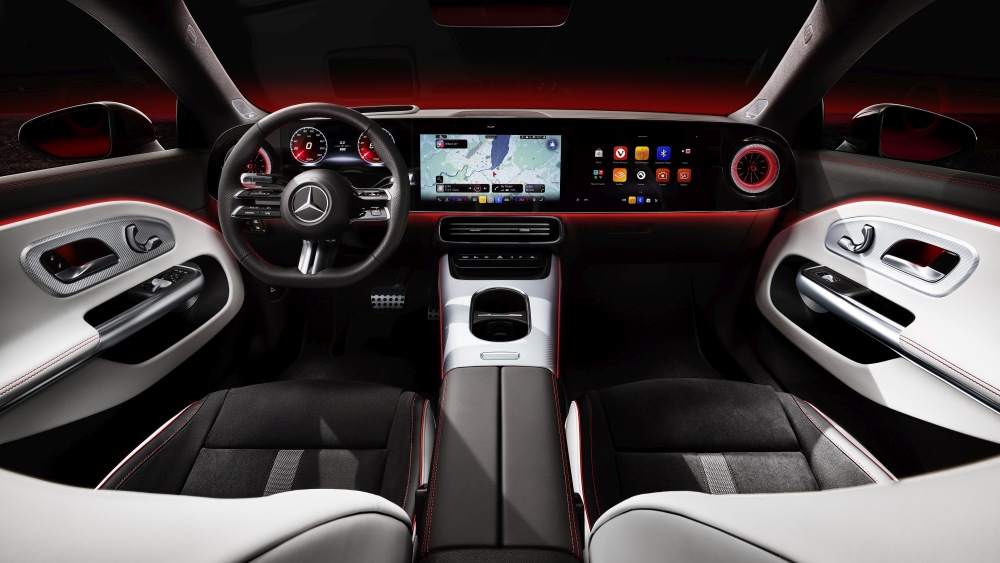
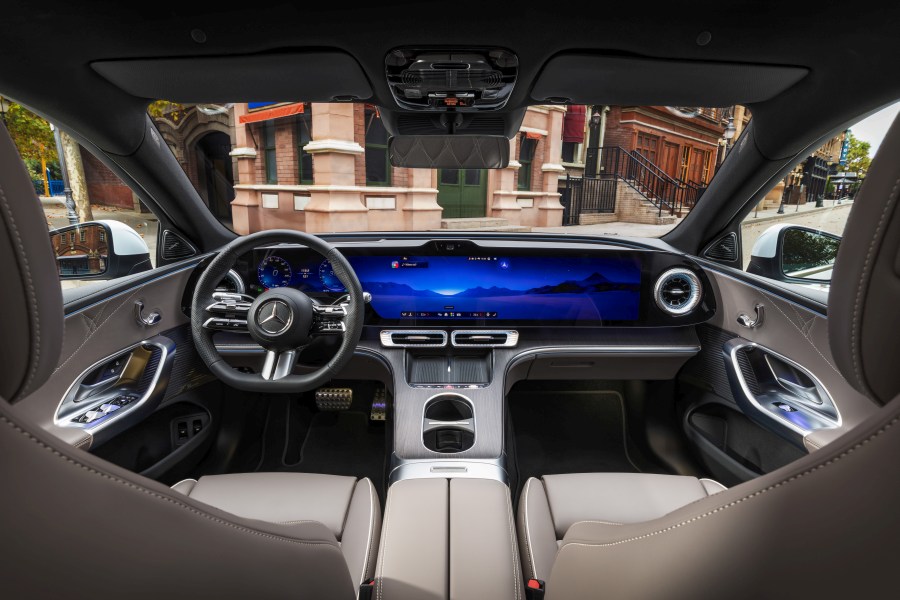
Both models have taken a major step forward by adopting the new MB.OS operating system based on Google services. Both come standard with two displays: a 10.25-inch screen for the instrument cluster and a 14-inch screen for the multimedia system.

For both models, a 14-inch front passenger display can be ordered, but only the Mercedes-Benz C-Class offers, as an option, the massive 39.1-inch (99.1 cm) display that stretches across the entire width of the dashboard.

Meanwhile, the steering wheels are very similar, now using physical buttons instead of the previous dual mini touch-sensitive surfaces.

Engines, Batteries, Range, Charging

In our test with the Mercedes-Benz CLA 250+, we recorded a low consumption of just 14.5 kWh/100 km (12.2 kWh/100 km official), corresponding to a real-world range of about 600 km, considering the NMC battery has a net capacity of 85 kWh. The CLA 250+ benefits from an exceptional drag coefficient (Cd) of 0.21, which, together with the two-speed transmission for the rear motor, contributes to its impressive efficiency. A similar two-speed transmission for the rear motor is also found in the Mercedes-Benz C 400 4Matic.

It is one of the few electric cars where consumption does not increase significantly at highway speeds, remaining under 20 kWh/100 km at a constant 160 km/h.

In this initial static comparison, however, we are referring to the CLA 350 4Matic version, but there will not be major differences in consumption, since the front motor—less powerful at only 109 HP (the rear has 272 HP)—engages only when extra traction or power is needed. Therefore, in most situations, the CLA 350 4Matic operates using only the rear motor.

We have not yet tested the Mercedes C 400 4Matic, which has higher power—489 PS compared to 354 HP in the CLA 350 4Matic—but it is also significantly heavier, weighing 2,460 kg versus 2,135 kg. However, the C-Class EQ also boasts an excellent drag coefficient for its size, at 0.22.

With a larger battery—94 kWh net compared to 85 kWh in the CLA 350 4Matic—the Mercedes C 400 4Matic promises a range of 762 km, nearly identical to the 769 km claimed for the CLA 350 4Matic.

Official consumption is 14.1 kWh/100 km compared to 12.2 kWh/100 km for the CLA, so in real-world conditions we expect at least 17 kWh/100 km in efficient driving, versus 14.5 kWh/100 km for the CLA 350 4Matic.

With 800V technology in both models, charging power is similar: 320 kW for the CLA EQ and 330 kW for the C-Class EQ.

Both models can also charge at older 400V DC stations using an optional adapter costing €654.

Additionally, both can charge at AC stations with 11 kW as standard, and optionally up to 22 kW (also €654 extra).

In our test with the CLA 250+ EQ, it achieved a peak charging power of 269 kW and a very good average of 167 kW. Normally, the CLA EQ should deliver similar performance.

Both models are very fast, with the CLA 350 4Matic accelerating from 0 to 100 km/h in 4.9 seconds and the C 400 4Matic in 4 seconds, both having the same top speed of 210 km/h.

Suspension and Running Gear

There are major differences here as well. The Mercedes CLA is available only with a conventional suspension using steel springs, and there is no option for adaptive or air suspension.

The Mercedes-Benz C-Class EQ comes standard with steel spring suspension, but can optionally be configured with air suspension and rear-wheel steering with a steering angle of up to 4.5 degrees (€2,844 in the Agility & Comfort package). In addition, the C-Class EQ is more comfort-oriented, with both the front and rear motors mounted on aluminum subframes.

Prices

The Mercedes CLA 350 4Matic starts at €60,285. Mercedes has not yet announced pricing for the Mercedes C-400 4Matic, but considering the roughly €5,000 difference between the C-Class and GLC with combustion engines, we expect it to be about €5,000 less than the Mercedes GLC 400 4Matic, which costs €71,281—that is, around €66,000. This is a very small difference of under €6,000.

Verdict

Verdict

Despite the long range and nearly similar charging power, it is clear that the Mercedes CLA 350 4Matic is expensive, and the difference of less than €6,000 compared to the larger, more powerful, more spacious, and more luxurious Mercedes-Benz C-Class EQ is too small.

For this reason, we believe the C-Class EQ is the better purchase. For a small price difference—less than 10% compared to the CLA EQ—it offers much more: superior comfort, better materials, more space, and greater power. According to official consumption data, the range is similar, as is the charging capability.

Technical dataMercedes CLA 350 4MaticMercedes C 400 4Matic
Engine2, one rear, one front2, one rear, one front
Max output (PS)354489
Max torque (Nm)515800
Tractionawdawd
Gearbox2 gears rear, one gear front2 gears rear, 1 gear front
L x w x h (mm)4,723 x 1,855 x 1,4684,883 x 1,892 x 1,503
Wheelbase (mm)2,7902,962
Curb weight (kg)2,1352,460
Boot volume (l)101/405101/470
Battery capacity net (kWh)8594
AC charging (kW)Nov-22 11/22
DC charging (kW)up to 320up to 330
DC charging time 10-100% (minutes)2222
Performances
0-100 kph (s)4.94.0
Top speed (kph)210210
Energy cons. ( kWh/100 km)12.214.1
Range (km)769762
Price (euro with VAT)60,285na

Shoot A Reply

Your email address will not be published.