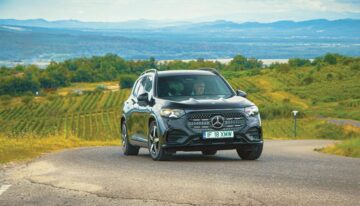
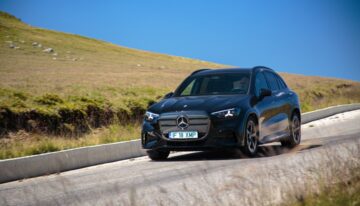
Cars aren’t 100% safe, as everyone knows. But in 2026, the focus has shifted strongly toward prevention. Mercedes-Benz is leading the way with AI-driven safety systems across its updated lineup, going far beyond the lane-keeping assist of the past decade. So what’s new, what works, and what’s still in progress?
Why Software Is Now the Product
Here’s something worth thinking about before diving into the features themselves: the car you buy today is mostly software. The hardware — steel, aluminum, glass — is almost secondary. The decisions a 2026 S-Class makes in a split second during a collision scenario are computed, not mechanical.
That shift has pushed automakers toward deep partnerships with enterprise tech firms. Companies working on automotive software development services, for instance, are increasingly embedded in OEM development cycles, helping bridge the gap between automotive-grade hardware and the kind of sophisticated AI inference pipelines that safety systems now depend on. Mercedes hasn’t built all of this in-house — nobody has — and understanding that supply chain matters when evaluating what you’re actually getting.
MBUX (Mercedes-Benz User Experience) 3.0, which debuted across 2026 models, sits at the core of the updated safety architecture.
The Big Five: Safety Systems That Actually Changed in 2026
- PRE-SAFE® with Predictive Neural Inference
Mercedes has had PRE-SAFE since 2002. Tightening seatbelts, closing windows, adjusting seats before an impact — classic stuff. The 2026 version adds something genuinely different: a neural inference layer trained on over 400 million real-world driving scenarios from the fleet telemetry program Mercedes runs across Europe and North America.
What does that mean practically? The system doesn’t just react to an imminent crash. It starts reading the situation 2–3 seconds earlier, flagging patterns that statistically precede accidents even when there’s no obvious danger yet — a pedestrian slowing their pace near a crosswalk, a vehicle with abnormal deceleration 150 meters ahead, a driver with microsleep indicators in the cockpit.
Key updates in PRE-SAFE 2026:
- Dual-camera stereo vision with 120fps capture (up from 60fps in the 2024 generation)
- Integrated sonar mesh — 12 ultrasonic sensors mapped into a continuous proximity field
- Side-impact pre-tension protocol activates at 280ms before projected collision vs. 180ms previously
- Rear passenger seatbelt pre-tensioning included as standard across all E, S, and GLE classes
- ATTENTION ASSIST — Now With Eye-Tracking That Actually Works
ATTENTION ASSIST has been around since 2009, but for most of its history it worked by analyzing steering micro-corrections to estimate drowsiness. Honestly? It was better than nothing, but it wasn’t great.
The 2026 update is a different product. There’s a near-infrared camera mounted in the instrument cluster that tracks eye movement, blink frequency, and gaze direction at 45fps — continuously, not periodically. The system cross-references this with an accelerometer profile of the road to filter out legitimate steering corrections on winding roads.
Real-world result: in Mercedes’ internal testing across 18 months of German Autobahn data, the updated system reduced false negatives (missed fatigue events) by 61% compared to the 2023 model. That’s not a marketing number — it was presented at the 2025 ESV Conference in Sydney alongside the methodology.
- Intelligent Drive 5.0 — The Autonomous Layer Nobody Calls Autonomous
Mercedes achieved SAE Level 3 conditional automation in 2021, and Intelligent Drive 5.0 in 2026 expands its capabilities.
Level 3 highlights:
- Driver can disengage attention under defined conditions
- System manages acceleration, braking, and steering
- Car can safely stop itself if something fails
- Driver has ≥10 seconds to respond to takeover requests
Now Level 3 works up to 95 km/h (vs. 60 km/h) and covers additional highways like I-5 in California and the A2 in the Netherlands (pending regulations).
Sensors Running the Show
Let’s be specific about the hardware stack:
- LiDAR: Luminar Iris+, 250m range
- Radar: Continental ARS540, 300m range
- Cameras: 6x 8MP HDR, surround view
- HD Maps: Here Technologies, OTA updates every 24h
The fusion of these inputs runs through a dedicated Domain Control Unit — not the main MBUX processor. That separation is what allows the safety stack to keep functioning even if the infotainment side encounters a software fault.
- eARC — Active Road Condition Detection
This one’s newer and gets less press than it deserves. eARC (Electronic Active Road Condition) uses wheel-speed sensors, suspension travel data, and steering resistance to build a real-time friction model of the road surface. Not just “it’s wet” — it estimates micro-zone friction coefficients, meaning the left wheels and right wheels can be on different surfaces simultaneously, and the system knows.
That matters because:
- Brake distribution adjusts wheel-by-wheel, not axle-by-axle
- Stability control interventions become faster and more targeted
- PRE-SAFE thresholds shift dynamically — lower friction surface, earlier warning triggers
- Cabin Guardian
This is the feature that generated the most discussion when Mercedes previewed the 2026 lineup at IAA Munich last September. Cabin Guardian uses the interior camera array (originally designed for gesture recognition in MBUX) to monitor for unattended occupants — specifically children and pets left in a hot vehicle.
But in 2026, it goes further:
- Detects medical emergency patterns (slumped posture, lack of movement over threshold periods)
- Contacts emergency services automatically via the built-in eSIM if driver is unresponsive
- Triggers hazard lights and unlocks doors if parked and occupant distress is detected
- Logs cabin temperature continuously and alerts via the Mercedes me app
Is it perfect? No. There are documented false positives with sleeping passengers in deeply reclined seats. Mercedes says this will be addressed in a Q3 2026 OTA update.
What the Data Says About AI Safety Systems
There’s a temptation to take manufacturer claims at face value. Worth being skeptical. What third-party data exists?
The Euro NCAP 2025 assessment of the 2026 E-Class gave it a 97% score in the “Safety Assist” category — the highest in the program’s history for a production vehicle. The testing specifically commended the PRE-SAFE neural system and the ATTENTION ASSIST eye-tracking as “substantially outperforming comparable systems from BMW and Volvo in the test protocol.”
IIHS (Insurance Institute for Highway Safety) gave the 2026 GLE a “Superior” rating in its Front Crash Prevention category, which is the top tier. The GLE also received a first-ever “Advanced” designation in its new Pedestrian Detection at Night assessment — a category IIHS only introduced this year.
Actual insurance premium data is starting to reflect this. In a study published by Swiss Re in early 2026, Mercedes vehicles equipped with the full AI safety suite showed a 14% lower claim frequency compared to equivalent vehicles from competitors across the same driver demographic. Fourteen percent is not nothing — that’s real money over a policy term.
What Still Needs Work
Edge Cases in Complex Urban Environments
Intelligent Drive 5.0 handles highways well. City driving at Level 3 is not happening yet. Construction zones, temporary traffic signals, and mixed-traffic scenarios with cyclists and pedestrians still require driver attention. The system will request a handover in these situations — and sometimes that request comes with less notice than you’d want.
OTA Dependency
The 2026 safety stack assumes a relatively frequent OTA update cycle. If the vehicle is offline for extended periods (think: stored seasonally, or regions with poor connectivity), some components of the system operate in degraded mode. Mercedes hasn’t been fully transparent about exactly which features are affected in which degraded states.
Privacy Questions
The interior cameras, eye-tracking, and telemetry data raise legitimate questions. Mercedes collects aggregated driving data — that’s how the PRE-SAFE neural model was trained. The opt-out process exists but it’s buried in the settings hierarchy. This is a broader industry issue, not a Mercedes-specific one, but it’s worth knowing before you sign anything.
Final Thoughts
The 2026 Mercedes safety suite is legitimately impressive. Not because of the marketing language or the CES demos — but because the third-party numbers hold up, the regulatory certifications are real, and the underlying architecture is built with separation of concerns that actually reflects engineering discipline.
That said, no system is finished. The edge cases are real. The OTA dependency is a legitimate concern for anyone who wants to understand exactly what they own and what it can do without a cellular connection. And the privacy trade-offs are worth reading carefully before assuming defaults are acceptable.
What’s undeniable is that the baseline for “safe car” has moved — and it’s moved fast. A 2018 Mercedes had none of this. A 2026 one has a computer actively modeling the next three seconds of your drive, watching your eyes, reading the road surface, and preparing a response before your foot moves. Whether that makes you feel safer or slightly watched depends on your point of view. Either way, it’s the direction this is all heading.