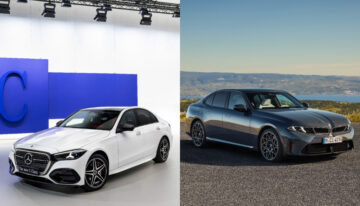
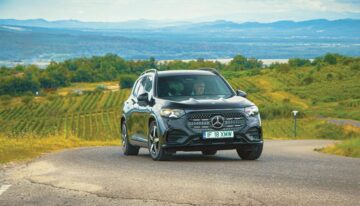
This comprehensive guide explores how the advanced Mercedes-Benz Pre-Safe system actively protects occupants moments before a rear collision. It breaks down the mechanical responses, such as seatbelt pre-tensioning, window closure, and brake locking to prevent secondary impacts. The article highlights how these engineering marvels mitigate severe whiplash and spinal trauma. It offers potential buyers a detailed look at why investing in the Driver Assistance Package is crucial for modern highway commutes.
Rear-end collisions make up nearly 32.5% of all crashes on the road. They’re also surprisingly deadly, contributing to more than 2,428 fatal collisions in 2020 alone.
But raw crash stats only tell part of the story. The more interesting question is what happens in the seconds before impact, and how a car like a Mercedes-Benz can change the outcome. Systems like Pre-Safe don’t just protect you during a crash; they prepare your body for one before it even happens. Meeting Federal Motor Vehicle Safety Standards is simply the baseline for luxury manufacturers aiming to reduce occupant injuries.
That said, even the best engineering can’t erase the financial and legal aftermath. So it’s worth understanding both sides of the equation.
Why Rear-End Crashes Keep Happening
Distracted Driving by the Numbers
The causes here aren’t exactly mysterious. Distracted driving and poor following distances account for the vast majority of rearward impacts. NHTSA data shows distracted driving kills roughly 3,000 people and injures over 400,000 every year in the U.S. About 12% of all police-reported crashes in 2024 involved some form of driver distraction.
Even specialized safety vehicles aren’t immune. Recent reports show that ignoring safety protocols caused severe crashes involving highway work trucks. The annual economic cost of all motor vehicle crashes? An estimated $340 billion.
So what’s the difference between walking away sore and walking away with a life-altering spinal injury? A lot of it comes down to how the car reacts in the moments before impact. Here’s how a standard vehicle response compares to Mercedes Pre-Safe:
| Factor | Standard Vehicle | Mercedes Pre-Safe |
|---|---|---|
| Occupant posture | Unprepared, often leaning or relaxed | Moved upright, pulled against seatback |
| Cabin integrity | Open windows allow debris and ejection risk | Windows and sunroof close automatically |
| Secondary impact risk | Vehicle rolls forward into traffic | Brakes lock to prevent forward motion |
| Whiplash severity | High probability of spinal/soft-tissue damage | Significantly reduced via seatbelt pre-tensioning |
How Pre-Safe Actually Works
Intervention Before Impact
Mercedes-Benz has spent decades evolving vehicle safety from reactive crash protection to proactive, anticipatory systems. The company holds patents for PRE-SAFE®, which uses radar sensors and cameras to track trailing vehicles in real time. When the system detects an unavoidable rear collision, the electronic control unit fires off a rapid sequence of defensive actions.
Keep in mind that specific capabilities vary by model and trim level. Different classes feature different tiers of the Driver Assistance Package, so it’s worth checking what’s included on your particular vehicle. The core system, though, works the same way: it intervenes in the critical milliseconds before a strike to reposition your body for better energy absorption.
Here’s what Pre-Safe does when it senses an imminent rear impact:
- Seatbelt pre-tensioning: Automatically reels in slack to secure occupants firmly against the seat, optimizing the gap between body and deploying airbags.
- Window and sunroof closure: Rapidly closes all glass to prevent ejection and block debris from entering the cabin.
- Seat adjustment: Shifts the front passenger seat into an ideal upright position so headrests and restraints work as intended.
- Brake locking: Applies maximum brake pressure just before impact, preventing the car from being shoved into cross traffic or the vehicle ahead.
When Engineering Meets Legal Reality
Injury Compensation After a Rear-End Crash
Even with Pre-Safe fully engaged, violent collisions still cause real injuries. Concussions, soft-tissue damage, and severe whiplash are common outcomes, and they carry serious financial consequences. Settlements for rear-end collisions typically range from $15,000 to $50,000, though cases involving permanent spinal trauma can exceed $100,000.
That’s why qualified legal representation matters just as much as the car you drive. When you’re rear ended in traffic, establishing fault and documenting injuries properly can make or break a claim. Attorneys who understand crash physics and vehicle telemetry data are better positioned to prove negligence, especially in cases involving advanced driver assistance systems.
The right legal strategy makes sure the protection your car provides on impact is matched by financial protection afterward. Without that, you’re left absorbing costs that should fall squarely on the at-fault driver.
What’s Coming Next: Predictive Threat Assessment
V2X and Autonomous Intervention
The next frontier isn’t just reacting faster. It’s predicting hazards before they materialize. Mercedes-Benz is pushing hard toward software-defined vehicles, incorporating high-performance compute nodes that support real-time AI telemetry and over-the-air updates.
Connected vehicles are also generating massive amounts of driving data. That data can feed into V2X communication models that predict collision probabilities with increasing accuracy. By cross-referencing live traffic conditions with nearby smart infrastructure, future vehicles could detect erratic driving several car lengths back and take autonomous evasive action.
The goal? Moving from collision mitigation to collision prevention entirely.
What This Means for You
If you’re shopping for your next Mercedes, the Driver Assistance Package isn’t just a luxury add-on. It’s a genuine risk management tool that can meaningfully reduce injury severity in a crash you can’t avoid.
But technology only goes so far. Smart drivers think about the full picture: the engineering that protects their body and the legal expertise that protects their wallet. Pairing advanced safety features with access to knowledgeable legal counsel is the most practical approach to navigating today’s highways with real confidence.