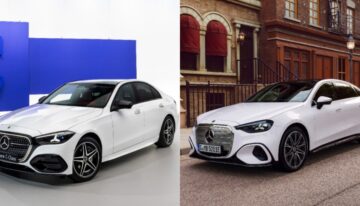
The new Mercedes C-Class EQ is the electric counterpart to the C-Class and is built on the dedicated MB.EA electric platform that debuted on the GLC EQ. It will debut in the second half of 2026 and will coexist alongside the C-Class with internal combustion engines, which will undergo a facelift.
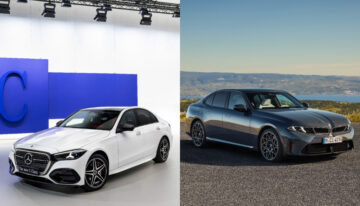
The competition between BMW and Mercedes is heating up in the new electric era with 800V platforms and 800V technology. Just one month after BMW unveiled the new i3, the electric equivalent of the 3 Series, Mercedes revealed the new Mercedes C-Class EQ, the electric equivalent of the C-Class.
Dimensions and design
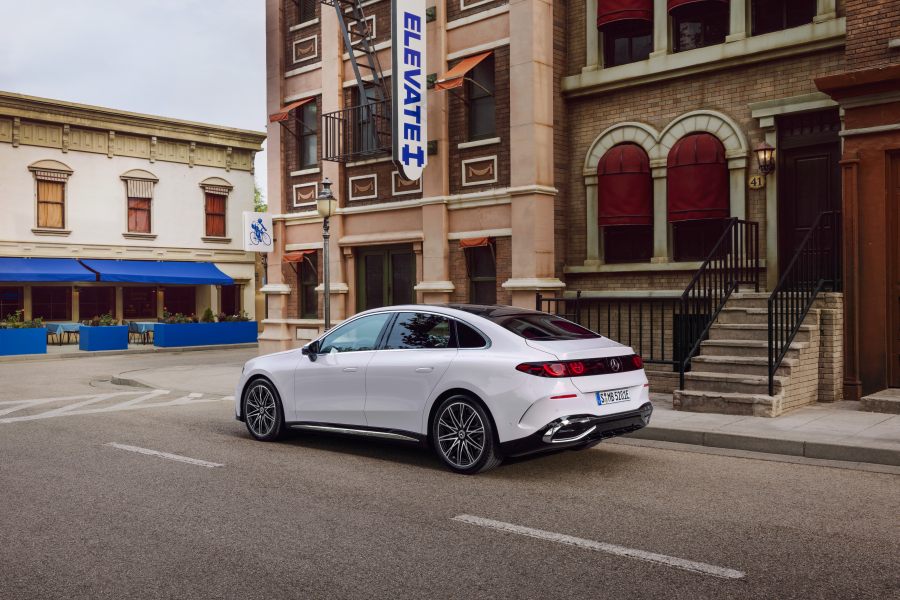
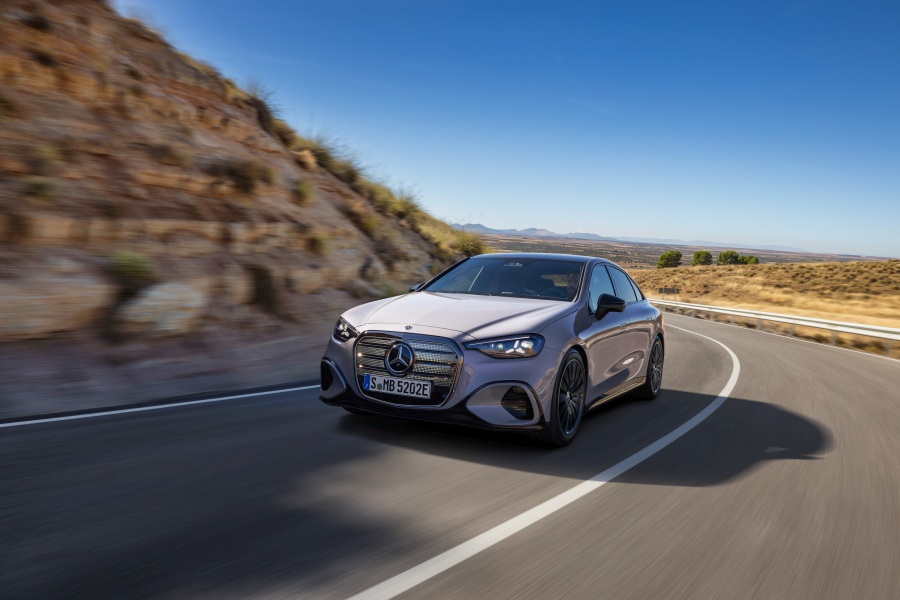
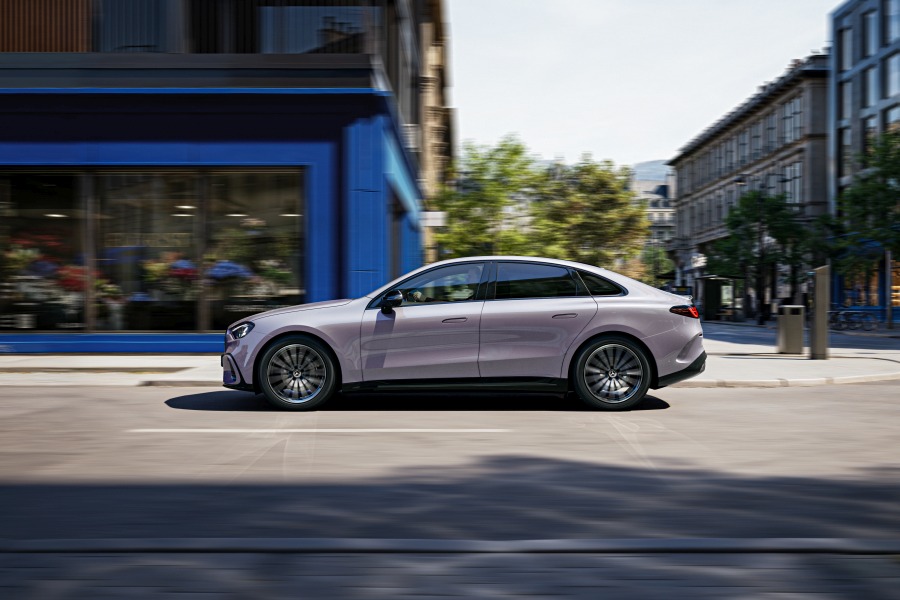
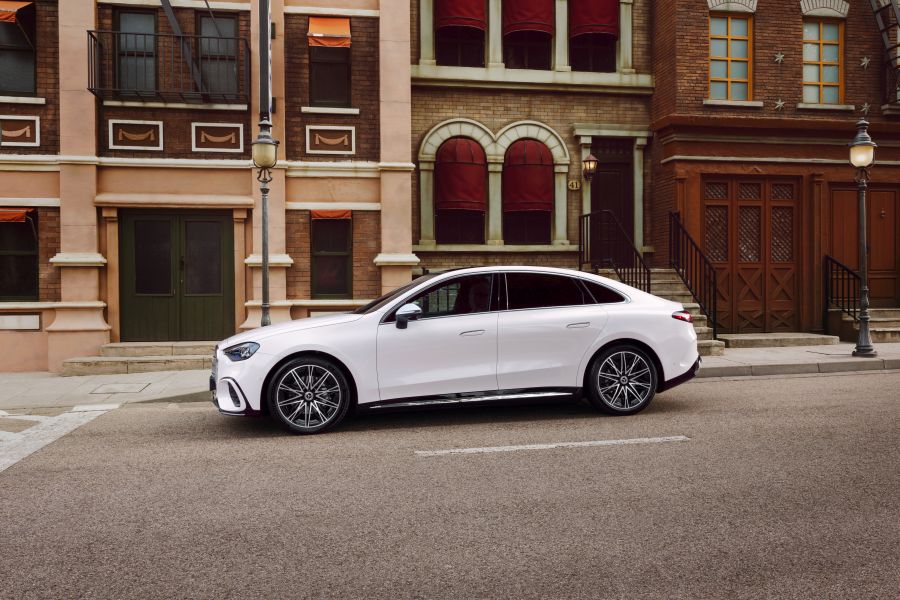
Measuring 4,883 mm in length, 1,892 mm in width, and 1,503 mm in height, the Mercedes C-Class EQ is 132 mm longer, 62 mm wider, and 56 mm taller than the Mercedes C-Class with internal combustion engines (4,751 mm long, 1,820 mm wide, 1,437 mm tall), while the 2,962 mm wheelbase is also 97 mm longer (C-Class: 2,865 mm). The greater height of the electric version is due to the 94 kWh net battery located in the floor, as Mercedes aims to provide interior headroom at least comparable to that of the internal combustion engine model.
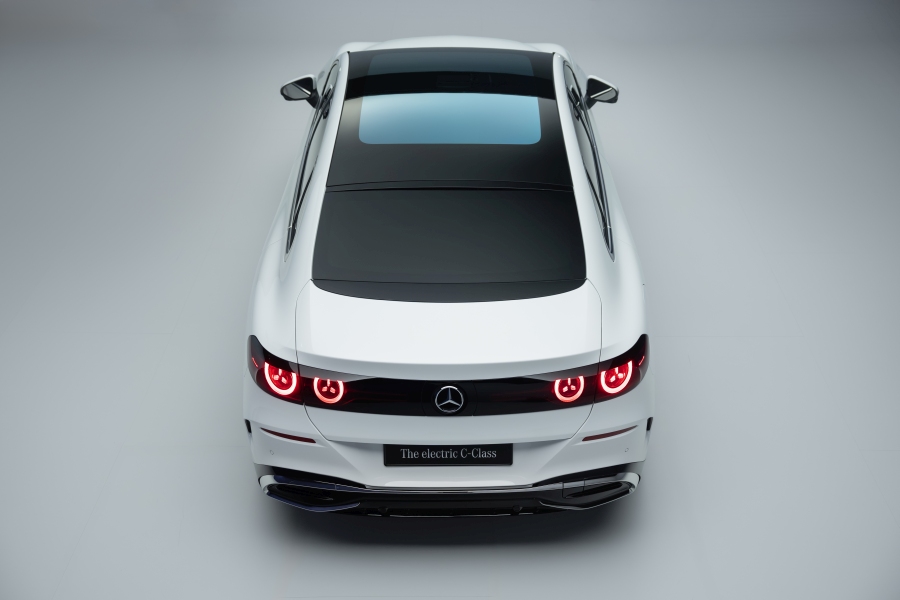
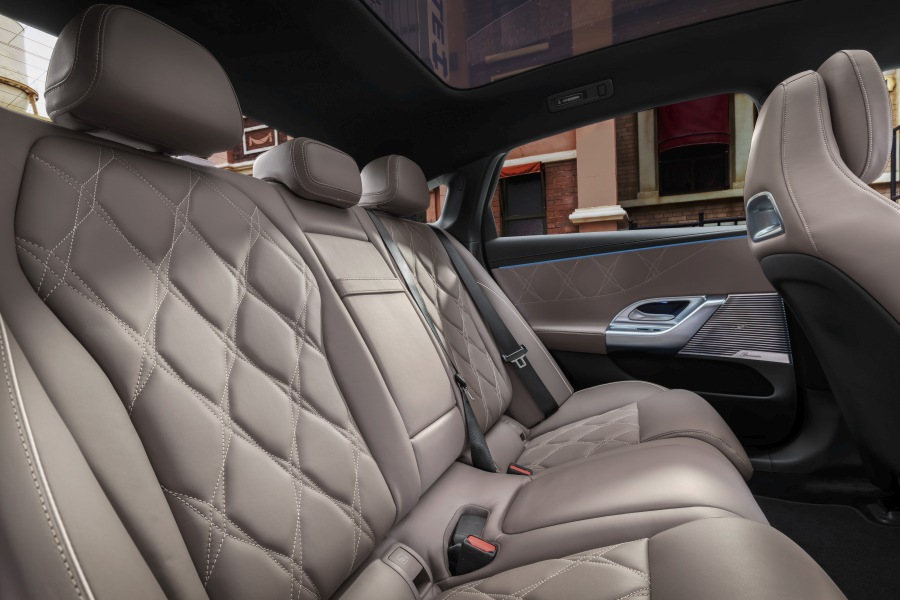
In fact, Mercedes specifies that the interior height in the front and rear is 22 mm and 11 mm greater, respectively, than in the C-Class with internal combustion engines. As with the CLA, the Sky Control panoramic roof is standard. It features nine segments whose opacity can be adjusted individually, and in combination with the optional ambient lighting, the roof comes with 162 stars that are illuminated in the selected color.
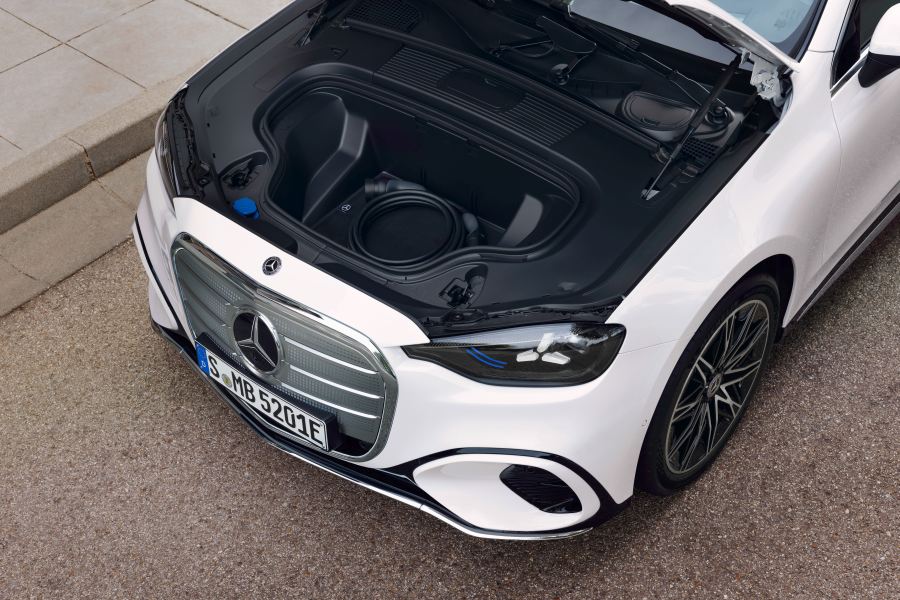
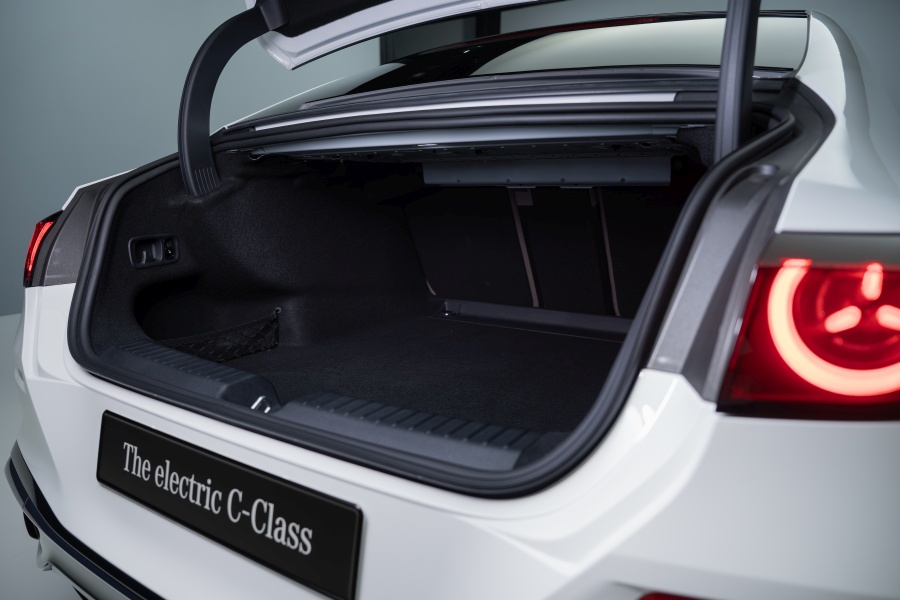
The 470-liter trunk volume is 15 liters larger than that of the C-Class with internal combustion engines (the PHEV versions have only 315 liters), and in addition, the C-Class EQ also has a 101-liter front trunk.
Thus, the Mercedes C-Class EQ is significantly larger than its main rival, the BMW i3, which measures only 4.76 m in length and is smaller in all dimensions. Like the CLA and EQS, the Mercedes C-Class EQ has an impressive drag coefficient of just 0.22.
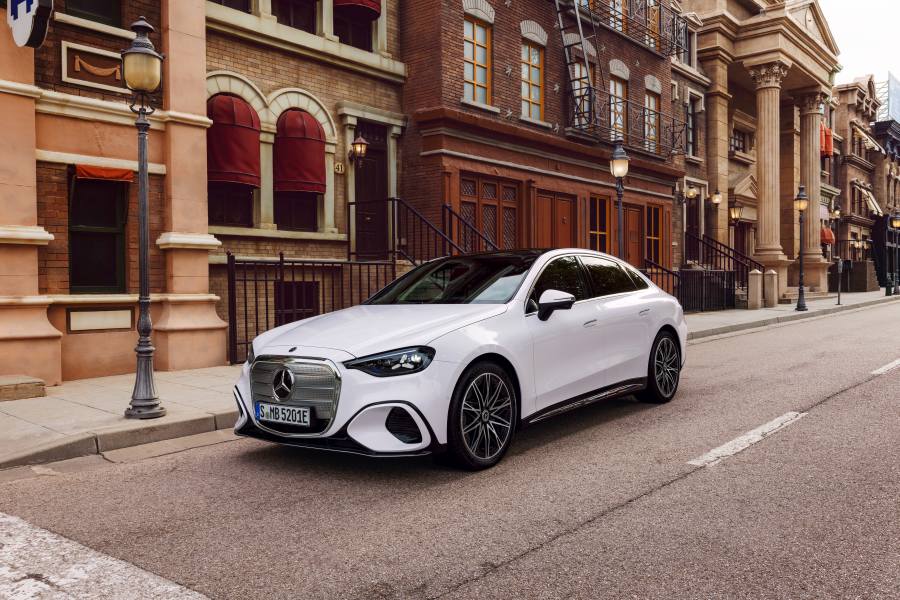
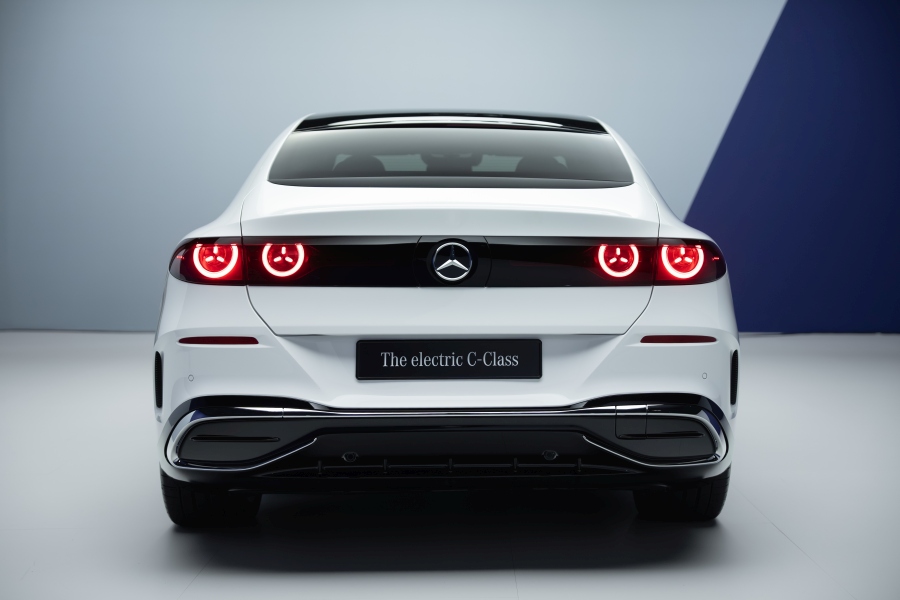
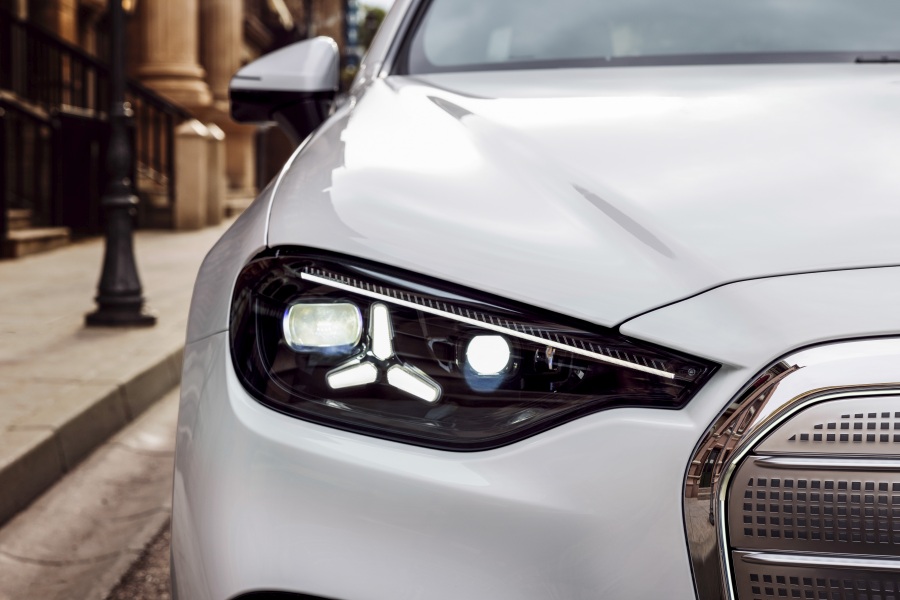
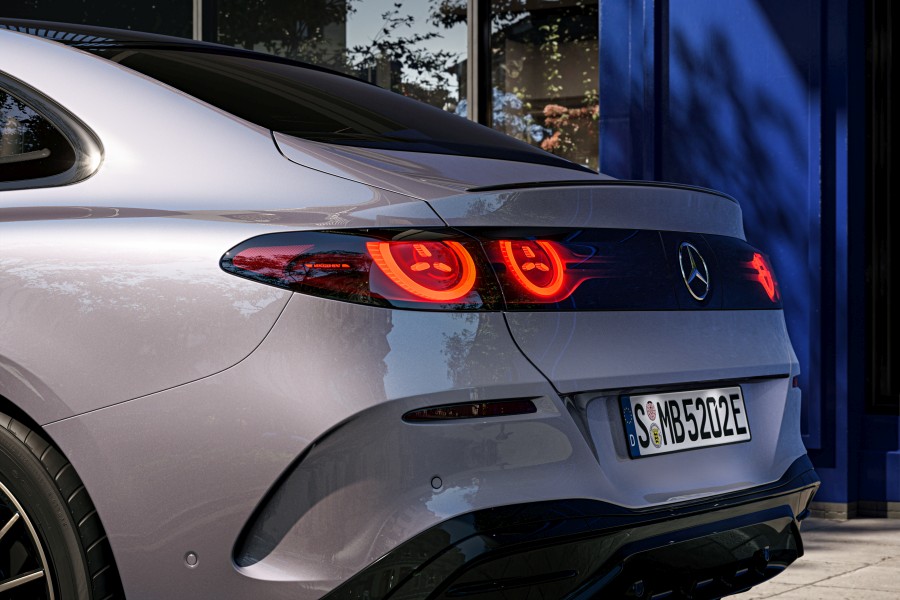
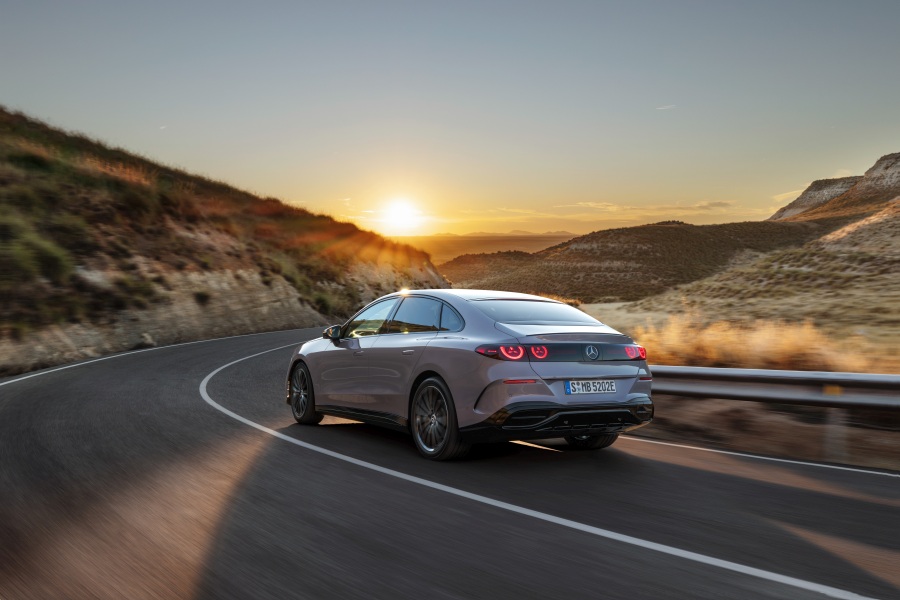
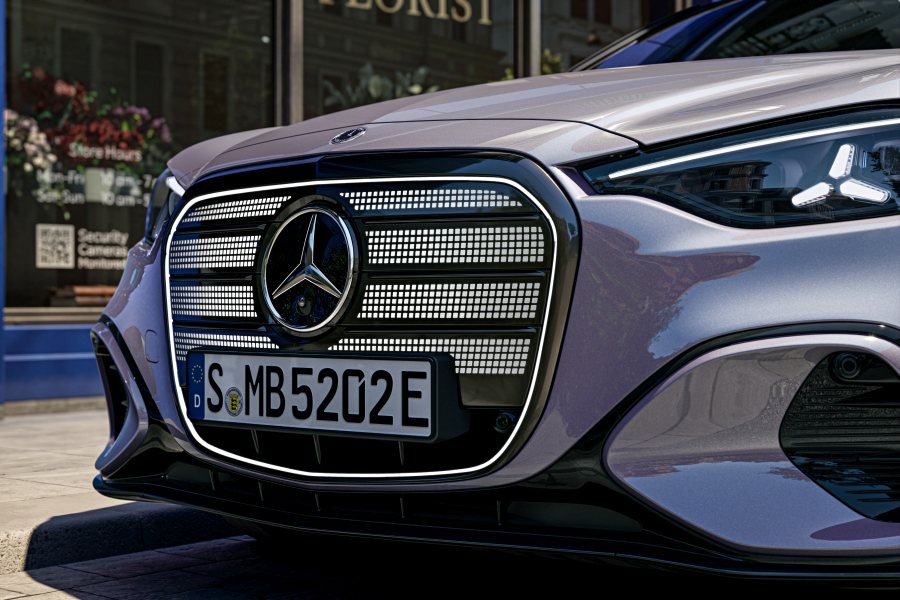
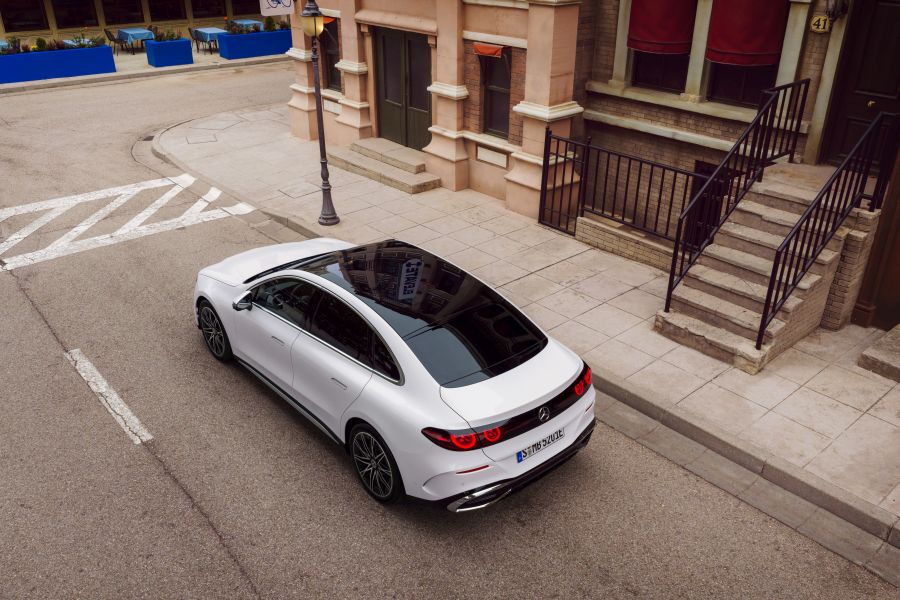
The design stands out thanks to the new grille introduced on the GLC EQ, which is larger than on the C-Class, featuring a chrome frame and a smoked glass-look mesh structure with an integrated central star. Optionally, the grille can be illuminated and features an animation when opening, closing, or charging the vehicle. High-Performance LED headlights are standard, with Digital Light headlights available as an option. At the rear, the taillights feature the signature light pattern that mimics the Mercedes logo surrounded by a red ring, just like on the upcoming AMG GT 4-door coupe EQ, which will debut soon.
Powertrain and Suspension
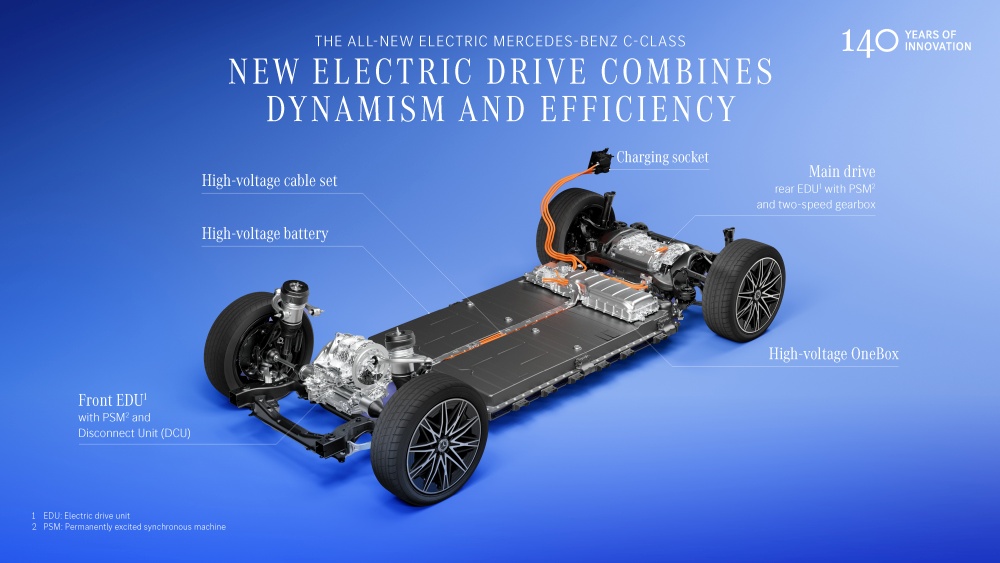
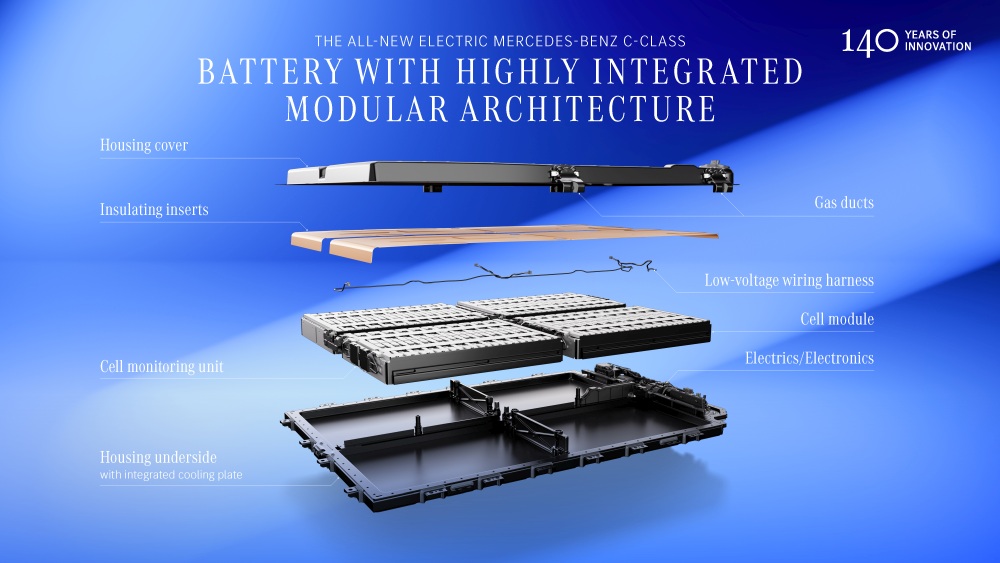
Like the Mercedes GLC EQ, the Mercedes C-Class EQ debuts in the top-of-the-line Mercedes C 400 4Matic version, featuring two electric motors that deliver a combined 489 hp and 800 Nm, powered by a 100 kWh gross (94 kWh net) NMC battery. Weighing 2,460 kg, the Mercedes C 400 4Matic is 75 kg lighter than the GLC 400 4Matic, giving it faster 0-100 km/h acceleration in 4 seconds compared to 4.3 seconds for the GLC EQ.
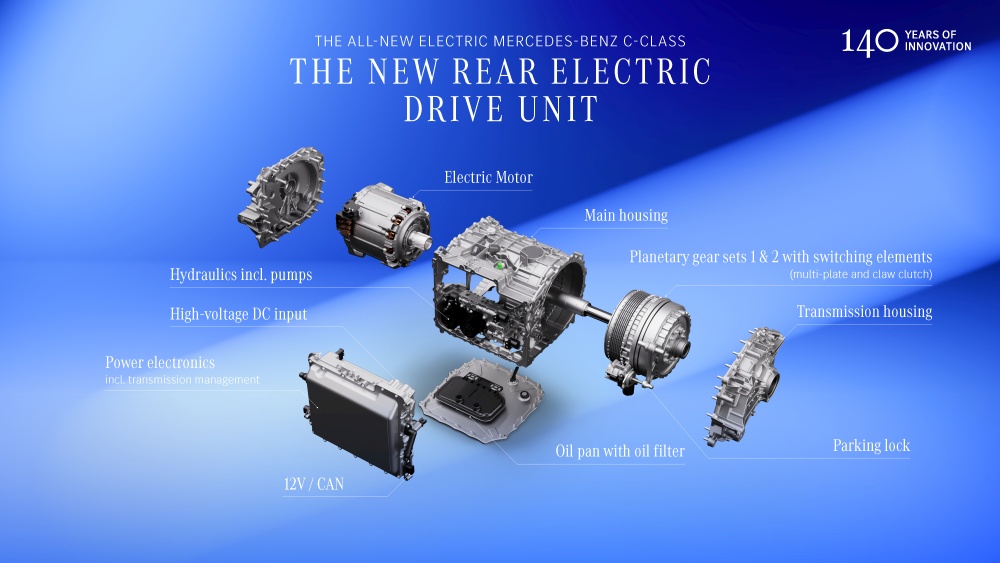
The rear motor is coupled to a two-speed gearbox, with the first gear having a gear ratio of 11:1 and the second, used at higher speeds, having a gear ratio of 5:1. Unlike BMW, which uses an asynchronous motor in the front, the Mercedes C 400 4Matic features two permanent-magnet synchronous motors (BMW uses direct-current motors without rare-earth magnets), and the front motor can be disconnected when additional traction or power is not needed. This reduces losses at the front axle by up to 90% and increases range.
With the same 800V technology, the battery can be charged at DC stations with up to 330 kW, and an optional adapter also allows charging at older 400V stations. By comparison, the new BMW i3 charges at up to 400 kW. However, charging times are roughly the same because the BMW has a larger battery, with a net capacity of 108.7 kWh. Thus, to charge from 10% to 80%, the Mercedes takes 22 minutes, and the BMW takes 21 minutes. 10 minutes are enough to charge enough energy for 325 km, and the C 400 4Matic also features bidirectional charging.
Unlike the GLC EQ, the Mercedes C 400 4Matic promises a WLTP range of 762 km, much lower than the 926 km promised by the BMW i3 50 xDrive. Mercedes states, however, that it will later launch a single-motor rear-wheel-drive version that will exceed 800 km of range.
Like the GLC EQ, the Mercedes C-Class EQ emphasizes comfort with electric motors mounted on subframes elastically attached to the body and adaptive air suspension that adjusts its stiffness based on information received from the Car-to-X network. All road irregularities encountered by new Mercedes models equipped with Car-to-X navigation are stored in the cloud, and the suspension is alerted when the vehicle passes over uneven or damaged pavement, adjusting its stiffness a few milliseconds in advance. The system is smart, but for now there are few Mercedes models with Car-to-X smart navigation.
Additionally, the Mercedes C-Class EQ is equipped with integral steering with a steering angle of 4.5 degrees, which has reduced the turning diameter by 0.9 meters to just 11.2 meters. At speeds up to 70 kph, the rear wheels turn in the opposite direction to the front wheels by an angle of 4.5 degrees, and at speeds over 70 kph, the rear wheels steer up to 2.5 degrees in the same direction as the front wheels.
Multimedia system carried over from the GLC EQ
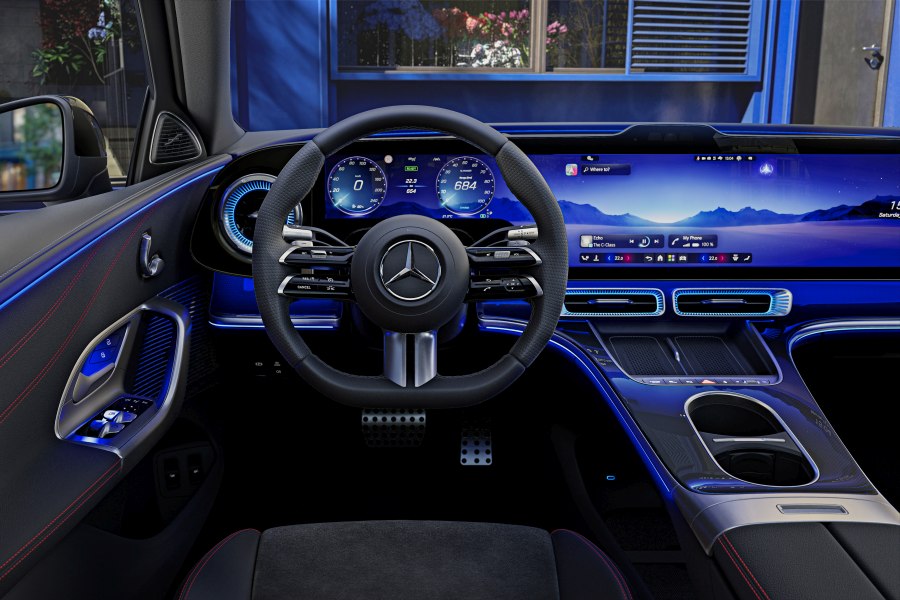
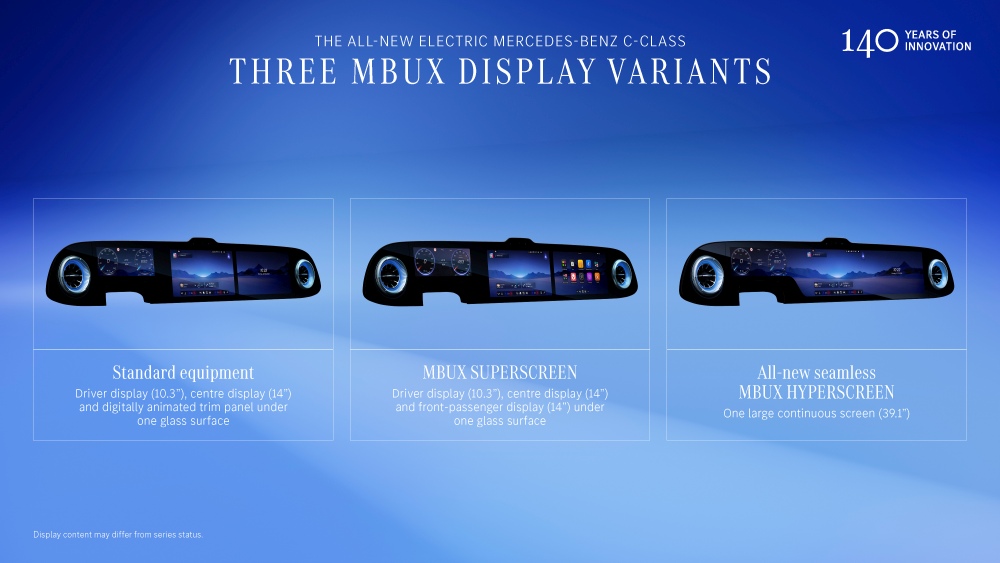
As expected, the dashboard is taken entirely from the new GLC EQ, and in the top-of-the-line MBUX Hyperscreen version, it comes with a giant display with nearly 10 million pixels that spans the entire width of the dashboard, which will be offered as an option. With Matrix backlight technology, the brightness of various areas of this giant display can be adjusted independently.
The base MBUX Superscreen version comes with two displays for the instrument cluster and multimedia, with the passenger display being optional.
No fewer than ten high-resolution ambient styles are available for both the MBUX Superscreen and the MBUX Hyperscreen. The color scheme of the instrument cluster, including gauges, control elements, and ambient lighting, is coordinated with these emotional background motifs.
The MB.OS multimedia system is completely new and utilizes Google services as well as artificial intelligence from ChatGPT, Microsoft Bing, and Google Gemini. 40 third-party apps for audio and video streaming and gaming can be downloaded. Navigation is based on Google Maps and is one of the first systems to integrate Google Cloud’s new Automotive AI Agent for in-vehicle conversational services.
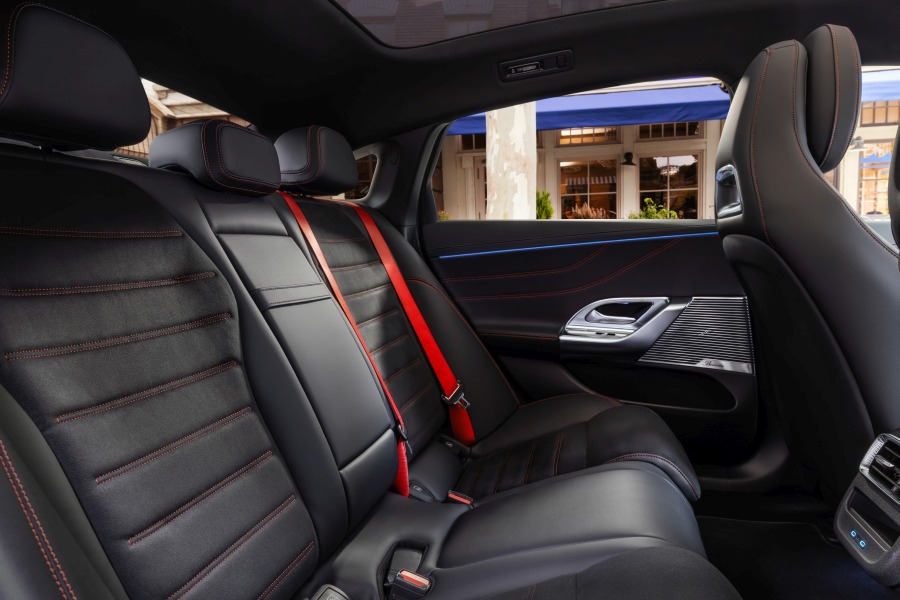
The standard equipment of the new Mercedes C-Class EQ includes a new leather upholstery called Softtorino, and sport seats upholstered in nappa leather with the exclusive “Twisted Diamond” design—which combines elegant diamond-shaped perforations with contrasting stitching—are available as an option. On the AMG Line, we note the fine moccasin stitching on the side bolsters of the seats. The color scheme includes three elegant standard shades: deep black, warm beech brown, and stylish ivory beige.
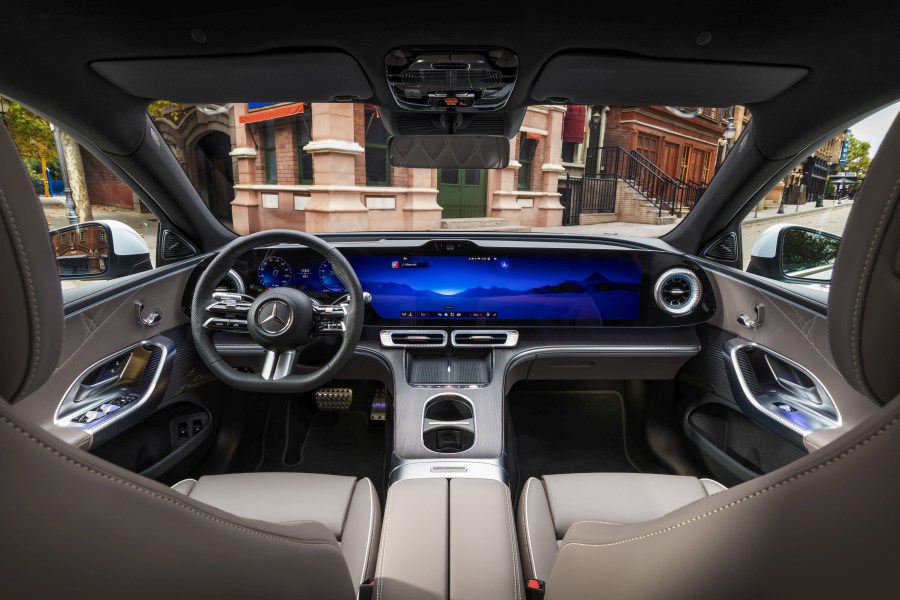
The air vents, speaker grilles, door handles, and switches for the electric seat adjustment impress with their build quality, while chrome inserts add a high-tech touch. For the first time, the speaker grilles feature a horizontal line pattern with a three-dimensional relief and a two-tone finish. In the Burmester® 3D surround sound system, these are made of stainless steel.
Like the GLC, the Mercedes C-Class EQ offers the option of a vegan interior certified by the independent association The Vegan Society. The Vegan package includes all soft-touch surface materials—from the seat upholstery and the headliner to the pillars, door panels, and carpeting.
Also available as an option are new high-end seats with electric adjustments and memory function, electro-pneumatic 4-way lumbar support, full-back massage function, ventilation, and 4D sound.
| Technical data | Mercedes C 400 4Matic |
|---|---|
| Motors | 2, one rear, one front |
| Max. output (PS) | 489 |
| Max. torque (Nm) | 800 |
| Traction | awd |
| Gearbox | 2 gears rear, 1 gear front |
| L x w x h (mm) | 4,883 x 1,892 x 1,503 |
| Wheelbase | 2,962 |
| Curb weight/payload (kg) | 2,460 |
| Boot volume (l) | 101/470 |
| Battery capacity net (kWh) | 94 |
| AC charging (kW) | 11/22 |
| AC charging time (h) | na/na |
| DC charging (kW) | up to 330 |
| DC charging time 10-80% (minutes) | 22 |
| Performances | |
| Acc. 0-100 kph | 4 |
| Top speed (kph) | 210 |
| Energy consumption (kWh/100 km) | 14.1 |
| WLTP Range (km) | 762 |