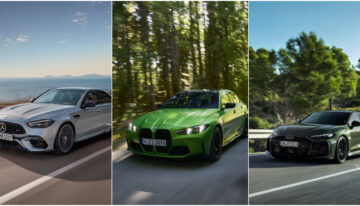
With the new PHEV propulsion system developing 639 PS, the new Audi RS5 is shaping up to be a formidable rival for the Mercedes-AMG C 63 and BMW M3. Here is the first static comparison between the three German premium sports sedans.
In recent years, Audi Sport GmbH (formerly Quattro GmbH until 2016), the division responsible for Audi’s RS performance models, had fallen behind its rivals from Mercedes-AMG and BMW’s M GmbH, both in terms of the number of models and sales figures. However, in the new era of electrification, Audi wants to make up for lost time and has made a strong impression with the new sporty version of the Audi RS5.
The days when the rivalry between the three major German manufacturers was limited to a battle between 6- and 8-cylinder engines are gone. In the new electrified era, the top models Mercedes-AMG C 63, BMW M3, and Audi RS5 are very different from one another. Each adopts a different technical solution that tries to meet increasingly strict emissions regulations while also satisfying customers’ expectations for performance. Let’s take them one by one.
Dimensions and Weight
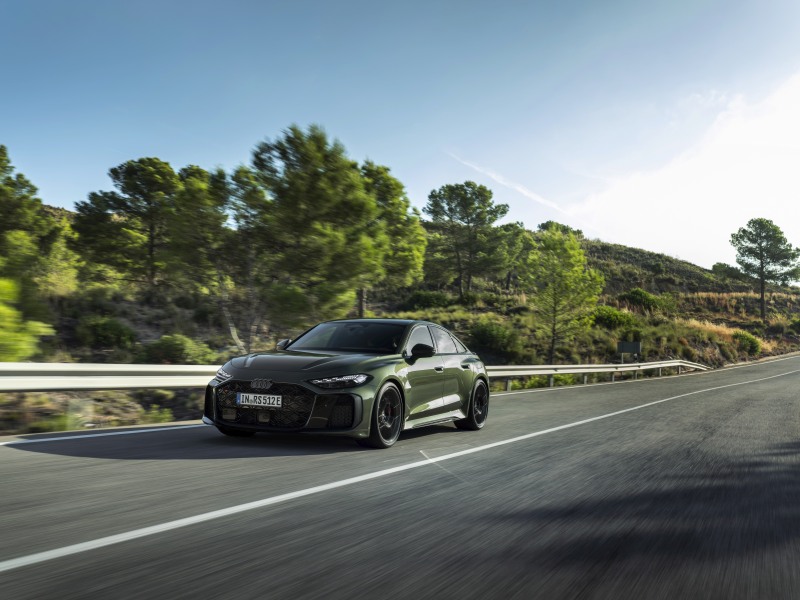
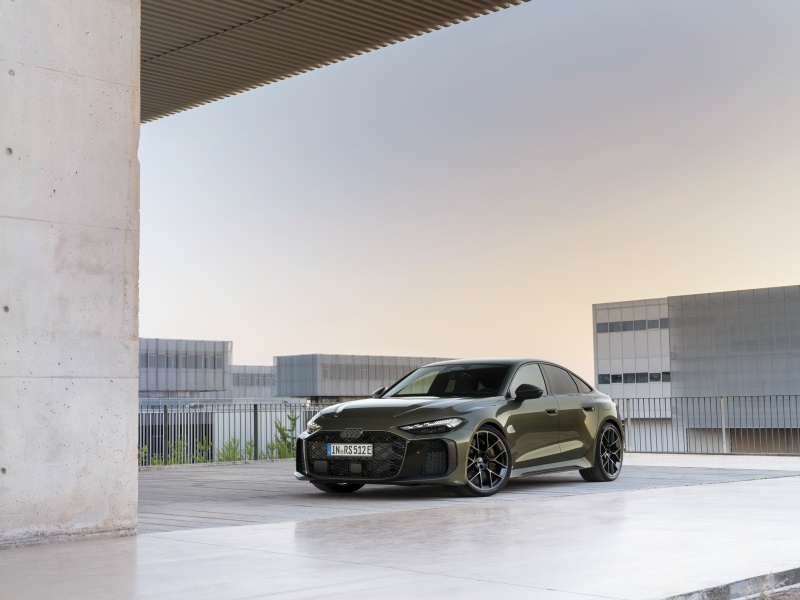
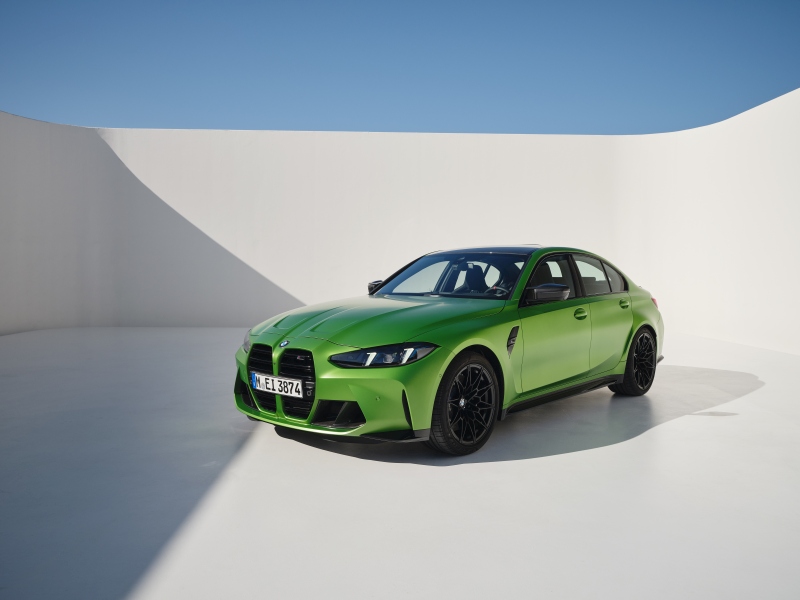
The new Audi RS5 impresses at first sight with its substantial dimensions. At almost 4.90 meters in length, it is 6 cm longer than the Mercedes and 10 cm longer than the BMW. Its wheelbase, just over 2.90 meters, is 2.5 cm longer than the Mercedes and 5 cm longer than the BMW. The 1.95-meter width is also impressive—5 cm wider than the M3 and AMG C 63, giving it a very imposing presence.
However, the weight is also enormous because Audi is the only model that carries a large battery of 22 kWh net capacity. (The BMW has no electrification, while the Mercedes has a small 4.8 kWh net battery.) Audi uses a traditional PHEV system, with the combustion engine and electric motor in the front and the battery placed at the rear.
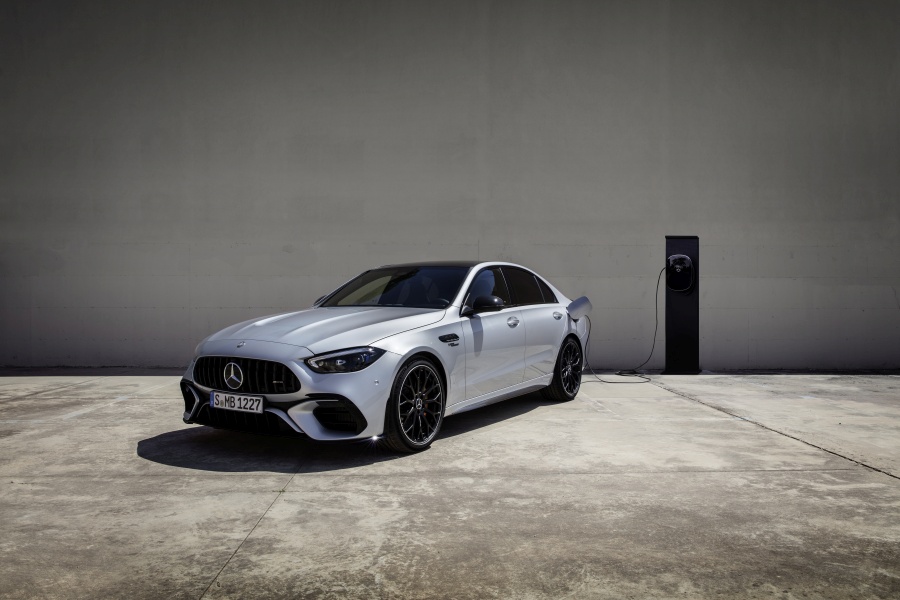
By comparison, Mercedes uses a completely different PHEV system called P3 Hybrid, where the electric motor is not placed between the combustion engine and the automatic transmission, but instead is mounted at the rear and drives the rear axle directly. Although the battery is much smaller than in the Audi (only 4.8 kWh net), the rear-mounted electric motor required raising the trunk floor, resulting in a very small 280-liter trunk.
Despite the small battery, the complex hybrid system still negatively affects weight. The Mercedes-AMG C 63 S weighs 2,165 kg—265 kg lighter than the Audi, but 310 kg heavier than the BMW. The difference in weight between the BMW and the Audi exceeds half a ton.
BMW benefits from having no electrification at all, which is why the top version M3 Competition xDrive weighs only 1,855 kg, while the rear-wheel-drive M3 Competition weighs 1,805 kg.
BMW is also the most practical model because it has by far the largest trunk capacity, even though it is the most compact car: 480 liters, compared with 331 liters for the Audi and 280 liters for the Mercedes. While the Mercedes and BMW have a traditional three-box sedan silhouette, the Audi RS5 features a hatchback tailgate. Folding the rear seats increases cargo capacity to 1,170 liters, although this is not particularly impressive considering the car’s nearly 5-meter length.



Ergonomics
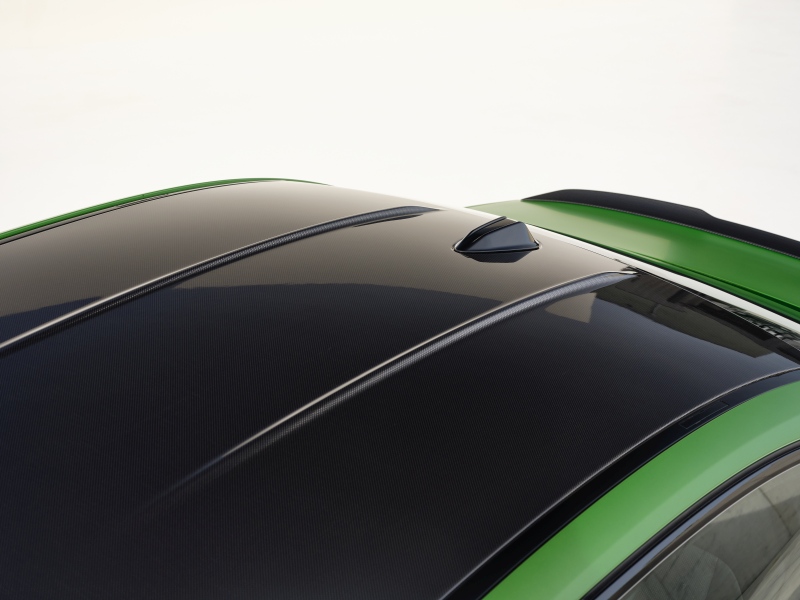
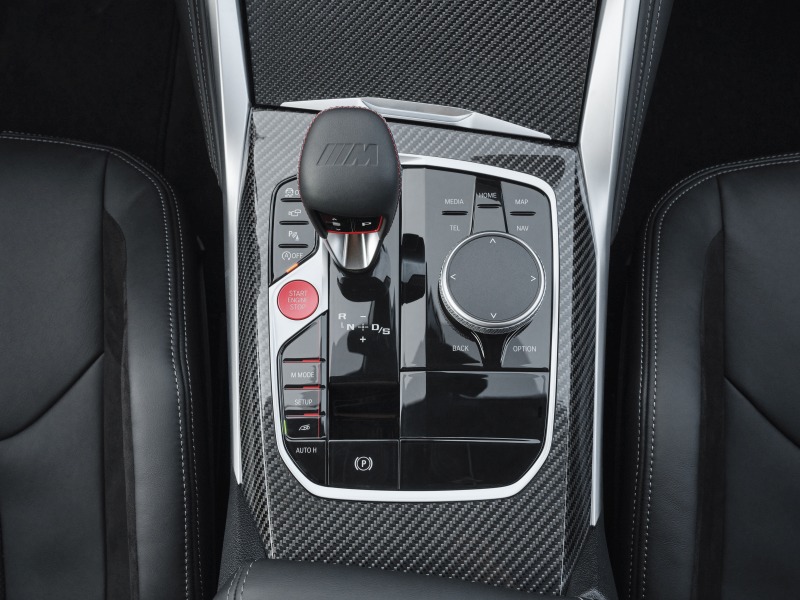
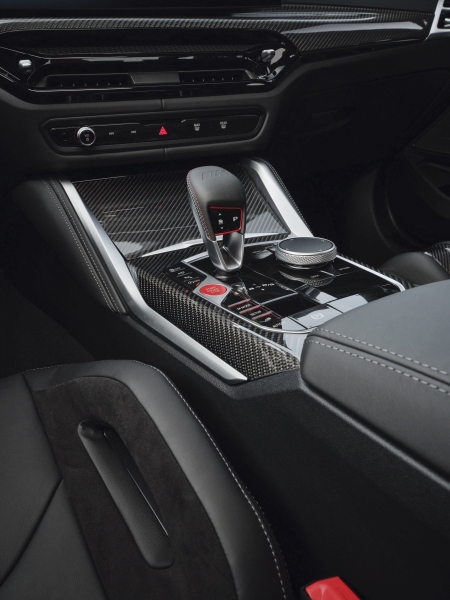
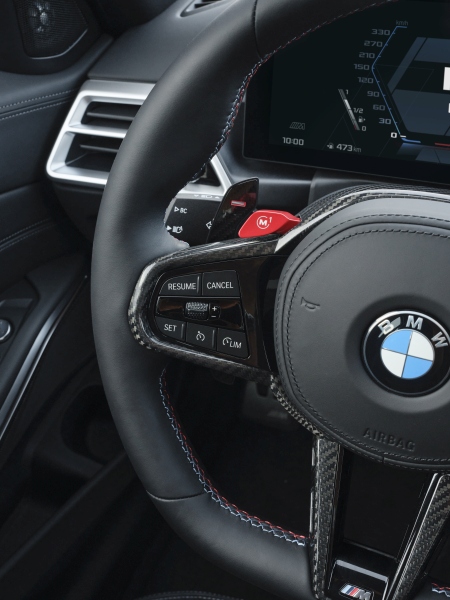
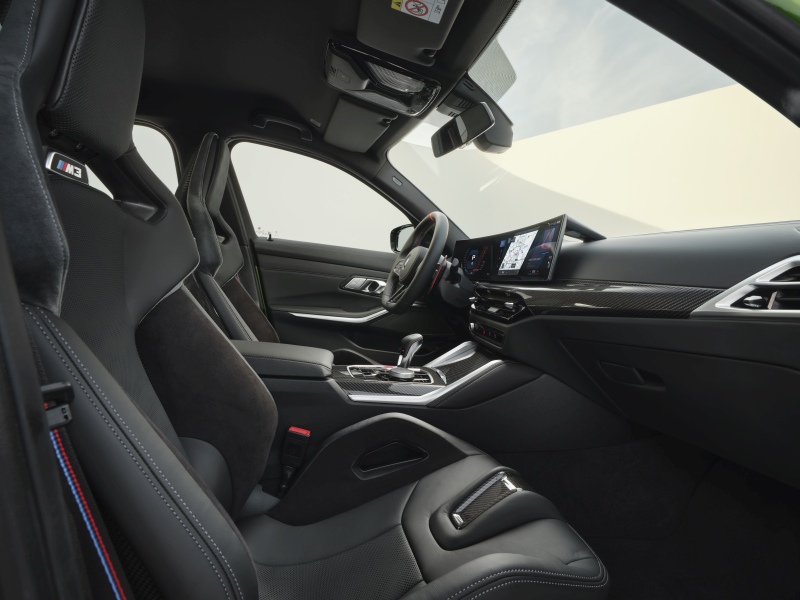
BMW is classic not only in terms of propulsion but also in its interior. The curved display integrates the digital instrument cluster and the multimedia system screen, while the thick steering wheel with physical buttons is ideal. The menus are structured simply and intuitively, and in true M tradition the driver can store two configurations, M1 and M2, which are activated using the two red buttons on the steering wheel. In addition to the various chassis settings, you have the Road, Sport, and Track modes available, with the last two featuring a specific M View graphic for the instrument cluster and head-up display.
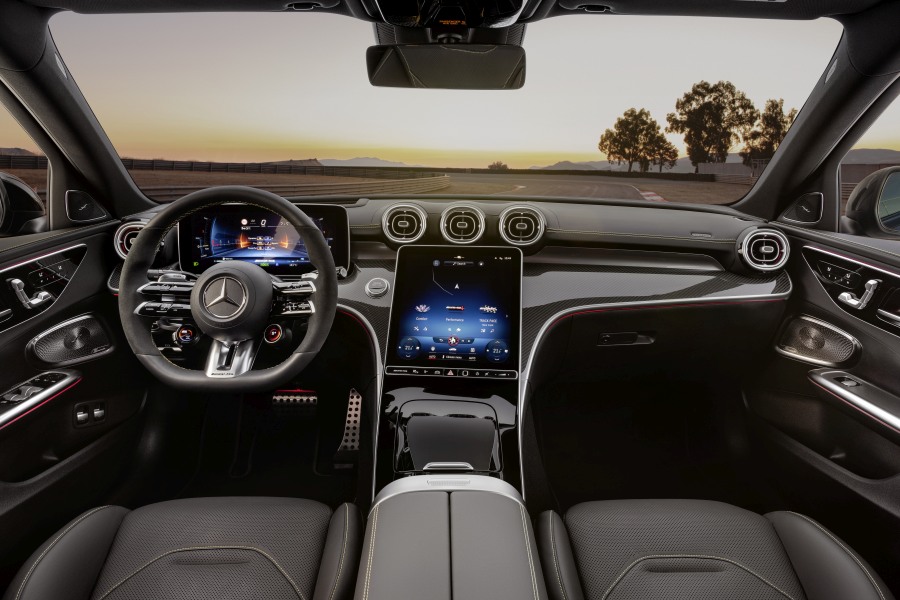
The AMG C 63 also offers specific driving programs alongside the classic ones. It includes different levels of energy recuperation and a boost function. It also provides AMG-specific menus with graphics that are even more attractive than BMW’s. The 11.9-inch multimedia display in portrait format is also easy to operate.
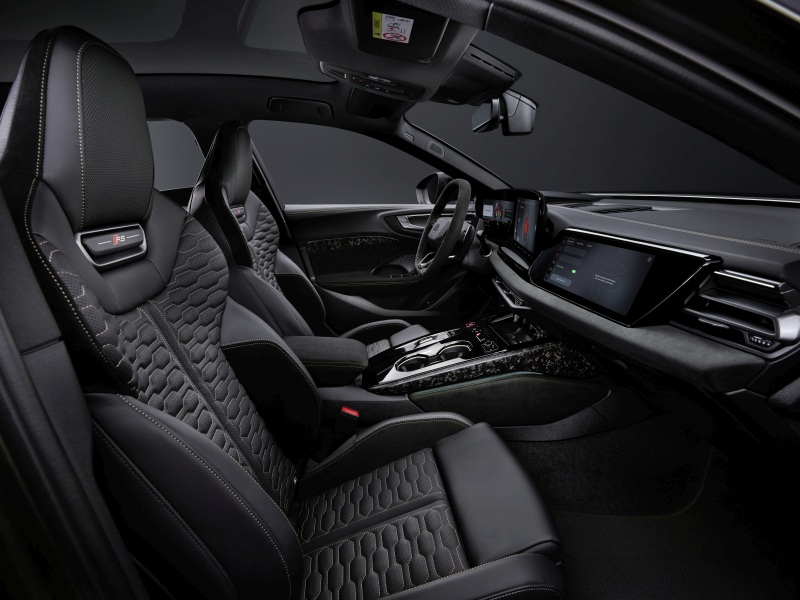
Audi is the most up-to-date in terms of digitalization, standing out with its large displays, RS- and PHEV-specific menus, and the optional passenger display. Menu navigation is also logically structured.
All three models have exceptional sport seats, but the ones that impressed me the most were the optional carbon-fiber seats from BMW, which are 9.6 kg lighter than the standard ones. At the first test drive they seem suitable only for the racetrack, because they are firm and very thin. But after a few hundred kilometers, especially if you drive in a sporty way, your opinion changes. With fine leather upholstery and Alcantara on the sides, featuring a central thigh support and the ability to adjust the width of the backrest, they simply wrap around you and pin you firmly in the seat.

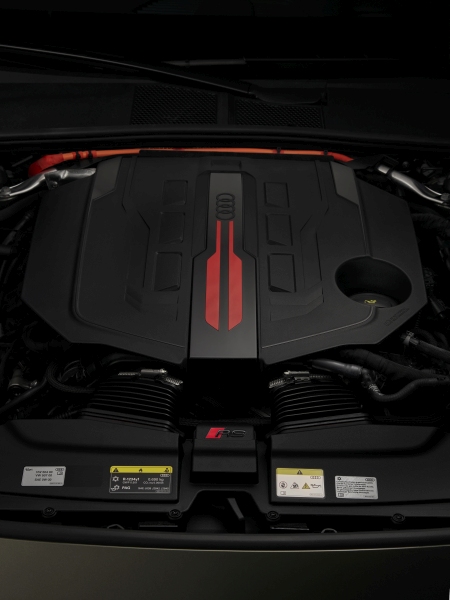
The Audi RS5 combines the 2.9-liter twin-turbo V6 engine also known from some Porsche models, which in this case produces 510 PS, with a 177 PS electric motor integrated into the 8-speed automatic transmission. The result is a system output of 639 PS and maximum torque of 825 Nm, sent to all four wheels through an innovative Quattro all-wheel-drive system.
The large 22 kWh net battery provides a practical electric range of 84 km (WLTP). This allows the Audi to travel a reasonable distance purely on electric power, making it very practical for use in zero-emission zones. At the same time, maximum power remains instantly available.
Audi uses a classic PHEV system in which the large battery ensures that most of the weight is distributed toward the rear axle. The new quattro system with electromechanical dynamic torque control on the rear axle, called Dynamic Torque Control, allows extremely fast and precise torque distribution. In practice, Audi can distribute torque between the rear wheels in less than 15 ms.

Unlike mechanical systems, electromechanical torque vectoring can transfer torque in either direction. A water-cooled permanent-magnet electric motor with an output of 8 kW and 40 Nm acts as a high-voltage actuator. Overdrive gears and a conventional differential with a low locking percentage are also key components. We will see exactly how this system works in a few weeks after we drive it.
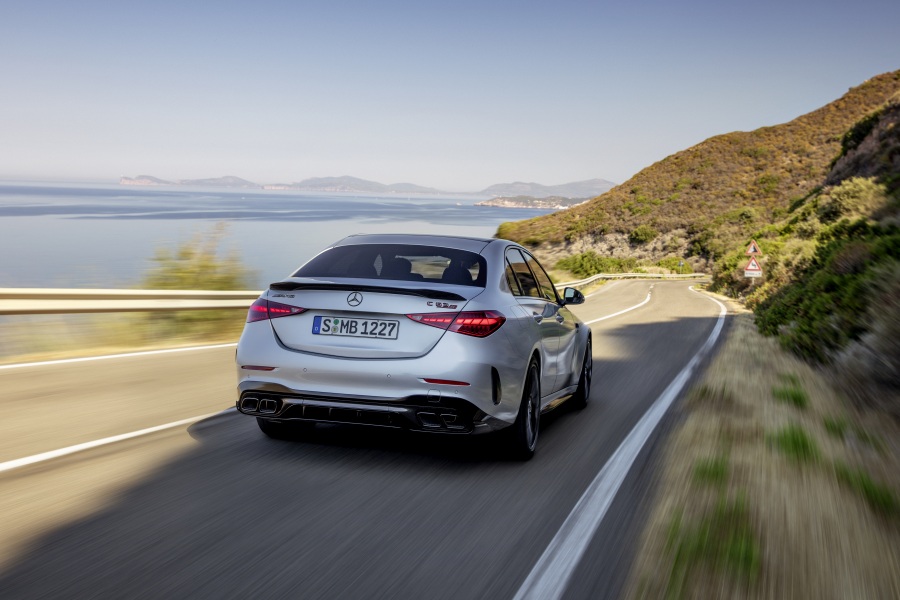
The Mercedes-AMG C 63 S uses a complex and radical PHEV system. The world’s most powerful production four-cylinder engine features an electrically driven turbocharger, powered by a small electric motor placed on the shaft between the turbine and the compressor wheel, which eliminates any turbo lag. The electric motor drives the rear axle directly through a two-speed automatic gearbox, which engages second gear at speeds above 140 km/h.
Mercedes says that up to 680 PS and 1,020 Nm are available for short periods of time. We tested this powertrain in the AMG GLC 63 S and concluded that there is no replacement for displacement. Up to 5,000 rpm, the four-cylinder engine performs respectably with help from the electric motor, but above 5,000 rpm it lacks the explosive character of a V8 engine.

Therefore, although on paper the AMG C 63 S has the fastest acceleration, in real life the maximum power is time-limited. AMG is a performance hybrid in the truest sense of the word, but not really an efficiency concept.
If we look at the fuel consumption figures, we see that the AMG C 63 S consumes 9 l/100 km, not much less than the BMW (10.1 l/100 km), while the Audi shows only 3.8 l/100 km when the battery is charged.
Mercedes customers have not been very enthusiastic about the sensations offered by this PHEV system, and Mercedes has finally understood this. The powertrain used in the GLC 63 S has already been replaced by an inline six-cylinder engine with a mild-hybrid system in the AMG GLC 53, and the same will happen to the C-Class with the facelift in autumn 2026.
BMW has a different philosophy. The Bavarians sell enough electric models (BMW has the highest EV sales compared with Audi and Mercedes), so they can still afford to build pure sports models without any electrification.

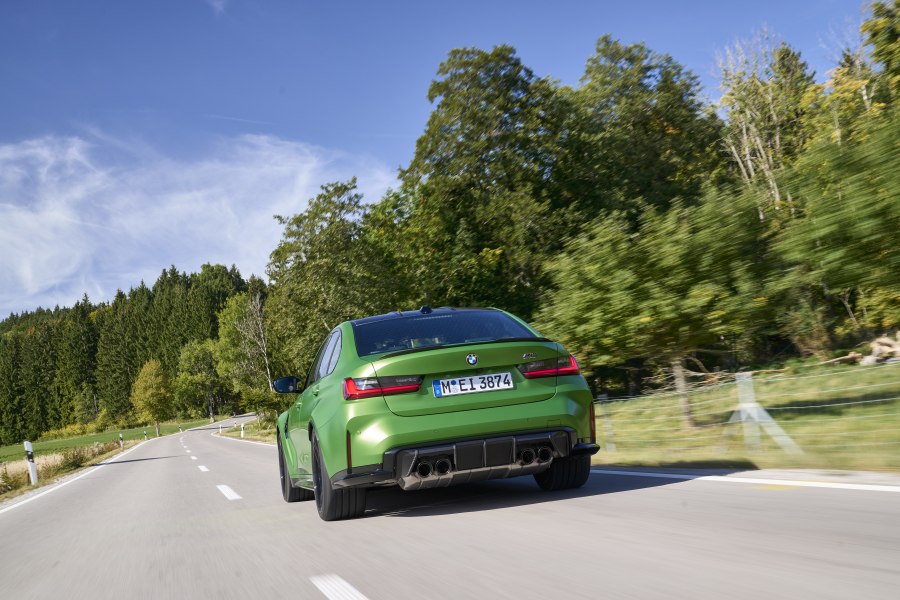
The S58 inline-six engine has no electric assistance, revs incredibly freely, and delivers power consistently. Above 5,000 rpm it unleashes itself like a real beast, and the power becomes comparable to that of a V8. Although on paper it produces only 530 PS, less than its rivals, all the horsepower feels very alive and present, accompanied by a spectacular sound.
The inline-six engine is also helped by an excellent 8-speed automatic transmission, which shifts as quickly as a dual-clutch gearbox but without any jolts. BMW also has an active rear differential.
Much lighter than the other two models, the BMW M3 impresses with its lightness, transparency, and consistency. With all-wheel drive, the BMW is extremely safe while still offering maximum driving pleasure. If the all-wheel drive is disengaged, it delivers a pure driving experience, and BMW is the only one that still offers a manual transmission for purists.
Prices
As usual, Mercedes is the most expensive, costing over €115,000, and the high price together with the lack of excitement from the PHEV system has driven away many traditional customers. However, Mercedes has listened to the criticism and is working on a new V8 with a flat-plane crankshaft, with which the German manufacturer hopes to win back customers of the old V8 model.
The Audi RS5 and BMW M3 Competition xDrive have comparable prices of €106,000–€107,000. However, the BMW M3 is the only one that can be bought for under €100,000 in the version with the 480 PS engine and rear-wheel drive. The M3 with 480 PS starts at €96,500, while the Competition version with 510 PS and rear-wheel drive costs €102,700.
Verdict
BMW offers fascinating driving dynamics and a fabulous inline-six engine that delivers incredible sensations beyond 5,000 rpm, without any electric assistance. The enormous driving pleasure is also helped by the lower weight and perfect weight distribution between the axles. The Mercedes-AMG C 63 S is brutally fast and technically fascinating, but it does not provide the emotion of a V8 nor the efficiency of a PHEV. Audi is trying to combine the performance of a classic PHEV system with practical electric range. On paper it is very fast, but we will have to wait for the first test drive to see how much the huge weight affects driving enjoyment.
| Edit | |||
|---|---|---|---|
| Model | Audi RS5 | BMW M3 Competition xDrive | Mercedes -AMG C 63 S E Perf. |
| Engine type | V6, bi-turbo | L6, bi-turbo | L4, turbo |
| Displacement (cc) | 2,894 | 2,993 | 1,991 |
| Max.power/revs (PS/rpm) | 510/6,300-6,800 | 530/6,250 | 476/6,750 |
| Max. torque/revs (Nm/rpm) | 600/2,000-5,000 | 650/2,750-5,750 | 545/5,250-5,500 |
| Electric engine | |||
| Max. power (PS) | 177 | - | 204 |
| Max. torque (Nm) | 460 | - | 320 |
| Total power (PS) | 639 | 530 | 680 |
| Total torque (Nm) | 825 | 650 | 1,020 |
| Traction | 4wd | 4wd | 4wd |
| Transmission | 8 gears, aut. | 8 gears, aut. | 9 gear, aut. |
| L/w/h (mm) | 4,896/1,952/1,428 | 4,794/1,903/1,438 | 4,842/1,900/1,458 |
| Wheelbase (mm) | 2,906 | 2,857 | 2,875 |
| Boot capacity(l) | 331-1,170 | 480 | 280 |
| Kerb weight(kg) | 2,430 | 1,855 | 2,165 |
| Battery capacity brutto/net (kWh) | 25.9/22.0 | - | 6.1/4.8 |
| Top speed (km/h) | 250 (285 optional) | 250 (290 optional) | 250 (280 optional) |
| Electric range (km) | 84 | - | 11 |
| Acceleration 0-100 km/h (s) | 3.6 | 3.5 | 3.4 |
| Mixed fuel consumption (l/100 km) | 3.8 | 10.1 | 9 |
| Emission CO2 (g/km) | 86 | 227 | 205 |
| PRICE (euro with VAT) | 106,200 | 107,600 | 115,472 |