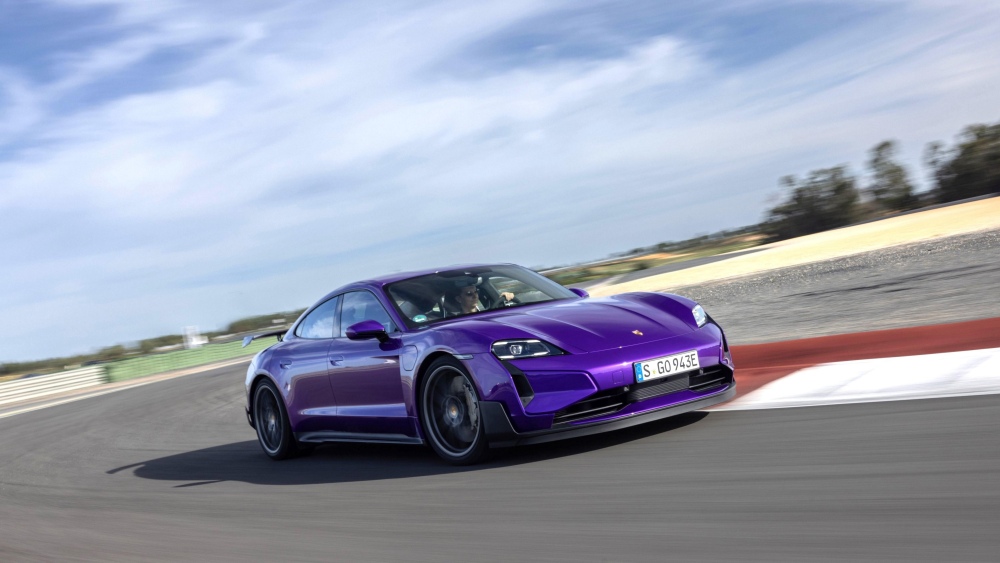
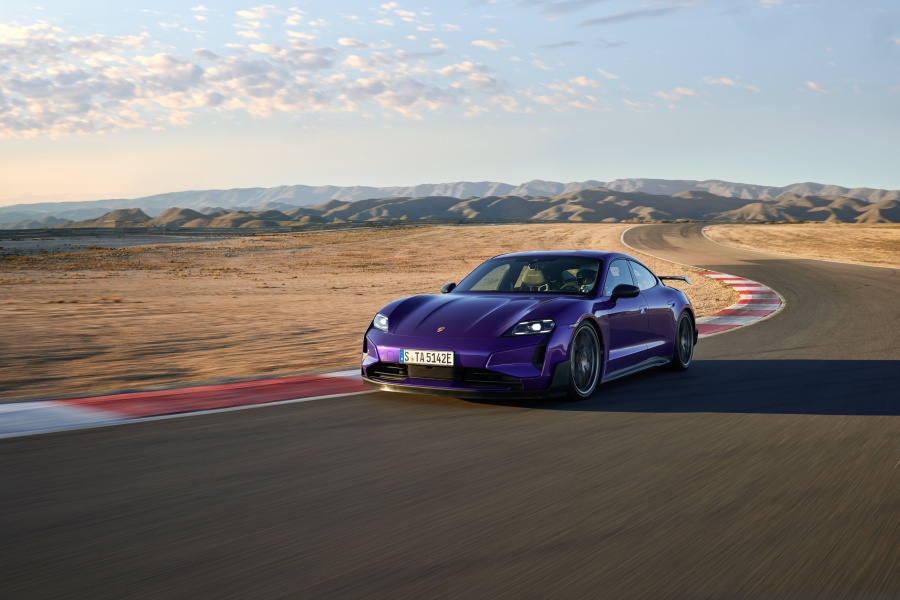
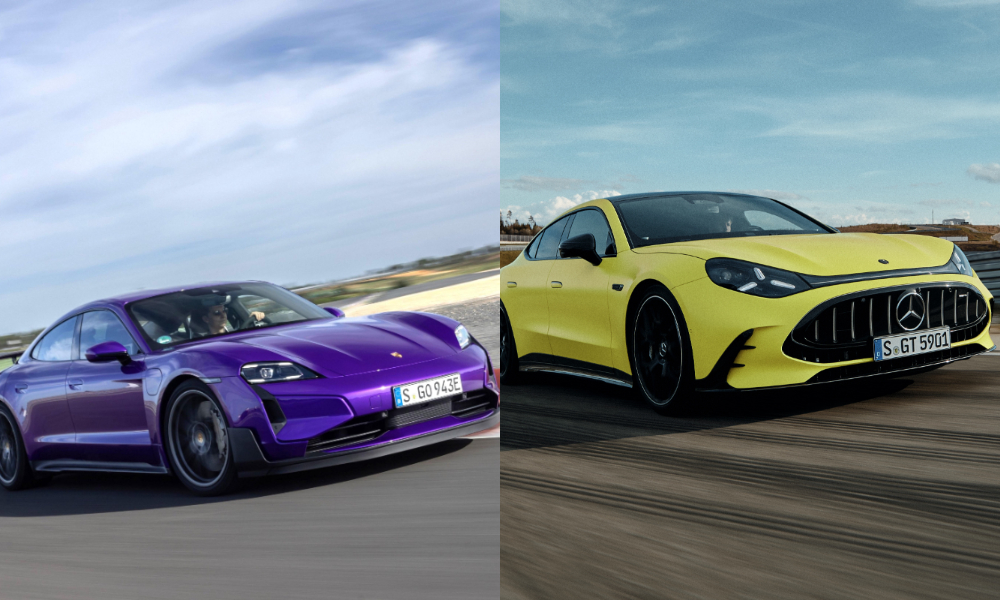
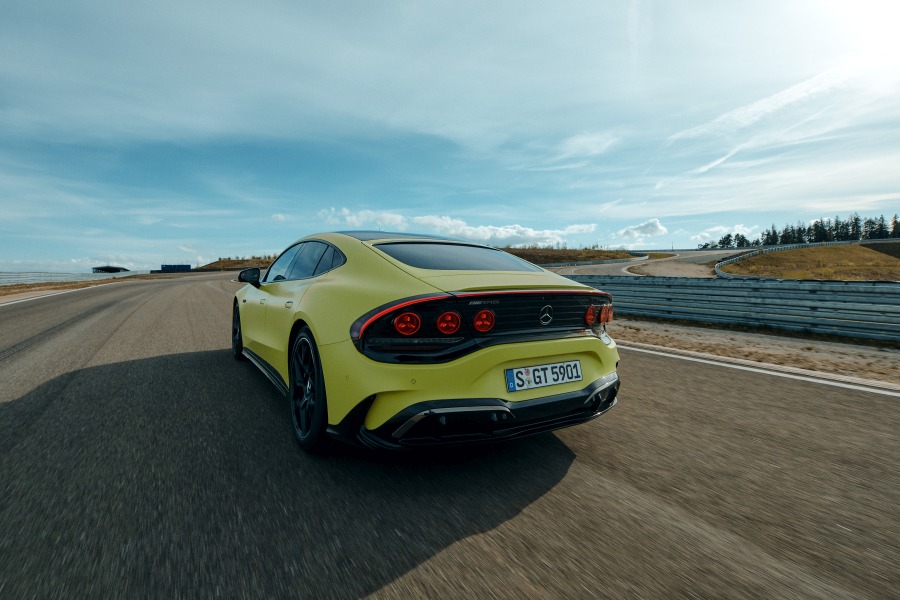
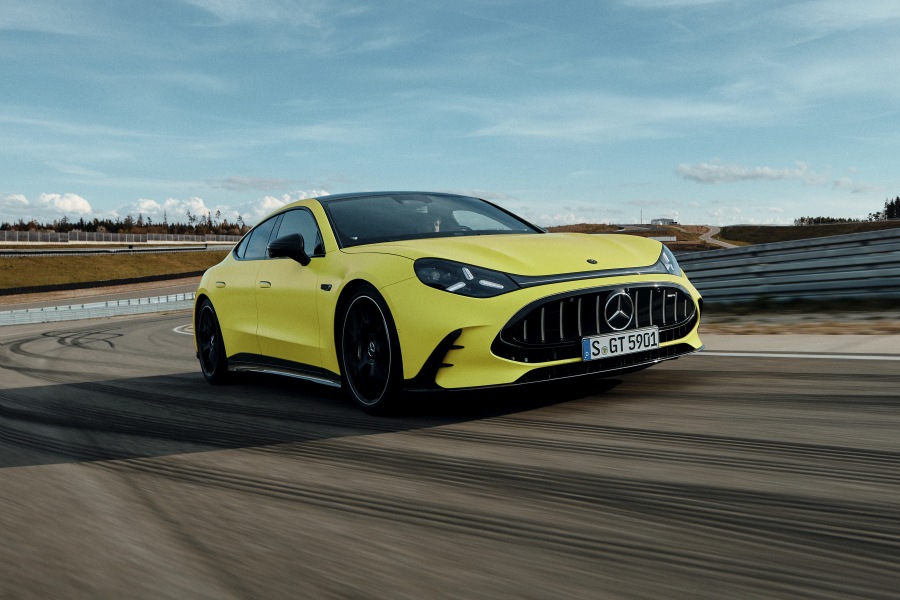
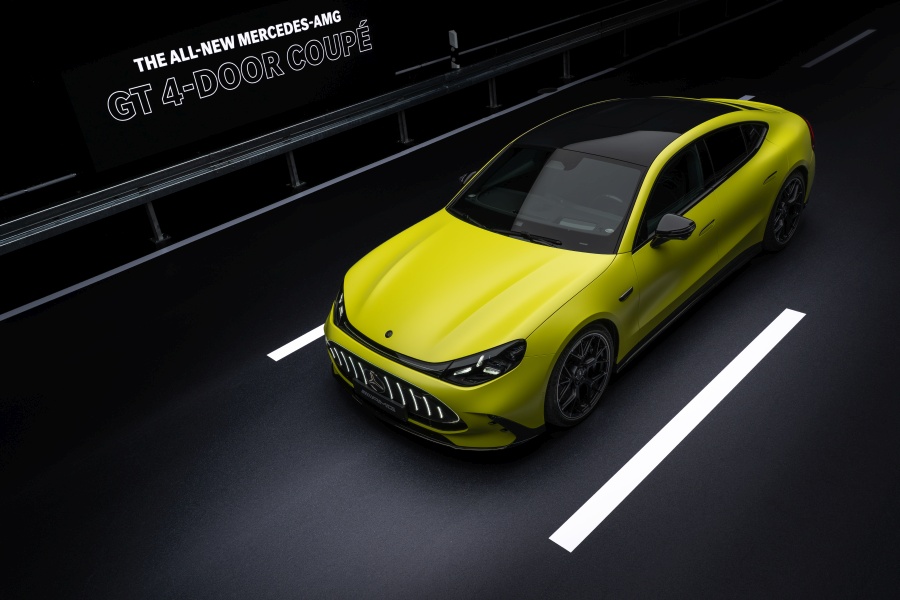
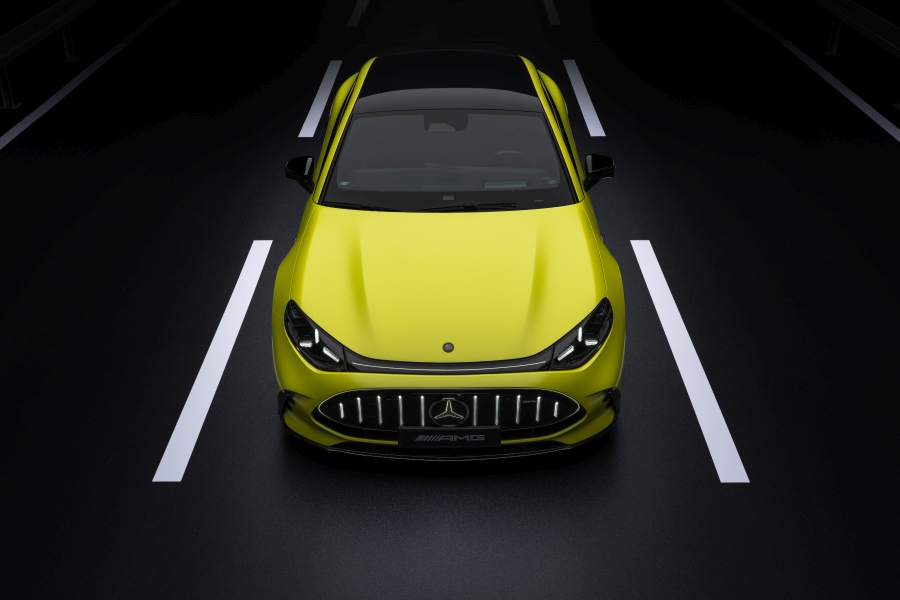
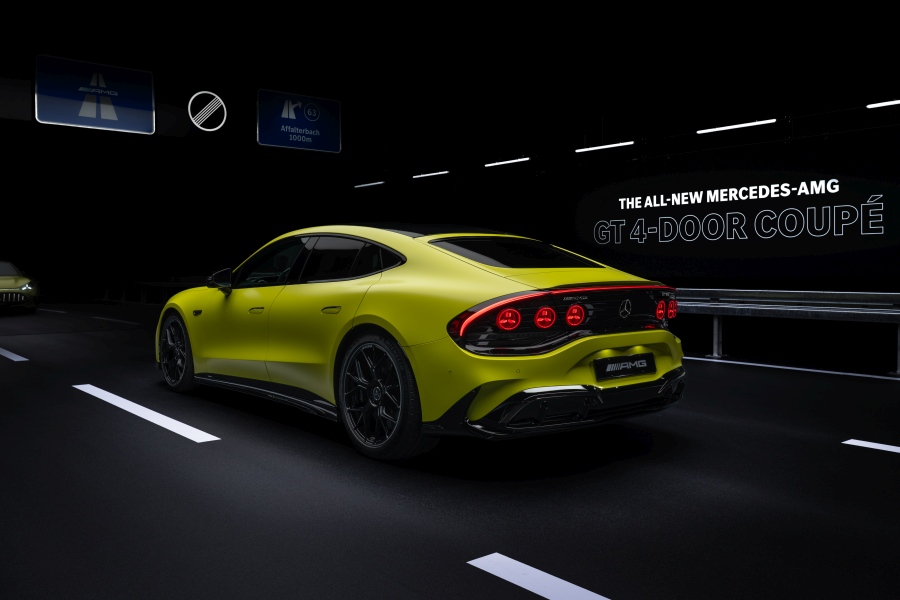
The Mercedes-AMG GT 4-Door Coupe is aimed at buyers of the top Porsche Taycan versions. Here is the first comparison between these two high-performance models: the Mercedes-AMG GT 63 4-Door Coupe and the Porsche Taycan Turbo GT.
The rivalry from the internal-combustion era between the Porsche Taycan’s predecessor, the Porsche Panamera, and the previous-generation Mercedes-AMG GT 4-Door Coupe has now moved into the electric age, as the new AMG GT 4-Door Coupe is available exclusively as an EV. As a result, the new Mercedes-AMG GT 4-Door Coupe competes directly with the top Porsche Taycan variants: Turbo, Turbo S, and Turbo GT.
The new Mercedes-AMG GT 4-Door Coupe is the first standalone electric model developed by AMG without a Mercedes-Benz counterpart. It is based on the new AMG.EA platform, which will also underpin a future SUV. The model is available as the AMG GT 55 4-Door Coupe 4Matic+ with 805 hp and the AMG GT 63 4-Door Coupe 4Matic+ with 1,153 hp. Both versions use a three-motor setup, with two motors at the rear axle and one at the front. By contrast, the top Porsche Taycan models feature two motors, one on each axle: Turbo (872 hp), Turbo S (939 hp), and Turbo GT (1,020 hp).
In this comparison, we focus on the flagship Mercedes-AMG GT 63 4-Door Coupe 4Matic+ with 1,153 hp and the Porsche Taycan Turbo GT with 1,020 hp. Although high-performance electric cars have not achieved major sales success so far, Mercedes-AMG hopes the new AMG GT 4-Door Coupe will change that thanks to its advanced technology: axial-flux motors, a Formula 1-inspired battery, and a record charging capability of up to 600 kW.
Dimensions and Interior Space
At 5,094 mm long, 1,959 mm wide, and 1,411 mm high, the Mercedes-AMG GT 4-Door Coupe is larger than the Taycan, which measures 4,968 mm in length, 1,998 mm in width, and 1,378 mm in height. The Taycan is therefore 126 mm shorter than the AMG GT 4-Door Coupe, while its 2,900 mm wheelbase is 140 mm shorter. It is worth noting that although the AMG GT 4-Door Coupe is 40 mm lower than its predecessor, the Taycan is still 33 mm lower.
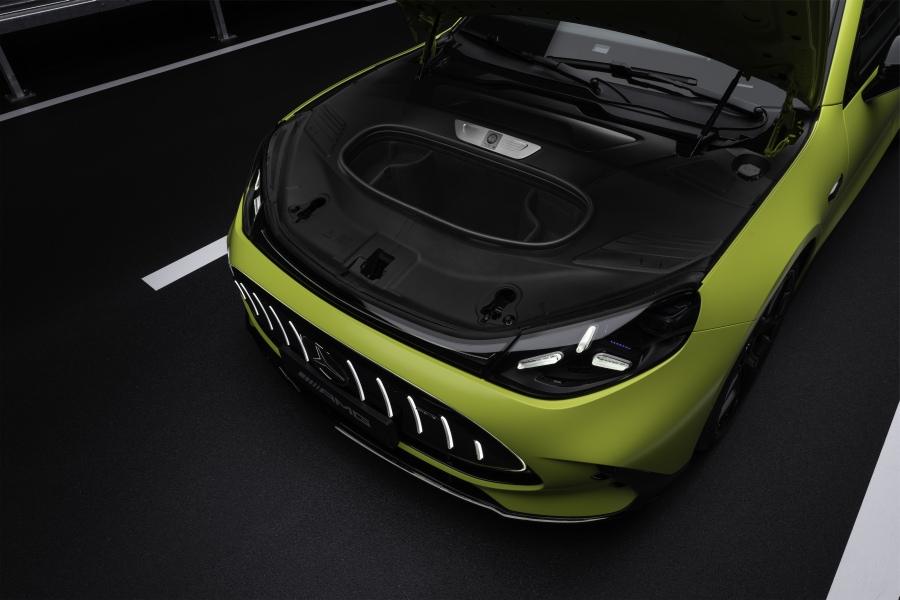
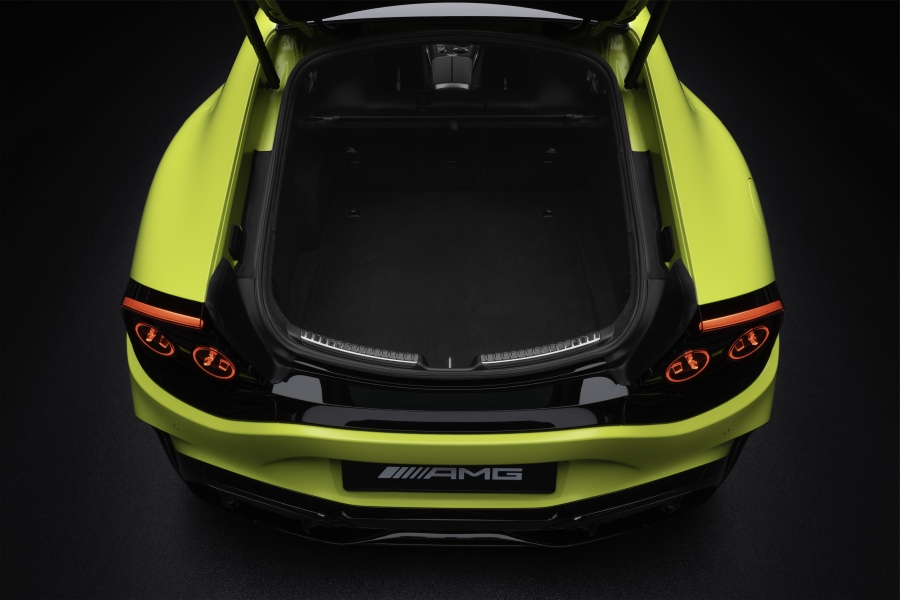
The wheelbase difference is reflected inside the cabin, where the Mercedes-AMG GT 4-Door Coupe offers more rear knee room and a larger trunk, with 415 liters compared to just 326 liters in the Porsche. However, the Porsche counters with a larger front trunk (frunk), offering 84 liters versus 62 liters in the AMG GT 4-Door Coupe.
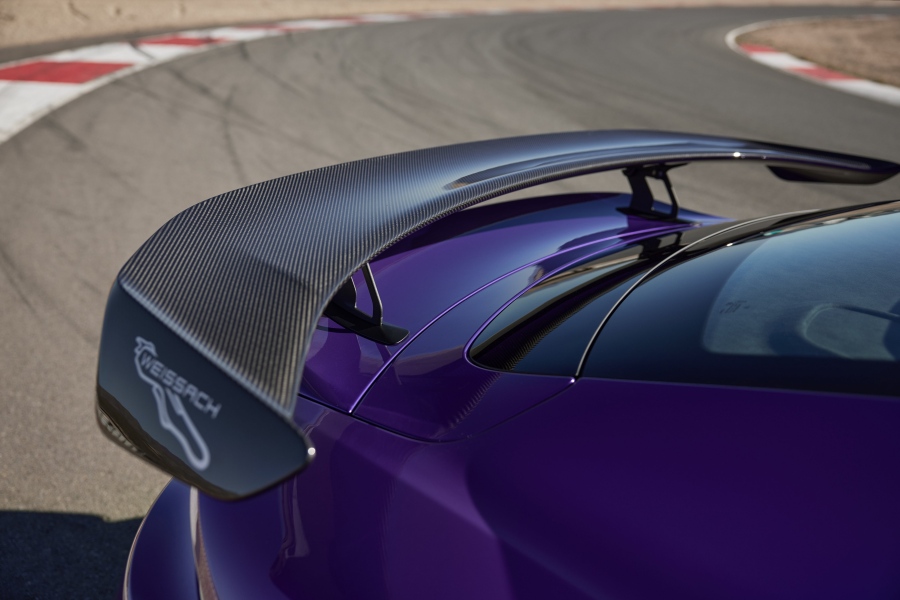
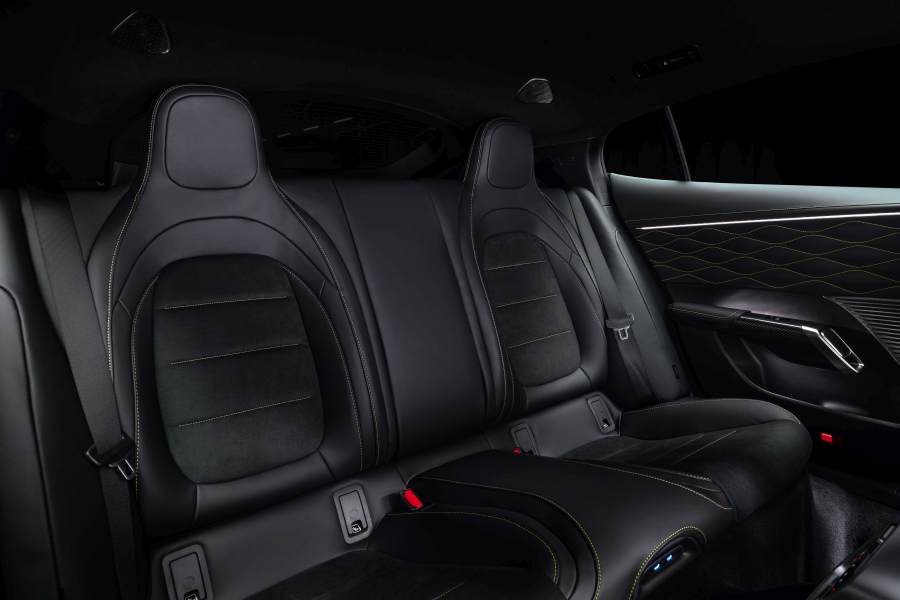
The Mercedes-AMG GT 4-Door Coupe comes standard as a four-seater with two individual rear seats and can optionally be equipped with a rear bench seat. The Porsche Taycan is available only as a four-seater, while the Turbo GT with the Weissach Package eliminates the rear seats altogether.
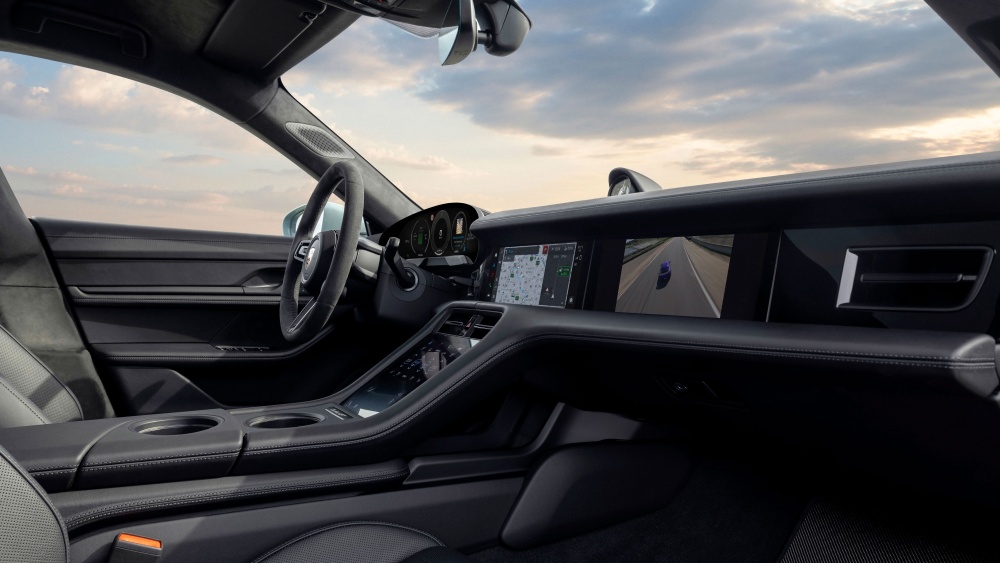
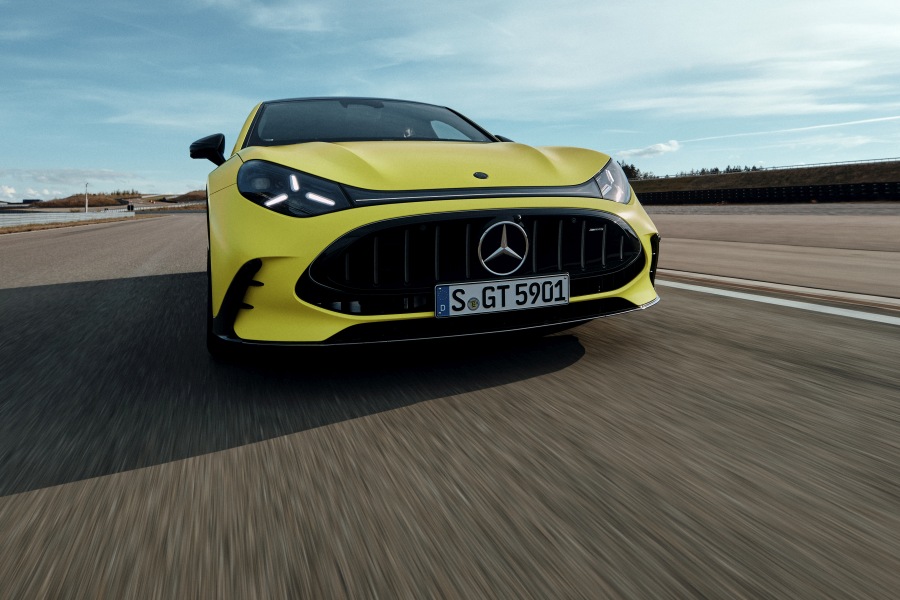
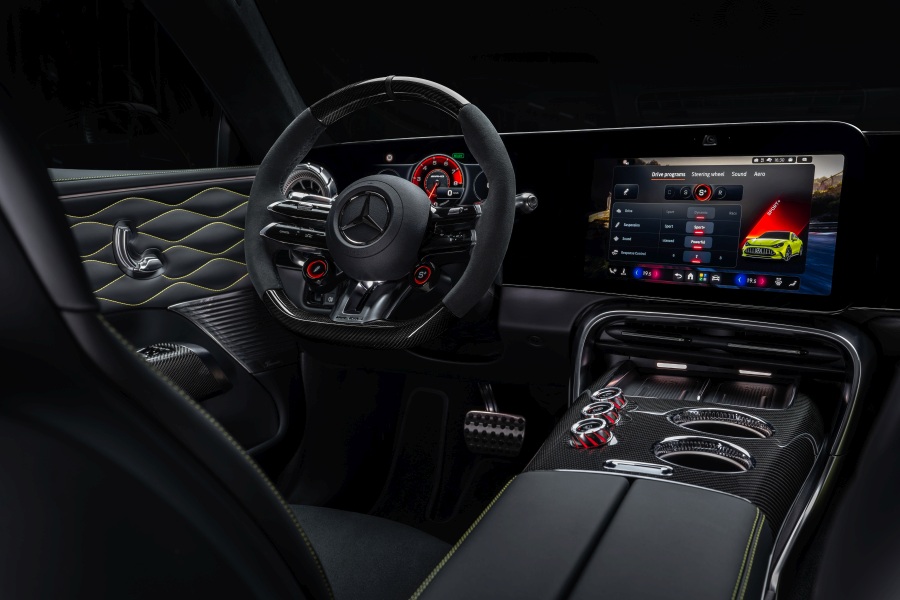
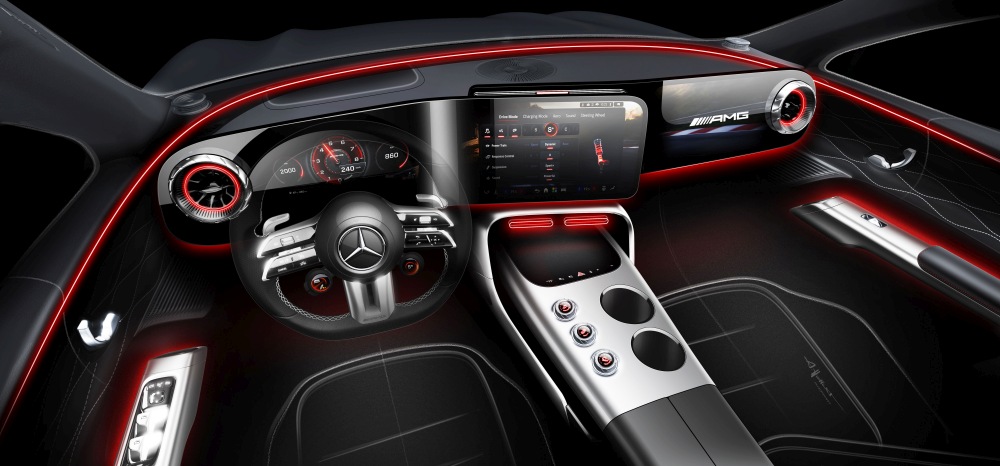
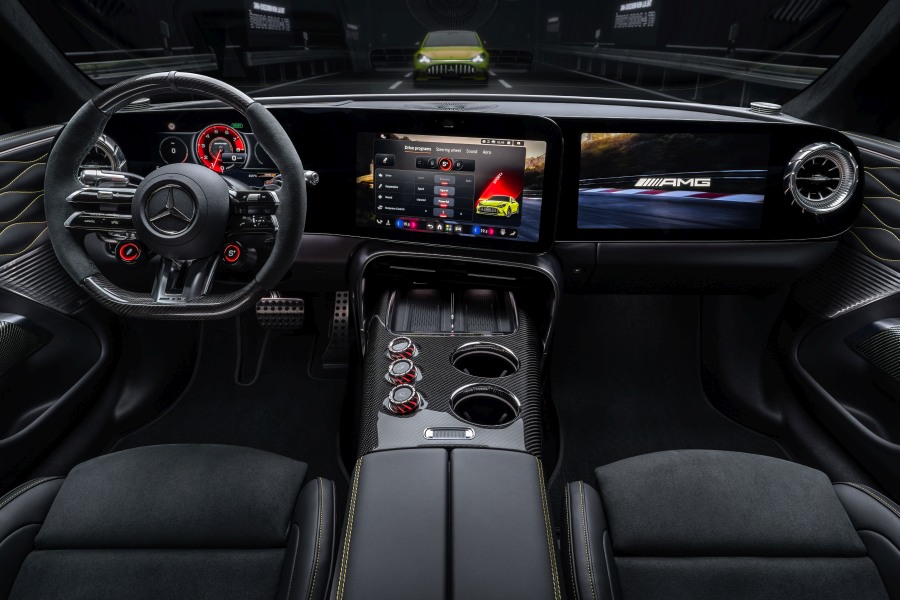
The Mercedes-AMG GT 4-Door Coupe features a futuristic interior dominated by a high-tech atmosphere, enhanced by exposed carbon fiber, premium leather, microfiber upholstery, and red-illuminated controls for the key chassis settings, emphasizing its sporting character. The infotainment display is housed within the same frame as the digital instrument cluster but is angled toward the driver. The driving position is very low, and buyers can optionally order AMG Performance seats (€3,439), which provide even better support, or AMG Performance High-End seats (€6,117). The AMG Performance steering wheel is wrapped in leather or a carbon-fiber and microfiber combination and includes paddles for adjusting the energy recuperation levels.
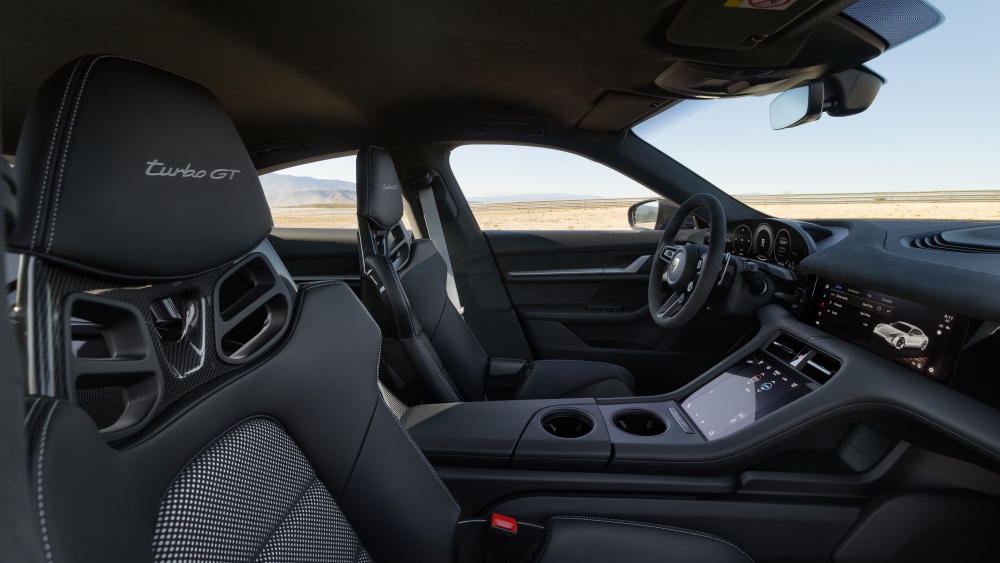
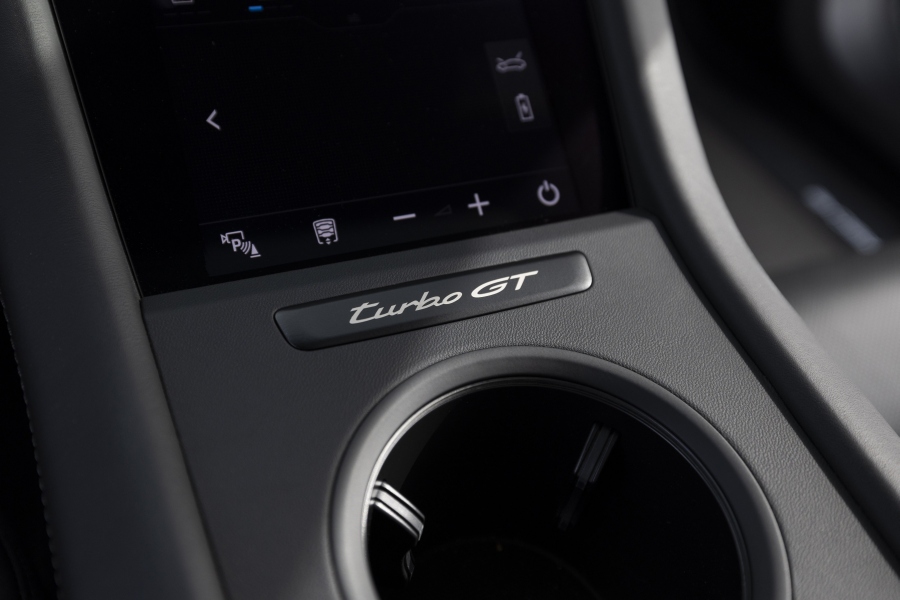
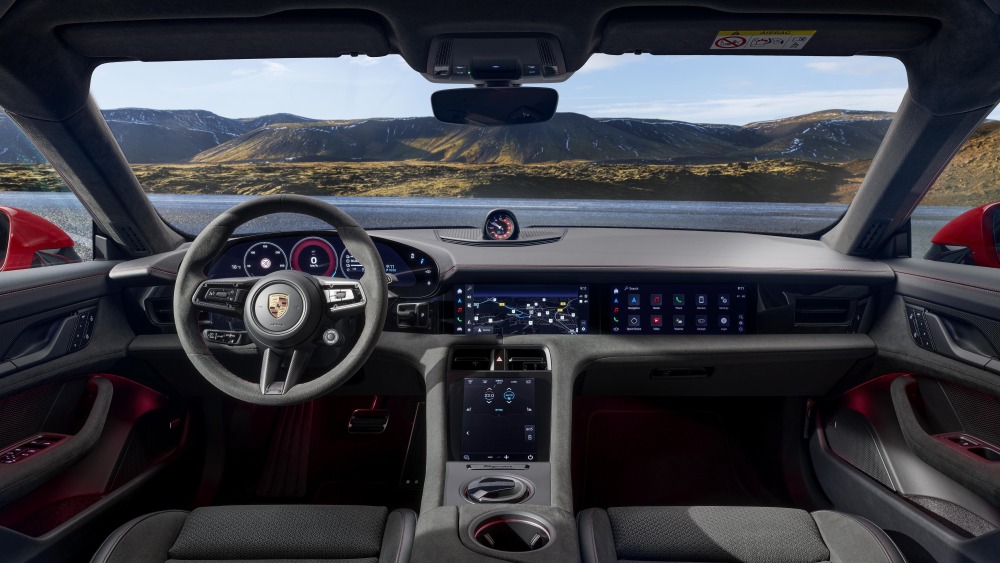
The Porsche offers an interior that feels closer to that of a grand tourer than a hardcore super-sports coupe. It retains the curved digital instrument cluster with three digital dials, while the infotainment display and optional passenger display are neatly integrated into the dashboard. A fourth touchscreen on the center console controls climate settings and other functions. Naturally, Porsche’s signature rotary drive-mode selector remains present on the steering wheel and is now standard across the entire range.
Powertrains
There are major differences between the powertrains of the two models. The Mercedes-AMG GT uses axial-flux motors supplied by the British manufacturer YASA, which was fully acquired by Mercedes in 2021. These motors are far more compact and offer higher power density than conventional electric motors. The rear motors are only 8 cm wide, while the front motor measures just 9 cm in width. Despite their compact dimensions, each motor can produce up to 468 hp.
The AMG GT 63 4-Door Coupé employs three motors—two at the rear and one at the front—delivering a combined output of 1,153 hp and 2,000 Nm of torque. It accelerates from 0 to 100 km/h in 2.4 seconds and from 0 to 200 km/h in 6.8 seconds. AMG promises that, unlike many high-performance EVs, maximum power is not available only for brief bursts but can be delivered repeatedly and continuously thanks to the YASA motors and the Formula 1-inspired battery technology.
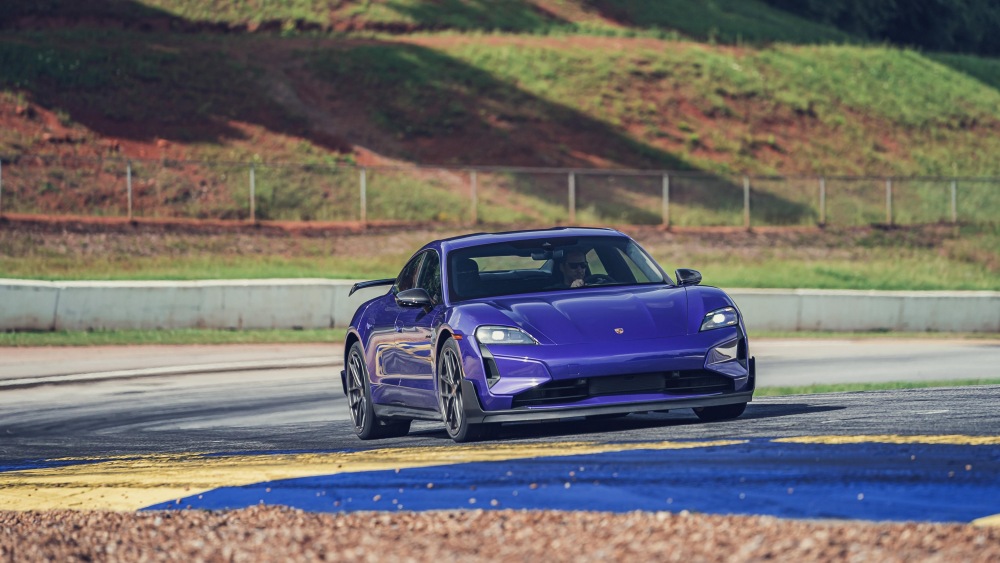
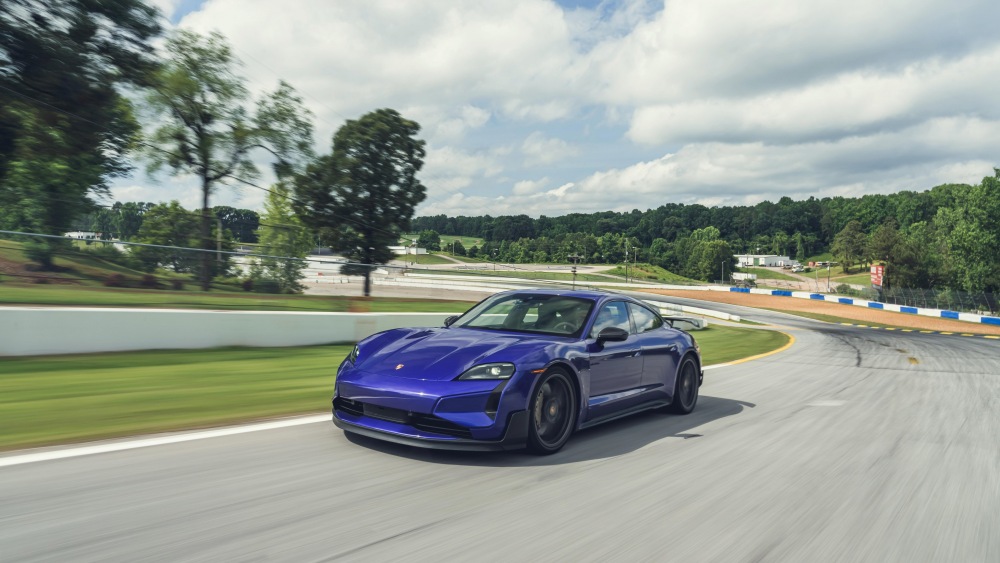
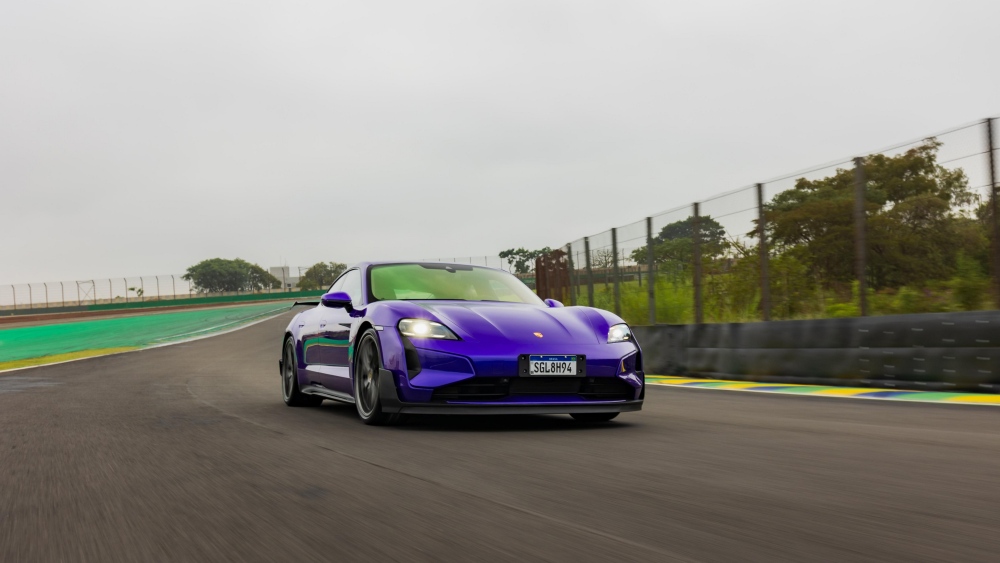
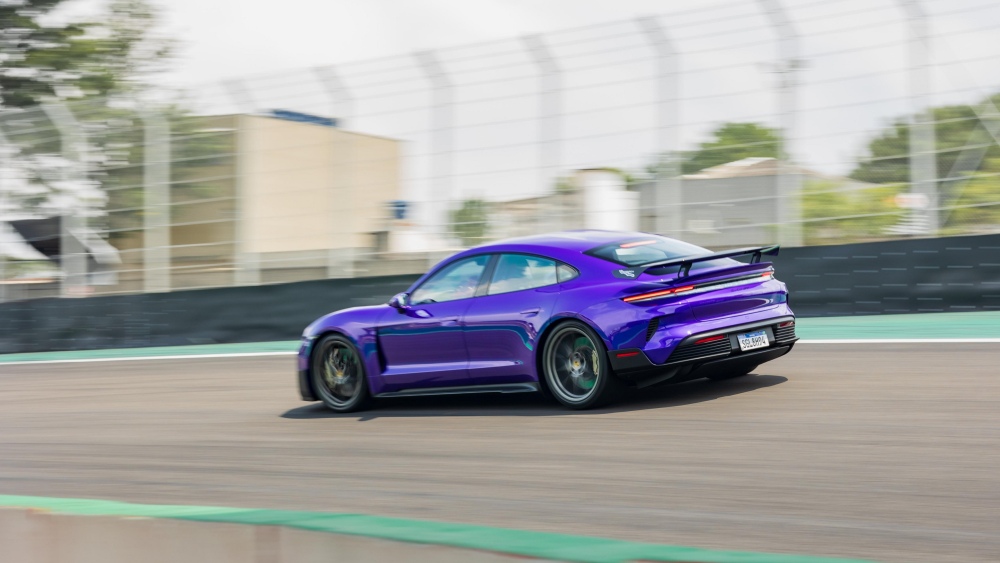
By contrast, the Porsche Taycan Turbo GT is less powerful on paper, producing 1,020 hp and 1,340 Nm. However, when Launch Control with the overboost function is activated, output increases to 1,093 hp for up to two seconds. In Attack Mode, it delivers 939 hp for up to ten seconds.
However, Mercedes-AMG’s power advantage does not fully translate into real-world acceleration figures. The Taycan Turbo GT with the Weissach Package reaches 100 km/h in 2.2 seconds and 200 km/h in 6.4 seconds. One explanation may be its lower weight: 2,295 kg for the Turbo GT Weissach (70 kg lighter than the standard Turbo GT at 2,365 kg), compared with 2,460 kg for the AMG GT 63 4-Door Coupé.
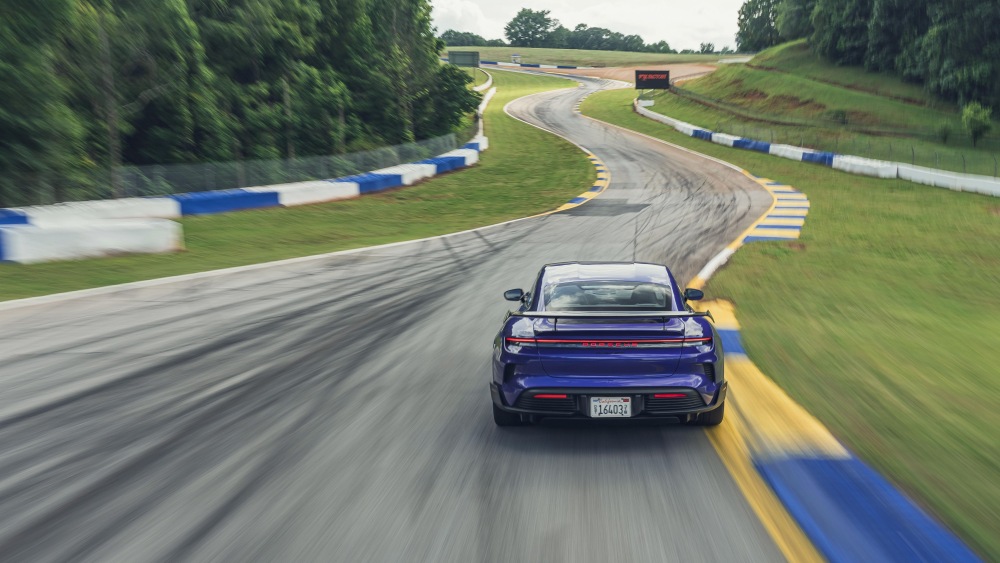
It now remains to be seen what happens on the racetrack, where the Taycan Turbo GT currently holds three production EV lap records: 6:55.53 minutes at the Nürburgring, 1:27.87 minutes at Laguna Seca, and 2:11.28 minutes at the Shanghai International Circuit. Will the AMG GT 4-Door be able to beat them?
Mercedes wanted to give customers of the new electric GT the auditory experience of a V8 engine. In AMG FORCE S+ mode, the car reproduces not only V8 engine sounds but also virtual gearshifts and simulated interruptions in power delivery.
The Porsche Taycan Turbo GT, on the other hand, sounds like an electric vehicle, which makes its acoustic character feel more natural. Porsche focused on driving experience and the exceptional responsiveness of its electric motors rather than creating an artificial sound experience. Those who still want to hear a real V8 can continue to buy a Panamera, while Mercedes no longer offers a combustion-engine version of the GT.
Chassis and Suspension
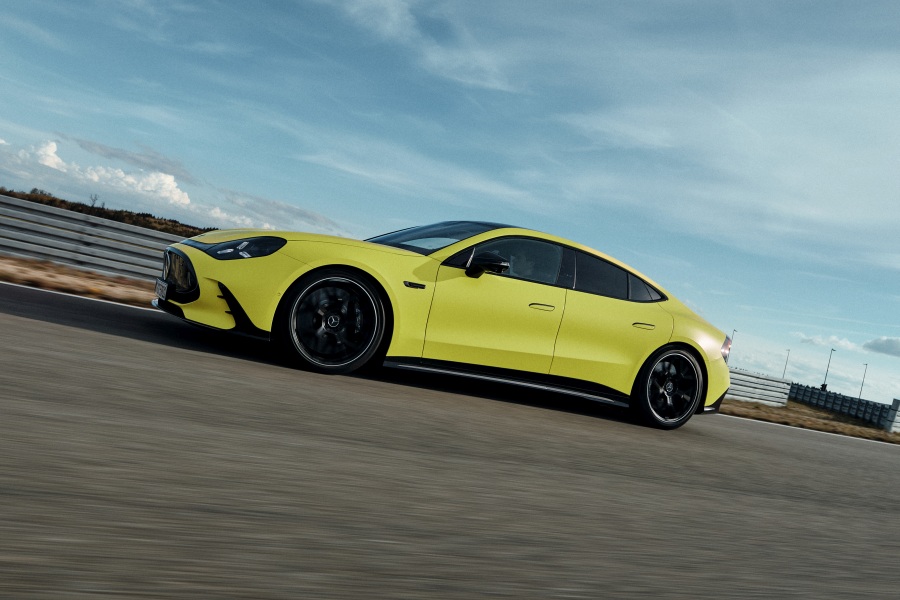
The Mercedes-AMG GT 4-Door features a sophisticated AMG Active Ride Control suspension with semi-active roll stabilization and three-stage adjustable air springs. The suspension uses dampers equipped with semi-active interconnected hydraulic elements that replace conventional anti-roll bars. There is also no need for locking differentials, as the two rear electric motors provide the torque-vectoring function.
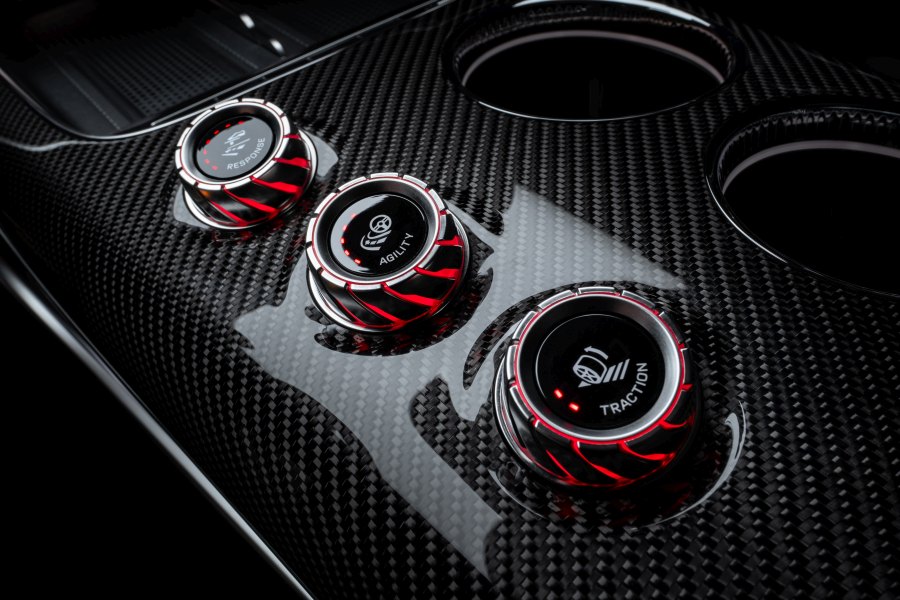
The AMG GT also impresses with its Race Engineer control unit, featuring three rotary switches on the center tunnel:
- Response Control (adjusts the response of the electric motors)
- Agility Control (regulates the moment of inertia around the vertical axis)
- Traction Control (varies traction control intervention across nine levels)
The chassis uses a multilink suspension layout at both the front and rear, while rear-wheel steering allows the rear wheels to turn by up to 6 degrees relative to the front wheels.
The Porsche Taycan Turbo S comes standard with adaptive air suspension and is optionally available on the Turbo and Turbo S (standard on the Turbo GT) with Porsche Active Ride suspension, similar to the AMG GT 4-Door system, featuring interconnected hydraulic elements. It is also combined with rear-wheel steering, just like the AMG GT 4-Door.
Both models feature a retractable rear spoiler. On the AMG, it deploys at speeds above 80 km/h and can adopt several positions. The Taycan’s spoiler also offers three positions: Eco, Performance, and Airbrake.
The Mercedes-AMG goes a step further with an active aerodynamic system featuring two flaps mounted underneath the vehicle—one at the front and one centrally located. At high speeds, these flaps activate to create a Venturi effect that increases downforce and presses the car more firmly onto the road surface (Aerokinetics Venturi Flow package, €5,176).
Battery and Charging
When the Porsche Taycan was launched in 2019, its 800-volt architecture offered a charging power of 270 kW. Following the facelift in February 2024, maximum charging power increased to 320 kW.
At the time, 320 kW was a benchmark figure, allowing the 105 kWh gross (97 kWh net) battery to charge from 10% to 80% in just 18 minutes. It remains an excellent figure today, but the Mercedes-AMG GT 4-Door offers nearly double that capability—albeit as an option.
Using a battery composed of 2,660 cylindrical cells, which are easier to cool than prismatic cells grouped into modules, standard charging power is 350 kW and can optionally reach up to 600 kW with the AMG Performance Charging package (€2,380). As a result, the Mercedes-AMG GT 4-Door requires only 11 minutes to charge from 10% to 80%.
Pricing
The new Mercedes-AMG GT 55 4-Door Coupé starts at €154,700, while the flagship AMG GT 63 4-Door Coupé begins at €196,350. However, the options list is extensive.
The AMG Driver’s Package costs €6,247 and includes 21-inch alloy wheels, ceramic brakes, and an increased top speed of 300 km/h. The previously mentioned Venturi package adds another €5,176, the 600 kW charging package costs €2,380, the Burmester High-End 4D audio system adds €4,879, and AMG High-End seats cost an additional €6,117. If you choose a Manufaktur paint finish, you can add another €7,021. As a result, the price of the top version can easily reach €250,000.
The Porsche Taycan Turbo starts at €177,200, while the Turbo S exceeds the €200,000 mark at €211,000. The Turbo GT costs €241,100. At least for the latter, the options list is considerably shorter.
One thing is certain: going very fast in an electric car comes at a very high price.
| Model | Mercedes-AMG GT 63 4-door coupe | Porsche Taycan Turbo GT with Weissach Package |
|---|---|---|
| Engine | 3, electric | 2, electric |
| Max. output PS(kW) | 860 (1,169) | 760 (1,034) |
| Continuous power PS (kW) | 530 (721) | na |
| Max. torque (Nm) | 2,000 | 1,340 |
| L x w x h (mm) | 5,094 x 1,959 x 1,411 | 4,968 x 1,998 x 1,378 |
| Wheelbase (mm) | 3.040 | 2,900 |
| Boot volume (l) | 62/415 | 84/326 |
| Kerbweight (kg) | 2,460 | 2,295 |
| Battery capacity net (kWh) | 106 | 97 |
| Charge power DC (kW) | 600 | 320 |
| Charge power AC (kW) | 11 | 11/22 |
| Energy consumption (kWh/100 km) | 17.9 | 20.6 |
| WLTP range (km) | 696 | 556 |
| Acc 0-100/0-200 kphh (s) | 2.4/6.8 | 2.2/6.4 |
| Top speed (km/h) | 300 | 305 |
| Price (euro with VAT) | 196,350 | 241,100 |