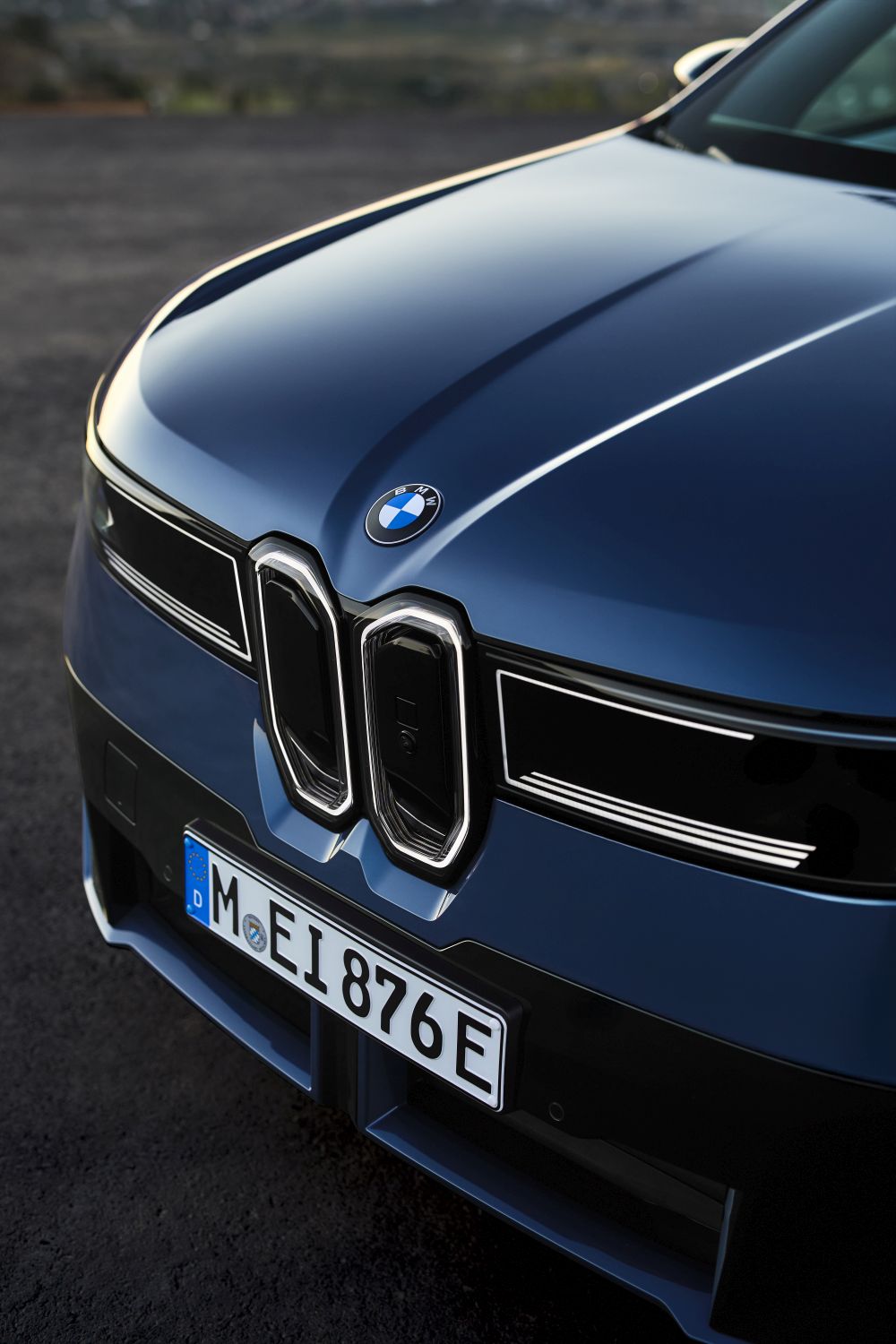
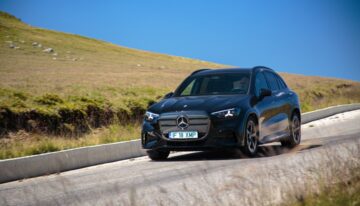
After their simultaneous debut at the Munich Motor Show, we now know almost everything about the new premium electric SUVs: the BMW iX3 and Mercedes GLC EV. That’s why we’ve put together a first static comparison, which you can read below.
After several hesitations and compromise models such as the Mercedes EQC and the first-generation BMW iX3, both built on conventional platforms, the two German premium manufacturers have now developed dedicated electric platforms. The Mercedes GLC EV and BMW iX3 are the first models to debut on these new architectures. Let’s analyze their particularities in comparison.
Dimensions and Size
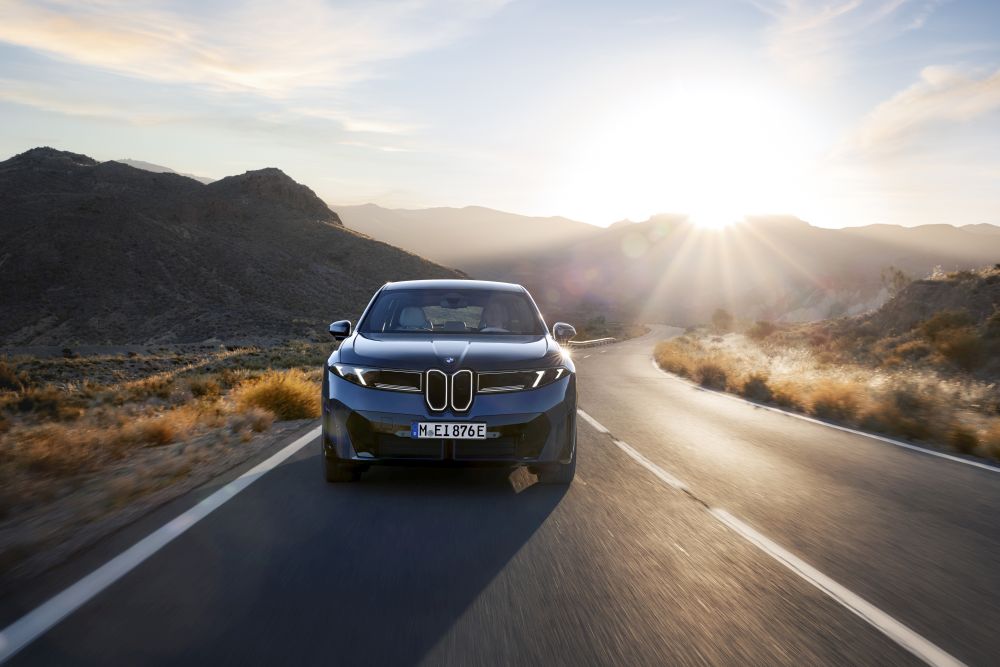
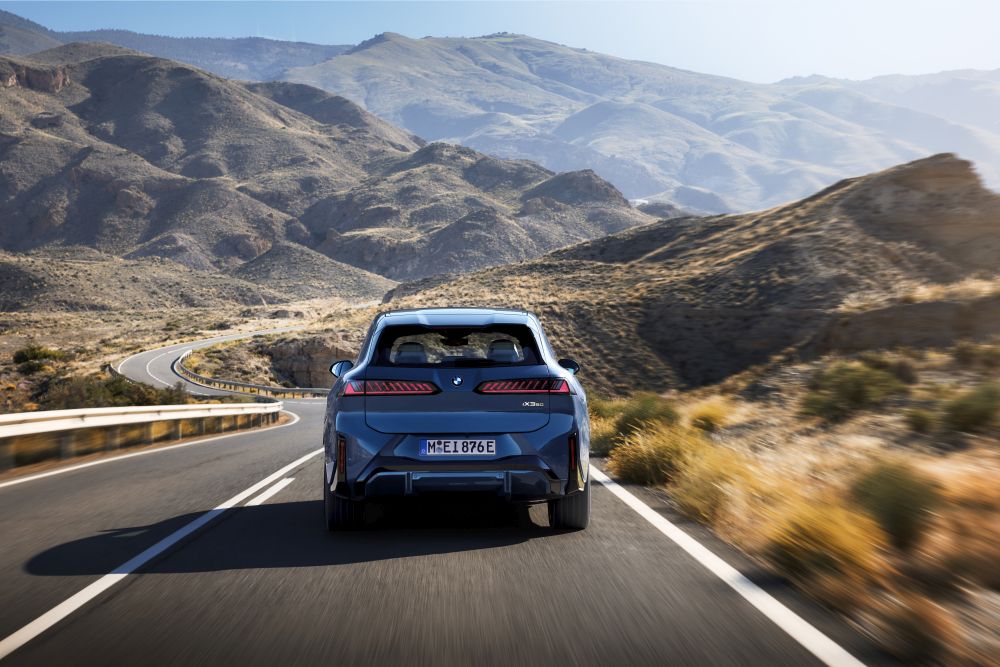
The two models have a similar footprint. At 4,845 mm long, 1,913 mm wide, and 1,644 mm high, the Mercedes GLC EV is 63 mm longer, 18 mm wider, and 9 mm taller than the BMW iX3. Although only 63 mm longer overall, the Mercedes GLC EV has a 2,972 mm wheelbase—85 mm more than the iX3. During the first seating test at the Munich show, the Mercedes felt a little roomier in the rear, although its rear bench seat cushion is shorter than the BMW’s.
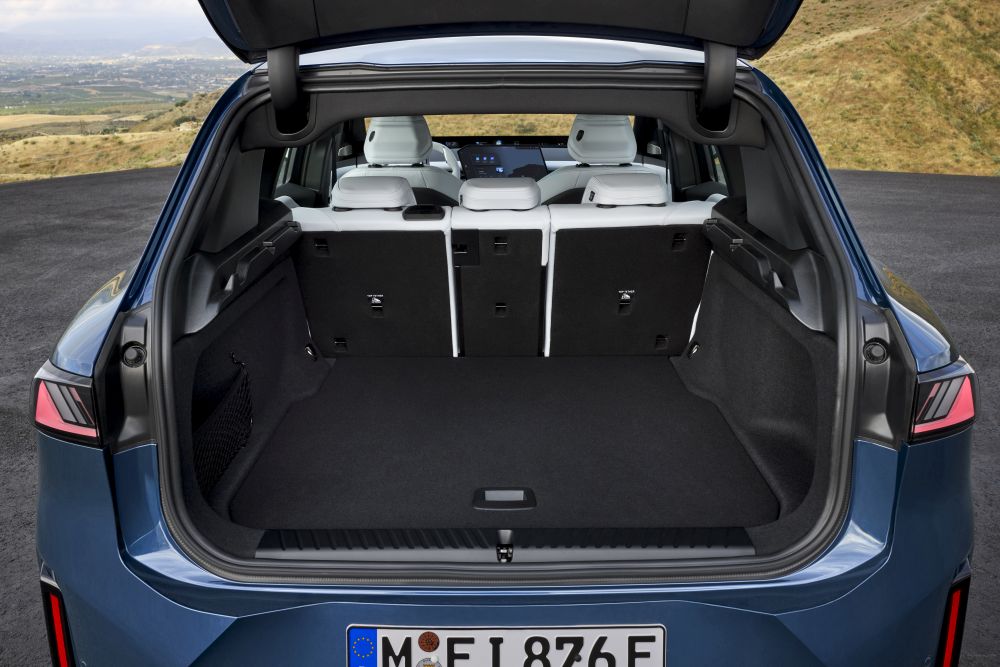
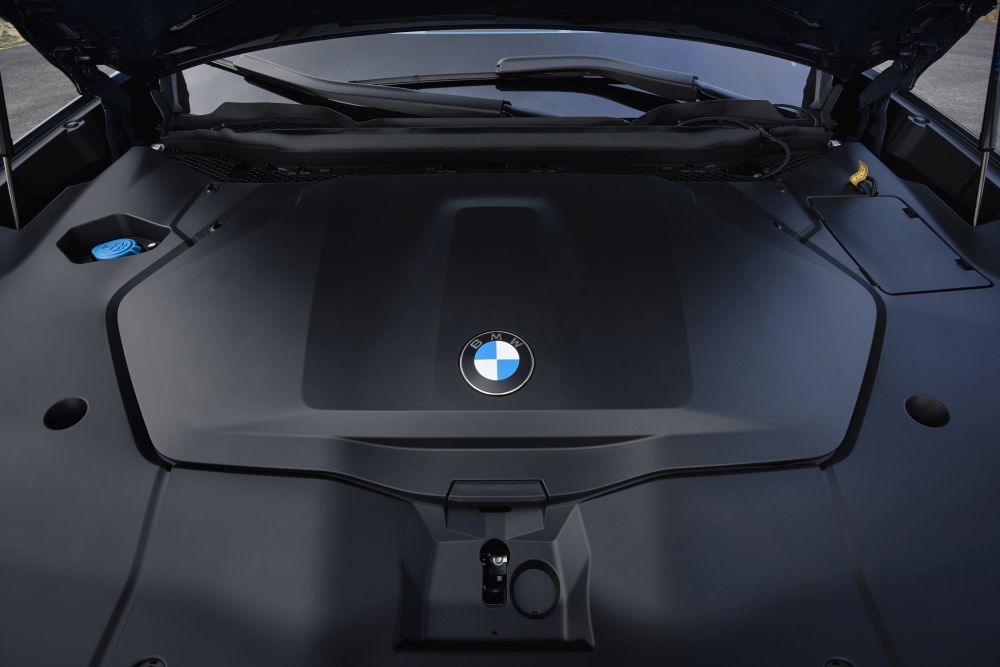
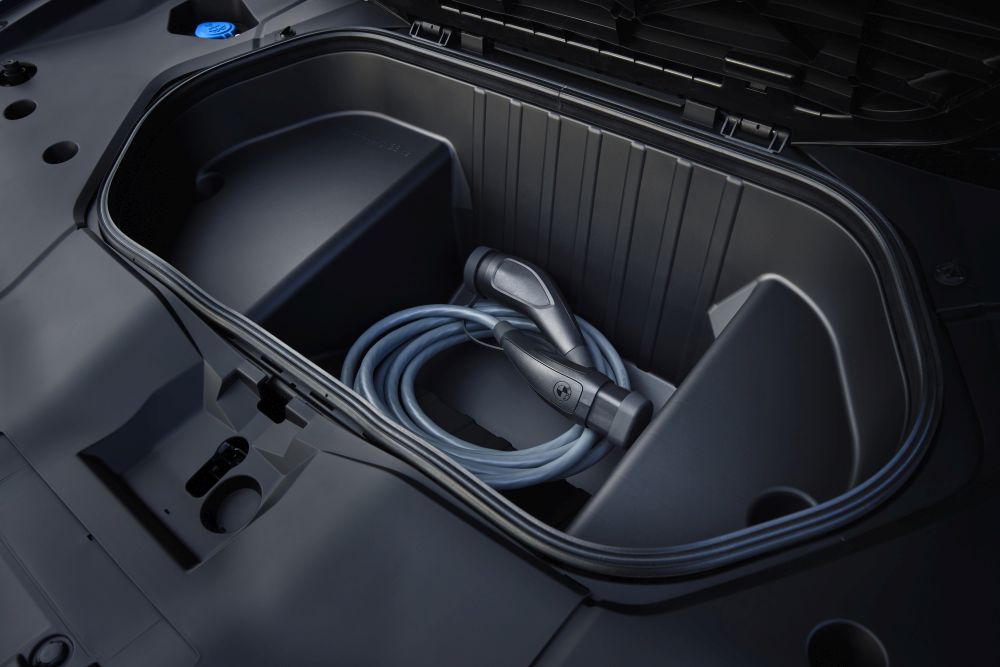
Both models come standard with a 40/20/40 split-folding rear bench. Thanks to its slightly greater length, the Mercedes offers a bit more boot space: 570 liters versus 520 liters in the BMW. With the rear seats folded, however, the cargo volumes are almost identical: 1,740 liters for the Mercedes and 1,750 liters for the BMW. Both also offer a front trunk (“frunk”). The Mercedes’ is larger—128 liters (100 liters according to ISO 3832) compared to just 58 liters in the BMW. However, the BMW’s frunk has a lid, and the hood opens traditionally from inside the cabin.
The Mercedes frunk has no lid, but it opens in a more original way: by pressing the Mercedes logo on the hood, after first unlocking it.





Powertrain and Battery
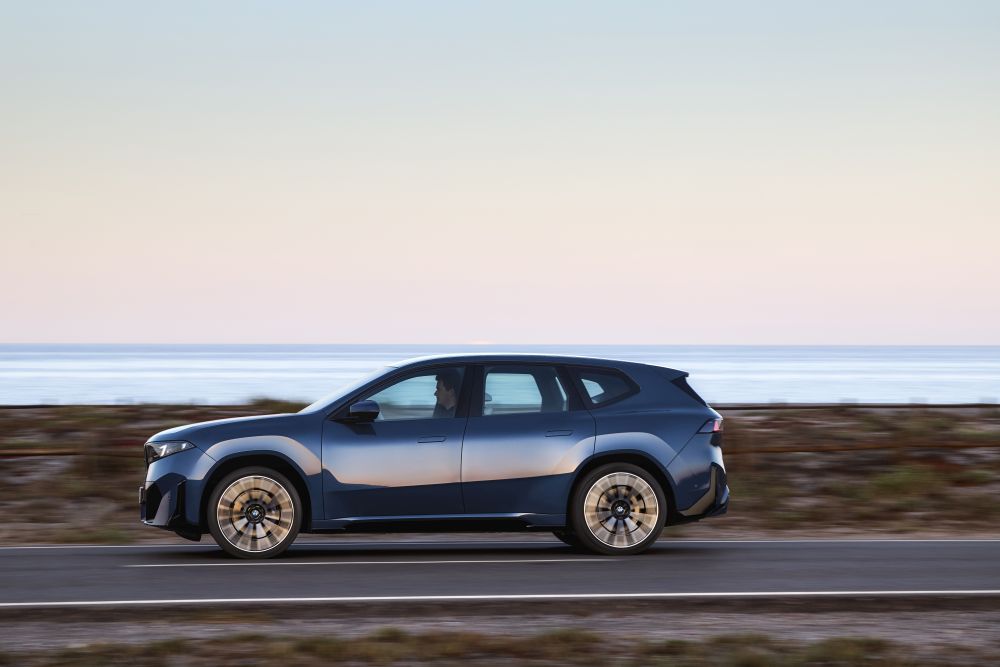
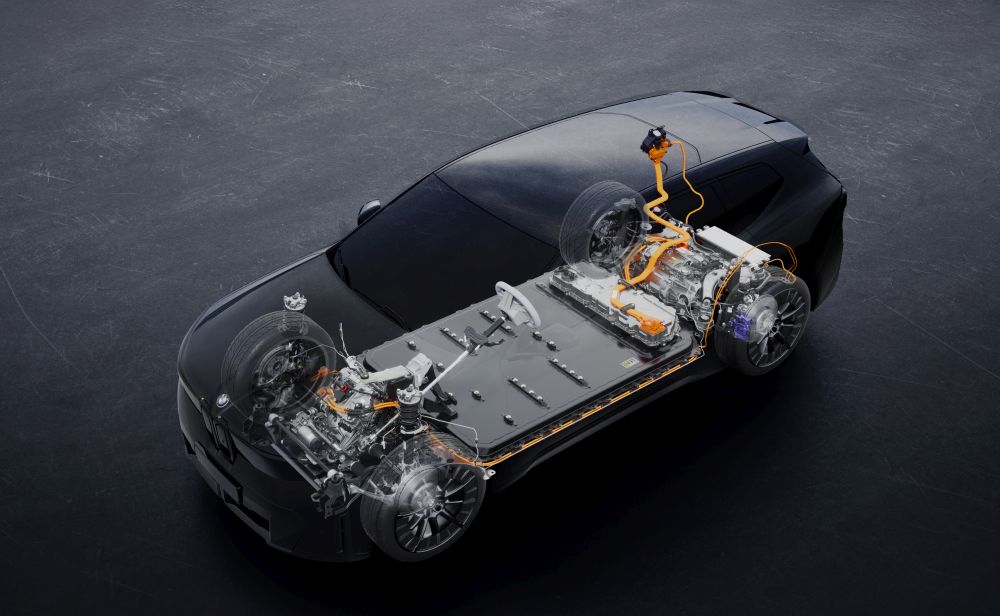
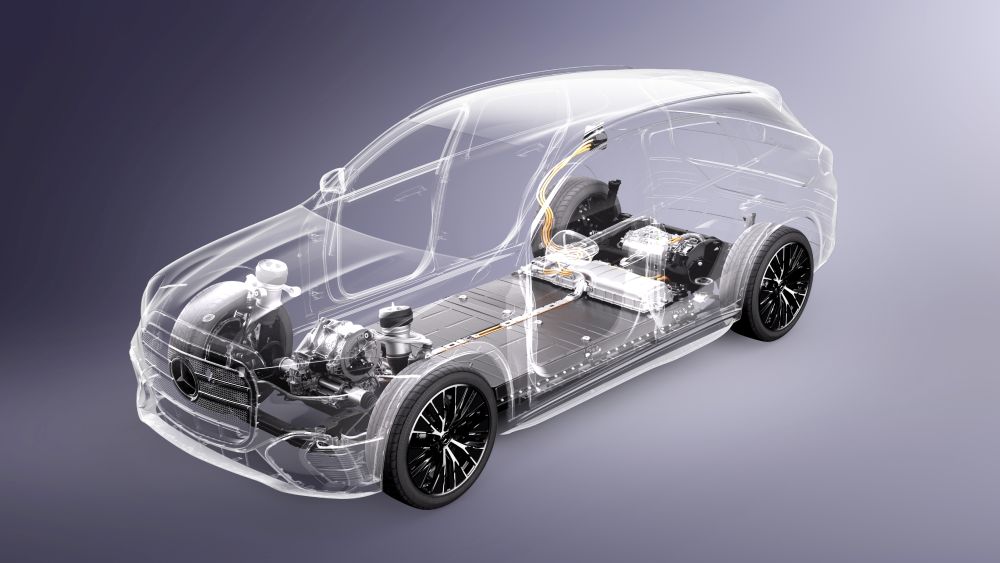
The BMW iX3 uses the Neue Klasse architecture with a sixth-generation powertrain, while the Mercedes GLC EV is built on the new MB.EA platform. At launch, both models were presented in their top versions (AMG and M60 xDrive will follow later): the BMW iX3 xDrive50 and the Mercedes GLC 400 4Matic. Both feature dual motors: a permanently excited synchronous motor at the rear (directly current-excited and free of rare earths in BMW’s case) and a permanently excited asynchronous motor at the front, which engages only when needed.The BMW’s main rear motor revs up to 18,000 rpm and is paired with a single-speed gearbox, while the Mercedes’ rear motor is paired with a two-speed gearbox with reduction ratios of 11:1 in first and 5:1 in second.
BMW publishes individual motor outputs: 326 PS/435 Nm at the rear and 167 PS/255 Nm at the front, for a total of 469 PS/645 Nm. Mercedes only communicates a total output of 489 PS.
Both models use Li-Ion batteries with NMC chemistry but completely different architectures. BMW uses cylindrical cells arranged in a cell-to-pack system directly within the battery casing—a more modern solution that allows better cooling, enabling higher charging power of up to 400 kW versus 330 kW in the Mercedes. The Mercedes GLC EV uses prismatic cells grouped in modules. In both cases, the control unit is housed separately, bolted to the battery casing, making replacement easier in case of failure.
BMW can charge from 10% to 80% in just 21 minutes at up to 400 kW, while Mercedes needs 22 minutes at up to 330 kW. The Mercedes charges almost as quickly despite the lower maximum charging rate, thanks to its smaller battery—94 kWh net versus 108.7 kWh for the BMW. Both models can be charged at standard AC stations at 11 kW, optionally 22 kW, and both support bidirectional charging.
With its larger battery, the BMW claims a WLTP range of 805 km, while the Mercedes advertises 713 km. However, the Mercedes is slightly more efficient, with a minimum WLTP consumption of 14.9 kWh/100 km compared to 15.9 kWh/100 km for the BMW iX3.
Both models feature a new one-box braking system—developed by ZF for Mercedes and by Continental (the new Aumovio) for BMW—combining brake booster, master cylinder, and ESP unit into a single compact module.
Chassis
Mercedes continues to emphasize comfort, promising outstanding ride quality. Its MB.EA platform features a new four-link multilink front axle and a five-link multilink rear axle, with both motors mounted on aluminum subframes elastically attached to the body. Standard suspension is steel-sprung, with optional air suspension and rear-wheel steering from the S-Class.
BMW uses a simpler MacPherson front axle and a five-link multilink rear axle, without the option of air suspension or rear-wheel steering. Instead, it relies on adaptive suspension that automatically adjusts stiffness.
Ergonomic Design
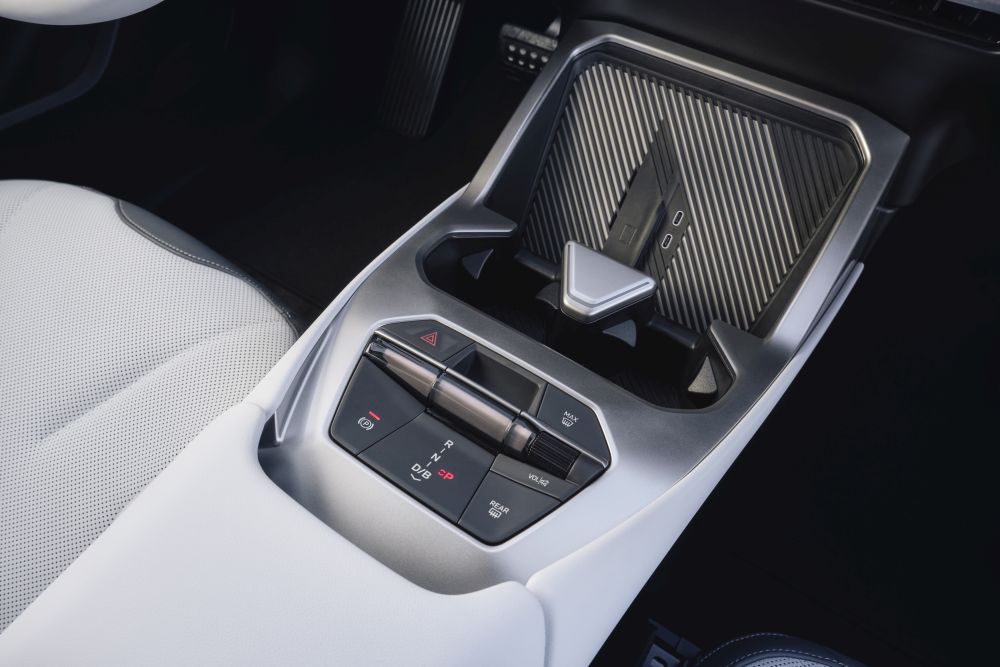
There are also major differences in dashboard design between the two models.
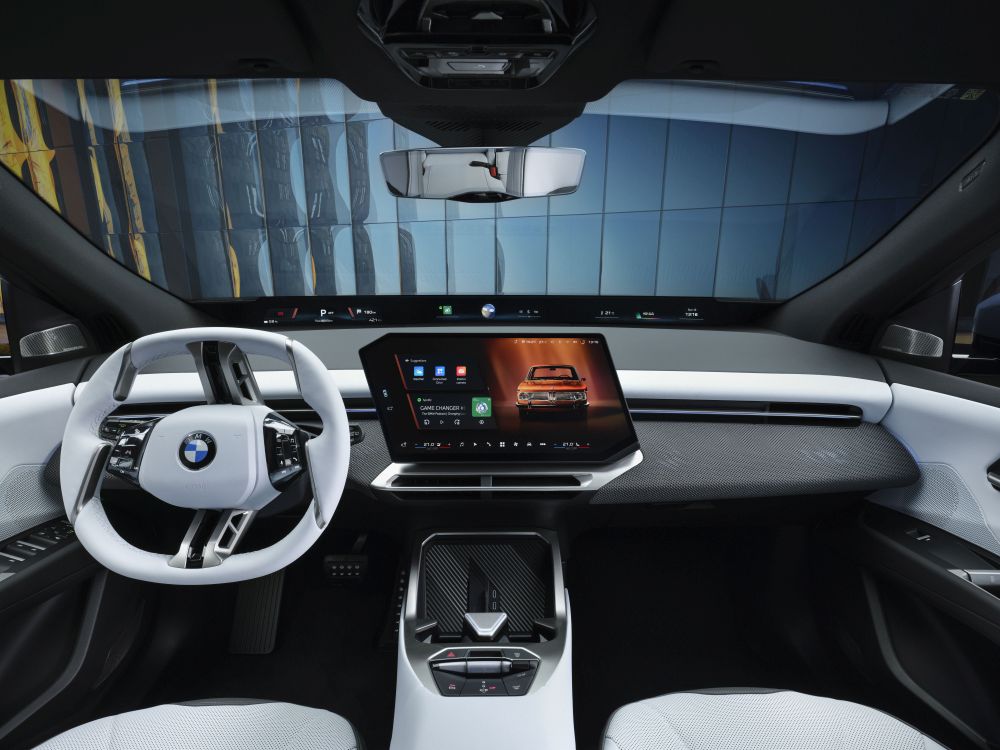
BMW has introduced a new dashboard architecture called Panoramic iDrive, consisting of four central elements:
-
the Panoramic Vision display stretching across the full width of the dash at the base of the windshield,
-
a 17.9-inch central screen with rear matrix lighting, positioned very close to the steering wheel,
-
an optional head-up display,
-
and a new steering wheel with two haptic surfaces.
Mercedes stays true to a wide digital panel across the dashboard, grouping three displays: a 10.3-inch instrument cluster, a 14-inch multimedia screen, and a 14-inch passenger screen (available from the Advanced Plus trim upward).
BMW’s infotainment runs on the new BMW X operating system, using BMW Maps and offering access to external apps such as Spotify, Disney+, YouTube, Zoom for video conferences, and Air Console games. Mercedes, meanwhile, uses its own MB.OS operating system but integrates Google Maps for navigation and AI support from Google, ChatGPT, and Microsoft. Like BMW, it also offers over 40 external apps, including Spotify and Disney.

Range and Prices
BMW has already announced pricing for the launch version, the BMW iX3 xDrive50, starting at €68,900. A base version with rear- or all-wheel drive and an M version will follow. The BMW iX3 comes standard with the Essential trim line, while Contemporary, M Sport, and Individual packages are optional.
Mercedes has not yet announced pricing for the GLC EV, but will certainly aim to align with the competition. An AMG version is planned, along with a likely base version, but no details have yet been revealed.
The Mercedes GLC EV will be produced at the Bremen plant, later also in Kecskemét (Hungary) and Beijing (China). Its motors are built in Sebeș, Romania, at Mercedes’ wholly owned Star Assembly subsidiary. The BMW iX3 will be built at the new plant in Debrecen, Hungary, with motors produced in Steyr, Austria.
| Technical data | BMW iX3 xDrive50 | Mercedes |
|---|---|---|
| Motors | 2, one rear, one front | 2, one rear, one front |
| Max. output (PS) | 469 | 489 |
| Max. torque (Nm) | 645 | na |
| Traction | awd | awd |
| Gearbox | 1 gear rear, 1 gear front | 2 gears rear, 1 gear front |
| L x w x h (mm) | 4,782 x 1,895 x 1,635 | 4,845 x 1,913 x 1,644 |
| Wheelbase | 2,897 | 2,972 |
| Curb weight/payload (kg) | 2,360 | na |
| Boot volume (l) | 58/520-1,750 | 100/570-1,740 |
| Battery capacity net (kWh) | 108.7 | 94 |
| AC charging (kW) | 11/22 | 11/22 |
| AC charging time (h) | na/5.8 | na/na |
| DC charging (kW) | up to 400 | up to 330 |
| DC charging time 10-80% (minutes) | 21 | 22 |
| Performances | ||
| Acc. 0-100 kph | 4.9 | 4.3 |
| Top speed (kph) | 210 | 210 |
| Energy consumption (kWh/100 km) | 15.9 | 14.9 |
| Range (km) | 805 | 713 |
| Price (euro ) | 68,900 | na |