The next step for in-car entertainment is not simply a wider display or another streaming app. It is live information that changes while the passenger is watching. A race, match, or esports broadcast becomes more engaging when the screen explains momentum, timing, and pressure, not only the picture.
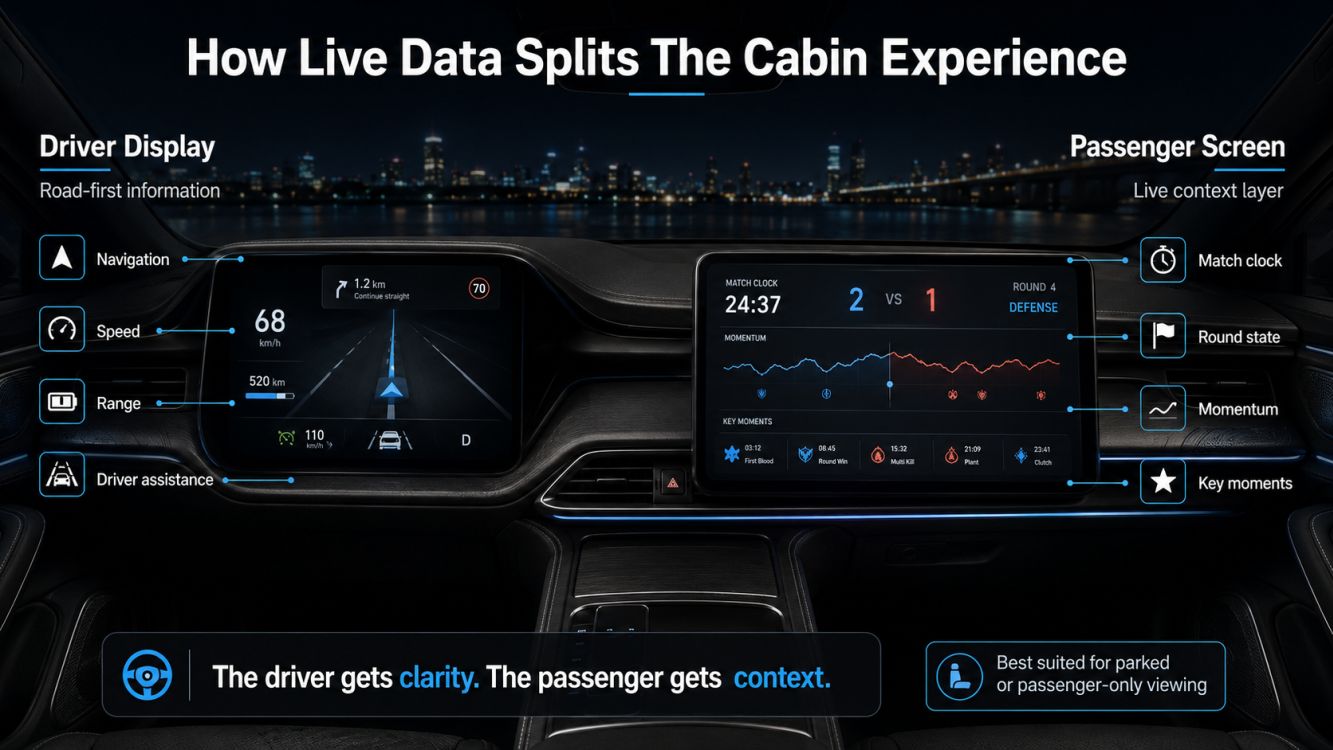
That is why passenger-side screens now matter in a different way. A 2025 study on an in-vehicle full-window augmented reality system found that richer passenger displays can improve spatial knowledge and the riding experience, which points toward a broader cabin shift. The driver still needs clean road-focused information. The passenger can receive a more layered stream of context, especially when the vehicle is parked, charging, or being used during a waiting period.
When Live Sports Data Reaches the Passenger Screen
Mercedes fans already understand live data through motorsport. A race broadcast is never just camera footage. It is sector gaps, tire choices, battery deployment, radio messages, weather, and the tension of a pit window closing. The same pattern is now easier to imagine inside a connected cabin: the passenger screen becomes a place where live entertainment carries its own context. A good example is Bovada live betting, a live sports betting page that presents changing event information with odds format choices, such as American, decimal, and fractional.
Here, the useful point is how live sport can be read through changing signals as the event keeps moving, with enough context to make shifts clear. Esports makes that clear because a Counter-Strike 2 round, a Valorant spike plant, or a League of Legends team fight can change the feel of a match within seconds. Bovada live betting fits that discussion as a real-time sports context page, while the wider cabin lesson is about interpretation: a passenger screen becomes more valuable when it helps the viewer understand why the next moment matters.
A quick way to see the esports side of that rhythm is BovadaHub’s guide to the most popular esports for betting, which highlights Counter-Strike 2, Dota 2, League of Legends, Valorant, and Call of Duty. These titles work well as live-viewing examples because they teach different kinds of attention. Round-based shooters create short bursts of pressure. Multiplayer online battle arena games build through map control, objectives, and team fights. Fast broadcast titles reward quick reading, rather than long setup.
The Cabin Is Learning to Separate Attention
The most important design idea is separation. The driver display should stay disciplined, legible, and connected to the road. Passenger entertainment can be richer because it does not need to carry the same workload.
| Live format | What the passenger reads | Why it suits the car |
| Formula 1 | Gaps, tire life, pit timing, sector pace | It matches the data-rich habits of car enthusiasts |
| CS2 or Valorant | Round state, map position, equipment, timing | Short rounds fit charging stops and parked breaks |
| Dota 2 or League of Legends | Objectives, team fights, map pressure | The screen can turn complexity into readable context |
| Call of Duty | Fast score changes and immediate action | Viewers can understand the rhythm quickly |
The strongest systems will make that context feel native to the cabin, especially when a passenger is watching while the car is stationary.
The table shows why live entertainment is different from passive streaming. A movie mainly asks for uninterrupted time. Live competition asks for orientation. The best passenger display does not need to overload the viewer. It only has to show the right signals at the right moment, then let the event breathe.
Why The Car Is a Natural Live Context Space
A modern Mercedes already translates complex machine behavior into readable information. Range, charging speed, route guidance, driver assistance, energy use, and performance data all depend on timing and context. Passenger entertainment is moving in the same direction. It is less about filling silence and more about turning a wait into something visually and mentally engaging.
This is especially relevant for electric cars. Charging changes how people use time with the vehicle. A 20-minute stop can be long enough for a race stint, an esports map, a highlights package, or the final phase of a live match. The point is not to turn every journey into screen time. The better idea is choice. When the car is stationary, the passenger has a better reason to follow content that updates in real time.
The Better Screen Explains The Moment
The next cabin upgrade will be interpretation. Bigger screens will still get attention, but the more valuable question is what the screen helps the passenger understand. Live data makes entertainment feel immediate because it turns a broadcast into a changing situation.
That is why connected car entertainment is starting to resemble a second screen with purpose. It can show the event, frame the pressure, and help the passenger read the moment without distracting the driver. Research on esports spectating motives and live-streaming types also supports this broader point: genre and viewing format shape how spectators engage with live content.