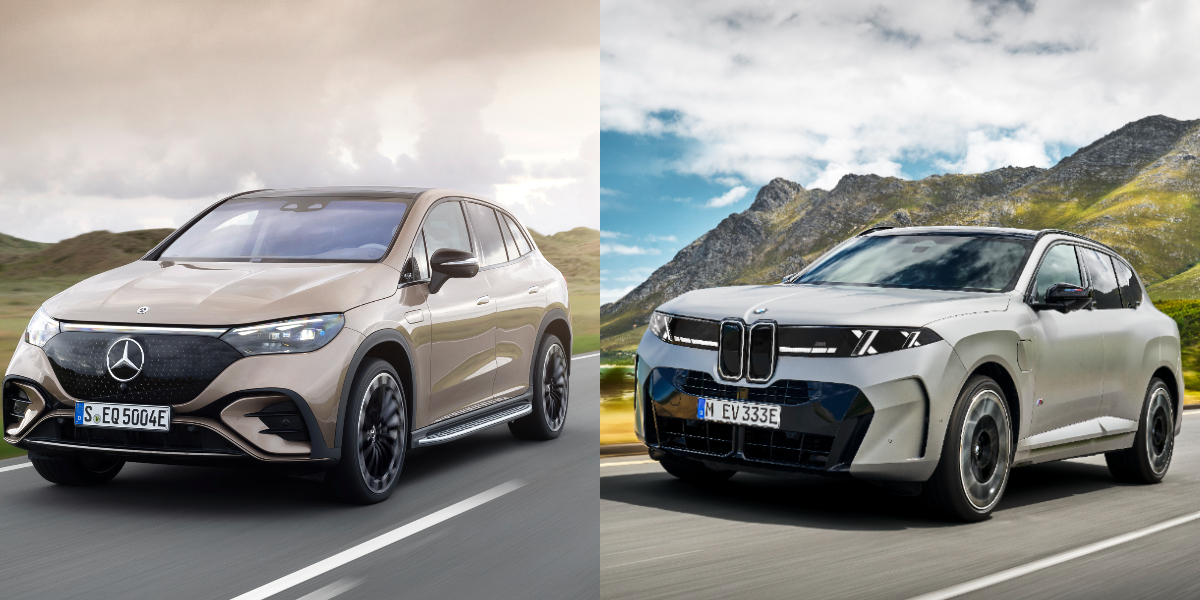
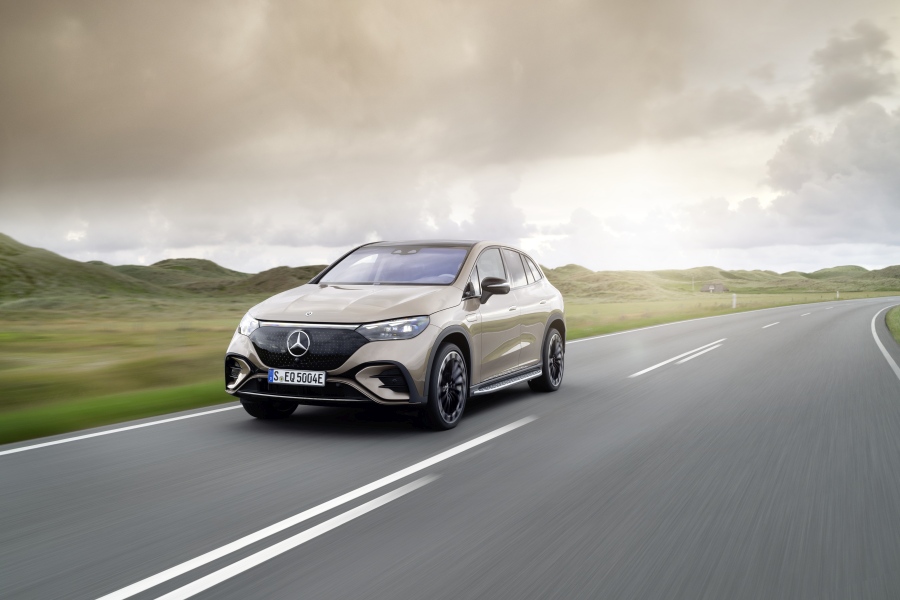
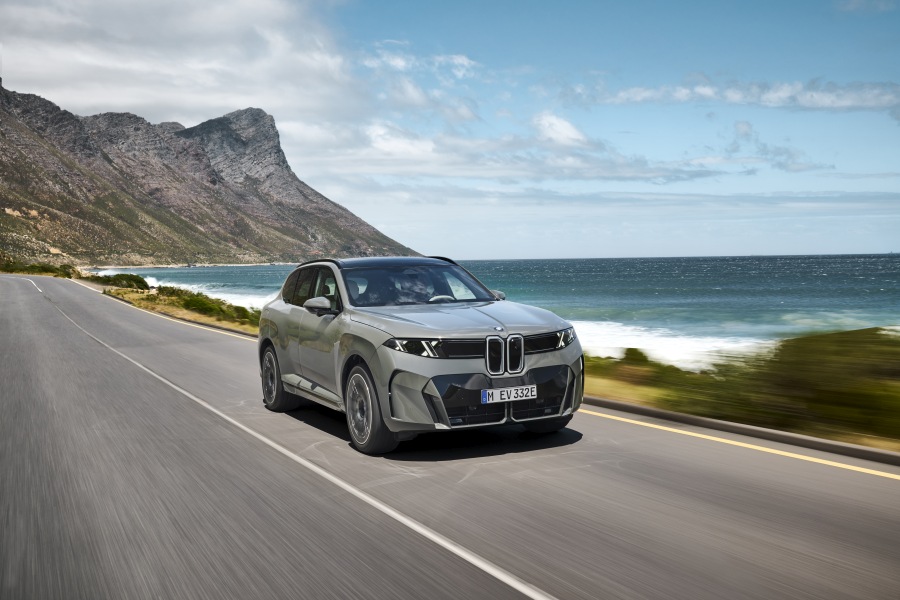
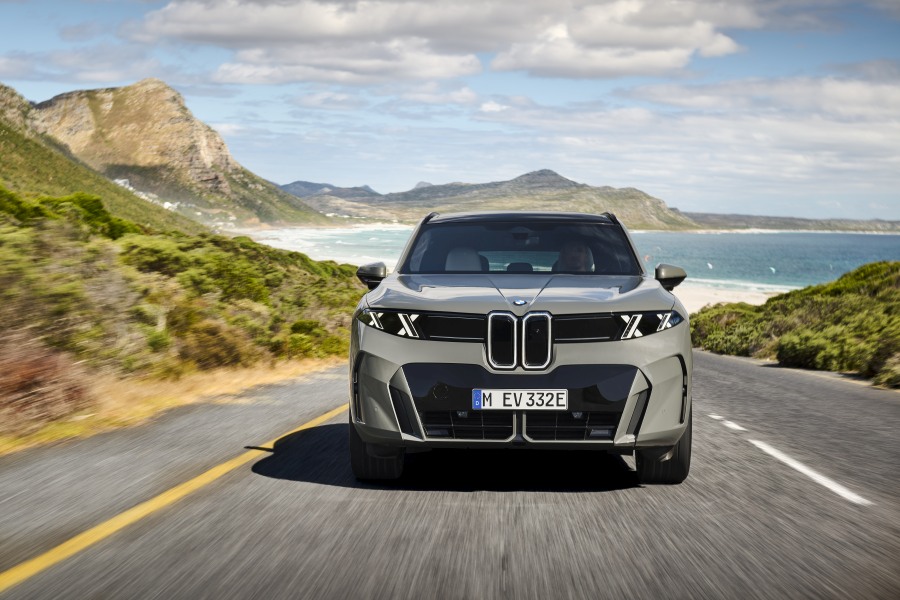
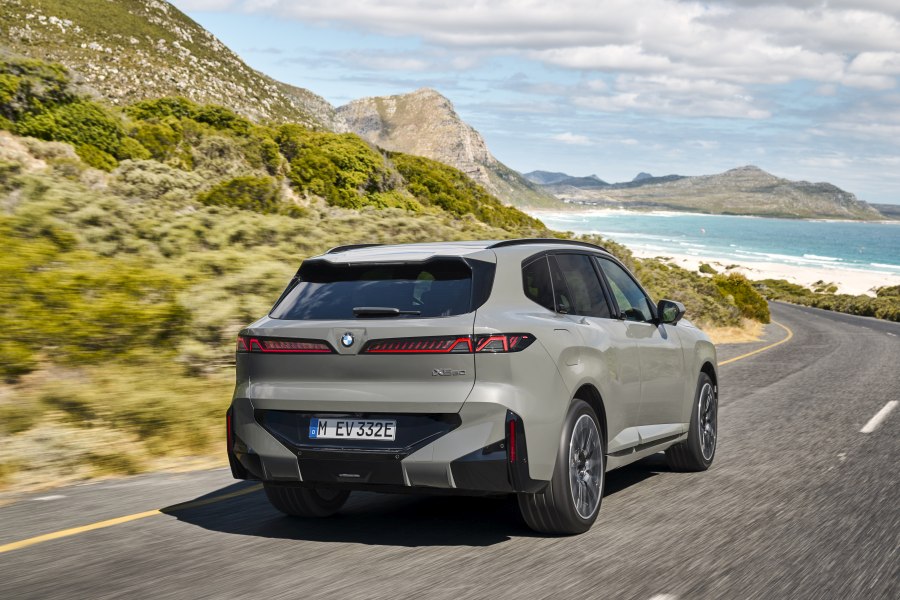
The new BMW X5 has been unveiled with five different powertrain options, including a fully electric version and a hydrogen fuel-cell variant, the latter scheduled to arrive in 2028. The electric BMW iX5 features newer technology than the Mercedes EQE SUV. Does Mercedes’ electric SUV still stand a chance against BMW’s Neue Klasse architecture?
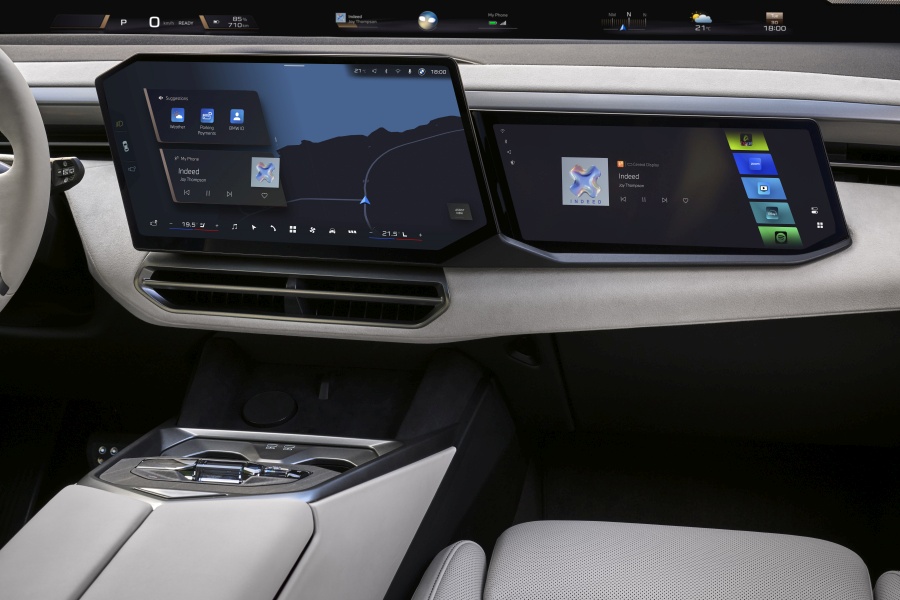
Built on BMW’s new Neue Klasse architecture introduced with the iX3, the new BMW iX5 adopts the latest cylindrical battery cells, an 800-volt electrical system, new electrically excited motors that require no rare-earth materials, and the new Panoramic iDrive cockpit concept.
The BMW iX5 is the first BMW model to feature battery cells that are 120 mm tall, while the 7 Series and iX3 use cylindrical cells measuring 95 mm in height (both have the same 46 mm diameter). As a result, the new BMW iX5 is equipped with a massive 141 kWh battery, delivering a WLTP driving range of up to 845 km. Its 800-volt architecture also enables an exceptional maximum DC charging power of up to 460 kW.
The impressive range is also helped by the iX5’s outstanding drag coefficient of just 0.28, a remarkable figure for a vehicle of this size. Aerodynamic details include BMW’s signature Air Curtain intakes as well as small aerodynamic fins integrated into the door handles. Fully automatic power-operated doors, similar to those of the 7 Series, are available as an option.
From 2028 onward, the BMW X5 will also be offered with a hydrogen fuel-cell powertrain featuring two electric motors and a range of 750 km. The BMW iX5 Hydrogen places its hydrogen tanks in a housing located where the battery sits in the electric version, while a small buffer battery is installed in the luggage compartment. Thanks to the third-generation, more compact fuel-cell stack, BMW was able to install a second electric motor on the front axle. The hydrogen-powered version will offer a 750 km range while being lighter than the battery-electric model.
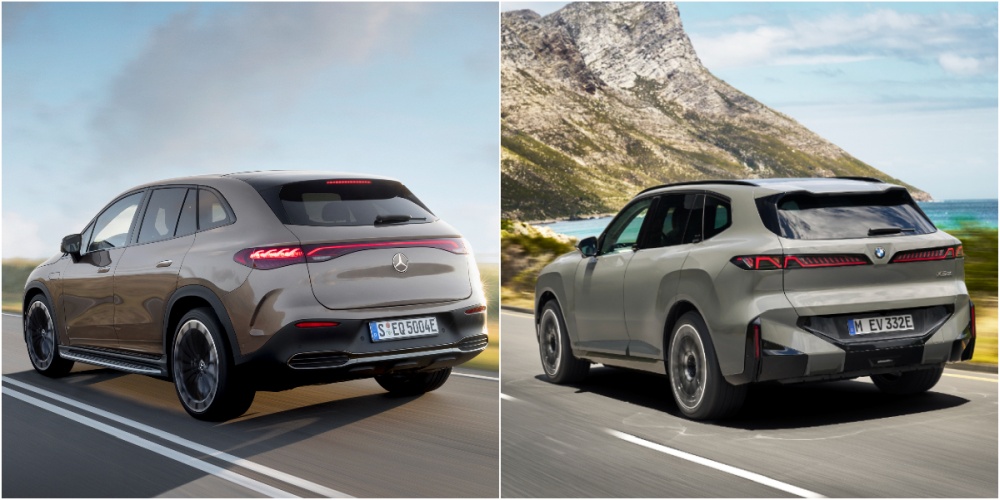
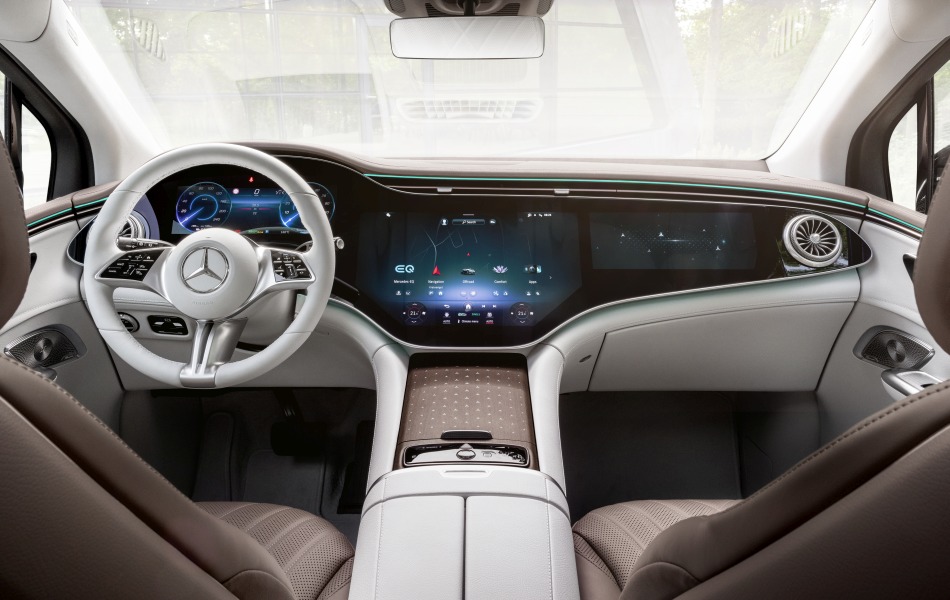
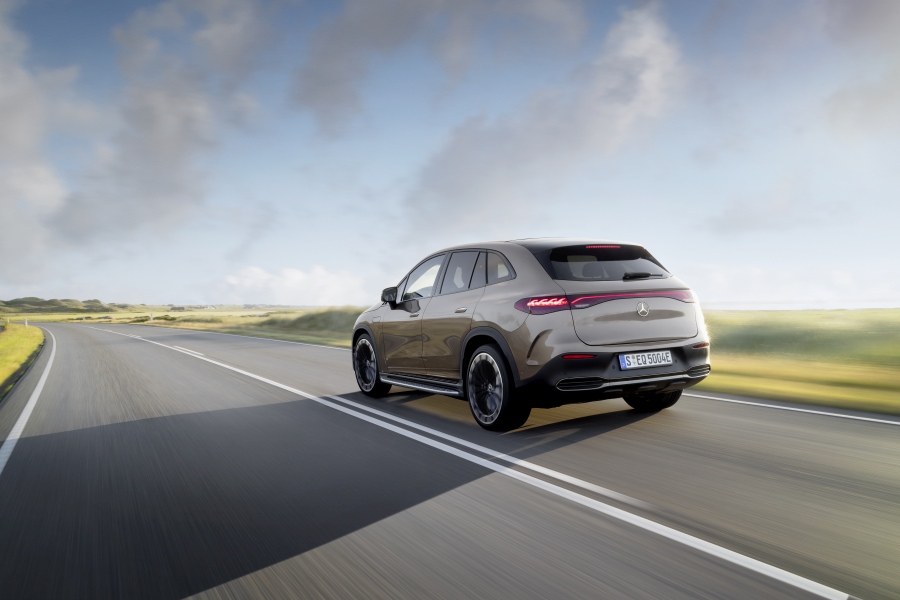
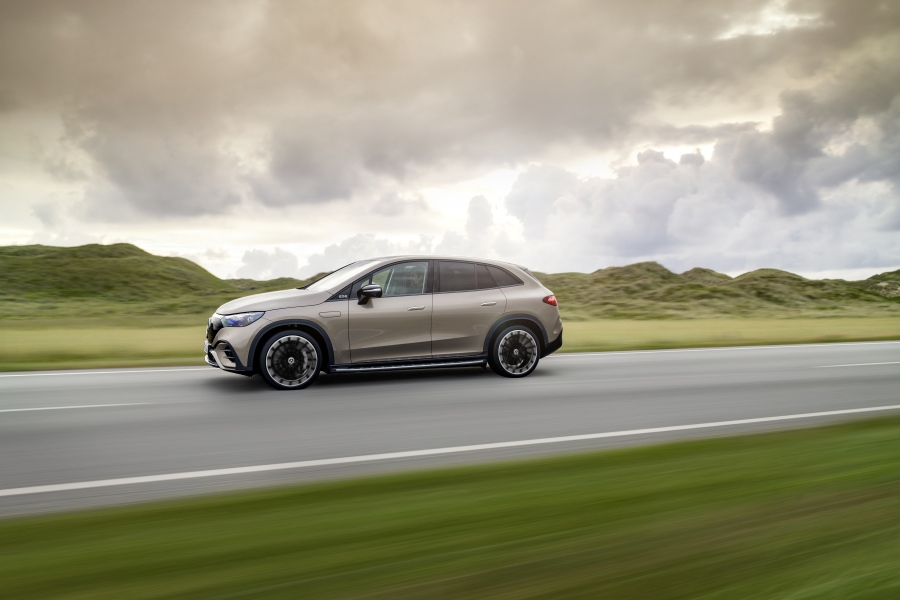
Unfortunately, the Mercedes EQE SUV cannot match the new BMW iX5 60 xDrive in any of the key areas that matter for an electric vehicle, despite having been launched only in 2023. Both charging performance and driving range are significantly inferior to those of the BMW iX5. Buyers comparing premium electric SUVs should also consider long-term ownership expenses beyond charging and maintenance. Comparing car insurance Las Vegas options, for example, can help drivers estimate one of the largest recurring costs before purchasing.
The Mercedes model closest in output to the BMW iX5 60 xDrive is the Mercedes-AMG EQE 53 4Matic SUV, which offers a WLTP range of up to 451 km and supports DC fast charging at a maximum of 170 kW.
Although the AMG EQE 53 4Matic SUV features a much smaller battery—90.6 kWh compared with the BMW’s 141 kWh—its weight is not dramatically lower. The Mercedes SUV weighs 2,690 kg, while the BMW iX5 tips the scales at 2,900 kg. However, thanks to its somewhat lower weight, the AMG EQE accelerates from 0 to 100 km/h in just 3.7 seconds, compared with 4.6 seconds for the BMW.
Energy consumption, however, is very similar: 23.2 kWh/100 km for the Mercedes versus 23.9 kWh/100 km for the BMW.
With a usable battery capacity of 90.6 kWh in the EQE 300 SUV, EQE 350 4Matic SUV, and Mercedes-AMG EQE 53 4Matic SUV, and 96 kWh in the EQE 350+ SUV and EQE 500 4Matic SUV, the Mercedes offers a WLTP range of between 451 and 606 km. Its maximum charging power of just 170 kW is almost three times lower than that of the BMW iX5.
Like the conventional versions, the new X5 comes standard with adaptive steel-spring suspension, which helps maintain an ideal 50:50 weight distribution. Optional equipment includes Adaptive Chassis Control with two-axle air suspension and Integral Active Steering with rear-wheel steering angles of up to 3.2 degrees. Adaptive Chassis Control Professional, available exclusively on the electric and plug-in hybrid versions, also adds active anti-roll bars powered by the vehicle’s 48-volt electrical system. Even the gasoline and diesel variants are equipped with at least a 48-volt mild-hybrid system.
The Mercedes EQE 500 4Matic SUV comes standard with a conventional steel-spring suspension without adaptive damping. Optional equipment includes the Airmatic air suspension (€2,082) and rear-axle steering with steering angles of up to 10 degrees (€1,547). The range-topping Mercedes-AMG EQE 53 4Matic SUV comes standard with the AMG Active Ride Control adaptive suspension featuring active anti-roll bars and rear-wheel steering.
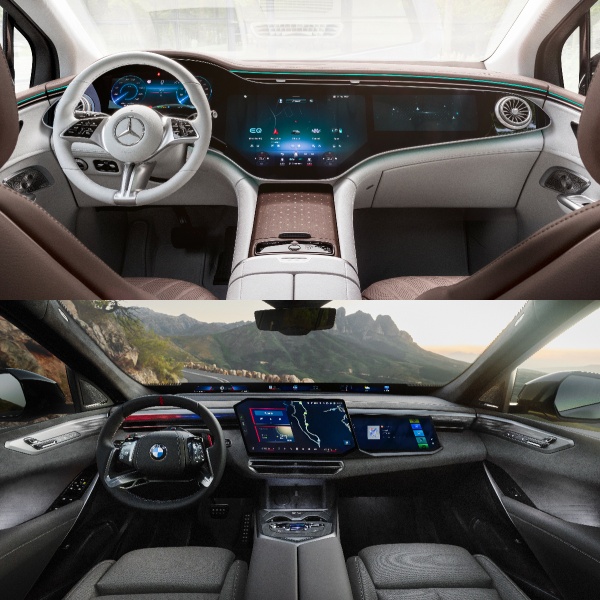
Production of the new BMW X5 (G65) will begin in August 2026 at BMW’s Spartanburg plant in the United States and, according to current plans, will continue until July 2035. Customer deliveries are expected to begin at the end of 2026 or, at the latest, in early 2027. The all-electric version will be available to order from the very start of sales.
As for the Mercedes EQE SUV, some reports suggest that production will end at the close of 2026 without a direct successor. In practice, the Mercedes EQE 500 4Matic SUV costs almost the same as the new BMW iX5 60 xDrive, yet offers more than 350 km less driving range (589 km versus 845 km) and a substantially lower charging rate (170 kW versus 460 kW).
Meanwhile, the Mercedes-AMG EQE 53 4Matic SUV, which delivers output comparable to the BMW iX5, offers almost half the driving range (451 km versus 845 km) while costing nearly €40,000 more.
| BMW iX5 60 xDrive | Mercedes EQE 500 4Matic | Mercedes-AMG EQE 53 4Matic | |||
|---|---|---|---|---|---|
| Engine | 2 electric | 2, electric | 2, electric | ||
| Max. Output (PS) | 578 | 449 | 625 | ||
| Max. torque (Nm) | 805 | 855 | 950 | ||
| L x w x h (mm) | 4,994 x 2,000 x 1,748 | 4,863 x 1,940 x 1,686 | 4,879 x 1,931 x 1,672 | ||
| Wheelbase (mm) | 3,000 | 3,030 | 3,030 | ||
| Boot Volume (l) | 655-1,850 | 580-1,675 | 520-1,675 | ||
| Curb weight (kg) | 2,900 | 2,615 | 2,690 | ||
| Battery capacity net (kWh) | 141 | 96 | 90.6 | ||
| Charging power AC/DC (kW) | 22/460 | 7.4/11/22/170 | 7.4/11/170 | ||
| Time charging DC 10-80% (min) | 23 | 32 | 32 | ||
| Time charging AC 0-100% (h:min) | 6:24 | 05:25/10.25/15:00 | 08:10/12:30 | ||
| Acc. 0-100 kph (s) | 4.6 | 4.7 | 3.7 | ||
| Top speed (kph) | 210 | 210 | 220 | ||
| Energy consumption (kWh/100 km) | 20.1-23.9 | 19.2 | 23.2 | ||
| Range WLTP (km) | 845 | 589 | 451 | ||
| Price (euro with VAT) | 100,551 | 99,841 | 139,438 |