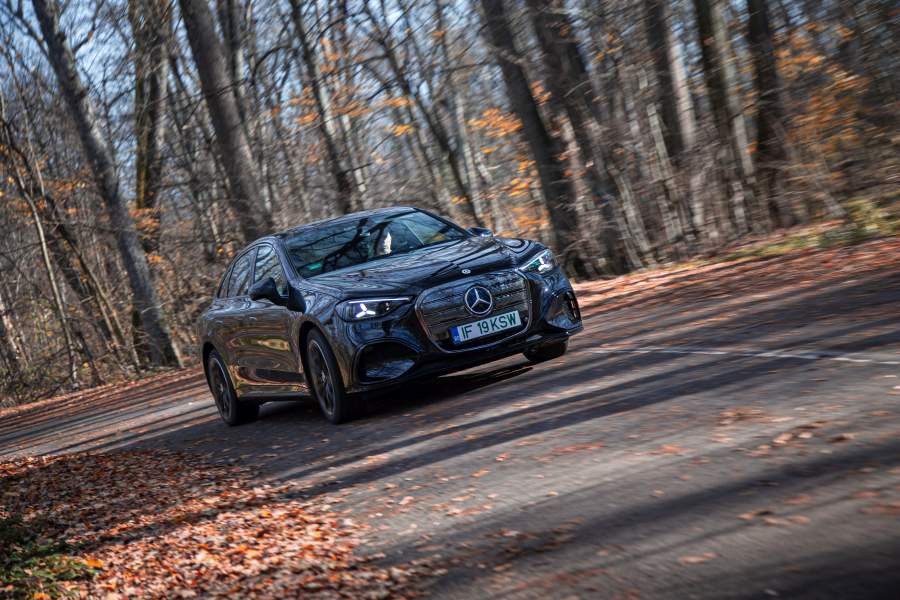
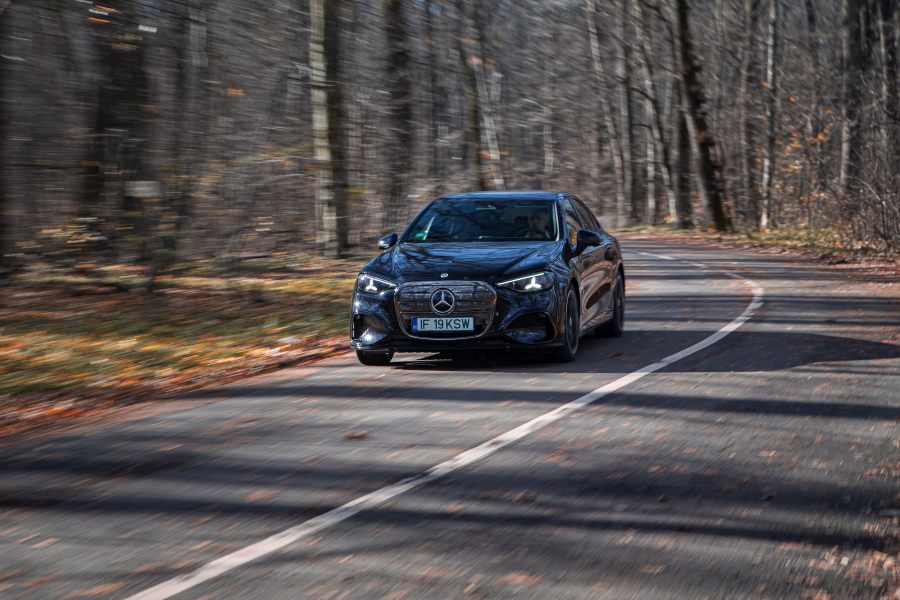
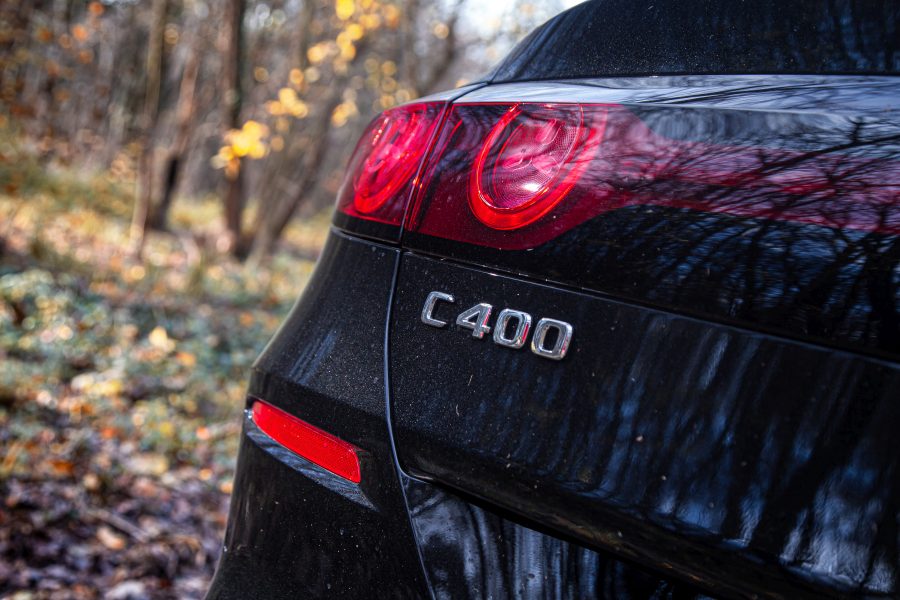
The name is misleading, but the Mercedes C 400 4Matic is a fully electric car with nothing in common with the combustion-engine C-Class. Is this the best Mercedes C-Class ever built? You will find the answer in our test of the current range-topping version, the C 400 4Matic, with 489 PS and 800 Nm.
Photos: Christian Bart
Built on the new dedicated MB.EA electric platform featuring 800V technology, the Mercedes C-Class EV is completely different from its combustion-engine counterpart, although it shares some components with the new electric CLA. While the differences between the combustion-engine versions of the CLA and C-Class are clear – one has front-wheel drive and the other rear-wheel drive – both electric models feature rear-wheel drive. So where does the electric C-Class fit in compared with the electric CLA? The C-Class EV is supposed to offer greater comfort and more interior space in exchange for a not insignificant price premium.
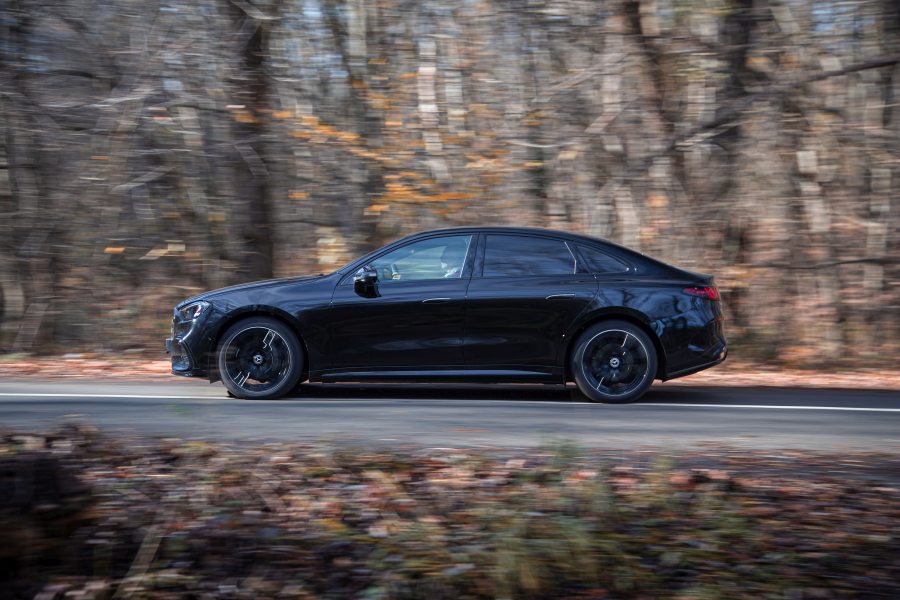
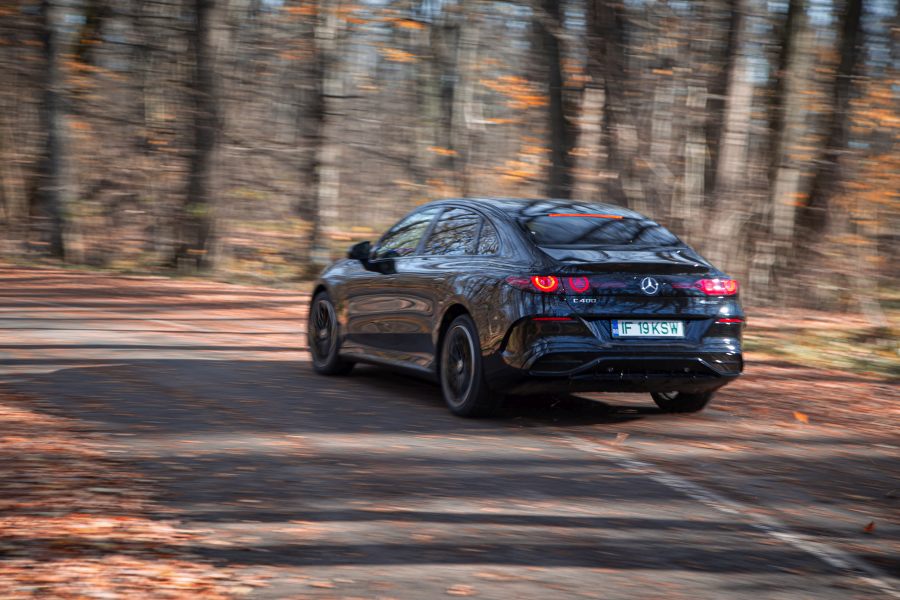
The new electric C-Class is available exclusively as a saloon, and its body design differs from that of the combustion-engine version. However, the biggest difference is not the new radiator grille, similar to the one on the new electric GLC, but the shape of the rear end, with its more steeply sloping rear window and Prius-style fastback silhouette. This rear-end design was adopted for aerodynamic reasons, with the electric C-Class achieving an excellent drag coefficient of just 0.22.
Luxurious but cramped interior
As we approach the car, we notice that the flush door handles do not automatically pop out. To enable this function, you have to order the optional Comfort Plus with Digital Extra package. The handles are easy to grip, but getting into the car is more complicated without this package.
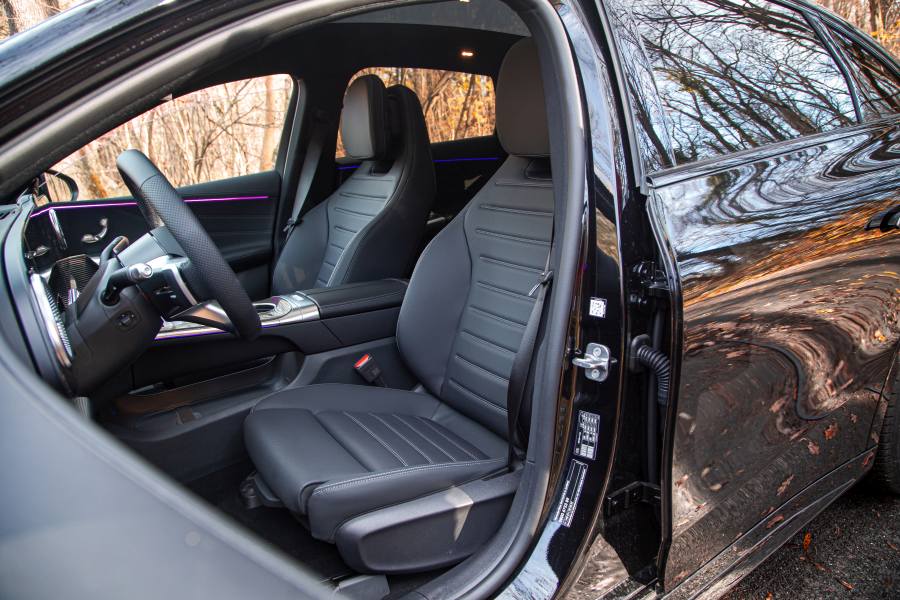
Inside, we are welcomed by a cabin upholstered in black Artico artificial leather. Our test car was equipped with the AMG Line package (€3,451), which includes comfort seats. The driving position is slightly higher than in the combustion-engine C-Class. The comfort seats, fitted above the 94 kWh net battery, are relatively firm and provide only moderate lateral support, although sport seats are also available as an option.
The main electric seat adjustments are operated via the door panels. However, finer adjustments, such as lumbar support, massage, heating and ventilation functions, require navigating through the multimedia menu. The seat cushion’s fore-and-aft adjustment is manual only.
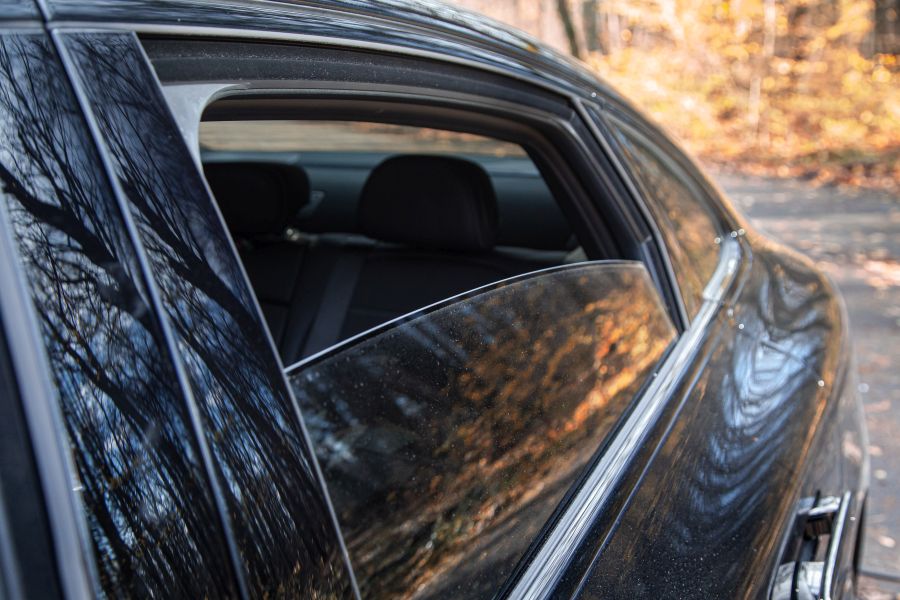
Rear passenger space, however, is rather limited for a car measuring 4.88 metres in length and featuring a wheelbase of almost three metres – 2,962 mm to be precise. Knee room is only average, and passengers cannot slide their feet underneath the front seats because clearance is limited. The rear bench is also positioned very low, leaving passengers sitting with their knees raised, while the seat cushion itself is short. In addition, the rear door windows only open halfway.
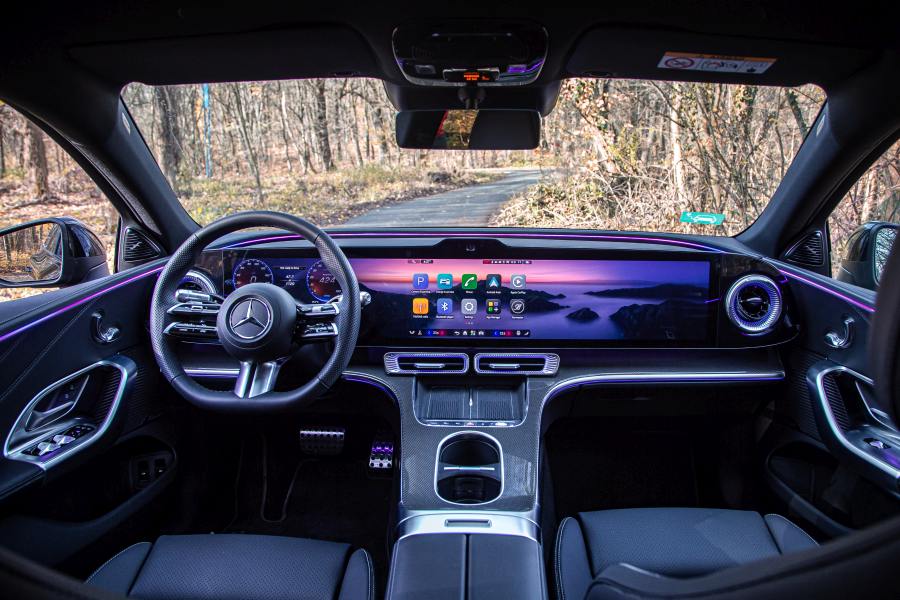
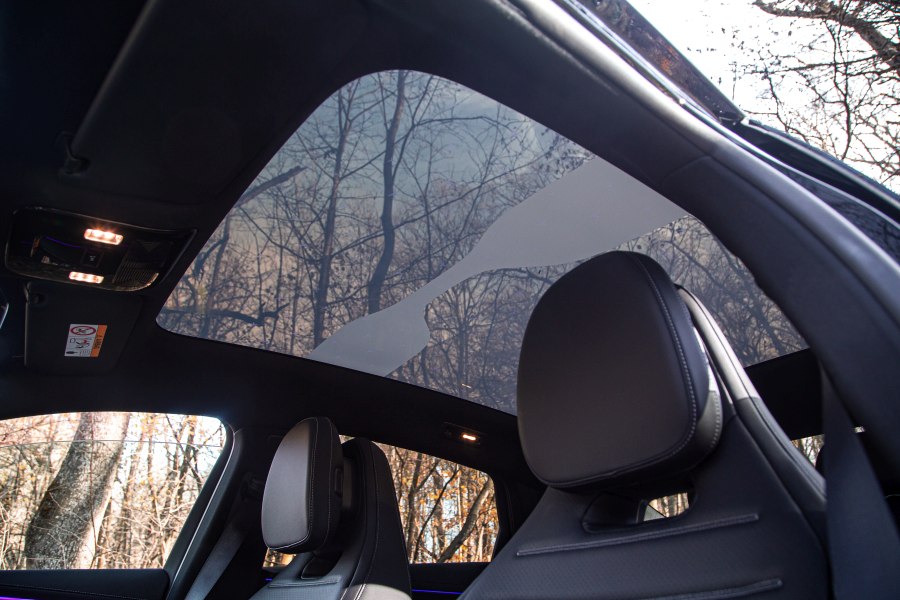
Headroom is sufficient, but with the panoramic roof fitted, there is not much clearance left for passengers taller than 1.80 metres. On the other hand, the panoramic roof is spectacular, and its transparency can be adjusted in sections through the multimedia system.
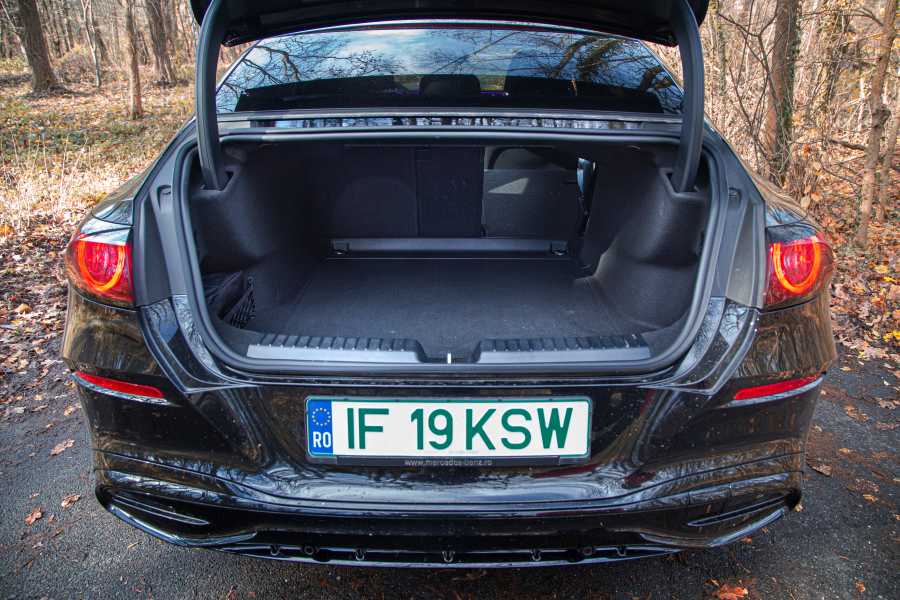
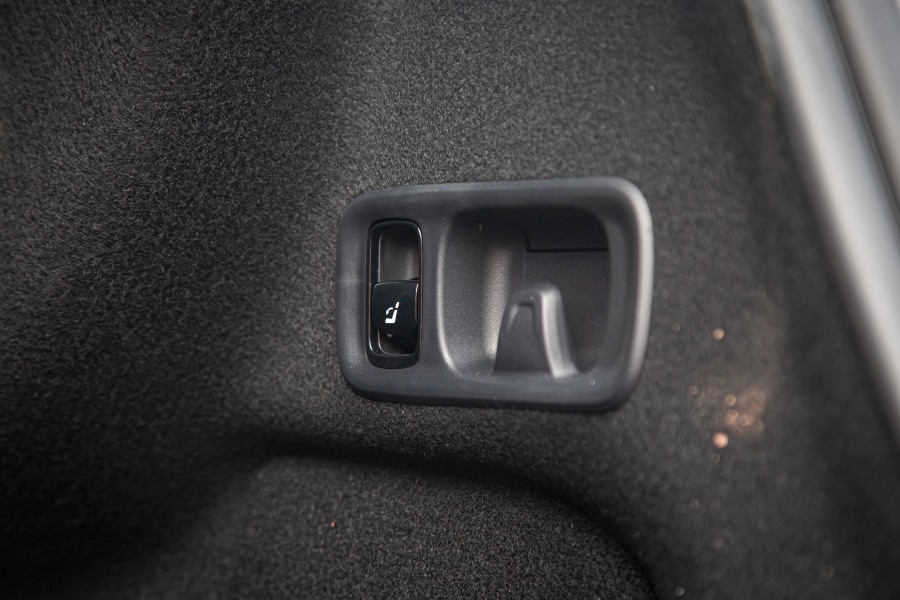
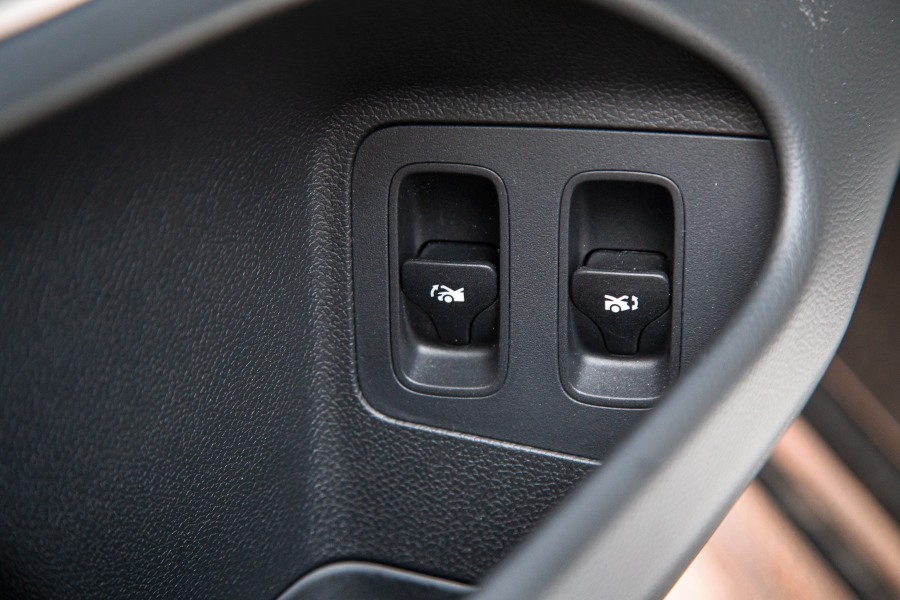
Because of the sloping rear window, the boot lid is short and the opening relatively narrow. Boot capacity is 470 litres, and the 40/20/40 split-folding rear seats can be folded down to accommodate longer items. However, the individual sections can only be released remotely using two buttons in the boot, which is not particularly practical.
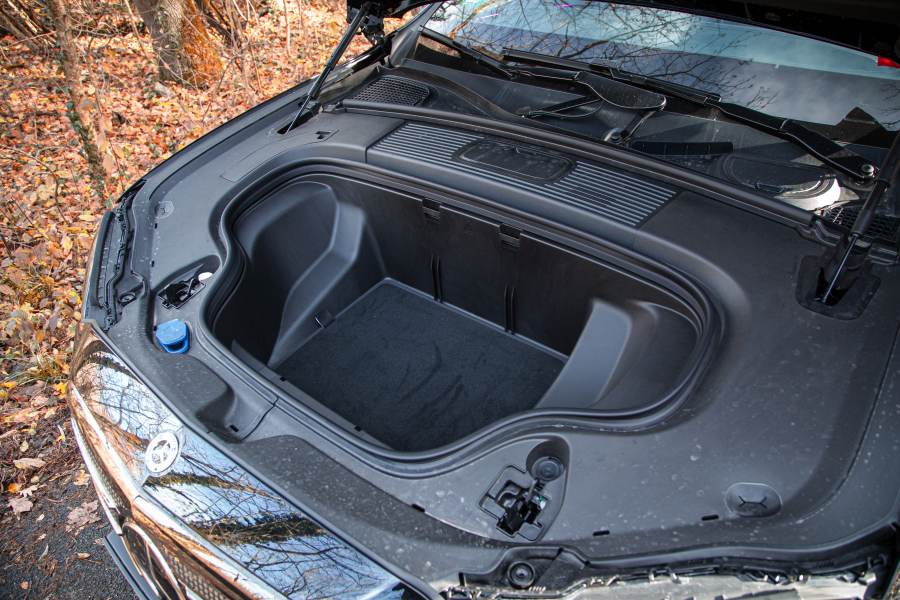
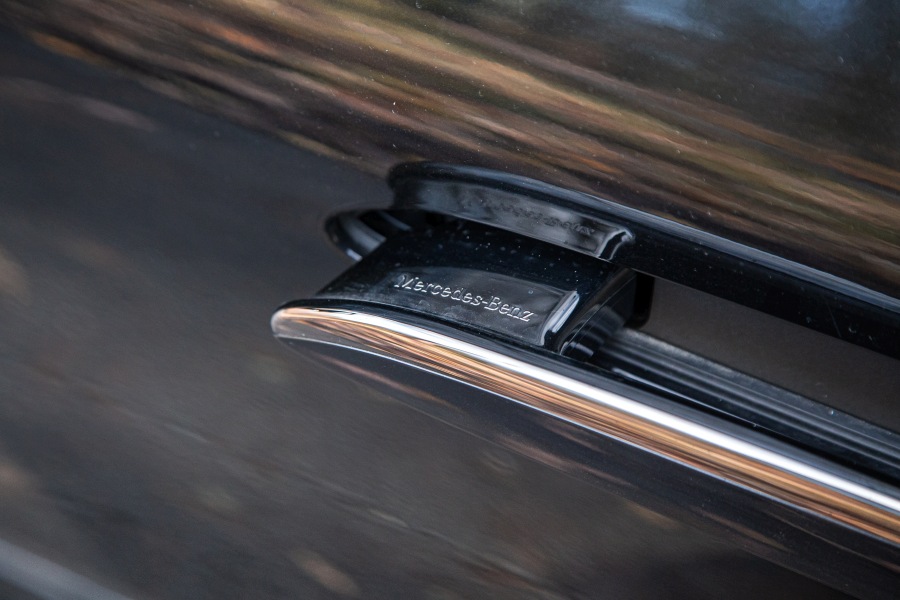
On the positive side, the low loading lip makes it easier to load heavy objects, although there is no additional storage space underneath the boot floor. Instead, there is a huge 101-litre front trunk, which can be opened either through the multimedia system, using a button located in the front door pocket, or by pressing the Mercedes badge on the bonnet. It provides plenty of room for charging cables, and a small cap at the bottom gives access to the windscreen washer fluid reservoir.
The sloping rear window also compromises rear visibility. On the other hand, the electric C-Class can identify parking spaces automatically and perform parking manoeuvres, both entering and leaving a parking space, simply by issuing a command on the touchscreen.
Spectacular multimedia system
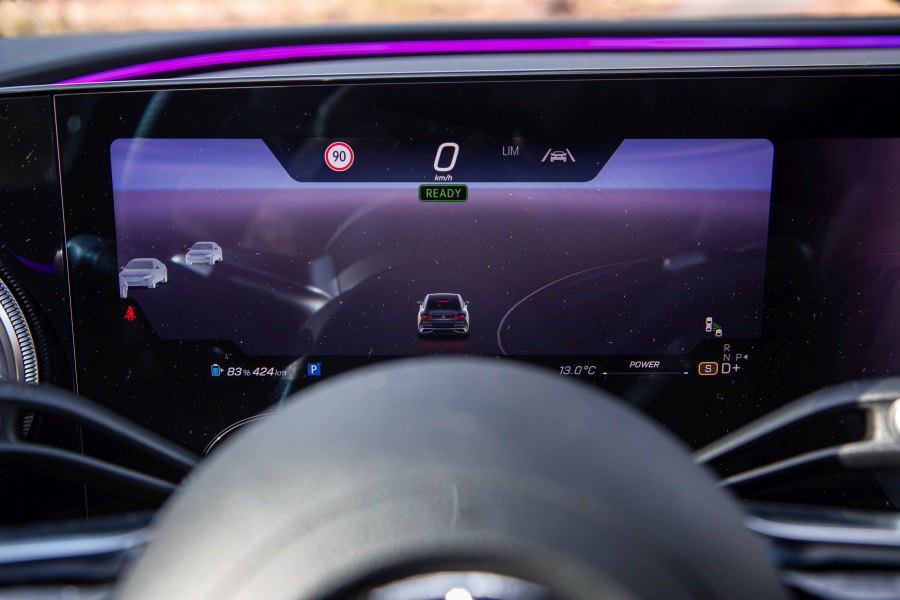
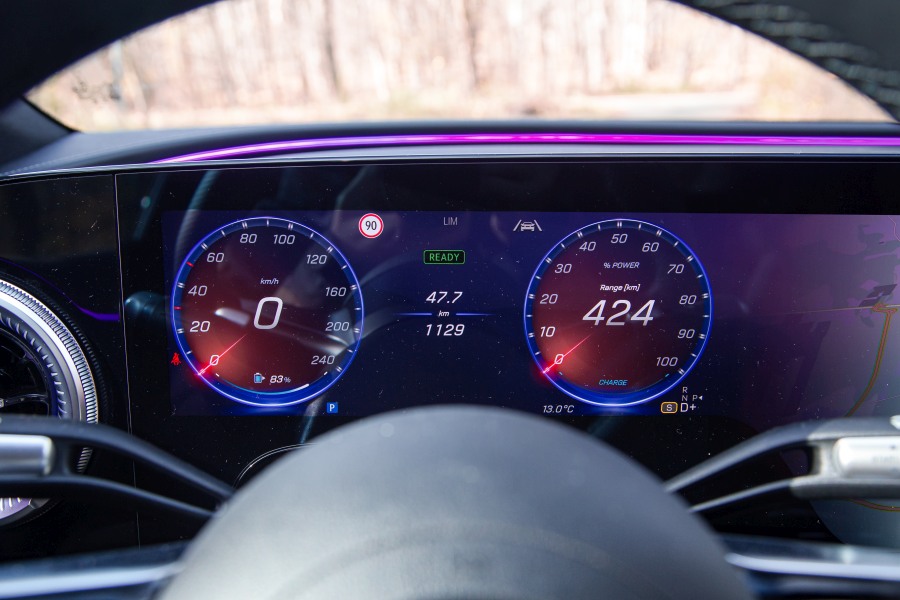
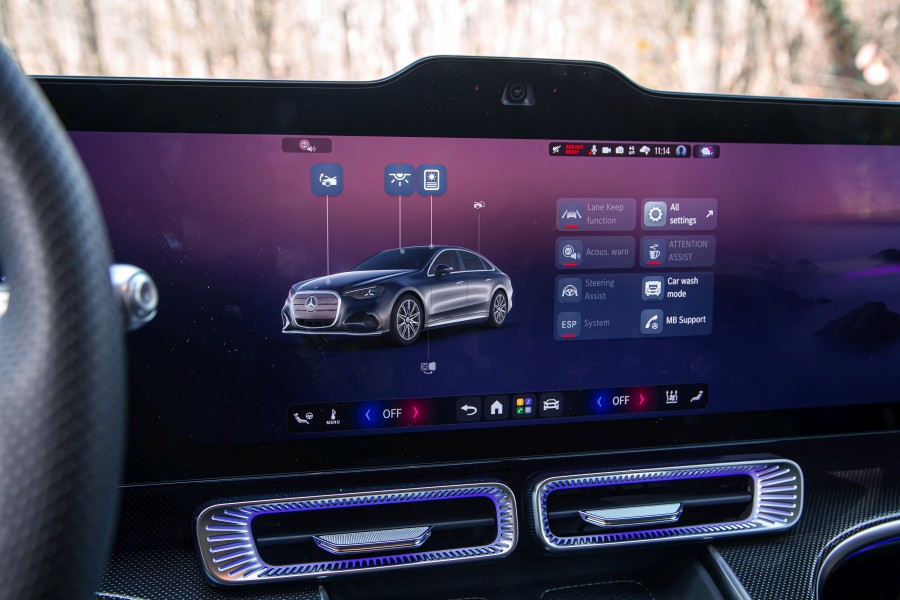
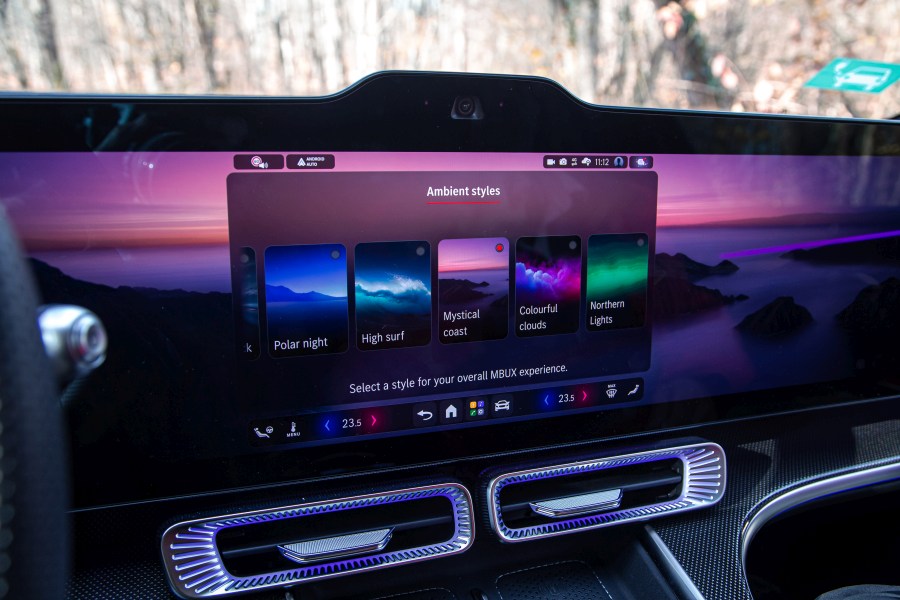
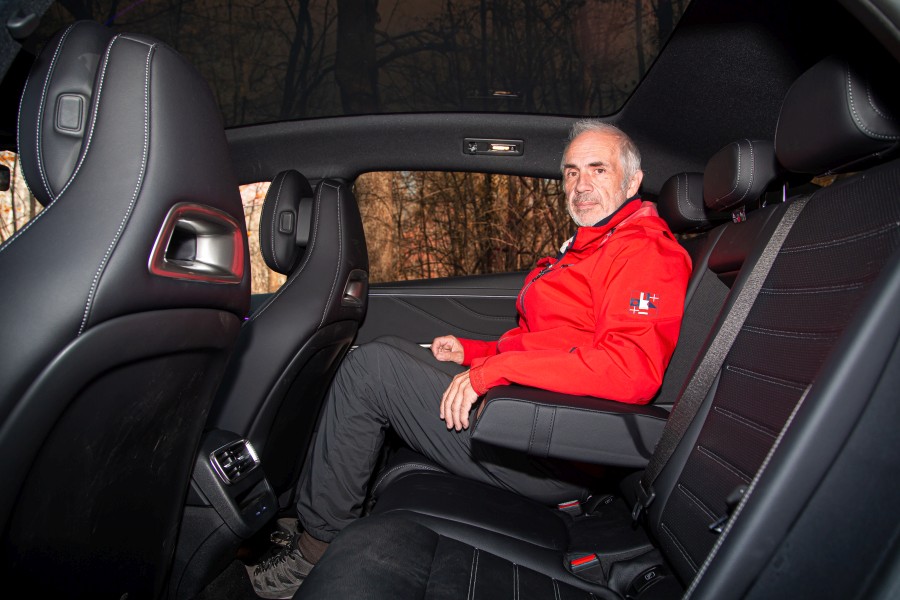
Our test car was equipped with the spectacular Hyperscreen display (€1,487.50), which stretches across the entire width of the dashboard and measures 39.1 inches (99.3 cm) diagonally. However, it tends to get rather hot.
Despite its large dimensions, the display offers superb resolution and responds very quickly to touch inputs. The large menu icons and well-structured menus make navigating the multimedia system easy.
The Google-based navigation system represents a major step forward. When you enter a destination, it automatically displays charging stations along the route, together with their charging capacities. However, it does not identify the electricity providers operating those stations. You can also access artificial intelligence assistants such as ChatGPT and Google Gemini to obtain various types of information.
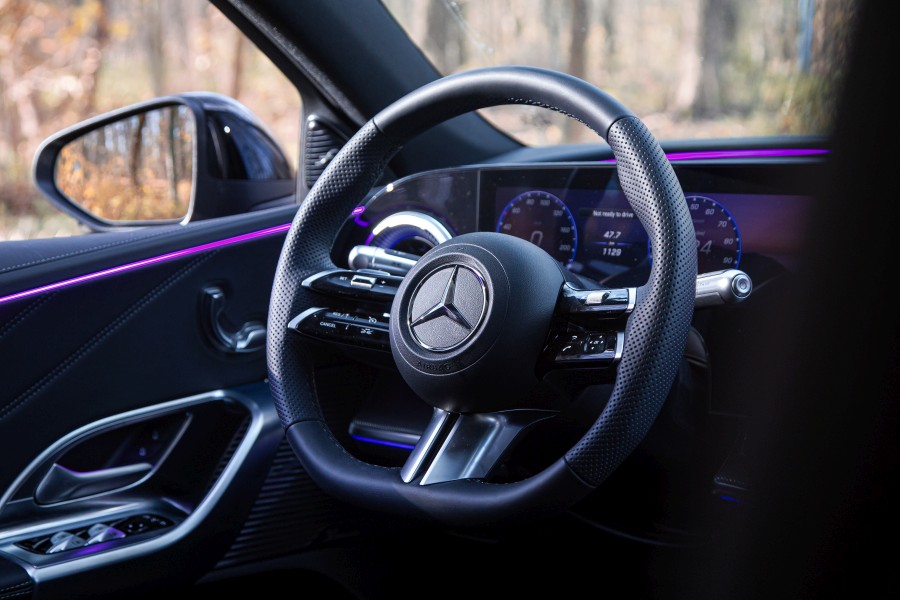
The gear selector is positioned on the right-hand side of the steering column, as in other Mercedes models. Unlike the CLA, where the regenerative braking levels can only be adjusted using the gear selector, the C-Class also features steering-wheel paddles for this purpose. The driver can choose between four regeneration settings: D Auto, D-, D and D+. The latter provides strong deceleration, similar to a One-Pedal driving mode, with the car capable of recuperating up to 300 kW.
At the bottom of the centre console, there are two wireless charging pads for smartphones, with USB-C ports underneath. Both charging pads are also cooled during operation.
We also appreciate the return of two physical controls on the steering wheel: the cruise control switch on the left-hand spoke and the volume roller on the right-hand spoke. However, the small touch-sensitive surface on the right-hand spoke, which allows you to select between the three instrument display layouts and scroll through the onboard computer information, is either too sensitive or occasionally responds too slowly.
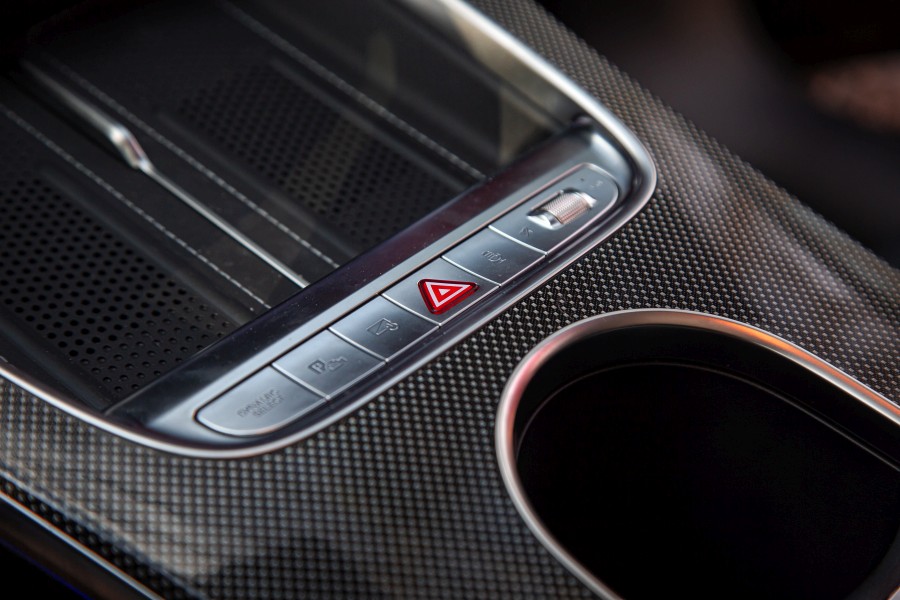
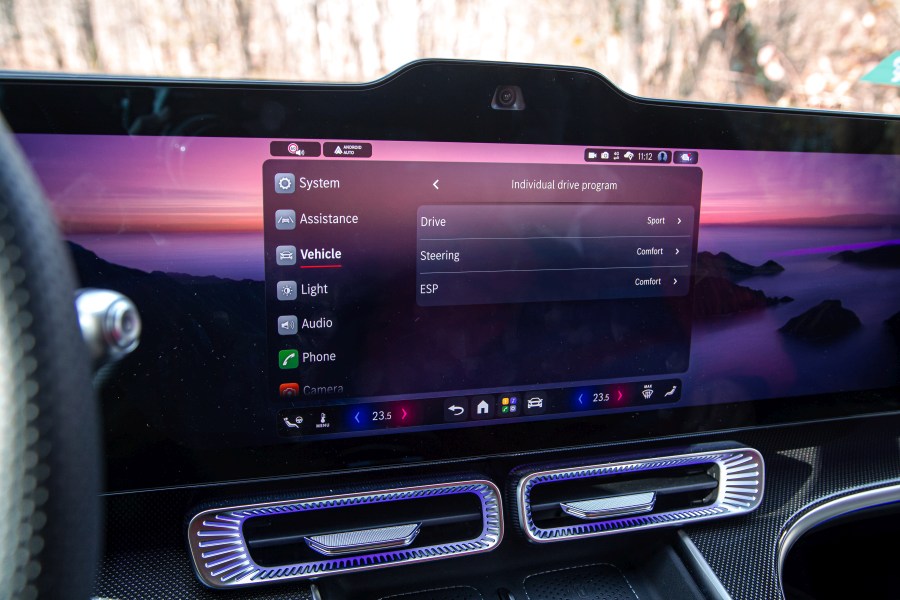
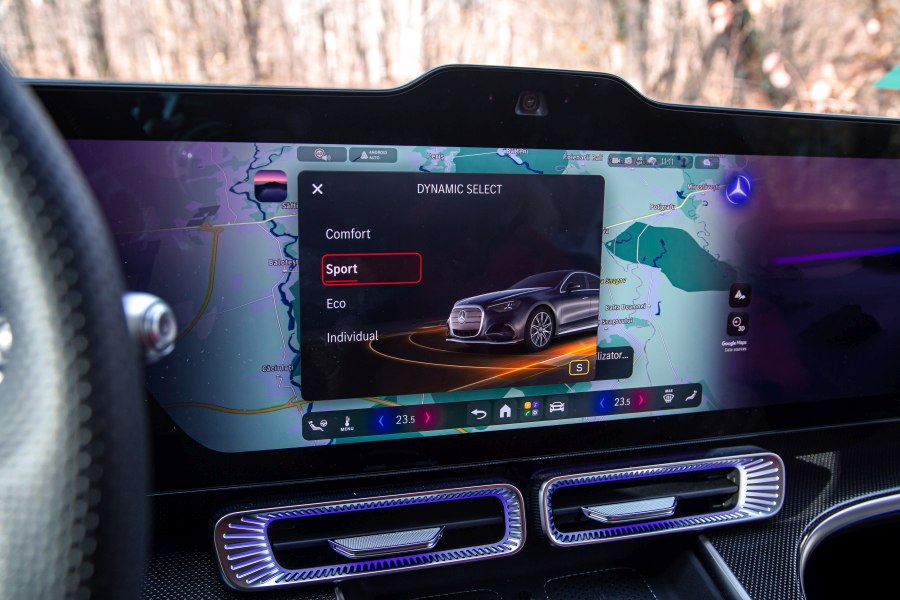
At the bottom of the centre console, there is another row of physical buttons. The first provides direct access to the driving modes: Eco, Comfort, Sport and Individual.
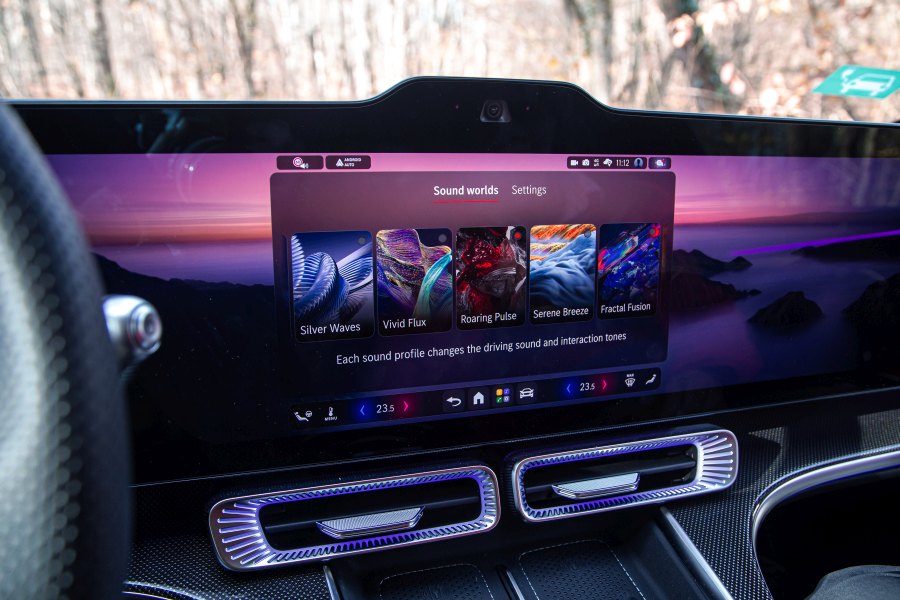
The multimedia system also offers numerous customisation options for ambient lighting, the layout of the large display and the simulated engine sounds.
Overall perceived quality is very good, with soft-touch materials throughout all visible areas, particularly with the AMG Line package fitted to our test car.
Comfort is the top priority, but sporting abilities are impressive too
In terms of straight-line performance, the C 400 4Matic already qualifies for the exclusive four-second club, accelerating from 0 to 100 km/h in just four seconds. By comparison, the Mercedes-AMG EQE 43 4Matic needed 4.2 seconds to complete the same sprint. This makes the C 400 4Matic as quick as an AMG model, even if it is not one of the top-performing versions.
This figure is all the more impressive considering that we are dealing with a very heavy car weighing 2,460 kg.
The C 400 4Matic is powered by two permanent-magnet synchronous motors producing 217 PS at the front and 408 PS at the rear. However, their outputs cannot simply be added together, with total system power standing at 360 kW (489 PS).
As in the CLA, the rear motor is paired with a two-speed automatic transmission. Second gear engages almost imperceptibly at around 120 km/h.
The two motors deliver impressive thrust, but acceleration is progressive rather than brutal, continuing all the way to 210 km/h, where the electronic limiter cuts in.
Our test car featured the standard Comfort suspension, but customers can opt for Airmatic air suspension and rear-axle steering with a steering angle of 4.5 degrees as part of the Agility & Control package (€2,844.10).
Consequently, with the suspension fitted to our test car, the driving modes only alter the response of the steering, motors and ESP system.
In Sport mode, the C 400 4Matic is surprisingly dynamic despite its considerable weight. The steering is responsive, precise and linear, providing excellent feedback. The car feels agile and handles corners with ease, with limited body roll. Only through rapid successive S-bends, when weight transfers from one side to the other, does the car’s substantial mass become noticeable, introducing a certain degree of inertia.
Even with the standard Comfort suspension, ride comfort is excellent, and the suspension operates very quietly. Sound insulation is also worthy of a Mercedes.
The optional air suspension will probably provide an additional comfort advantage in Comfort mode, but even the conventional suspension does an excellent job of absorbing short bumps and road imperfections. The comfort advantage over the electric CLA is obvious. The CLA also features conventional suspension and does not offer either adaptive or air suspension as an option.
In Eco mode, the accelerator pedal provides additional, progressive resistance that is clearly perceptible, helping to prevent excessively aggressive acceleration.
Another major strength of the new C 400 4Matic is its braking system, both in terms of stopping distances and overall refinement. The new One Box braking system impresses with its seamless transition between regenerative and mechanical braking, representing a huge improvement over the EQE and EQS.
Furthermore, the brakes deliver stopping power worthy of a supercar. Measurements confirmed extremely short braking distances of just 31.8 metres from 100 km/h to a complete standstill.
Mercedes claims an energy consumption figure of 14.6 kWh/100 km, but we believe this is impossible to achieve in real-world driving. In Eco mode, we managed to reduce consumption to 17.5 kWh/100 km, corresponding to a real-world range of 537 km. In normal driving conditions, consumption rises to 20.8 kWh/100 km, giving a range of 452 km.
These figures are lower than those recorded by the BMW i3 50 xDrive, although the BMW also has a larger battery, with a net capacity of 108.7 kWh compared with 94 kWh in the Mercedes.
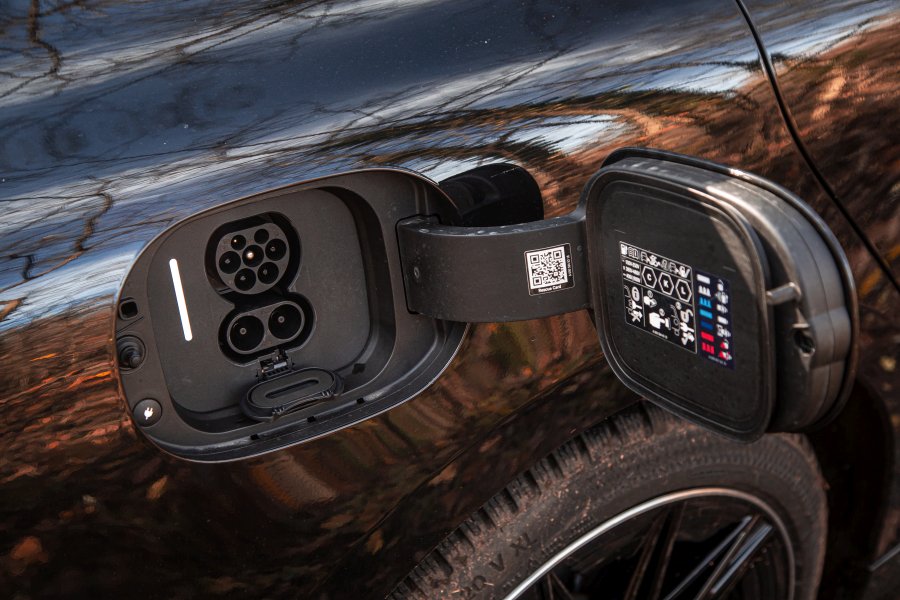
As with the GLC, the battery charges extremely quickly, with a maximum charging power of up to 330 kW.
Faster charging than officially claimed
Mercedes promises a maximum charging power of up to 330 kW. However, just like the GLC 400 4Matic, our test car recorded an even higher figure, reaching a peak of 345 kW.
It charged from 10 to 80% in 25 minutes, with an average charging power of 185 kW. For comparison, the GLC 400 4Matic achieved a maximum of 354 kW and an average of 197 kW.
However, if you want compatibility with older 400V charging stations or 22 kW AC charging instead of the standard 11 kW, you have to pay an additional €654 for each option.
The range-topping C 400 4Matic starts at €67,711, but our test car, equipped with all the options, costs over €88,000. And that is without the air suspension and rear-axle steering, which would push the final price above €90,000.
That is quite a lot of money, despite the outstanding performance.
Those looking to save around €5,000 can opt for the C 300 4Matic, which also features two motors and produces 421 PS. However, it comes with a smaller 85 kWh battery.
Verdict
Ride comfort is undoubtedly the Mercedes C 400 4Matic’s greatest strength, even when equipped with the standard suspension.
We are also pleasantly surprised by its handling and dynamic performance despite its considerable weight, as well as by its sophisticated yet powerful braking system.
The electric C-Class saloon also impresses with its spectacular and easy-to-use multimedia system.
However, rear passenger space is limited, and the rear bench – with its short seat cushion and excessively low seating position – does not live up to Mercedes’ standards and expectations.
- Good driving range
- Reasonable energy consumption
- Fast charging
- Outstanding ride comfort
- Excellent dynamic performance
- Impressive handling despite its weight
- Exceptional brakes
- Spectacular multimedia system

MAX vs MIN
- Limited rear passenger space
- Rear bench with a short seat cushion and excessively low seating position
- Poor rear visibility
- Expensive optional equipment
- High price of the test car

| Technical data | Mercedes C 400 4Matic |
|---|---|
| Motors | 2, one rear, one front |
| Max. output (PS) | 489 |
| Max. torque (Nm) | 800 |
| Traction | awd |
| Gearbox | 2 gears rear, 1 gear front |
| L x w x h (mm) | 4,883 x 1,892 x 1,503 |
| Wheelbase | 2,962 |
| Curb weight/payload (kg) | 2,460/580 |
| Boot volume (l) | 101/470 |
| Battery capacity brutto/net (kWh) | 100/94 |
| AC charging (kW) | 11/22 |
| AC charging time (h) | 4 h 50 min (22 kW) |
| DC charging (kW) | up to 330 |
| DC charging time 10-80% (minutes) | 22 |
| Performances | |
| Acc. 0-100 kph | 4.0 |
| Top speed (kph) | 210 |
| Energy consumption (kWh/100 km) | 14.6 |
| Range (km) | 743 |
| MEASUREMENTS | |
| Energy consumption (kWh/100 km) | 20.8 |
| Real Range (km) | 452 |
| Acceleration 0-100/0-200 kph (s) | 4.0/14.5 |
| Brake 100-0 kph (m) | 31.8 |
| Price (euro ) | 67,711 |
| Test car price (euro) | 88,262 |