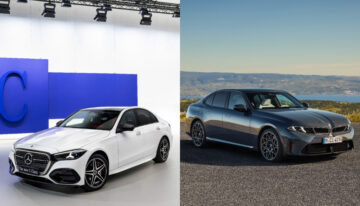
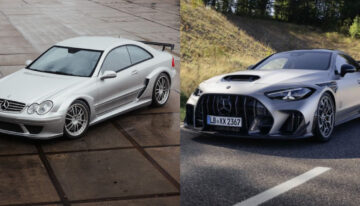
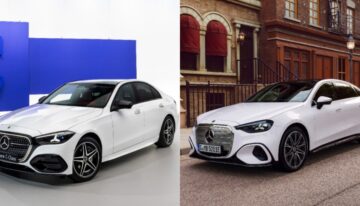
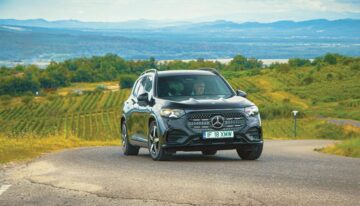
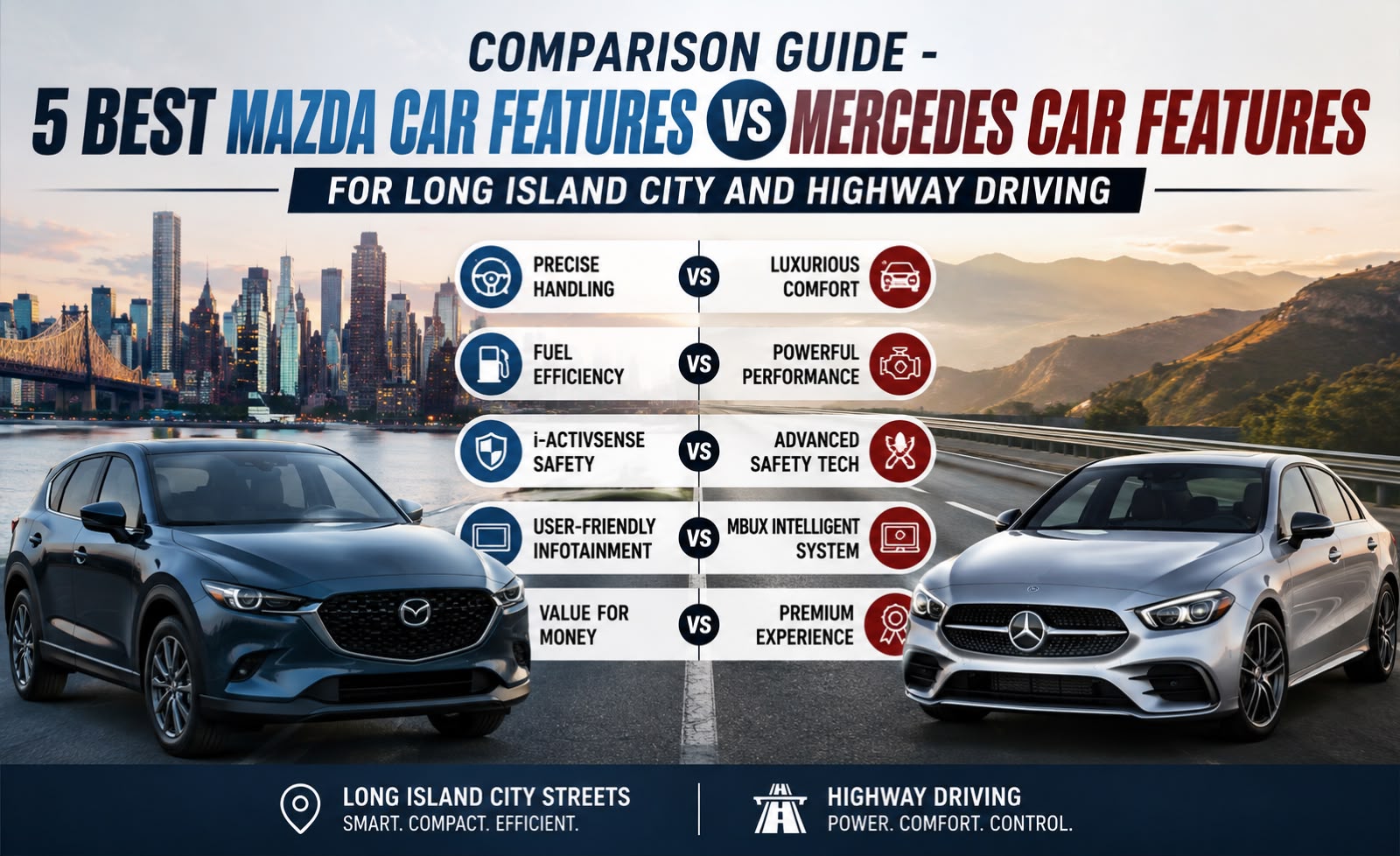
Choosing a vehicle for Long Island City and highway driving means balancing comfort, technology, safety, efficiency, and everyday practicality. City streets can demand quick maneuverability, while highway trips call for stable handling, driver-assistance features, and comfortable cabins. Mazda and Mercedes-Benz take different approaches to these needs, with Mazda focusing on responsive driving and practical technology, while Mercedes-Benz emphasizes luxury, advanced electronics, and premium comfort. For shoppers researching Mazda New York, understanding how these brands compare can make the buying decision easier. Below are five important feature categories to consider when comparing Mazda and Mercedes vehicles for urban and highway use.
1. Driver Assistance and Safety Features
Safety technology is especially valuable in Long Island City, where vehicles frequently encounter pedestrians, cyclists, congested intersections, and stop-and-go traffic. Both Mazda and Mercedes-Benz offer driver-assistance systems designed to help drivers maintain awareness and respond to changing conditions.
Mazda vehicles commonly provide features such as blind-spot monitoring, rear cross-traffic alert, lane departure warning, adaptive cruise control, and automatic emergency braking, depending on the model and trim. These systems can make city driving less stressful while adding confidence during longer highway journeys.
Mercedes-Benz vehicles typically take driver assistance to a more advanced luxury-oriented level. Available technologies can include active lane-keeping assistance, adaptive cruise control, blind-spot assistance, traffic sign recognition, and more sophisticated collision-avoidance systems. Some Mercedes models also offer enhanced highway assistance technologies that can reduce driver workload under appropriate conditions.
For daily urban driving, Mazda’s safety technology can provide a strong combination of useful features and straightforward operation. Mercedes may appeal more to drivers who want a broader selection of premium driver-assistance technologies and are willing to pay more for them.
2. Infotainment and Connectivity
Modern drivers spend significant time interacting with vehicle infotainment systems, whether navigating busy city streets, listening to music, or handling phone calls on the highway. Mazda and Mercedes-Benz both offer technology-focused cabins, but their philosophies are noticeably different.
Mazda tends to use a clean and driver-oriented infotainment layout. Depending on the vehicle, shoppers may find smartphone integration, touchscreen functionality, voice controls, navigation, Bluetooth connectivity, and access to commonly used mobile applications. Mazda’s systems are generally designed to minimize unnecessary distractions by keeping important controls within easy reach.
Mercedes-Benz offers a more technology-heavy experience. Many models feature advanced infotainment interfaces, large digital displays, voice assistance, smartphone integration, and highly customizable digital settings. The Mercedes-Benz User Experience, commonly known as MBUX, is one of the brand’s most recognizable technology features and gives drivers extensive control over navigation, entertainment, vehicle settings, and other functions.
For a driver who values simplicity and practical connectivity, Mazda can be appealing. For someone who prefers a more immersive digital cockpit with extensive customization, Mercedes-Benz may have the advantage.
3. Comfort, Seating, and Cabin Quality
Long Island City driving can involve frequent stops, tight streets, and longer commutes on surrounding highways. A comfortable cabin can make those daily journeys considerably more enjoyable.
Mazda has developed a reputation for combining supportive seating with an upscale interior design. Even without moving into the luxury segment, many Mazda models use quality materials, thoughtful layouts, and refined styling. The driver’s seating position is often designed around visibility and control, which can be useful when navigating urban traffic.
Mercedes-Benz generally places stronger emphasis on luxury. Depending on the model, buyers may find premium upholstery, sophisticated interior finishes, ambient lighting, heated and ventilated seats, advanced climate-control systems, and highly refined cabin materials. Higher-end Mercedes models can also provide additional sound insulation, making highway travel feel quieter and more relaxed.
Mazda can offer an excellent balance of comfort and value, while Mercedes-Benz typically delivers a more luxurious experience. Drivers who spend considerable time commuting may want to evaluate both seating comfort and cabin noise during test drives rather than relying only on specifications.
4. Handling, Performance, and Highway Stability
Driving in Long Island City requires a vehicle that feels predictable at low speeds but remains composed when entering highways and traveling at higher speeds. Mazda and Mercedes approach performance from different perspectives.
Mazda is known for emphasizing responsive handling and an engaging driving experience. Steering tends to feel direct, and many Mazda models are designed to provide a balanced connection between the driver and the road. This can be useful when navigating narrow streets, making turns, or changing lanes in busy traffic.
Mercedes-Benz offers a broader range of performance characteristics. Some models prioritize smooth and comfortable cruising, while others deliver stronger acceleration and sportier handling. Many Mercedes vehicles are engineered to provide excellent stability and composed highway performance, with available all-wheel-drive systems and advanced suspension technologies on selected models.
For everyday city use, Mazda’s responsive character can make driving feel natural and enjoyable. Mercedes-Benz may stand out for shoppers seeking a combination of refinement, power, and high-speed stability. The best choice depends on whether the driver prioritizes agility, luxury, performance, or a mixture of these qualities.
5. Fuel Economy and Everyday Efficiency
Fuel costs matter for commuters who regularly drive through city traffic and spend additional time on highways. Efficiency depends heavily on the specific engine, transmission, vehicle size, drivetrain, and driving habits, so buyers should compare individual models rather than assuming one brand will always perform better.
Mazda offers several vehicles designed with efficiency in mind while maintaining responsive performance. Many models use engine and transmission technologies intended to balance power with fuel consumption. For drivers who alternate between city streets and highway commuting, a well-matched Mazda powertrain can provide practical everyday efficiency.
Mercedes-Benz also offers efficient powertrains, including smaller turbocharged engines and hybrid-oriented technologies in certain models. However, larger luxury vehicles with more powerful engines can naturally consume more fuel. Buyers should look carefully at EPA-rated city and highway figures for the exact Mercedes model under consideration.
For frequent commuters, fuel economy should be considered alongside purchase price, maintenance expenses, insurance costs, and expected ownership duration. A vehicle with slightly better fuel efficiency may offer greater long-term value when driven many miles each year.
Choosing the Right Features for Long Island City Driving
Long Island City presents a unique mixture of driving conditions. Narrow roads, busy intersections, parking challenges, pedestrian activity, and frequent traffic make maneuverability and visibility especially important. Features such as blind-spot monitoring, parking sensors, rear cross-traffic alert, a clear infotainment system, and a comfortable driver’s seat can have a major impact on daily convenience.
Mazda’s approach often appeals to drivers who want useful technology without making the driving experience feel overly complicated. Its combination of responsive handling, practical driver assistance, and refined interiors can work well for urban commuters.
Mercedes-Benz may be more attractive to buyers who want their daily commute to feel like a premium experience. Advanced infotainment, upscale materials, sophisticated safety systems, and additional comfort features can make frequent city driving more enjoyable.
Choosing the Right Features for Highway Driving
Highway driving introduces a different set of priorities. Stable handling, adaptive cruise control, lane-monitoring technology, comfortable seating, low cabin noise, and strong acceleration can all contribute to a more relaxing trip.
Mazda provides many features that support comfortable long-distance driving while maintaining an engaging driving feel. Its driver-assistance technologies can help reduce fatigue during longer journeys, particularly when traffic becomes repetitive.
Mercedes-Benz is particularly strong in highway comfort. Many models are designed for extended cruising, combining refined suspension systems, quiet cabins, powerful engines, and advanced driver-assistance technologies. For shoppers who frequently travel beyond Long Island City, the additional luxury features may become more noticeable over time.
Mazda vs Mercedes: Which Offers Better Value?
Value is not simply about the purchase price. It also includes reliability expectations, fuel economy, maintenance requirements, insurance, technology, comfort, and resale considerations.
Mazda can provide a compelling middle ground for drivers who want many desirable features without entering a higher luxury price category. Its vehicles can offer attractive combinations of driving enjoyment, technology, safety, and interior quality.
Mercedes-Benz generally commands a higher purchase price because it competes directly in the luxury market. Buyers receive additional premium appointments and sophisticated technologies, but they should also consider long-term ownership costs before making a decision.
The better value depends on what matters most to the individual buyer. Someone who prioritizes practical features and driving enjoyment may prefer Mazda, while a driver seeking a more luxurious and technology-rich experience may find Mercedes-Benz worth the additional investment.
Conclusion
Mazda and Mercedes-Benz both offer strong options for drivers who split their time between Long Island City streets and highway travel, but they target different priorities. Mazda emphasizes practical technology, responsive handling, everyday comfort, and value, while Mercedes-Benz focuses more heavily on luxury, advanced electronics, premium materials, and refined highway performance. Comparing safety systems, infotainment, cabin comfort, driving dynamics, and efficiency can help shoppers identify which features matter most for their routines. A careful test drive of specific models from both brands is the best way to determine which vehicle delivers the right combination of comfort, capability, and confidence for daily city and highway driving.