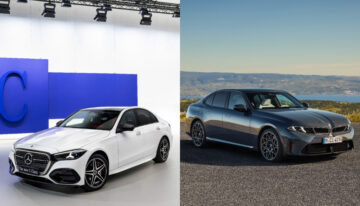
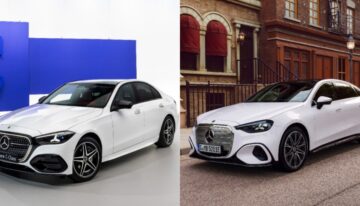
Mercedes-Benz puts its name on the Masters and the World Cup, paying nine figures for global brand recognition across markets it will never sell a single car to locally. A dealership twenty minutes outside the city center puts its name on a school sports team for a few thousand dollars and keeps renewing it year after year. While the two plays look different in scale, the underlying logic is identical. Consistently showing up where actual buyers look lets repetition do the work that a single ad campaign cannot.
So what is the smaller sponsor actually buying? It is not just vague goodwill or a community spirit tax deduction. The investment buys six concrete advantages that any local business owner should understand before writing the check.
1. Audience Behaves as a Catchment
National advertisers buy demographics like age brackets, income ranges, and interest clusters, but a dealership sells to people who can physically drive to its lot. This makes geography the only targeting variable that actually matters. A school’s parents, siblings, and extended family members are geographically self-selected, making them the only audience that can realistically convert.
Compare that to a paid social campaign where a well-optimized local ad can still serve the dealership’s name to someone four states away. The school jersey cannot do this, functioning instead as a geographic filter that no digital platform replicates precisely at this scale.
2. Buying a Physical Object
A radio spot runs for thirty seconds and then disappears, while a sponsored uniform is worn at every practice, match, and awards ceremony for a full season. That difference in duration changes the cost-per-impression math entirely. The money buys a physical object that a squad wears all season and parents photograph repeatedly.
Consider a high school wrestling squad ordering their gear for the season. When the athletic director places that order, platforms like Sports Gear Swag supplying custom wrestling team singlets make the process straightforward. The dealership’s logo goes on every single item, surfacing across family social accounts from November through February.
The spend keeps generating impressions for five months after the invoice is paid. A local radio schedule at comparable cost runs for two to four weeks and leaves nothing behind.
| Pro Tip: Before ordering sponsored uniforms, confirm minimum order quantities and free design preview options. Most platforms have eliminated these barriers, making the sponsorship logistics far simpler than many dealership owners assume. |
3. Parents Match the Buying Cycle
Adults attending school sports events are disproportionately in the family-car replacement cycle. A household with school-aged children is typically in a specific formation stage characterized by growing families and aging second vehicles. 27.7 percent of all family households in the United States were family households with their own children under 18 years old, facing upcoming major purchase decisions arriving on a predictable timeline.
A dealership name on the team kit places direct exposure in front of an audience structurally likely to be in a purchase window. The audience at a youth sports event skews toward the exact life stage that generates repeat vehicle purchases. As a result, the dealership’s name is the one they have been reading on the uniform all season.
4. The Local Arithmetic Works
Run the rough comparison yourself using your own local rates. A modest annual sponsorship puts the dealership’s name on a squad’s uniforms for a full season, delivering roughly six months of impressions across live events and organic social posts. A local radio schedule at a similar spend might run for two to four weeks before the budget is exhausted.
The cost-per-impression comparison heavily favors the uniform sponsorship when viewed across the full season. The point is to prompt the comparison rather than rely on a single national average. When a dealership owner applies their actual local media numbers to that framework, the uniform sponsorship rarely loses.
| Key Insight: A $2,000 to $3,000 annual uniform sponsorship generates roughly six months of community impressions, while a comparable local radio schedule often runs only two to four weeks. |
5. Six Seasons Earns Permanence
A name that has appeared on the same school’s uniforms for six consecutive years is no longer read as an advertiser. It reads as a reliable part of the community’s landscape. A dealership needs this kind of permanence, and it can only be earned by showing up every season.
Renewal is the real product here, turning a first-year trial sponsorship into a concrete business asset. The dealer who renews builds automatic recall when someone in that community is ready to buy.
| Quote: Consistency is the real mechanism: renewal converts a sponsor logo into automatic recall, something no single campaign can replicate. |
6. Honest Measurement Criteria
School sponsorship is not a direct-response channel, and treating it like one produces bad decisions. Do not expect trackable clicks or attributed car sales tied to a single season’s kit. Instead, ask new customers where they heard of the dealership and note any school or sport mentions to watch whether referrals increase over a three-year window.
Monitor whether the relationship deepens through school communications or favorable renewal terms. Do not promise yourself a specific number of vehicles sold from one season of uniform logos. Being clear-eyed about these metrics from the start separates a deliberate sponsorship strategy from a simple donation.
The Bottom Line
Of the six elements outlined above, the single thread connecting them is renewal. The geographic catchment logic holds up year after year because the audience naturally refreshes, reaching a new cohort of parent buyers without requiring a massive budget increase. The physical kit keeps generating brand impressions each season, functioning as a durable community asset rather than an expiring media time slot.
Mercedes-Benz does not calculate daily return rates before renewing its major tournament spots because consistency acts as the primary marketing mechanism. A local dealer can apply that exact strategy to reach an audience a global media buy cannot touch. Sign the contract, secure the branded uniforms, and keep showing up for the community every single year.
| Author Profile: Sports Gear Swag is an online retailer of custom sports apparel and gear for teams, schools, and organizations of all sizes. Specializing in team jerseys, uniforms, and athletic apparel with a wide range of customization options. |