Over the past 20 years, the Chinese market has contributed significantly to the success of German carmakers Mercedes, Audi and BMW. But now Chinese customers no longer want to buy European premium models, and because China was a key market, sales volumes are falling, profits are shrinking, and layoffs and plant closures are being discussed. How did we get to this point?
Profits and sales in China have collapsed
The boom in the Chinese market 20–25 years ago represented an extraordinary opportunity for German premium manufacturers, especially Mercedes. For the Stuttgart-based manufacturer, China became its number-one market worldwide, and there were years of glory when sales in China accounted for 40% of total sales — almost 800,000 units out of a total of 2.1 million — and generated up to 60% of profits. But much faster than expected, Chinese manufacturers overtook European companies technologically. This is linked to the shift in powertrains from combustion engines to electric and PHEV systems, as well as the development of new electronic architectures.
The mistake of transferring know-how to China
Unlike the EU, which allows Chinese companies to come to Europe and build factories largely unhindered, European manufacturers could not do the same when they entered the Chinese market. The Chinese communist government required European companies to establish 50:50 joint ventures with Chinese companies. This gave Chinese manufacturers access to European high-tech technologies.
The partnership between VW and state-owned SAIC is notorious. SAIC later acquired the MG brand and now sells more than 300,000 MG models annually in Europe, produced much more cheaply in China. Mercedes also has a partnership with BAIC Group (Beijing Automotive Group), and BAIC profits a lot by the german know-how and begun to sell own cars in Europe. Fortunately, BAIC has not achieved the same success in Europe as MG.
The EU’s overly permissive policy toward Chinese manufacturers
The EU allows Chinese companies to build factories in Europe to avoid tariffs, but does not require them to form partnerships with European manufacturers, as the Chinese did when European companies entered China. As a result, Chinese companies are not only building new factories but are also buying plants belonging to manufacturers in financial difficulty.
The EU hopes and believes that this will create jobs for European citizens. However, Chinese companies will certainly not offer the same salaries and working conditions, and it cannot be ruled out that they will employ immigrants who are cheaper and have lower salary expectations.
The shift in powertrain technology
In 2011, China officially declared electric vehicles a strategic industry and invested enormous sums in electric propulsion. Chinese companies acquired mines in Congo that supply around 90% of the raw materials for batteries and developed increasingly advanced battery technologies. Europeans woke up too late, and the technological lead of companies such as CATL in battery technology is now virtually impossible to recover.
Today, European electric cars are too expensive compared with Chinese models for several reasons. Some are related to the manufacturers themselves, because development times are longer, while others are linked to the specific conditions in the EU, where energy is much more expensive than in China and labour costs are higher. In addition, European manufacturers have to face unfair competition because Chinese companies also receive massive state subsidies.
As a result, Chinese manufacturers have launched a price war that European companies cannot match. European manufacturers have collapsed first and foremost in their home Chinese market, where they now sell very few electric cars. However, sales of combustion-engine models are also declining in China because the country has a general policy of promoting electric vehicles and renewable energy sources.
In the automotive industry, China now controls the entire ecosystem, from the raw materials needed for batteries to battery-cell production and electric motor manufacturing. New electric and PHEV registrations in China account for 60% of the market, of which 30% are fully electric. And following the outbreak of the war in Iran, rising fuel prices have further reduced sales of combustion-engine models.
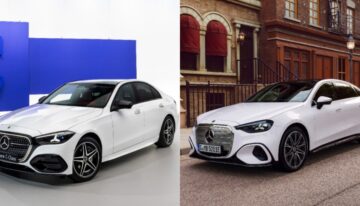
Mercedes has developed a special CLA L version for China. But in six months, it has sold only around 600 units. In Europe, a standard CLA 350 4Matic with 354 HP and rather modest equipment costs €60,000. The new Zeekr 7GT costs about the same, but offers 646 HP, top-level equipment, superior technology including adaptive air suspension with adjustable ride height — something that Mercedes doesn’t even offer on CLA range — as well as much better interior materials.
So what chance does Mercedes really have against this competitor, which, by the way, is only half Chinese, since it was designed in Europe by people from Volvo?
Europe does not produce batteries entirely on its own, even though battery plants exist
In an electric car, the motor is not the most expensive component — the battery is. Initially, the battery accounted for around 40% of the cost of an electric vehicle, but this has now fallen to around 30% thanks to lower battery prices in China.
The only notable European attempts, Northvolt and ACC, have failed precisely because the raw materials came from China and they could not control costs. Meanwhile, battery plants built by some European manufacturers in Europe use cells supplied by Chinese manufacturers, with European companies merely assembling them. As a result, a significant share of the profits still goes to China.
Tesla and Chinese manufacturers also lead in software and electronic architectures
The problem is not just batteries but also software. Chinese customers like navigation, social media, and audio and video streaming in their cars so they do not get bored in the heavy traffic of their huge cities. For Europeans, it may seem strange to have access to a children’s game such as Angry Birds in a Mercedes E-Class, but Chinese customers like it.
For Chinese customers, ergonomics is less important, and many infotainment systems are essentially tablets adapted to the car’s functions and packed with games, apps, audio and video streaming. Chinese manufacturers spend less time on traditional ergonomic concepts, dramatically shortening development times.
By contrast, European manufacturers have spent decades developing systems with hundreds of control units connected via CAN Bus, using many individual components from different suppliers.
Then Tesla arrived and introduced a solution based on a central computer, in-house software development and over-the-air updates. Chinese manufacturers quickly copied the concept, and European manufacturers are now following the same path. A good example is BMW’s Heart of Joy computer in the Neue Klasse, with the iX3 being the first BMW to feature a Software Defined Vehicle architecture.
Here, European manufacturers do not necessarily have a technology deficit, but they do have a problem with components, because most chips still come from Asia and have become significantly more expensive in recent years.
China wants to destroy the European market
Chinese manufacturers are not content with dominating their domestic market; they are also attacking the European market with an aggressive dumping strategy in the electric and PHEV segments. There are dozens of manufacturers with hundreds of sub-brands.
Chery has entered Europe with its main brand but also has four other sub-brands: Omoda, Jaecoo, Lepas and iCAUR. BYD, meanwhile, also has the Denza and Yangwang brands.
It is estimated that the Chinese automotive industry has the capacity to produce 55 million vehicles per year, while only around 24 million are sold in China. This means that 31 million vehicles are potentially available for export at dumping prices, despite the tariffs imposed by the EU.
The European market is collapsing
Before the pandemic, around 16 million new cars were sold in Europe every year. After the pandemic and the semiconductor crisis, the new-car market fell to between 10 and 11 million units annually because of rising prices.
Higher energy and labour costs are making car production in Europe increasingly unprofitable, compounded by declining volumes.
Now, around 20 Chinese manufacturers are also fighting for this smaller slice of the market, offering dumping prices despite the protectionist tariffs, which appear to have had little impact on them. China has excess production capacity and wants to sell its cars at any price.
Trump’s tariffs
In addition to unfair Chinese competition, Trump has dealt another blow to European manufacturers with new import tariffs. Mercedes estimates that it lost €1 billion in 2025 because of Trump’s tariffs. These tariffs are also forcing European manufacturers to move production to the USA to avoid import duties.
The good news is that Trump and a large part of the American population dislike electric cars, meaning the USA remains a good market for combustion-engine vehicles. However, tariffs still hurt profitability.
Fortunately, Mercedes and BMW have huge factories in the USA where they produce some of their SUVs (Mercedes) and most of their SUVs (BMW). In Mercedes’ case, however, its best-selling SUV, the GLC, is produced in Europe, as are the GLA and GLB.
In addition, Trump has dealt another blow to European manufacturers. He wants to ban the sale of vehicles from manufacturers in which Chinese shareholders own more than 15% of the shares. This could affect Mercedes, where Li Shufu, the founder of Geely, owns 9.9% of the shares, while BAIC, Mercedes’ Chinese partner, owns another 9.9%. A dramatic decline in sales in China combined with a potential ban on sales in the USA would represent a catastrophe for Mercedes.