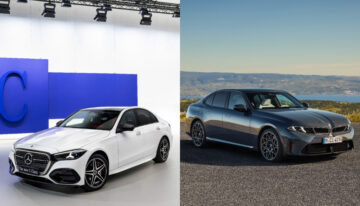
The visual profile of the average roadway changed dramatically over the last four decades. A sedan parked on a city street in 1985 possessed a distinctively lower hood line and a slimmer wheelbase than the typical crossover occupying that same spot today. This transition represents more than a mere evolution in automotive aesthetics or consumer taste.
Manufacturers fundamentally altered the footprint, height, and mass of vehicles to align with specific legislative architectures and safety mandates. These physical modifications stem from a complex interaction between fuel economy regulations, shifting classification criteria, and the physics of modern crashworthiness rather than a spontaneous desire for larger vehicles.
What Is the Regulatory Foundation of Size Expansion?
CAFE standards set lower fuel-economy requirements for light trucks than for passenger cars. Automakers exploited this by tweaking wheelbase, ground clearance, and cargo capacity to qualify vehicles as light trucks, letting them build larger, less efficient vehicles while staying federally compliant.
The light-truck classification’s laxer standards drove engineers to prioritize SUV and crossover designs over sedans, reshaping vehicle sizing well beyond simple height comparisons. According to the United States Environmental Protection Agency, the average vehicle weight increased to a record high of approximately 4,289 pounds for the 2022 model year, a substantial rise driven by the proliferation of these larger vehicle segments.
How Do Pedestrian Safety and Visibility Metrics Compare?
The rise of high-profile vehicles introduced new variables into traffic safety, specifically regarding pedestrian impact and sightline obstruction. The geometry of the front end changed as vehicles moved away from low-slung designs toward the blocky, upright aesthetic of modern crossovers. This shift creates distinct challenges for the individuals surrounding the vehicle.
The Hood Height Crisis
Modern hood lines sit significantly higher than those of the 1980s. Professionals utilize height comparison tools such as easyheightcomparison.com to compare heights and evaluate vehicle bumper proximity against pedestrian stature. It becomes evident that impact dynamics have shifted detrimentally.
Rather than striking the lower extremities and directing the force over the hood, modern high-profile designs often impact the chest or head, drastically increasing the likelihood of severe injury. This trend toward a bold, imposing front fascia represents a design priority that directly correlates with higher pedestrian fatality rates.
Sightline Obstructions
The width of the A-pillars and the height of the hood line create massive blind spots. Modern safety pillars contain airbags and reinforced steel, making them thicker and more obstructive than the slim pillars common in 1980s designs. These physical barriers limit the ability to spot pedestrians, particularly children, at intersections.
Is the Volume Increase Really Driven by Consumers?
The regulatory-loophole argument is well-documented and largely accurate. CAFE standards created a lighter compliance burden for light trucks, and manufacturers steered R&D and marketing dollars toward SUVs/pickups accordingly, while shrinking sedan lineups. That’s real supply-side distortion. But framing it as pure manufactured demand overstates the case.
Genuine preferences, perceived safety, towing/cargo utility, driving position, predate and reinforce the regulatory incentive; the two reinforce each other rather than one simply causing the other. Supply and demand shaped each other iteratively: loopholes made certain vehicles profitable to push, marketing normalized them, and consumers responded, further justifying investment. Attributing it entirely to either corporate strategy or organic demand oversimplifies a genuinely interactive dynamic.
How Has Structural Evolution Shaped Crashworthiness?
Safety engineering genuinely explains part of the size growth. Crumple zones, side-impact bracing, and reinforced pillars do require more structure than 1980s designs, and unibody construction with modern crash standards does add mass and some dimension.
But safety necessitated it is incomplete as a full explanation. Much of the width/height growth, especially in trucks and SUVs since the 2000s, tracks CAFE footprint rules (which scale allowable emissions targets to vehicle size, rewarding bigger footprints) and market/styling choices like higher hoods and beltlines, not just crash engineering. Safety requirements set a floor, not the ceiling, on the size increase actually observed.
How Does Electrification Affect Mass Distribution?
The transition to battery-electric platforms introduces a new trajectory for vehicle dimensions. Batteries possess significant mass, requiring robust chassis designs to support the weight and ensure safety during accidents. Electric vehicles currently weigh hundreds, if not thousands, of pounds more than their internal combustion counterparts.
To manage this mass, manufacturers widen the track and extend the wheelbase, further increasing the vehicle footprint. The floor-mounted battery packs also dictate a higher ride height, which contributes to the tall profile of most modern electric crossovers.
Rising vehicle weight creates a feedback loop. Heavier cars need bigger wheels and tires, requiring larger wheel wells and bodywork. Even efficient powertrains now need large structural footprints to meet safety and range demands, departing from the late-20th-century lightweight, compact design.
Questions About Vehicle Dimensions
Why do modern vehicles require wider parking spaces than those built in the 1980s?
Modern vehicles utilize wider platforms to accommodate increased interior safety structures and track widths. While a standard parking space typically measures 8.5 to 9 feet wide, the increased external dimensions of modern SUVs and trucks leave less margin for error, often exceeding 75 inches in width without mirrors.
Does increasing vehicle height improve safety for the occupants inside?
Height offers a perceived advantage in crash scenarios through superior ride height and mass. However, this safety gain creates external risks. The Insurance Institute for Highway Safety notes that larger vehicles can override the crash structures of smaller sedans, effectively shifting the risk from the occupants of the larger vehicle to the occupants of smaller ones.
Will future regulations force a return to smaller vehicle footprints?
Regulatory pressure regarding emissions and pedestrian safety may eventually curb extreme vehicle growth. Certain regions now consider the implementation of pedestrian-friendly design standards that penalize excessively high hood lines. These mandates could force manufacturers to innovate with lower-profile designs that prioritize structural integrity without relying on the massive, upright chassis currently dominating the market.