A radical decision has taken diesel fans by surprise: the new BMW 3 Series no longer offers a diesel engine, even though its rivals, the facelifted Mercedes C-Class and the Audi A5, still feature compression-ignition engines in their configurators. Why has BMW made this decision?
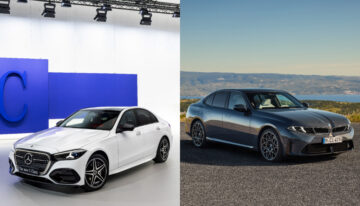
The launch of the new BMW 3 Series G50 came as a major surprise. At launch, the engine line-up includes only two four-cylinder mild-hybrid petrol versions, the 318i and 320i, and an M Performance model, the M350 xDrive, but no diesel. A PHEV will follow next year, as will the next-generation M3, which will also feature mild-hybrid technology.
At the BMW 3 Series launch, I asked BMW executives about the reasons behind this decision. One BMW executive told me that, for the time being, the company had decided to discontinue diesel engines, but that this decision is not final. BMW is monitoring the market and, if demand materialises, it could respond accordingly.
As is well known, the Euro 7 emissions regulations will come into force in November 2026 for all new models and in November 2027 for all models already in production.
Since the 3 Series is an entirely new model, all its engines must comply with Euro 7 standards. And Euro 7 can no longer be met without mild-hybrid technology and an electrically heated catalytic converter.
BMW already has this technology, as the new X5 G65 is equipped with both diesel and petrol engines compliant with Euro 7. However, in this segment, where prices start at around €100,000 and above and six-cylinder inline engines are the norm, the cost of adapting the engines to Euro 7 represents a smaller proportion of the overall vehicle price than it would for a four-cylinder diesel engine fitted to the 3 Series.
For this reason, BMW wants to see whether sales of the new 3 Series will meet expectations without a diesel option. However, if sales targets are not achieved, it is highly likely that the 3 Series will get a diesel engine again, at least the 2.0-litre four-cylinder unit.
By comparison, traditional rivals Audi and Mercedes-Benz still offer diesel engines in their A5 and C-Class models.
The Audi A5 is available with just one mild-hybrid diesel engine, the 2.0-litre four-cylinder 40 TDI, which produces 204 PS and is offered with either front-wheel drive or all-wheel drive. However, it only complies with Euro 6 standards. Since the A5 is not an entirely new model, Audi can continue selling it with a Euro 6 diesel engine until November 2027.
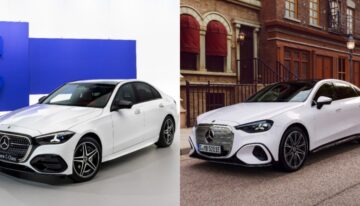
The recently launched facelifted Mercedes C-Class, on the other hand, has already switched to Euro 7 and even offers two mild-hybrid diesel engines: the C 200 d with 163 PS and the C 250 d/C 250 d 4Matic with 200 PS. However, the previous C 300 d 4Matic, with 265 PS, has been discontinued as part of the facelift.
In Europe, diesel car sales have fallen dramatically, from 19.6% of total registrations to just 8.9% in 2025, according to ACEA (European Automobile Manufacturers’ Association). During the first nine months of 2026, the downward trend accelerated further, with diesel cars accounting for just 7.1% of the European market.
In the premium segment, however, the share of diesel engines remains higher, particularly in the mid-size, large and luxury SUV categories.