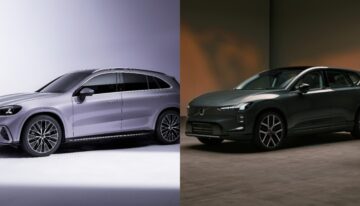
After completing our first static comparisons between the new Mercedes GLC EQ vs the new BMW iX3 and Mercedes GLC EQ vs Tesla Model Y, we now want to make an initial evaluation of the Mercedes GLC EQ compared with the new Volvo EX60.
Until last year, the Tesla Model Y was the best-selling electric car in the world, but not because it was the best—rather because it had no truly comparable competitors. The previous generations of the Mercedes EQC and BMW iX3 were models built on conventional platforms that came with many compromises.
However, starting in the autumn of 2024, things changed with the launch of the new Porsche Macan EV and Audi Q6 e-tron, built on the dedicated PPE electric platform with 800-V technology and charging power of up to 270 kW.
Then, in the autumn of 2025, BMW and Mercedes unveiled their new electric weapons, also built on dedicated electric platforms, with 800-V technology and even higher charging power: 330 kW for Mercedes and 400 kW for BMW.
Now, joining this quartet of German aces is the new Volvo EX60, also built on a dedicated electric platform called SPA3 with 800-V technology.
After carrying out an initial evaluation of the Mercedes GLC EQ vs. BMW iX3 and Mercedes GLC EQ vs. Tesla Model Y, we now want to see how the Mercedes GLC EQ positions itself against the new Volvo EX60.
Dimensions
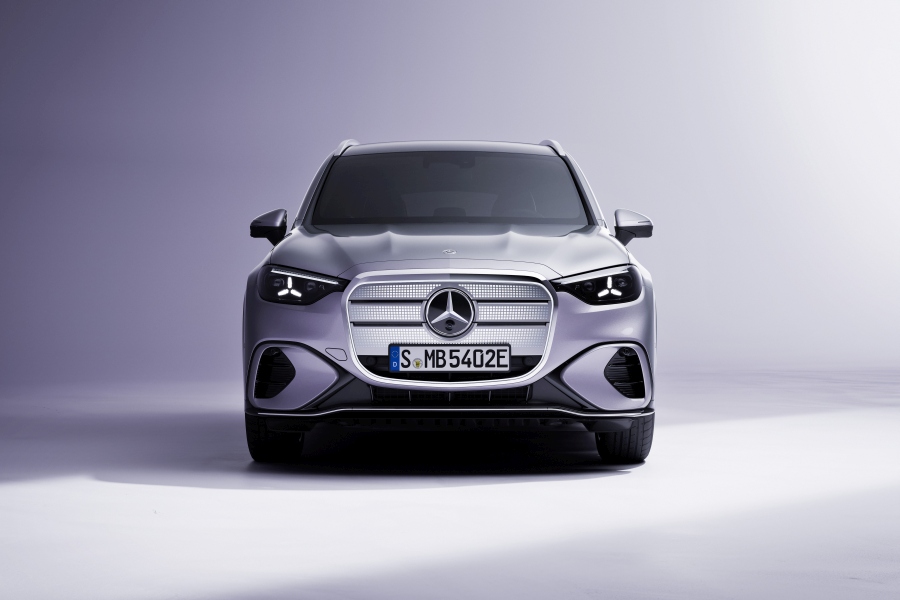
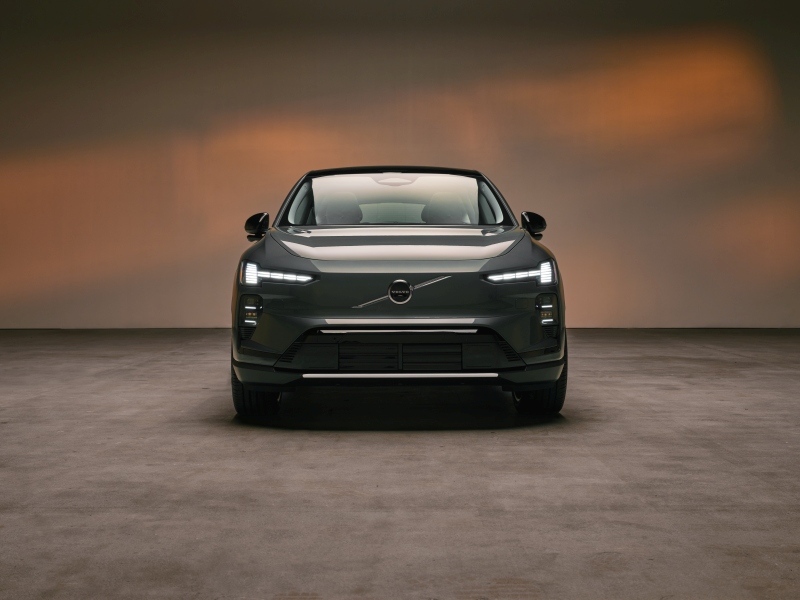
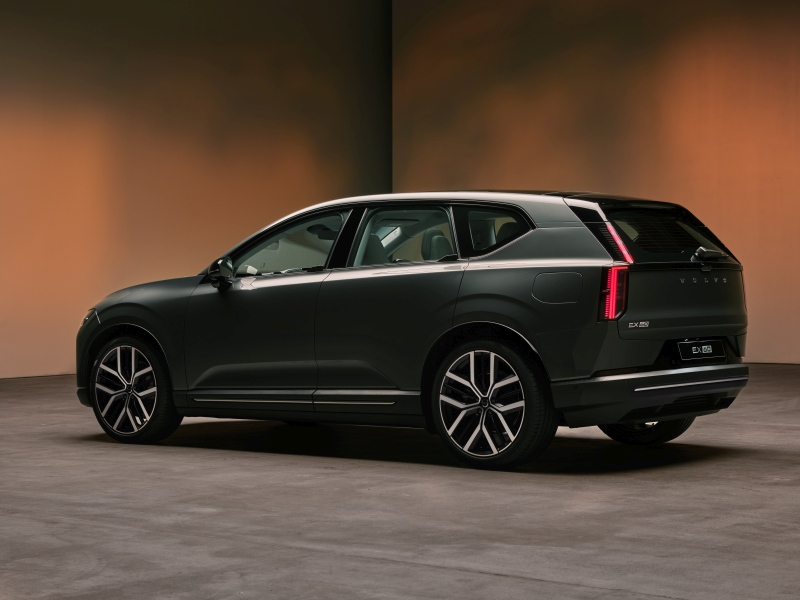
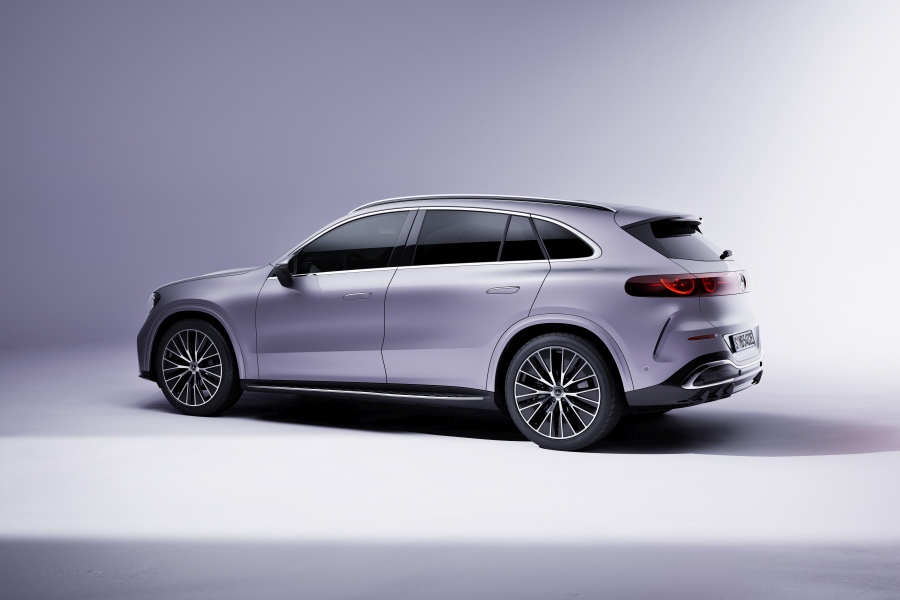
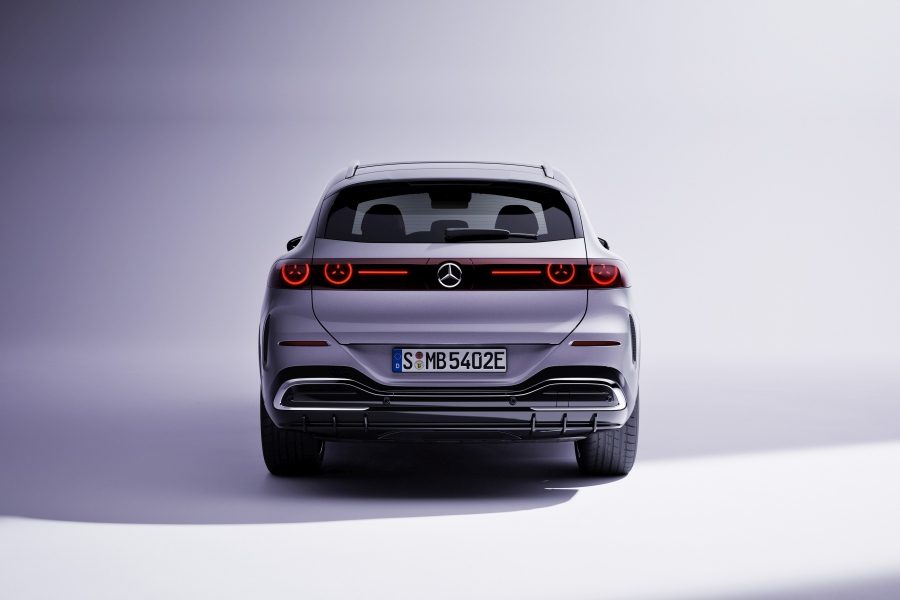
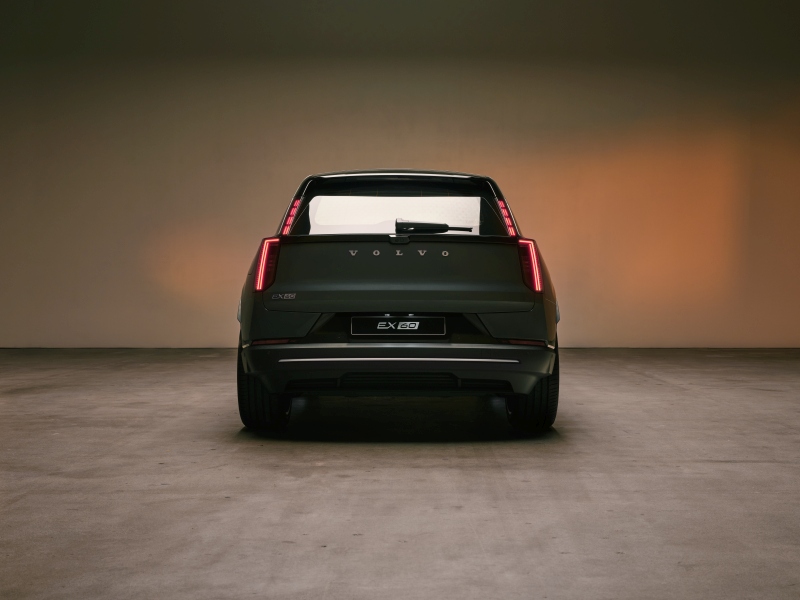
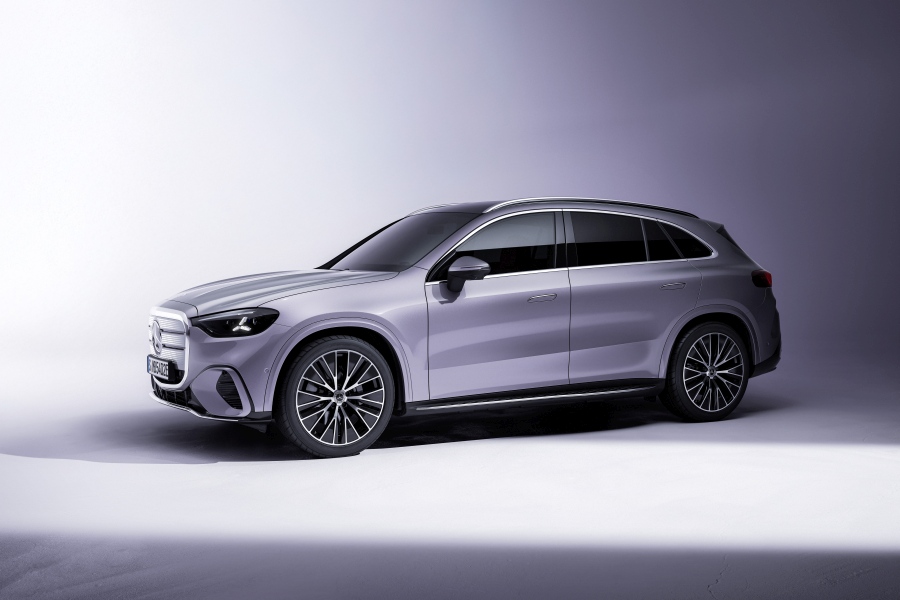
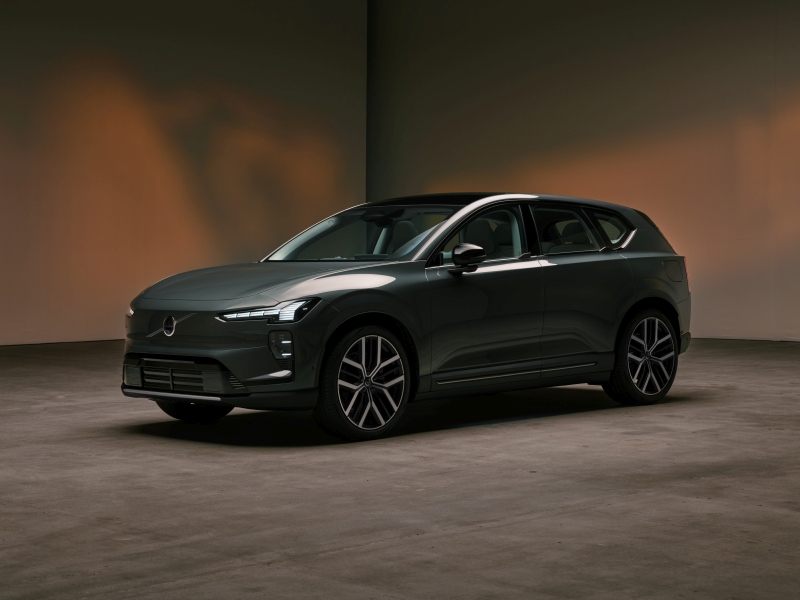
With a length of 4,845 mm, a width of 1,913 mm, and a height of 1,644 mm, the Mercedes GLC EQ is 42 mm longer, 14 mm wider, and 9 mm taller than the Swedish model, while the wheelbases are almost identical: 2,972 mm for Mercedes versus 2,970 mm for Volvo. Thanks to their dedicated electric architectures, both models feature short overhangs and long wheelbases.
With a pronounced beltline, the Volvo EX60 tapers toward the rear in the upper section to improve aerodynamics. As a result, Volvo boasts a very good drag coefficient of 0.26, equal to the figure announced by Mercedes. For comparison, the BMW iX3 has a Cd of just 0.24.
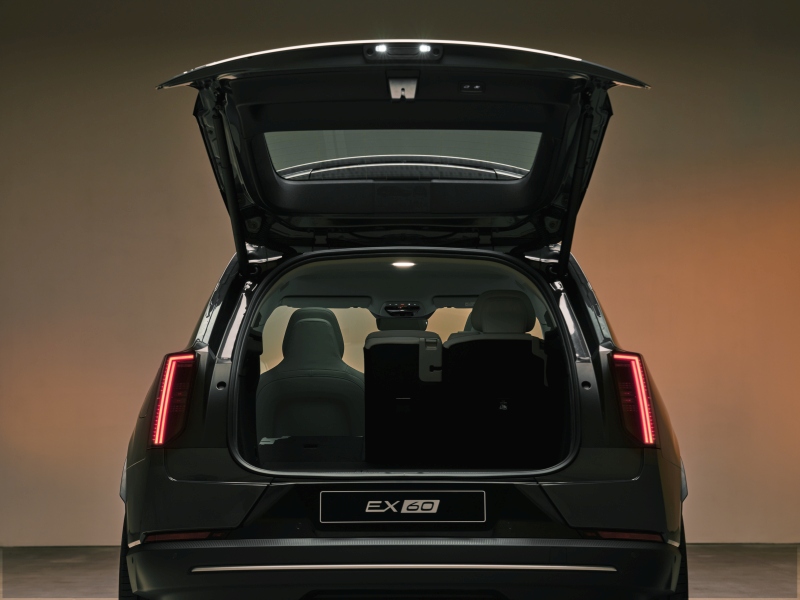
On the Volvo EX60, the outer rear seat backrests are electrically adjustable and include integrated child booster seats in traditional Volvo style. The rear bench can be folded in a 40/20/40 split to increase luggage capacity (523 liters from which 63 liters under the load floor) up to a maximum of 1,647 liters.
The Mercedes GLC EQ also features a 40/20/40 split rear bench, but the backrest is not electrically adjustable. Instead, the trunk floor is height-adjustable, and Mercedes offers a slightly larger storage volume. Thus, luggage capacity ranges from 570 to 1,740 liters.
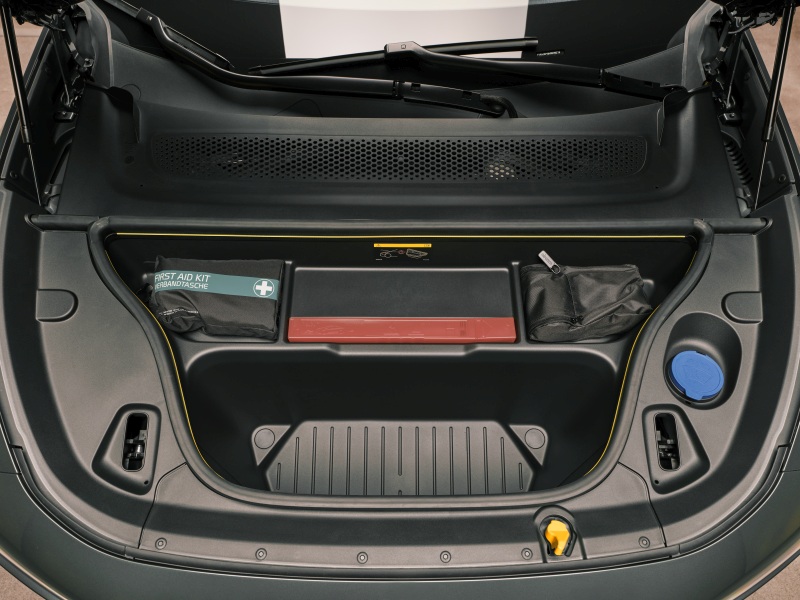
Both models also feature a front trunk (frunk): 75 liters in the Volvo and 128 liters in the Mercedes GLC EQ.
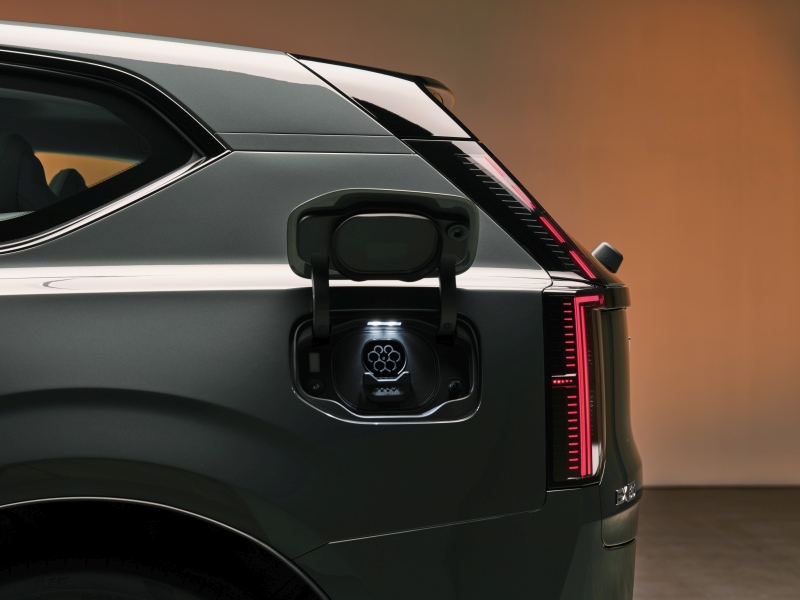
We haven’t yet sat inside the Volvo, but the Swedes promise more comfortable rear seating because the floor is positioned lower thanks to the cell-to-body construction, in which the battery essentially also serves as the floor.


Operation and ergonomics
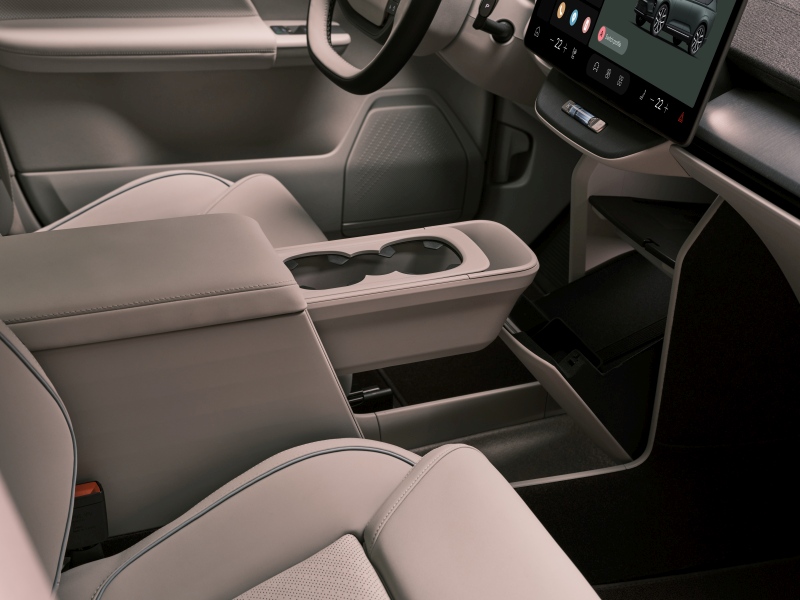
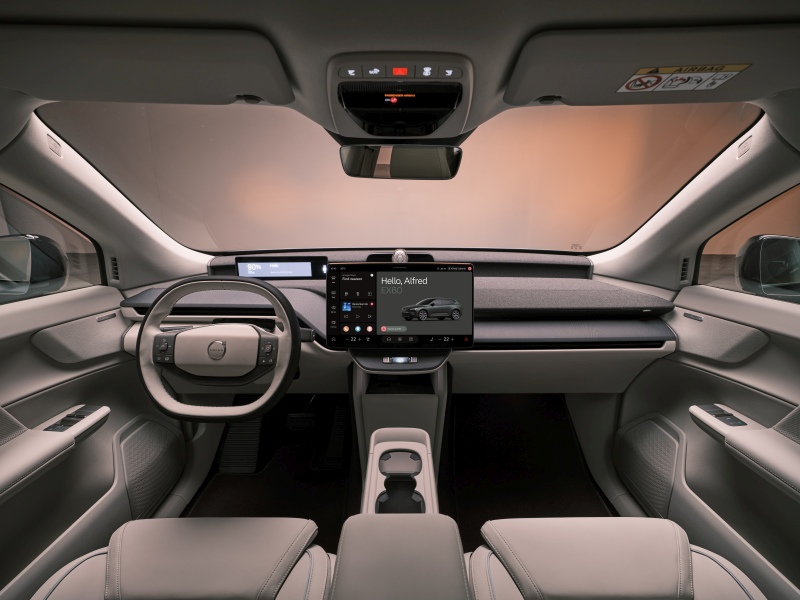
The Volvo EX60 is the first model from the Swedish manufacturer to abandon the portrait-style multimedia display format. The EX60 features a 15.1-inch display that is no longer integrated into the dashboard but instead floats above it, similar to some Chinese cars.
The 11.4-inch instrument cluster display is larger than the 9-inch unit in the EX90 and is no longer positioned in the traditional location, but at the base of the windshield, more directly in the driver’s line of sight. The idea is somewhat similar to that of the BMW iX3, with the difference that Volvo has dropped the head-up display, while BMW has not.
Volvo’s multimedia system is based on Google services—Google Maps and AI-supported voice control via Google Gemini. Apple CarPlay and Android Automotive are also available, and the software can be updated over the air.
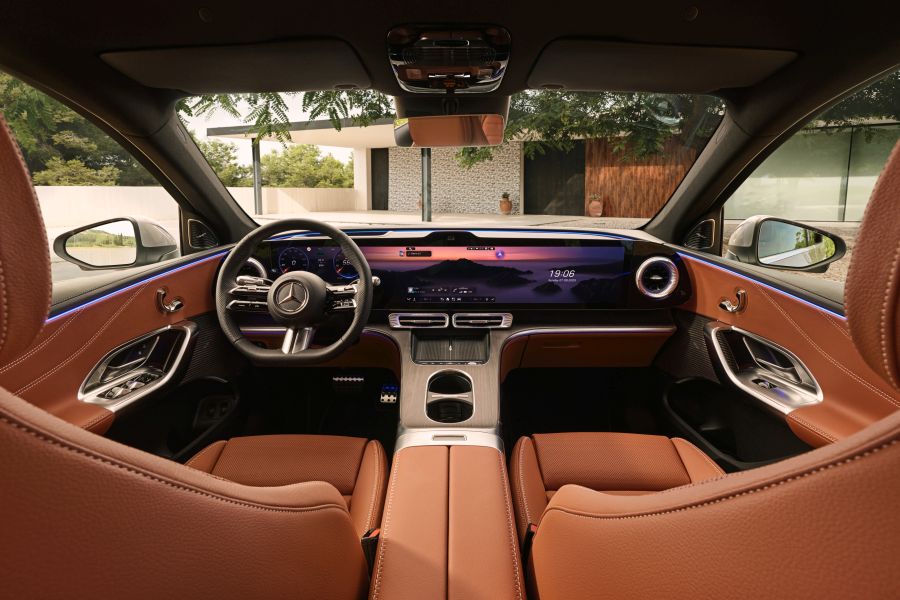
Mercedes GLC follows a different, more conventional philosophy. In the base version, there are two displays: a 10.3-inch screen for the digital instrument cluster and a 14-inch screen for the multimedia system, plus a digitally animated trim panel instead of a passenger display—all grouped under a single glass surface.
In the second version, Superscreen, in addition to the 10.3-inch instrument cluster display and the 14-inch multimedia display, there is also a 14-inch passenger display, but the three screens are separate, grouped under the same glass panel.
In the top version, Hyperscreen, there is a single massive 99.3-cm display stretching across the entire width of the dashboard, integrating the side air vents. The displays offer exceptional clarity, illuminated from behind by more than 1,000 individual LEDs.
The new MB.OS multimedia system of the GLC EQ works with various AI agents and enables voice control with ChatGPT integration. Like Volvo, Mercedes also relies on Google services for navigation.
Powertrain, range, and charging
The Mercedes GLC EQ is currently available with a single drivetrain—the launch version: the GLC 400 4Matic with two motors producing a combined 489 PS and 800 Nm. The rear permanent-magnet synchronous motor is paired with a two-speed transmission (ratios: 11:1 for first gear and 5:1 for second). It accelerates from 0 to 100 kph in just 4.3 seconds and reaches a top speed of 210 kph. With a 94-kWh net battery, the Mercedes GLC EQ promises a WLTP range of 673 km and a WLTP consumption of 15.8 kWh/100 km. It can charge at DC stations at up to 330 kW, from 10 to 80% in 22 minutes.
To charge at older 400-V DC stations, you need to purchase an adapter costing €654.50, and the same amount applies if you want to charge at 22-kW AC stations instead of the standard 11 kW.
Built on the MB.EA platform, the Mercedes GLC EQ features an entirely new chassis, with a new four-link front multilink suspension and a five-link rear multilink suspension, with both motors mounted on aluminum subframes elastically attached to the body. The standard suspension uses steel springs; air suspension and rear-wheel steering are optional as part of the Agility & Comfort package (€2,844.10).
Volvo announced three versions from launch:
-
P6 with a rear permanent-magnet synchronous motor delivering 275 kW (374 PS), paired with an 83/80-kWh gross/net battery. WLTP range: 620 km; WLTP average consumption: 14.7 kWh/100 km; charging power: 320 kW (10–80% in 18 minutes); 0–100 kph in 5.9 s.
-
P10 AWD with two motors producing a total of 375 kW (510 PS), paired with a 95/91-kWh gross/net battery. WLTP range: 660 km; WLTP average consumption: 15.7 kWh/100 km; charging power: 370 kW (10–80% in 19 minutes); 0–100 kph in 4.6 s.
-
P12 AWD with two motors producing 500 kW (680 PS total), paired with a 117/112-kWh gross/net battery. WLTP range: 810 km; average consumption: 16 kWh/100 km; charging power: 370 kW (10–80% in 19 minutes); 0–100 kph in 3.9 s.
Although Volvo offers two versions with higher power than the Mercedes, all Volvo versions have their top speed limited to 180 kph.
On the other hand, the Volvo EX60 charges slightly faster, because the larger batteries support higher charging power, and the base battery is smaller than Mercedes’.
The mid-range Volvo P10 AWD has power, performance, and range similar to the Mercedes GLC 400 4Matic: 660 km vs. 673 km range, 0–100 kphh in 4.6 s vs. 4.3 s, and WLTP average consumption of 15.7 kWh/100 km vs. 15.8 kWh/100 km for the Mercedes.
Volvo also comes standard with conventional steel-spring suspension, with air suspension available as an option. In addition to the standard version, Volvo offers a Cross Country version, raised by 20 mm, with an additional 20 mm if the air suspension is specified.
Mercedes does not offer a dedicated off-road version but features a Terrain mode that keeps the front motor permanently active. In other driving modes, the front motor activates only when extra power or grip is needed. Steering, braking, and motor response are adapted for off-road use. Like the combustion-engine GLC, the GLC EV features a transparent hood function using a 360-degree camera.
Prices
The Mercedes GLC 400 4Matic starts at €71,281, but the numerous options and packages can quickly push the price toward €90,000.
The cheapest single-motor Volvo EX60 starts at €62,990, while the version comparable to the GLC 400 4Matic—the P10 AWD—starts at €66,000, around €5,000 less than the GLC 400 4Matic.
Deliveries of the Mercedes GLC 400 4Matic will begin in April 2026, while deliveries of the Volvo P6 and P10 AWD will start in June 2026, with the top-of-the-range P12 AWD arriving toward the end of 2026.
| Technical data | Mercedes GLC 400 4Matic | Volvo EX60 P10 AWD |
|---|---|---|
| Motors | 2, one rear, one front | 2, one rear, one front |
| Max. output (PS) | 489 | 510 |
| Max. torque (Nm) | 800 | 710 |
| Traction | awd | awd |
| Gearbox | 2 gears rear, 1 gear front | 1 gear rear, 1 gear front |
| L x w x h (mm) | 4,845 x 1,913 x 1,644 | 4,803 x 1,899 x1,639 |
| Wheelbase | 2,972 | 2,970 |
| Curb weight/payload (kg) | 2,535 | 2,350 |
| Boot volume (l) | 100/570-1,740 | 75/523-1647 |
| Battery capacity net (kWh) | 94 | 91 |
| AC charging (kW) | 11/22 | 11/22 |
| AC charging time (h) | na/na | 9/4.5 |
| DC charging (kW) | up to 330 | up to 370 |
| DC charging time 10-80% (minutes) | 22 | 18 |
| Performances | ||
| Acc. 0-100 kph | 4.3 | 4.6 |
| Top speed (kph) | 210 | 180 |
| Energy consumption (kWh/100 km) | 15.8 | 15.7 |
| WLTP Range (km) | 673 | 660 |
| Base price (euro ) | 71,281 | 66,000 |